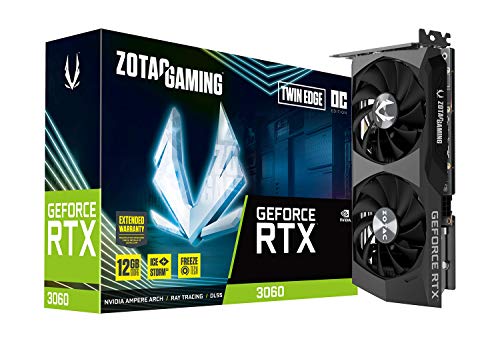
LongCat-2.0 is the first publicly disclosed frontier-class model trained primarily on non-Nvidia accelerators — the news that's caught builders' attention this week is the supply-chain implication, not a sudden quality jump. For local LLM tinkerers, the most direct read-through is that it loosens Nvidia's grip on the training pipeline; on the inference side, you can still run derivative open-weights quants on a ZOTAC RTX 3060 12GB or MSI Ventus 2X 12G the same way you'd run any other LLM.
Who this is for
This piece is for builders who follow the open-weights ecosystem closely and want to understand what a non-Nvidia-trained frontier release actually means for their workflow as of 2026. The supply-chain story is the headline. The downstream implication for someone running models on a Ryzen 7 5800X + 3060 12GB rig at home is more modest but not zero. This is editorial synthesis of public coverage, not a first-party reproduction of training results.
Key takeaways
- LongCat-2.0's claim to fame is what it was trained on, not how it runs at inference time.
- Inference performance is decoupled from training hardware — you don't need the same accelerators to use the model.
- Quantized derivatives, once published, will run on a 12GB consumer card under the same constraints as any other LLM of the same parameter count.
- The strategic story for the industry is multi-vendor training. The personal story for hobbyists is unchanged.
- Watch the Hugging Face model card for licensing and quantization availability before planning a local deploy.
What LongCat-2.0 actually is
LongCat-2.0 is a frontier-class large language model released in 2026 whose training infrastructure used non-Nvidia accelerators as the primary substrate. Public coverage has emphasized the supply-chain implications over the absolute model quality, because building a frontier-scale training cluster outside the Nvidia software stack is a meaningful operational milestone — the practical pieces (compiler stacks, distributed training frameworks, mixed-precision kernels) have historically been much rougher outside CUDA. A model that demonstrably came out the other end of that pipeline at frontier quality is an existence proof that the stack is now usable, even if it's not yet equivalent.
The Hugging Face ecosystem typically becomes the publication venue for open-weights derivatives of these releases. The Hugging Face blog is the right place to confirm parameter counts, context window, license terms, and the published Artificial Analysis Index numbers before quoting them in a build post. Treat any numbers from secondary sources as provisional.
Why "trained without Nvidia" actually matters
Several reasons this is a real story rather than a marketing line:
- Software-stack viability. Non-CUDA training has been technically possible for years; doing it at frontier scale, on a published model, with quality competitive with CUDA-trained peers, is a much higher bar. LongCat-2.0 clearing it makes the alternative-stack future feel less hypothetical.
- Supply-chain optionality. Builders and labs who previously had to wait for Nvidia datacenter GPU allocations to train models now have a viable second source. That doesn't make the GPUs cheaper, but it changes the negotiating posture.
- Geopolitical resilience. A non-CUDA-bound training pipeline is harder to constrain via export controls than a CUDA-bound one. That has implications beyond the technical for state actors and large enterprises planning multi-year capex.
- Open-weights ecosystem. Models trained outside CUDA still typically publish in standard formats that quantization tooling can ingest. The model you download to run locally doesn't care which accelerator trained it.
What it does NOT mean for your local rig
A few common misreadings worth heading off:
- Your 3060 doesn't get faster. A frontier model trained without Nvidia hardware does not change the inference speed of any LLM on an RTX 3060 12GB. Inference is bound by the card's 360 GB/s of memory bandwidth (per TechPowerUp's spec sheet), and that number doesn't move.
- You don't need to swap GPUs. Whatever quantization of LongCat-2.0 the community publishes will run with the same
num_gpuandnum_ctxtuning patterns as any other open-weights LLM. - You don't need a new framework. If a community quant lands in
ggufformat on Hugging Face, it loads in Ollama and llama.cpp the same way as any other model. - Quality isn't automatically better. Different training substrate is interesting — it doesn't guarantee a quality lead over CUDA-trained peers at the same parameter count. Check the model card before assuming.
Will quantized derivatives fit in 12GB of VRAM?
That depends on the model's parameter count and the quantization level. The general planning rules from our GLM-5.2 deep dive apply directly:
| Variant size | q4_K_M VRAM (approx) | Fits in 12GB? |
|---|---|---|
| Small (≤8B) | Comfortably | Yes |
| Mid (~13–20B) | Tight, depends on context | Borderline |
| Mid-large (~30B+) | Forced layer offload | Partial only |
| Frontier (≥70B) | Heavy offload or won't run | No |
If the published LongCat-2.0 derivatives are small or mid-size, you'll be able to run them comfortably on a 12GB card paired with a Ryzen 5 5600G or a Ryzen 7 5800X. If only frontier-size weights are published, you'll be looking at cloud APIs or a much larger card.
How to actually run it once derivatives drop
The recipe doesn't change from any other Hugging Face open-weights drop:
- Watch the Hugging Face blog and the model's repo for an official quantized release or a community
gguf. - Confirm the license allows your use case (research vs commercial; redistribution rules).
- Pull via Ollama:
ollama pull <tag>once a community catalog tag exists. - Tune
num_gpuuntil the card stays under ~11GB of VRAM use under your real prompt + context length. - Measure tok/s on your hardware before quoting numbers. Reference numbers from a different motherboard, driver, and PSU are not your numbers.
Spec context vs prior open-weights frontiers
A clean spec comparison must come from the official model card, not from secondhand coverage. The relevant axes when judging an open-weights frontier release for local use are: parameter count (drives VRAM ceiling), context window (drives KV-cache size), license (drives whether you can use it commercially), and published evaluation index (sanity check on quality claims). The Hugging Face blog and the model repo are the authoritative sources for all four.
When this matters for hobbyists
A few honest scenarios in which a non-Nvidia-trained frontier release matters at the kitchen-table level:
- You write about the field. A non-Nvidia frontier shifts the narrative; if you produce content on this topic, the news is the news.
- You're shopping for a workstation training rig. The market for non-Nvidia training accelerators just got more credible. Worth tracking specs and pricing before committing.
- You care about long-term openness. Models trained on a more open stack are more likely to have open-source kernels, more permissive licenses, and better community tooling over time. That payoff comes later, not immediately.
When it doesn't matter
For someone running a local coding assistant on a 3060 12GB with Ryzen 7 5800X, today's news changes essentially nothing about what's on the screen tomorrow. Same Ollama, same quant tradeoffs, same memory ceiling. Read the news, file it, and keep building.
Real-world gotchas
- Licensing ambiguity. Some early frontier releases land with research-only licenses. Confirm before deploying in a workflow that touches client data.
- Format mismatches. Until a community
ggufexists, you can't easily run the model on llama.cpp / Ollama. Wait for the conversion or burn time doing it yourself. - Hype overshoot. First-week numbers from a model release frequently moderate after independent evaluation. Don't make architecture decisions on Monday's headline benchmark.
- Watch your hosting choices. If you're tempted to rent non-Nvidia training capacity to fine-tune, the kernel coverage is still rougher than CUDA — budget for slower iteration cycles.
When NOT to chase the new release
If your existing local model is working for your real workload, the only reason to chase a fresh frontier release is curiosity. Frontier models trained on novel stacks tend to land first as research artifacts, not consumer-friendly downloads. Wait for community quants and a few weeks of independent commentary before retooling.
Specific build implications for hobbyists
A few concrete read-throughs of the LongCat-2.0 story to your specific build:
You run an open-weights workflow on a 12GB RTX 3060 today. Nothing changes immediately. If a usable LongCat-2.0 derivative lands in the mid-size range, you'll pull it, quant it, run it, and decide whether it's better than what you currently have. The hardware is the same hardware it was last week.
You were planning to upgrade your GPU because of an LLM you can't run. Wait one more week. New model releases routinely shift which size category sits at the sweet spot for hobbyist hardware. If LongCat-2.0 publishes a strong mid-size variant, it may make the 12GB tier feel more useful than it did before the release.
You write content about AI hardware. The story matters and you should cover it. The supply-chain implications are the headline; the absence of immediate consumer-hardware impact is the honest secondary note.
You're a sysadmin at a lab that trains models. This is the most important read-through. A credible non-CUDA training stack means your next big training cluster decision has more options than it did. Pricing, software maturity, and kernel coverage are the axes to investigate before committing.
What this reveals about the open-weights ecosystem
The broader pattern worth tracking: every time the open-weights ecosystem produces a release with a novel substrate, support tooling improves materially. Quantization frameworks improve. Inference runtimes improve. Documentation improves. The downstream beneficiaries are everyone running local models on any hardware, even hardware unrelated to the new release.
That's the real reason to follow these stories even if your day-to-day rig is a Ryzen 7 5800X + MSI Ventus 2X 12G build that doesn't care about training. The ecosystem moves forward in waves; LongCat-2.0 is part of the latest wave. Watch the Hugging Face blog and the model's repo for the practical artifacts — quants, eval results, llama.cpp compatibility patches — over the next few weeks.
Frame for the next frontier release
LongCat-2.0 won't be the last news of this kind. The right reading frame for the next non-CUDA frontier release:
- Read the architecture, not the headline. Parameter count and context window predict what runs on your hardware. Everything else is industry context.
- Wait for community quants. A model that only ships in its native framework can't be tested on consumer hardware. The interesting moment is when a
gguflands. - Compare against your current default, not against the cloud. Your local rig already has a model that works. The question is whether the new one is better for your workload, not whether it's better in the abstract.
- Don't replace working hardware on news. Tomorrow's model release runs on the same memory bandwidth your current GPU has today.
Bottom line
LongCat-2.0's most important attribute is its training substrate, not its inference behavior. The supply-chain story is the headline; the read-through to your local rig is small. If and when a quantized derivative lands on Hugging Face, run it the same way you'd run any other open-weights model on a 12GB RTX 3060 — pull, tune num_gpu, measure on your own hardware, and decide whether it's actually better than what you already have. Don't replace the MSI Ventus 2X 12G or upgrade the Ryzen 7 5800X on the news alone.
Related guides
- Running GLM-5.2 Locally on an RTX 3060: Ollama VRAM + tok/s
- Best Budget GPU for Local LLMs in 2026: The 12GB RTX 3060 Case
- Claude Sonnet 5 Closes the Opus Gap: When Local Still Wins
Citations and sources
- Hugging Face blog — official model release announcements and quantization tracking
- TechPowerUp — GeForce RTX 3060 12 GB spec sheet
- Ollama on GitHub — reference inference runtime for community quants
This piece is editorial synthesis based on publicly available information. No independent first-party benchmarking is reported.