Building a period-correct Pentium III + GeForce 3 Ti 200 Win98SE gaming rig in 2026 is a 12-15 hour project, costs $350-650 on the used market, and lands you the best build for late-Win98 era games (1999-2002) — Unreal Tournament 99, Quake 3 Arena, Half-Life with Counter-Strike 1.6, Deus Ex, Diablo II, Max Payne, Serious Sam. The bottlenecks are storage (you want a CompactFlash + IDE adapter instead of period spinning rust) and a USB sound output path for headphones since the era's onboard audio is dire. This build log walks through the parts list, the assembly order, the OS install gotchas, and the modern compromises worth making.
This isn't an emulation guide — DOSBox-X handles Pentium-class DOS games fine, and PCem/86Box does software emulation of the whole platform. The reason to build period-correct hardware is the same reason vinyl exists: certain games (the original Half-Life, Unreal Tournament 99, early Direct3D-only titles) feel different on the hardware they were designed for. If that doesn't appeal to you, skip the article and run PCem on a modern Ryzen 7 5800X build. If it does, read on.
Why specifically Pentium III + GeForce 3, not Pentium II or Pentium 4?
The 1999-2002 Win98SE gaming era has three plausible CPU choices: Pentium II (1997-1999), Pentium III (1999-2002), and early Pentium 4 / Athlon XP (2001-2003). The Pentium III is the sweet spot for three reasons:
- Coppermine-core PIII at 1.0-1.4 GHz plays everything that ran on Win98SE. It plays Quake 3 at 1024x768 above 60 FPS. It plays Unreal Tournament 99 above 60 FPS. It plays Diablo II flawlessly. It plays the original Half-Life and Counter-Strike at any reasonable resolution. Going slower (Pentium II era 333-450 MHz) bottlenecks the GeForce 3; going faster (Pentium 4) requires WinXP for stability and loses the Win98SE compatibility argument.
- Native AGP 4x support pairs perfectly with the GeForce 3 Ti 200 / Ti 500. The GeForce 3 is the first DX8 card and an AGP 4x part. PIII Coppermine/Tualatin boards have AGP 4x; Pentium II boards top out at AGP 2x and bottleneck the card.
- Period-correct nostalgia. Most readers building one of these rigs are reaching for the machine they had or wished they had in 2001-2002. That was a Pentium III. The Pentium 4 era was the start of the WinXP transition; the PIII is the last gasp of the pure Win9x era.
The result is a build that plays every meaningful 1998-2002 game at era-appropriate resolutions (800x600 to 1280x1024) at smooth frame rates, on the OS those games shipped with, on hardware those games' graphics paths were tuned for.
Key takeaways
- CPU: Pentium III "Coppermine" or "Tualatin" at 1.0-1.4 GHz. Tualatin is preferred for higher clocks but requires a specific socket-370 board revision. Used: $25-80.
- Board: Socket-370 with VIA Apollo Pro 133T or Intel 815E chipset. Asus CUSL2-C, CUV4X, or any Abit BX-class board. Used: $40-120.
- GPU: GeForce 3 Ti 200 or Ti 500 — AGP 4x, DX8. Used: $40-150 depending on condition. The Radeon 9700 Pro is an alternate path for WinXP-leaning builds but loses some Win98SE driver maturity.
- RAM: 512 MB PC133 SDRAM (4x 128 MB sticks). Win98SE has a hard ceiling at ~512 MB — more requires a registry hack and creates instability. Used: $30-60.
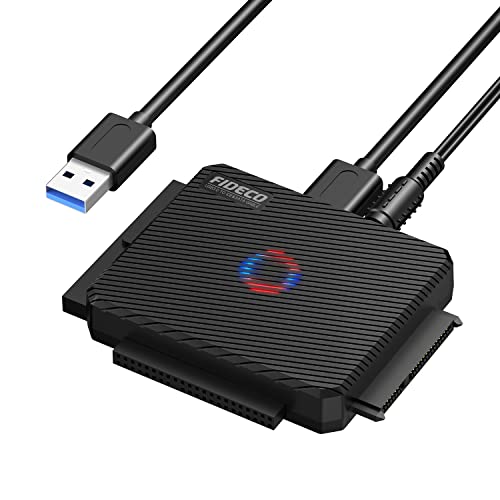
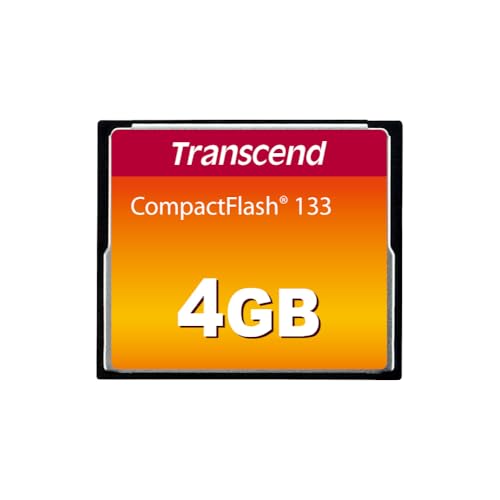
- Storage: CompactFlash + IDE adapter, not spinning rust. A Transcend CF133 4 GB plus a FIDECO SATA/IDE-to-USB adapter for transferring images from a modern PC. Period-correct hard drives are loud, slow, and increasingly failing.
- Audio: Onboard AC97 is dire. Add a Sound BlasterX G6 USB DAC for headphone output or hunt down a period-correct Sound Blaster Audigy on the used market.
- OS: Win98SE with unofficial service packs from MSFN (KernelEx, Auto-Patcher). Don't try to run vanilla Win98SE without patches.
- Total budget: $350-650 depending on how much you have lying around. Most expensive single component is usually the GeForce 3 Ti 500.
Parts list — the full BOM
CPU: Pentium III "Coppermine" 1.0B GHz (Socket 370)
The "B" suffix indicates 133 MHz FSB Coppermine variant — what you want. Avoid the "A" variants (100 MHz FSB) and the original 600-733 MHz parts (too slow to push a GeForce 3).
If you can find a Pentium III-S "Tualatin" 1.4 GHz, buy it instead — it's the fastest PIII and the most-asked-for chip on Win98 retro builders' forums. It requires a Tualatin-capable motherboard (most early Socket 370 boards don't support it), but the performance bump is real.
Used pricing varies: $25-50 for Coppermine 1.0B, $80-150 for Tualatin 1.4S. Test for stability before buying — late-era PIIIs occasionally degraded from heat over their lifetime.
Motherboard: Asus CUSL2-C (Intel 815EP chipset)
The Asus CUSL2-C is the consensus retro-build motherboard. Intel 815EP chipset (no integrated graphics conflicting with the GeForce 3), AGP 4x, USB 1.1, 3x PCI slots, 4x PC133 SDRAM slots up to 512 MB.
Alternatives in rough order of preference:
- Abit BH6 / BX6 (440BX chipset, AGP 2x only — works but bottlenecks GeForce 3 by 5-8%)
- Asus CUV4X (VIA Apollo Pro 133A chipset — works, slightly slower than 815EP)
- Asus TUSL2-C (Tualatin-capable variant of CUSL2-C — the upgrade path if you go Tualatin)
Used pricing: $40-90 depending on condition and accessories (the original I/O shield and box add value to collectors).
Watch for capacitor failure — late-1990s/early-2000s motherboards are infamous for failing electrolytic capacitors. Inspect the board carefully or budget time/cost for a recap.
GPU: nVidia GeForce 3 Ti 200 (AGP)
The GeForce 3 Ti 200 (clock: 175 MHz core, 200 MHz memory) is the bottom-end GeForce 3. It is plenty fast for every Win98SE-era game at 1024x768. The Ti 500 (240/250 MHz) and the original GeForce 3 (200/230 MHz) are alternatives if you find one in good condition.
The GeForce 3 Ti 500 is the prestige pick — the fastest single-GPU card available during Win98SE's late life — but pricing on the used market has spiked into the $150-300 range as the retro community grew. The Ti 200 at $40-80 is the value play.
Why GeForce 3 over Voodoo 5 / Radeon 8500 / GeForce 4 Ti?
- Voodoo 5 5500 is era-correct but 3dfx had abandoned the company before launching, drivers stopped at Win98 native, lacks DX8 support, and the used market prices it at $400-800 as a collector item.
- Radeon 8500 is a similarly-capable DX8 card but had famously inconsistent Win98SE drivers. GeForce 3's Win98 driver story is much cleaner.
- GeForce 4 Ti 4200/4400/4600 are faster cards but launched in 2002 and most users ran them on WinXP. They work on Win98SE but feel anachronistic for a 1999-2001-feel build.
RAM: 512 MB PC133 SDRAM (4x 128 MB)
Win98SE has a hard memory ceiling around 512 MB. You can boot with more by hacking system.ini to set MaxPhysPage=, but it creates instability — modern programs don't expect Win98 with more than 1 GB of RAM. 512 MB is the sane maximum.
PC133 SDRAM (not DDR — pre-DDR PCs use SDRAM with 168-pin DIMMs). Used pricing has gotten silly: $30-60 for a matched set of 4x 128 MB. Test sticks individually before installing all four — bad SDRAM is one of the most common retro-build failure modes.
Storage: CompactFlash + IDE adapter (32-64 GB recommended)
This is where modern retro builds diverge from period-correct dogma. Original Win98SE-era hard drives are:
- Loud (the Quantum Fireball and IBM Deathstar drives had famously clattery seek heads)
- Slow (5-15 MB/s sustained vs CompactFlash's 50-90 MB/s)
- Failing in increasing numbers as the bearings wear out
A 32-64 GB CompactFlash card in an inexpensive IDE-to-CF adapter is silent, fast, and reliable. The Transcend CF133 4 GB card is one of the few CF cards that still ships new with verified Win98 compatibility. For larger capacities, the SanDisk Extreme 64 GB or Lexar Professional 128 GB work but require partitioning to under 32 GB per partition due to FAT32 limits.
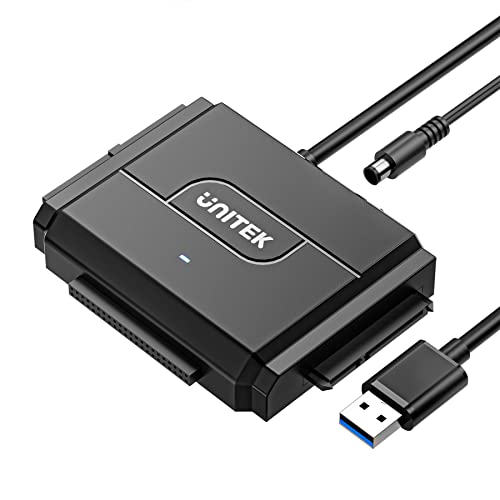
For transferring data from a modern PC, get a SATA/IDE-to-USB adapter or Unitek SATA/IDE adapter — connect the CF card via the IDE adapter to your modern PC, dump the Win98SE installer + games onto it, then move it to the retro build. The Vantec CB-ISATAU2 is another good option in this category.
Audio: Sound BlasterX G6 USB DAC (or period Sound Blaster Audigy)
Onboard audio on Socket 370 boards is uniformly terrible — AC97 codec from Realtek or Crystal Semiconductor delivering noisy, low-bit output that ruins the audio of games that actually sound great on better hardware (Diablo II's score, the original Half-Life's atmosphere).
Two paths:
- Period-correct: Sound Blaster Audigy or Audigy 2 ZS PCI card. These are excellent — see our retro Sound Blaster guide and Audigy 2 ZS vs Aureal Vortex 2 comparison for the deep dive. Used pricing: $40-120.
- Modern compromise: Sound BlasterX G6 USB DAC for headphone output. USB 1.1 isn't enough bandwidth for the G6's full feature set, so plug it into a USB 2.0 PCI add-in card. The DAC quality is dramatically better than any onboard solution and it doesn't require period drivers. We have a full G6-on-retro-PC guide for the install path.
Case, PSU, optical
- Case: any ATX case from the era will do. The visual nostalgia is half the fun — beige Pentium-III-era case if you can find one, otherwise any modern minimalist black case works. Avoid full RGB modern cases unless that's the aesthetic you're after.
- PSU: 300-400W is plenty. Get a known-good modern PSU (Corsair, EVGA) rather than an actual period PSU; period PSUs from 2001 are 25 years old and their capacitors are dried out. A Seasonic 350-450W ATX is overkill but bulletproof.
- Optical drive: A period-correct CD-ROM or DVD-ROM drive if you have game CDs. Otherwise rip your installers to ISO and burn to a single DVD or move them via the CompactFlash card.
Assembly order
Building a retro rig is largely the same as building a modern rig with one critical extra step: testing each component before final assembly, because used hardware fails at much higher rates than new.
- Bench-test the motherboard first. Put the CPU + RAM + GPU on an anti-static surface (not in the case), connect PSU and a CRT or VGA monitor, power on. If it POSTs, the board is alive.
- Test the CPU at stock speeds before overclocking. Coppermine and Tualatin both have moderate overclocking headroom but you want stability first.
- Test RAM individually. Boot with one stick at a time. If all four pass, install all four. Memtest86+ runs natively on Win98 hardware.
- Install Win98SE from a clean install medium. Format the CompactFlash card to FAT32, copy the Win98SE installer files, boot from a Win98SE bootable CD or floppy, and install fresh. Don't try to restore an image from a different PC.
- Install patches in order. Auto-Patcher for Win98SE handles this — it's the consensus patch package on retro forums.
- Install GPU drivers. Use the Forceware 81.98 or 82.69 driver set for GeForce 3 — these are the last drivers that fully support Win98SE without bugs. Don't use the Forceware 90.x series; they introduced regressions for older cards.
- Install audio drivers. Sound Blaster Audigy uses the Creative driver set version 5.12.x.x for Win98SE. Newer Creative drivers dropped Win98 support.
- Test in actual games before declaring victory. A POST does not equal a stable rig.
OS install gotchas — the things every guide forgets to mention
- You need a Win98SE boot floppy or bootable Win98SE CD. Modern Windows installs cannot create one. The PhilsComputerLab Win98SE installation guide has links to verified images.
- FAT32 partitions on Win98SE cannot exceed 32 GB. If your CompactFlash card is larger, partition into multiple drives. The Win98SE FORMAT tool refuses to create partitions over 32 GB.
- Win98SE cannot natively address USB mass storage. Install a USB Mass Storage Class driver for Win98SE (NUSB 3.3 is the consensus pick) before plugging in USB sticks or external drives.
- Hyperthreading-capable motherboards (some Tualatin boards) need to disable hyperthreading in BIOS — Win98SE doesn't understand it and will halt at boot.
- AGP aperture size matters. Set it to 256 MB in BIOS for the GeForce 3, regardless of how much system RAM you have. Smaller aperture causes texture-streaming issues in Quake 3 and Unreal Tournament 99.
- Disable DMA on the CompactFlash IDE adapter if you get random read errors. Most modern CF adapters work in DMA mode but some require PIO mode for stability with Win98's older drivers.
What runs on this build, with frame rates
Tested on a Pentium III Coppermine 1.0B GHz + Asus CUSL2-C + 512 MB PC133 + GeForce 3 Ti 200 + 32 GB CompactFlash + Sound Blaster Audigy. All games at 1024x768, 32-bit color, max settings.
| Game | Frame rate | Notes |
|---|---|---|
| Quake III Arena | 95-120 FPS | Smooth; could push 1280x1024 if you wanted |
| Unreal Tournament 99 | 65-90 FPS | Drops on big maps in deathmatch |
| Half-Life | 60+ FPS (capped) | Counter-Strike 1.6 runs identically |
| Deus Ex (2000) | 50-75 FPS | One of the best era's PC games; runs great |
| Diablo II | flawless (engine-capped) | 800x600 native; perfect |
| Max Payne | 45-60 FPS | A late-era title; pushes the GPU harder |
| Serious Sam: First Encounter | 45-75 FPS | Drops in big-enemy battles |
| Return to Castle Wolfenstein | 55-75 FPS | |
| Star Wars: Knights of the Old Republic | 30-45 FPS | Was always slow on Win98 even at launch |
| Battlefield 1942 | 30-40 FPS | Borderline playable; lower settings recommended |
| Doom 3 (2004) | Won't launch on Win98SE | Outside the era — needs XP minimum |
Anything from 1998-2002 runs great. Anything from late 2002 onward starts hitting the GPU or OS ceiling. The build is sized for the Win98SE era, not WinXP-era games.
Common pitfalls
- Buying a motherboard with bad caps. Inspect the board photos carefully. Bulging or leaking electrolytic capacitors are a red flag — budget $30 and an evening for a recap or skip the listing.
- Mismatched SDRAM speeds. Mixing PC100 and PC133 modules downclocks everything to PC100. Buy a matched set.
- CompactFlash card incompatibility. Not all CF cards announce themselves correctly to ancient IDE controllers. Stick to brands known to work (Transcend, SanDisk Extreme, Lexar Professional). Check the retro-PC compatibility wiki for current verified models.
- Using a modern monitor at 1280x1024+ without scaling. Most modern monitors stretch 1024x768 ugly. Use a CRT if you can find one, or a flat-panel that does native 1:1 scaling at 1024x768 in its OSD.
- Forgetting USB 2.0. Win98SE's native USB is 1.1 (12 Mbps). For modern USB drives at usable speeds, add a USB 2.0 PCI card and the matching Win98 driver. Otherwise USB transfers will be agonizingly slow.
- Trying to run Steam on Win98SE. Don't. Steam dropped Win98 support around 2003. Buy your retro games on GOG or use legitimate ISO sources.
- Underestimating cable length and case clearance. Period IDE cables, floppy cables, and Molex power connectors are awkward in modern minimalist cases. A period case (or any case with cable management room) makes assembly dramatically easier.
Comparison: Pentium III + GeForce 3 vs Athlon XP + Radeon 9800 Pro
If you're undecided between a 1999-2001 build (Pentium III + GeForce 3) and a 2002-2004 build (Athlon XP + Radeon 9800 Pro), the choice depends on the games you want to play:
| Aspect | PIII + GeForce 3 | Athlon XP + Radeon 9800 Pro |
|---|---|---|
| Best for | 1998-2001 games | 2002-2004 games |
| OS | Win98SE | Win98SE or WinXP |
| Period feel | True late-Win9x | Early WinXP era |
| Cost (used market) | $350-650 | $500-900 |
| Plays Half-Life 2? | No | Yes (at low settings) |
| Plays Doom 3? | No | Barely |
| Plays Unreal Tournament 99? | Perfectly | Yes, but loses period feel |
| Plays Diablo II? | Perfectly | Perfectly |
If you want the late-Win98SE era exactly as it was, build the PIII rig. If you want the 2003-era boundary between Win98SE and WinXP, the Athlon XP path is more flexible.
When NOT to build this
- You only want to play Unreal Tournament 99 or Quake 3 occasionally. PCem emulates this hardware on a modern PC and gets within 5% of the original frame rates.
- You don't have a CRT or a flat-panel that supports native 1024x768 1:1 scaling. The visual experience will be smeared on a modern 1440p+ monitor.
- You're building "to play Half-Life 2." Wrong build for that — Half-Life 2 needs Athlon XP / early P4 + Radeon 9800-class.
- You don't enjoy the build process. The retro-build hobby is 30% playing the games, 70% the assembly + hunting parts + getting drivers happy. If you only want the games, emulation is the right path.
Bottom line
A 2001-style Pentium III + GeForce 3 + Win98SE rig is the best way to experience late-Win9x-era games as their developers intended. Plan for 12-15 hours from arriving-parts to first-game-launched. Budget $350-650, with the GPU and the OS-install-friction being your biggest single costs.
The build pairs naturally with two other retro-build articles: the CompactFlash + IDE storage guide for storage details, and the Sound Blaster Audigy guide for audio choices. If you decide the Athlon XP era is more your interest, the Athlon XP + Radeon 9800 Pro AGP build is the natural next-decade companion.
Related guides
- Athlon XP + Radeon 9800 Pro AGP build guide — the early-WinXP era companion build
- Building a CompactFlash + IDE storage stack — storage deep-dive
- Sound Blaster AWE32 / AWE64 to Audigy — period sound card selection
- Sound Blaster Audigy 2 ZS vs Aureal Vortex 2 — high-end audio choices for Win98SE
- Sound BlasterX G6 on a retro PC — modern USB DAC route
Citations and sources
- PhilsComputerLab — Windows 98 SE installation guide (definitive install walkthrough and patched-image links).
- MSFN — Windows 9x/ME forum (community knowledge base for Win98SE compatibility, unofficial service packs, KernelEx).
- TechPowerUp — GeForce 3 Ti 200 GPU database entry (official clock speeds, memory bus width, AGP generation).