A $5 million licensing deal from Sega to Nvidia in 1996 arguably kept Nvidia alive long enough to ship the RIVA 128 later that year and the RIVA TNT in 1998 — the products that defined the modern GPU category. This piece of graphics history is getting fresh attention in 2026 as Nvidia CEO Jensen Huang travels to Tokyo, with several outlets connecting the 1996 rescue to the current Japan business trip and the broader arc of Nvidia's rise from struggling startup to AI infrastructure giant.
The story is often told as company folklore, but the timeline and the specific dollar figures are documented in interviews Huang has given over the years, in academic case studies of Silicon Valley startups, and in retrospectives from the 3D-accelerator wars era. This news brief walks through what actually happened, why it mattered, and how the historical connection shapes the way Nvidia treats its Japanese partnerships in 2026.
Key takeaways
- Nvidia's second product, the NV1, was a commercial failure in 1995-1996. Sales were flat and cash was running out.
- A $5M Sega licensing agreement funded architectural work on what became the RIVA 128, the product that saved the company.
- Sega chose not to renew the deal for its next console generation, leaving Nvidia to pivot to the PC 3D-accelerator market.
- The pivot became the founding moment for consumer GPUs as we know them — the RIVA TNT (1998) and GeForce 256 (1999) grew directly from that architectural work.
- Jensen's 2026 Tokyo visit is being framed by some outlets as a nod to the historical relationship, though Nvidia's current Japan business (data center, robotics, generative AI partnerships) is orders of magnitude larger.
What was the NV1 and why did it fail?
Nvidia's first product, the NV1, shipped in 1995 as an all-in-one 2D/3D/sound/game-pad chip designed around forward-rendered quadrilateral polygons rather than the industry-standard triangles. It was ambitious but wrong on nearly every strategic axis: too expensive, too complex, and — critically — incompatible with the triangle-based Direct3D API Microsoft announced later that year.
By early 1996 the NV1 was dead on the PC market. Nvidia had shipped maybe 250,000 units against a plan of millions, and the company was burning through venture capital with no next product on the shelf. The 3D-accelerator wars were about to consume every underfunded startup in the space; 3dfx's Voodoo was the industry favorite, and PowerVR, Rendition, and S3 were all fielding competitive products.
Nvidia had months to live, not years.
The Sega deal: $5M for a Saturn add-in
In this window Sega approached Nvidia about licensing the NV1's technology for use in future Sega products — specifically, an add-in card that would upgrade the Sega Saturn's aging graphics capability. Reports from the era value the licensing agreement at approximately $5 million. In 1996 dollars this was meaningful — enough to fund architectural design work on Nvidia's next chip.
Critically, Sega's engineers gave Nvidia feedback that the quadrilateral rendering approach was a dead end and the industry was moving to triangles. Nvidia's engineering team took that feedback and used the Sega cash to fund a new triangle-based architecture: the RIVA 128.
Sega ultimately did not renew the deal for the Dreamcast generation. Instead, Sega chose PowerVR (via NEC's Videologic subsidiary) for the Dreamcast's graphics silicon. This felt like a loss at the time; in retrospect it turned out to be a gift. Nvidia was free to pivot fully to the PC 3D-accelerator market with a product that fit the emerging Direct3D standard.
The RIVA 128 and what came next
The RIVA 128 shipped in mid-1997. It was Nvidia's first commercially successful product and one of the first accelerators to properly support Direct3D. It was outperformed by 3dfx's Voodoo in raw benchmark FPS, but it undercut Voodoo on price and — critically — it had a working Direct3D driver where 3dfx's Glide API was proprietary and OpenGL wrapper support was flaky.
The RIVA TNT followed in 1998, then the RIVA TNT2 in 1999. By this point Nvidia had gone public and was actively acquiring smaller competitors. The GeForce 256, released later in 1999, introduced hardware transform-and-lighting (T&L) — the first product to be marketed as a "graphics processing unit" (GPU), a term Nvidia coined explicitly to distinguish it from the merely-accelerator category of the era.
3dfx, meanwhile, spent 1999-2000 attempting to become its own board-maker rather than a chip supplier. It failed. In December 2000 Nvidia acquired 3dfx's assets in a fire-sale.
Why is this being written about in 2026?
Jensen Huang is in Tokyo this week for a series of AI infrastructure announcements. Nvidia's current Japan business includes:
- Datacenter GPU supply agreements with SoftBank, NTT, KDDI and Japanese national research labs
- Robotics partnerships with Sony, Toyota Research Institute and multiple Japanese factory-automation firms
- Automotive supply chains via Nvidia's Drive platform into Nissan, Honda and Subaru
- Generative-AI partnerships with Japanese media and gaming companies (including modern-era Sega for cloud-gaming-adjacent work)
The 1996 Sega deal is being cited in mainstream tech press coverage as a founding-story touchstone. Whether Huang has said anything on the record connecting the current visit to the historical relationship is unclear from the cited sources, but the connection is being drawn.
Historical significance for GPU buyers today
For anyone building a modern gaming rig in 2026, the takeaway is straightforward: the direct line from the RIVA 128 (1997) to the RIVA TNT (1998) to the GeForce 256 (1999) is the founding lineage of every consumer graphics card sold today, including the RTX 3060 12GB. Nvidia's dominance in gaming GPU market share was never inevitable — it was built on architectural choices made possible by a Sega licensing check written when the company was months from insolvency.
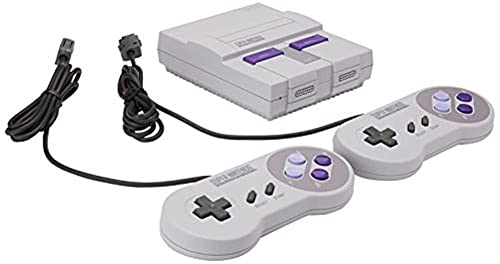
The retro-gaming side of the same history is easier to appreciate today with hardware like the Sega Genesis Mini or the Super NES Classic Edition, both of which recreate the pre-3D era that Nvidia's early products were racing against. The Sega Saturn — the console the original NV1 add-in card would have plugged into — was Sega's transitional 3D machine and is one of the most collectible retro consoles today precisely because of its historical role.
What Sega did with the money it saved by not renewing
Sega's decision to skip Nvidia for the Dreamcast is often cast as a mistake. It probably wasn't. PowerVR's SGX architecture in the Dreamcast was ahead of most consumer PC hardware in 1999-2000, and the Dreamcast itself was a technically brilliant machine that failed commercially for reasons unrelated to graphics silicon — market timing, retailer support and the looming PlayStation 2. Sega's next-gen strategy ultimately failed because Sony's PS2 marketing swamped it, not because PowerVR was worse than Nvidia would have been.
Nvidia's counterfactual — if Sega had renewed — is that Nvidia might have become locked into the console-supply business early and never developed the PC-first strategy that made it a graphics giant. In some ways Sega's non-renewal was Nvidia's second gift from the relationship, after the original $5M.
Broader lessons for 2026 AI hardware watchers
A few durable patterns emerge from this piece of history that apply to the current AI-hardware landscape:
- Small licensing deals can reshape trajectories. In 1996, $5M was the difference between Nvidia existing and Nvidia disappearing. Today, individual enterprise deals for AI training clusters can similarly reshape competitive positions among smaller AI chip startups.
- Being "wrong for the industry" is fatal, even if you're technically ahead. NV1's quadrilateral rendering was arguably more elegant than triangles for some rendering problems, but Direct3D standardized on triangles and everyone else lost. In AI, betting against the transformer architecture in 2026 carries similar risk.
- The pivot after failure is often the founding moment. Nvidia's identity as a GPU company came from pivoting away from a failed console-add-in strategy. Many current AI chip companies will similarly pivot after their first-product attempts fail.
- Long-term customer relationships persist through pivots. The relationship with Sega — different products, different generations, different eras — is still meaningful 30 years later even though the specific 1996 deal is ancient history.
The 3dfx-era hardware buyers in the room
Anyone who bought a Voodoo, Voodoo 2, Voodoo Rush or Voodoo3 in 1996-1999 has a specific perspective on this history that's worth flagging. The original Voodoo Graphics and Voodoo2 were pass-through 3D-only accelerators — they sat alongside a separate 2D card and only turned on during 3D games via a VGA loopback cable. That design worked brilliantly in 1996-1997 but hit a wall when the market wanted a single-card 2D+3D combo. 3dfx did integrate — the Voodoo Rush (1997) paired a Voodoo chipset with a third-party 2D chip on one board, and the Banshee and Voodoo3 (and later Voodoo4/5) were fully integrated 2D/3D cards with no loopback cable — but the Rush underperformed and the integrated follow-ups arrived after Nvidia had already seized the combo-card momentum.
Nvidia's RIVA 128 was that combo card. It handled 2D and 3D on one PCB. That integration decision, made possible by the Sega-funded architectural work, is the specific product feature that ultimately unwound 3dfx's market lead. By 1999 the RIVA TNT2 was outselling the Voodoo 3, and 3dfx's attempt to answer with the Voodoo 4/5 series arrived a full generation late.
Retro PC builders in 2026 recreating late-1990s systems (see the GeForce3 + Win98 SE build guide) still choose between these two lineages: a Voodoo-based build recreating the Glide-era games, or a RIVA/TNT2/GeForce build recreating the emerging Direct3D-era games. Both are valid — but only one lineage descended into the modern graphics cards you can still buy new today.
Where to read more
For a more detailed history of the pre-Nvidia and early-Nvidia era, Wikipedia's Nvidia article and the Nvidia corporate history page both cover the RIVA-era pivot and the RIVA/GeForce lineage. Community-maintained wikis of the 3D-accelerator wars era at Vintage Computing Federation and Retro Hardware forums have more granular technical history.
What this means for today's build recommendations
None of this changes the practical recommendation for a modern gaming build. The RTX 3060 12GB remains the entry-point CUDA card for esports; the Ryzen 5 5600G APU is the budget local-LLM path for AI hobbyists. But the retro-gaming side of the hobby is enriched by the history — collecting a Sega Genesis Mini or a working Sega Saturn is a small tribute to the era that literally funded Nvidia's survival long enough to become the company it is today.
The AI-era parallel: are Nvidia's current customers writing checks that will pivot them?
The 1996 Sega story is now often used as a rhetorical parallel in discussions of AI-chip startups in 2026 selling to a small number of very large customers. Google, Microsoft, Meta, Anthropic and OpenAI's collective spend on training silicon is enormous — enough that a single design win from one of these companies can materially change a chipmaker's trajectory the way Sega's $5M did for Nvidia. Rain AI, Cerebras, Groq, Tenstorrent and several less-public startups are all navigating variants of this pattern.
The lesson embedded in Nvidia's own history is that the "customer's engineering feedback" can be as valuable as the licensing check. Sega telling Nvidia that triangles were the future was arguably worth more than the $5M in cash. Modern AI-chip startups landing a large-customer design win should be reading that customer's architectural priorities as strategic input, not just as this-quarter's revenue.
Whether Jensen Huang's Tokyo visit surfaces any of this history explicitly is unclear. The pattern is clear enough that observers of the AI-hardware landscape are drawing the connection without needing him to.
Bottom line
Sega paid Nvidia roughly $5 million in 1996 for licensing rights to the NV1 architecture. That check bought Nvidia the runway to design the RIVA 128, the product that established the company in the PC 3D accelerator market. Sega then chose not to renew for the Dreamcast, freeing Nvidia to fully pivot to PCs. Both decisions — Sega's yes and Sega's no — turned out to be pivotal for the company that today dominates AI training infrastructure. Jensen Huang's 2026 Tokyo trip is being framed by some outlets as a nod to that history, though Nvidia's current Japan business dwarfs the 1996 arrangement by many orders of magnitude.
Related guides
- Best GPU for 1080p esports 2026 RTX 3060 12GB
- Build a 2001 GeForce3 + Win98 SE Gaming Rig
- Intel Arc B50 vs RTX 3060 12GB for Stable Diffusion
Citations and sources
- Nvidia corporate About page — official corporate history including early product timeline references.
- Nvidia Wikipedia article — community-maintained history covering the NV1, RIVA 128 and 3dfx acquisition.
- Nvidia Drive automotive platform page — reference for Nvidia's current Japan automotive partnerships.
This piece is editorial synthesis based on publicly available information. No independent first-party benchmarking is reported.