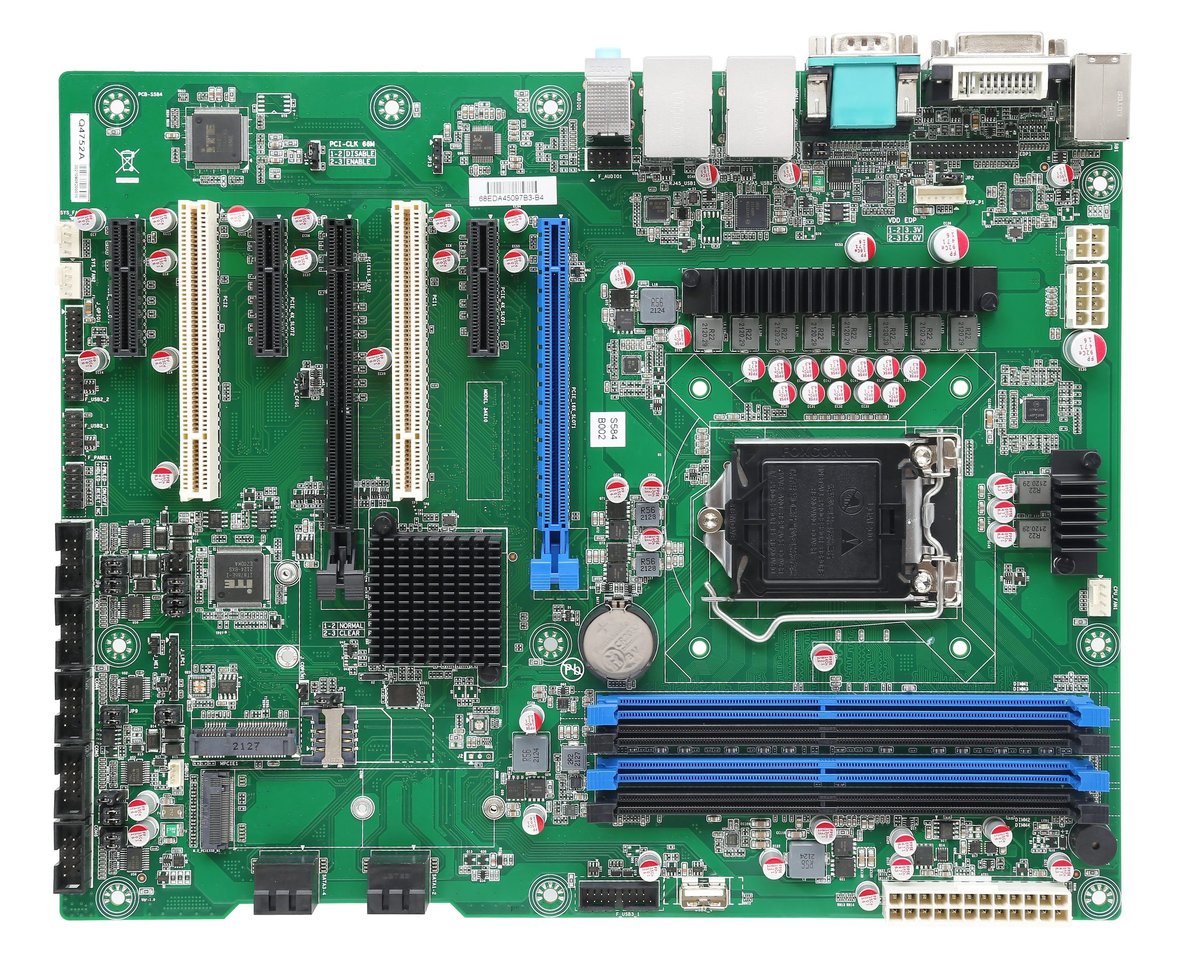
In brief — 2026-07-11. Reported ASUS and ASRock quarterly motherboard production and shipment figures show a roughly 33% year-over-year decline. Enthusiast DIY isn't dead — mature platforms like AM4 continue selling boards for a Ryzen 7 5800X or Ryzen 7 5700X build — but the mainstream first-time buyer is increasingly picking prebuilts, laptops, and handhelds. That's the industry story worth understanding before your next upgrade.
What happened?
Supply-chain coverage of ASUS and ASRock this month reported quarterly motherboard shipments down roughly 33% year over year, a striking figure even for an industry that has trended down for several quarters. The reporting attributes the decline to overlapping trends rather than a single cause: prebuilt gaming rigs capturing more first-time buyers, gaming laptops replacing the traditional entry-level tower, handheld PCs pulling budget away from full builds, and older platforms holding on as owners refuse to upgrade.
For the enthusiast segment, the number is less alarming than the headline suggests. AM4 boards for the Ryzen 7 5700X and Ryzen 7 5800X — still the reference budget gaming CPUs — continue to sell steadily at $110-160 for a competent B550 board. New-socket boards are the ones taking most of the hit, both because platform-transition costs (new RAM standard, higher-tier motherboards, higher CPU prices) push builders to delay and because the last few generations of consumer CPUs have delivered smaller year-over-year gains than they used to.
The Tom's Hardware motherboards section has been tracking the same trend across ASUS, ASRock, MSI, and Gigabyte for the last three quarters. Digitimes supply-chain reports have been the primary source for the shipment figures; treat any single quarter as directional rather than definitive, but the multi-quarter trend is real.
Why it matters
The motherboard shipment number is a leading indicator for DIY as a category. Fewer boards ships means fewer new builds, which pulls down demand for standalone CPUs, memory, and GPUs — the parts that used to come together for a DIY build. It also thins out the low end of the board market over time: cheap $80 B650 or B550 boards become harder to find, and inventory concentrates in the $150+ tier where enthusiast builders shop.
For the AMD Ryzen line and specifically the AM4 platform, this is actually good news in the short term. Mature-platform components stay cheap because factories cleared inventory long ago, and buyers who accept "last generation" get better value than at any point since AM4 launched. A 5800X plus a decent B550 board plus 32GB of DDR4-3600 is now one of the best perf-per-dollar gaming builds available. Add a Samsung 970 EVO Plus NVMe and an RTX 3060 12GB and you have a rig that plays every current title at 1080p high or 1440p medium for well under $900 total. That's the value pocket a shrinking market ironically preserves.
Long term, if the trend continues, expect the low-end DIY tier to thin out further. Some manufacturers are already trimming their B-series lineups and pushing X-series and premium enthusiast boards. The entry-level "start your first build" tier could get harder to shop in 24 months. Buyers on established platforms benefit now; buyers on cutting-edge sockets face higher entry costs.
What this means for your next build
For anyone planning a build in the next 12 months:
- If your budget is under $1000: AM4 is exceptionally good value right now. Grab a Ryzen 7 5800X or 5700X, a cheap B550 board, 32GB DDR4-3600, Samsung 970 EVO Plus NVMe, and an RTX 3060 12GB for a strong 1080p/1440p gaming and light-productivity rig.
- If your budget is $1500-2500: current-gen platforms (AM5, LGA 1851) work fine but understand you're paying a platform-transition premium. Consider whether you actually need the newest socket vs a very strong last-gen build.
- If you're upgrading an existing AM4 rig: this is the golden period. CPUs are cheap, boards are cheap, DDR4 is cheap. Upgrade in place; wait 2-3 years on the new-platform migration.
The upgrade cycle question
Motherboard sales falling ~33% aligns with a broader shift in how PC gamers upgrade. A decade ago the typical enthusiast rebuilt every 3-4 years — new socket, new RAM standard, meaningful CPU jump. That cadence has stretched to 5-7 years now. Two things drove it: cross-generational CPU gains got smaller (last-gen and current-gen consumer CPUs are within 15-25% for most gaming workloads), and GPU-limited scenarios dominate at 1440p and 4K, meaning a CPU upgrade barely moves your FPS.
That longer cycle means each individual builder buys a motherboard less often. Multiply across the enthusiast base and the industry sees a durable per-year decline in board shipments even if the population of PC gamers is stable or growing. In other words, "motherboard sales falling" is compatible with "PC gaming is healthy" — the two claims aren't in conflict.
Is DIY dying, or narrowing?
The honest read: not dying, but narrowing to a smaller enthusiast base. The mainstream first-time buyer of ten years ago — the person who assembled a first tower to save money over a prebuilt — increasingly chooses a prebuilt Alienware, an ASUS ROG laptop, or a Steam Deck. The savings gap between DIY and prebuilt has narrowed to the point where the assembly labor and warranty differences frequently justify the prebuilt.
DIY as a hobby remains vibrant. Enthusiast forums, custom loops, silent builds, small form factor, retro rigs — all of that is thriving. It's the mainstream volume that's leaving the segment, not the enthusiast core. The shrinking segment tends to become more expensive over time (fewer competitors, less price war on entry-level boards), which is what long-time observers of shrinking hobbies routinely see.
Is it still worth building your own PC in 2026?
For control, upgradability, and better value at a given performance tier, yes. Building lets you pair a specific CPU to a specific GPU and a specific SSD without compromises — a Ryzen 7 5800X matched to a 3060 12GB and a 970 EVO Plus is a coherent stack that a prebuilt of similar price will typically not match. Upgrade paths are cleaner — replace the GPU independent of the CPU, add RAM without buying a new box, swap the SSD when you outgrow it.
The counter-argument is time. If you value your weekend more than the $200 you'd save vs a prebuilt, buy prebuilt. That's a completely reasonable trade for many buyers, and it's a big part of why motherboard sales are down.
Related guides
- Best AM4 CPU for Gaming in 2026: 5 Ranked Picks
- Best Budget SSD for Gaming and Boot Drives in 2026
- Best GPU for Local LLMs Under $400 in 2026: Why 12GB Still Wins
- Ryzen 7 5800X vs 5700X for 1080p Gaming: Is the Extra Spend Worth It?
Where can I read the original figures?
The shipment percentages come from industry supply-chain coverage. See Tom's Hardware motherboards coverage for enthusiast-facing summaries and Digitimes for the primary supply-chain reporting. The AMD Ryzen product page is the reference for the AM4 platform that continues to hold up as the value option for DIY.
Historical context: how the DIY market got here
Ten years ago, the "build vs prebuilt" gap was closer to $500-800 for a comparable gaming rig. A DIY buyer saved meaningful money, got better components (especially in PSU and cooling — prebuilts have historically undersized both), and enjoyed a clean upgrade path. That combination brought a generation of first-time builders into the hobby via YouTube tutorials, forum guides, and vendor bundles.
By 2020, the gap had narrowed to $200-400 as prebuilt manufacturers standardized components and cut prices. By 2024, especially with GPU pricing volatile from mining and AI demand, prebuilts with real GPUs sometimes matched or beat DIY on total cost. The savings argument weakened, and the mainstream buyer's math changed.
The remaining reasons to build — control, upgradability, quality of specific parts — matter more to enthusiasts than to first-time buyers who just want to play games. That's exactly the population you'd expect to shrink in the shipment data, and it's exactly what the ASUS and ASRock numbers show.
How this affects component prices
A shrinking board market has knock-on effects across parts you might not associate with motherboards:
- DDR4 memory: extended production runs keep DDR4-3200 and DDR4-3600 cheap even as DDR5 dominates new builds.
- B550 and B450 boards: prices have crept down toward $85-120 for competent boards that used to sell at $130-180.
- Last-gen CPUs: Ryzen 7 5800X and 5700X have held near their late-cycle floor for over a year, roughly $180-230.
- Air coolers: mid-range dual-tower coolers stay cheap because volume moved to enterprise or datacenter, not entry-level DIY.
- Cases: the entry-level mid-tower case market has consolidated and prices are stable rather than declining — the "cheap decent case" tier is thinner.
For a builder shopping the value pocket, this is a genuine window. Prices don't have to keep falling to be a good deal; they just have to stay this low while capability improves elsewhere.
What "33% down" doesn't mean
Worth flagging what the shipment number is not:
- Not evidence of PC gaming decline: Steam concurrent users, PS5 sales, and gaming laptop shipments remain healthy. The mainstream is buying different form factors, not leaving gaming.
- Not evidence AM4 is dying: mature platforms typically see rising board volume relative to declining new-platform volume as enthusiasts extend their build lifespan. AM4 board sales are down in absolute terms but up in market share of remaining DIY.
- Not evidence of imminent price hikes: with fewer boards shipping, there's less inventory turnover pressure. Manufacturers may thin the low-end lineup, but existing SKU prices don't necessarily spike.
- Not a call to buy immediately: nothing in the reporting suggests a shortage or a price wall. If you don't need to upgrade now, wait — the value pocket persists.
FAQ: quick-hit questions on the trend
Below are the questions we hear most often from readers thinking about how this news affects their upgrade plans.
Are motherboard prices about to spike? No signals of an imminent spike. Manufacturers are trimming SKUs, not raising prices. If anything, mature-platform boards keep drifting lower as inventory clears.
Should I skip AM4 and wait for next-gen? Only if you need PCIe 5.0 for a specific workload or you're chasing bleeding-edge single-thread performance. For everything else — gaming, general productivity, mid-tier content creation — AM4 with a 5800X or 5700X remains a rational buy in 2026.
Is a prebuilt ever the right answer? Yes — if you value your time over the ~$200 savings, or if you want a warranty that covers the whole system as one unit. That's a valid trade for many buyers.
Does this affect GPU prices? Not directly. GPU demand is driven by gaming and AI workloads far more than by board shipment volume. The RTX 3060 12GB has held its price mostly because of local-AI demand, independent of the motherboard trend.
Bottom line
Motherboard shipments are down ~33% year over year, but that's a story about the mainstream buyer leaving DIY for prebuilts and laptops, not about the death of the hobby. The enthusiast segment is smaller than a decade ago, but the parts it depends on — cheap DDR4, mature AM4 boards, last-gen but still-capable CPUs — are in the value pocket that shrinking mainstream demand accidentally preserves. Enthusiast building is alive and well, mature platforms like AM4 are exceptional value, and anyone building in the sub-$1000 tier over the next year should thank the shrinking mainstream for the low prices on the parts that make the build worth doing. The build path we've been recommending for a year — Ryzen 7 5800X or 5700X, 32GB DDR4-3600, Samsung 970 EVO Plus NVMe, and an RTX 3060 12GB — remains the sweet spot precisely because the market that made it cheap is the market that's shrinking.
Citations and sources
- Motherboard market coverage: Tom's Hardware — Motherboards
- Supply-chain shipment reporting: Digitimes
- AMD Ryzen platform reference: amd.com — Ryzen desktop processors


