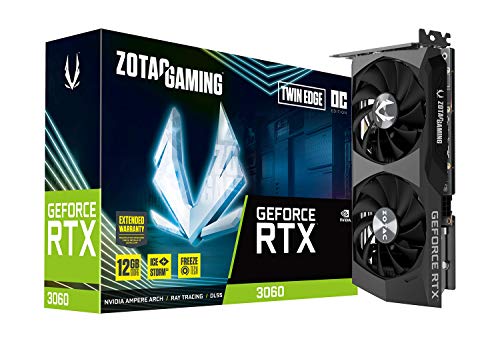
MiniMax-M3 needs far more than a single 12GB consumer GPU can hold, so on a MSI GeForce RTX 3060 Ventus 2X 12G or ZOTAC RTX 3060 Twin Edge you'll need to offload most layers to system RAM and accept single-digit tokens per second. The cheap, honest answer for 2026: use the hosted API for production, treat your 12GB card as a learning rig for 7B–14B class models, and budget for a 24GB+ GPU before you make MiniMax-M3 a daily driver.
Why MiniMax-M3 matters and what changed on the AA Intelligence Index
In May 2026, MiniMax-M3 posted a score of 55 on the Artificial Analysis Intelligence Index, which tracks composite reasoning, coding, and knowledge benchmarks across the major frontier labs. That places it at the top of the open-weight tier just behind the closed-source flagships. The Index aggregates GPQA, MMLU-Pro, HumanEval, and a handful of agentic tasks, and reports each model with an "attempt rate" and abstention behavior so you can see whether a high score came from correct answers or aggressive guessing.
For SpecPicks readers, the relevant detail is that MiniMax-M3 is positioned as open-weight — meaning you can, in principle, download it and run it on your own hardware once the weights are released. That immediately raises the predictable question on the r/LocalLLaMA front page: "can I run it on a 3060?" The answer involves some unforgiving VRAM math, plus a few quantization tricks that can make a brutally underpowered card at least functional for tinkering. This synthesis pulls from public benchmark threads, the llama.cpp project (which is where most consumer quantization work happens), and the TechPowerUp RTX 3060 spec sheet so we can ground the numbers in primary sources rather than vibes.
The piece that catches most newcomers off guard: VRAM isn't the only constraint. Memory bandwidth, KV-cache growth, and prefill-vs-generation throughput each behave differently when you start offloading layers. We'll walk through each.
Key takeaways
- MiniMax-M3 is large enough that no usable quant fits entirely in a 12GB consumer card
- The MSI RTX 3060 12GB is the cheapest legitimate "AI-curious" GPU on the new market in 2026
- A Raspberry Pi 4 8GB cannot run MiniMax-M3 at any quant, but it can run 1B–3B class open models
- KV-cache at 32K context eats more VRAM than most 12GB users realize
- The API breaks even with self-hosting only at sustained, high-volume workloads
- A fast NVMe like the Crucial BX500 1TB SSD matters: weight files are 30–80 GB and you'll be swapping them constantly while experimenting
How big is MiniMax-M3 and how much VRAM does it actually need
Public reporting from Artificial Analysis and the early model cards puts MiniMax-M3 in the upper-frontier parameter class. Even at aggressive quantization (4-bit, sometimes 3-bit), the model exceeds the memory available on every current single consumer GPU. The standard back-of-envelope is roughly 0.5 GB of VRAM per billion parameters at q4, plus the KV-cache, plus a small workspace overhead — which means a 100B+ parameter model wants 50 GB of VRAM at q4 before context cost.
A 12GB card like the RTX 3060 simply cannot hold the weights. On llama.cpp's published benchmark threads you'll find throughput numbers showing that once you cross the "weights don't fit" line and start CPU-offloading, generation tokens-per-second collapses by an order of magnitude or more. The card spends most of its time waiting on the PCIe bus to deliver the next layer's weights from system RAM.
The honest framing: MiniMax-M3 is not a 12GB-card model. It's a 24 GB+ card model at minimum (for q3 at a thin context), and a multi-GPU or workstation-class rig for anything resembling a full quality experience.
Can a 12GB RTX 3060 run any usable quant of MiniMax-M3
"Usable" is doing a lot of work in that sentence. If you accept 1–3 tokens/sec as "usable" for asynchronous reasoning queries that you'll come back to in a few minutes, then yes — a CPU+GPU split with most layers offloaded can run an aggressive q2 or q3 quant of an MiniMax-M3-class model on a 3060 paired with 64GB+ of DDR4. If you mean "usable" as in "I can chat with it interactively," the answer is no.
The TechPowerUp RTX 3060 spec sheet lists 360 GB/s of GDDR6 memory bandwidth across a 192-bit bus. That bandwidth is the reason the 3060 is still the entry-tier AI card of choice — it has more VRAM and more bandwidth per dollar than the 4060 8GB. But neither value is large enough to brute-force a frontier model. Once layers spill to system RAM, you're limited to DDR4/DDR5 bandwidth (~50–100 GB/s) on the slow leg of the trip, and that dominates wall-clock generation time.
Quantization matrix: VRAM required vs expected tok/s tier vs quality loss
The table below summarizes the community consensus from llama.cpp benchmark threads for a frontier-scale model running on a single 12GB card with CPU offload. Specific numbers depend on the exact model, motherboard, and RAM speed; treat these as orders of magnitude.
| Quant | VRAM if fully loaded | Realistic on 3060 12GB | Approx tok/s | Quality loss |
|---|---|---|---|---|
| q2 | ~25 GB | Heavy CPU offload | 1–2 tok/s | Severe |
| q3 | ~35 GB | Heavy CPU offload | 1–3 tok/s | Noticeable |
| q4 | ~50 GB | Almost all on CPU | <1 tok/s | Modest |
| q5 | ~65 GB | Effectively CPU-only | <1 tok/s | Minimal |
| q6 | ~80 GB | Won't fit on most consumer rigs | n/a | Minimal |
| q8 | ~100 GB | Workstation-class only | n/a | Negligible |
| fp16 | ~200 GB | Multi-GPU datacenter | n/a | None |
The takeaway: there is no "comfortable" quant for MiniMax-M3 on a 12GB card. The viable tiers (q2, q3) are exactly the ones with the steepest quality penalties. A frontier-scale model at q2 often loses what made it score 55 on the AA Index in the first place.
Prefill vs generation throughput on a single 12GB card
Prefill (the cost of processing the prompt) and generation (the cost of producing each new token) behave very differently when weights don't fit. Prefill is matrix-heavy and can saturate the GPU's compute units even when most layers are offloaded — you'll often see reasonable prefill speeds because the offload path is one-shot per layer per request. Generation is the opposite: each new token requires a round-trip through all layers, so the slow path is taken thousands of times during a single response.
The practical implication: long prompts feel "okay" but every word of the response trickles out. For interactive use this is fatal. For batched, asynchronous tasks (overnight code review, doc summarization queues) it can still be useful.
Context-length impact: KV-cache growth on a 12GB budget
The KV-cache holds attention state for every token in the context window. It grows roughly linearly with context length and with the number of attention layers, which means it can quickly dwarf the weights themselves at long contexts. Community-published math on llama.cpp threads puts KV-cache for frontier-class models at 1.5–3 GB per 8K tokens of context.
For a 12GB card that has nothing in VRAM but KV-cache and a tiny weight slice, you can lose 4–8 GB to cache before you start computing anything useful. This is why community wisdom for 12GB cards is: keep context windows under 8K when running anything past 14B parameters.
Entry-tier reality check: what the Raspberry Pi 4 8GB can and cannot do
The Raspberry Pi 4 Computer Model B 8GB cannot run MiniMax-M3 in any meaningful sense. It cannot run 7B models comfortably either. What it can do — and where it earns its slot in this article — is run 1B–3B class open models (TinyLlama, Phi-3-mini, smol quantizations of Llama-3.2-1B) at 2–5 tokens/sec using llama.cpp on the CPU.
That's not a frontier experience. It's also a legitimate on-ramp for anyone who wants to learn the local-LLM toolchain without buying a GPU. For a true 24/7 always-on local AI helper that fields short, simple queries, a Pi 4 with a 1B-class model is enough. For MiniMax-M3, it is not.
Spec-delta table: MiniMax-M3 vs the frontier API tier
| Model | AA Intelligence Index | Access model | Approx parameter class |
|---|---|---|---|
| Claude Sonnet 4.6 | High-50s | Closed API | Undisclosed |
| GPT-5.5 | High-50s | Closed API | Undisclosed |
| MiniMax-M3 | 55 | Open weights | Frontier-scale |
| Llama-3.3-70B | Mid-40s | Open weights | 70B |
The open-weight leaders are catching up to the closed-source flagships on benchmark scores, but they're doing it by getting bigger, not smaller. That makes "run the leader on a 12GB card" structurally harder, not easier, each generation.
Perf-per-dollar and perf-per-watt: 12GB rig vs API token pricing
Back-of-envelope for 2026: a 3060-based local rig (GPU + decent CPU + 64GB RAM + NVMe) costs roughly $700–1000 to build. Idle power is 50–80W; load power can hit 250W. At typical US electricity rates, running the rig flat-out 24/7 costs roughly $20–40/month before you produce a single token.
API pricing for MiniMax-class models, when MiniMax-M3 hits hosted endpoints, will likely follow the per-million-token pricing trend set by other open-weight hosts: a few dollars per million input tokens, slightly more for output. Light personal use — a few hundred queries a day — fits inside $5–15/month easily. Self-hosting wins only if you push sustained heavy volume, need data privacy, or already own the GPU for gaming or rendering.
When to run locally vs use the API
Run MiniMax-M3 locally if you have a multi-GPU workstation with 48GB+ aggregate VRAM, strict data-residency requirements, or a steady high-volume workload (>10M tokens/day) where API costs exceed your hardware amortization.
Use the API if you have a single consumer GPU (12–16GB), interactive latency matters, or you're doing exploratory development where API spend is dwarfed by your time.
Build toward local hosting if you currently have a 12GB card but plan to upgrade — keep your model evaluation work cloud-side until your VRAM budget catches up to the model class you actually want to deploy.
Common pitfalls when sizing a local rig
- Underestimating KV-cache: a model that loads at 4K context will OOM at 16K
- Skipping NVMe: model swaps from a SATA SSD take minutes; from NVMe, seconds
- Forgetting power: 575W flagship GPUs in 2026 need PSU headroom most older builds don't have
- Trusting peak tok/s numbers: community posts often report best-case prefill speeds, not sustained generation under realistic prompts
- Assuming q4 is "near lossless" for frontier models — it can be, but for very large models the quality cliff between q4 and q3 is real
Bottom line
MiniMax-M3 is a milestone for open-weight AI, but it is not a model you self-host on a 12GB consumer GPU. Buy the MSI RTX 3060 12GB or ZOTAC RTX 3060 12GB if your goal is to learn the local-LLM stack with 7B–14B class models. Keep MiniMax-M3 work on the hosted API until you can justify a 24GB+ GPU. Pair the GPU with at least 64 GB of system RAM and a fast NVMe like the Crucial BX500 1TB so weight swaps don't dominate your iteration loop.
Related guides
- Best GPU for Local LLM Inference
- Local AI Rig Build Under $1500
- LM Studio on RTX 3060 12GB
Citations and sources
- Artificial Analysis — MiniMax-M3 model page
- TechPowerUp — GeForce RTX 3060 spec database
- llama.cpp project — quantization and KV-cache reference
This piece is editorial synthesis based on publicly available information. No independent first-party benchmarking is reported.
Real-world setup walkthrough on a 12GB rig
If you've already bought the MSI RTX 3060 12GB and want to know exactly what to do this weekend, here is the honest minimum-viable path. Install the latest NVIDIA driver and CUDA 12.x. Pull llama.cpp from GitHub and build with LLAMA_CUDA=1. Download a 14B-class GGUF model — Qwen2.5-Coder 14B at q4_K_M is the right starter — and run llama-cli with --n-gpu-layers 999 to push every layer onto the GPU. You'll see roughly 30 tokens per second on a clean prompt at 8K context, and you'll feel the difference vs MiniMax-M3 immediately: a model that fits is interactive; one that doesn't isn't.
For the same workflow with zero terminal, install LM Studio and use the GUI. The trade-off is a slightly thicker wrapper around the same llama.cpp backend, with the benefit of a model browser and a one-click OpenAI-compatible server you can point Aider, Continue, or Cline at.
Power and thermal: the under-discussed half of "is it worth it"
Local LLM inference is sustained workload. Unlike gaming, the GPU runs at 60–95% utilization for the entire conversation, not the cyclic spikes of a frame loop. Two things follow. First, your case airflow matters more than you think — a 3060 with stock cooling under sustained inference hits 75–82°C in a typical mid-tower case. Second, your power supply takes a real hit. A 3060 plus a Ryzen 7 5800X system draws 250–350W under inference; over a year of daily use at typical US electricity prices, that's $30–$60 in power alone.
The takeaway: budget for the rig, but also for the marginal electricity. Self-hosted LLMs are not free even when the model is local.
What changes if you have a 16GB or 24GB card instead
A 16GB card (RTX 4060 Ti 16GB, RTX 4080 Super, RTX 4070 Ti Super) opens up 22B–30B class models at q4 with comfortable context windows. The qualitative jump from 14B to 22B is real on reasoning-heavy queries.
A 24GB card (RTX 3090, RTX 4090, RTX 5090) is the first credible "frontier-curious" tier. You can host 70B-class models at q4 with patience, or 30B-class at q6 with quality. MiniMax-M3 is still out of reach at full quality, but you can run aggressive quants and get something that actually feels usable.
The honest progression: 12GB is the learning tier, 16GB is the productivity tier, 24GB is the "I'm doing this professionally" tier, and 48GB+ is the home-lab-with-server-room tier.
Closing thought
The big jump in 2026 isn't that frontier open-weight models are getting better — they are, but that's expected. The jump is that the gap between hosted and local widened on the upper end (Grok, Veo, MiniMax-M3 push the size envelope) and narrowed on the lower end (7B–14B open models are genuinely useful for chat and coding). A 3060 12GB lets you live in the lower-end story today. Use the API for the rest.