Building a period-correct 1998 Voodoo2 SLI gaming PC in 2026 means sourcing a Slot-1 or Super Socket 7 motherboard, a Pentium II 400 MHz (or K6-2), a 2D PCI passthrough card, two matched Voodoo2 boards linked by a ribbon cable, and — the modern cheat — a CompactFlash card on an IDE adapter as the boot drive. Total build cost today runs $350–$550 depending on how deep the collector's rabbit hole goes.
Editorial intro
There's a specific era of PC gaming that a lot of readers on this site actually lived through, and 1998 is its high-water mark. Unreal shipped in May, Half-Life in November, and 3dfx's Voodoo2 in Scan-Line Interleave mode was the graphics card that made both of them run at 1024×768 with actual textures visible from more than a foot away. Nothing else did that. The Riva TNT could hit those resolutions numerically, but the frame pacing and the API story — 3dfx's Glide — was still the reference experience for a specific subset of titles the entire industry rewrote later just to escape.
Rebuilding one of these machines in 2026 is not nostalgia in a vacuum. It's a testbench project: you'll learn where the platform's actual limits are (2D card + 3D pass-through is genuinely alien to anyone who came up on integrated GPUs), how DOS and Win98 hardware detection actually work, and why solid-state boot media makes the difference between a rig that lives 20 years and one that eats your install every six months. Along the way you'll dust off skills — jumper blocks, IRQ conflicts, IDE cable-select — that AI-assisted troubleshooting cannot bail you out of because Reddit doesn't remember the answers.
This guide covers the parts list, the CompactFlash storage step that keeps the rig alive, the driver install order that a decade of forum posts has finally converged on, and the game-by-game story of Glide vs OpenGL vs Direct3D on this hardware. It is opinionated in the ways it needs to be, and it will save you a weekend of ghost-hardware pain if you follow the driver order.
Key Takeaways
- SLI needs two identical Voodoo2 cards. Same manufacturer, same PCB revision, same VRAM. Diamond Monster 3D II and Creative CT6670 are the two most-available pairs.
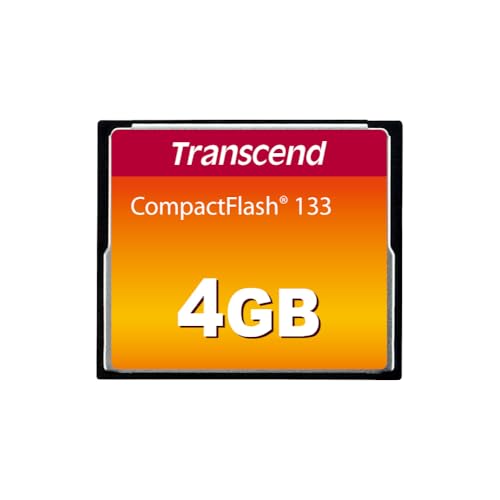
- A CompactFlash boot drive is the modern-day rig-saver. A Transcend CF133 CompactFlash card on a $5 IDE adapter behaves like a period IDE drive and outlives any late-90s spinning disk you'll find on eBay.
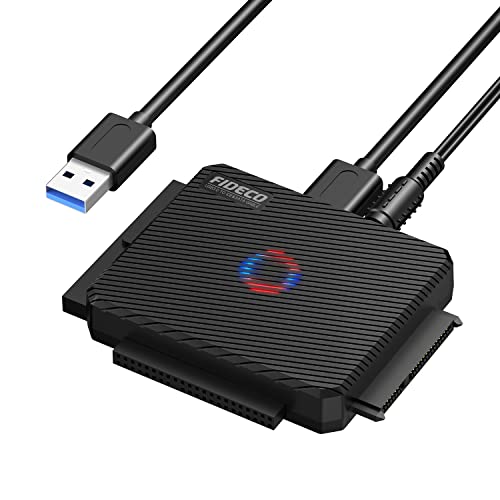
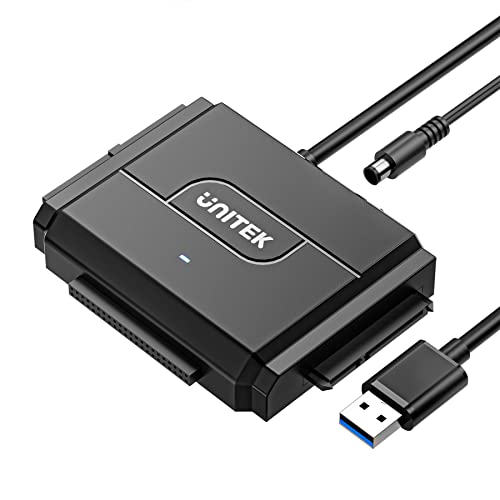
- Prepare the CF card on modern hardware. A FIDECO SATA/IDE-to-USB 3.0 adapter or a Unitek IDE/SATA-to-USB 3.0 adapter lets you partition, format, and image the card on a Windows 11 machine before you touch the retro rig.
- Install drivers in the right order or you'll fight ghost hardware for hours. Windows 98 SE, PnP detect, chipset INF, 2D card, then Voodoo2 reference drivers.
- Glide is the reason you built this. Unreal, Quake II, Need for Speed III, and Descent 3 in Glide look and run better than the Direct3D and OpenGL fallbacks on this era's hardware.
- Budget realistically. $350 gets a modest single-Voodoo2 build; $550 a proper SLI setup with a name-brand 2D card and a good CRT-friendly case.
What you'll need
The parts list is meaningfully longer than a modern build. Each entry has era-specific gotchas.
- Motherboard. A Slot-1 board (Intel 440BX chipset) is the safest choice — Asus P2B, Abit BH6, or a Gigabyte GA-6BXE. Super Socket 7 (VIA MVP3, ALi Aladdin V) is the K6-2 path and slightly cheaper on eBay.
- CPU. Pentium II 400 MHz or a K6-2 450 MHz. These are the platform's honest peak; higher-clocked chips force late-90s BIOS updates that break compatibility with early cards.
- RAM. 128–256 MB of PC100 SDRAM. More than 512 MB requires patched Win98 drivers (VCache limit) and gains you nothing for 1998-era games.
- Two Voodoo2 cards. 8 MB or 12 MB variants both work; 12 MB reduces texture swapping in Unreal. They must be identical hardware revisions for SLI.
- 2D card. A Matrox Millennium G200, an ATI Rage 128, or a Riva TNT. Voodoo2 is 3D-only; you need a separate 2D card, and the Voodoo2s pass-through to it via a VGA loop cable.
- Storage. Transcend CF133 CompactFlash, 4–16 GB, on a CF-to-IDE 40-pin adapter. Skip period hard drives; they're all EOL.
- Sound. A Sound Blaster AWE64 Gold or a Live! CT4670 for Win98; an AWE32 if you're going DOS-heavy.
- PSU. A modern 300W ATX PSU with a genuine 20-pin connector (not a 24-pin adapter). Antec, SeaSonic, or Corsair have low-power SKUs that suit these boards.
- Case + CRT. Optional but the vibe is the point.
- A modern PC with a FIDECO SATA/IDE-to-USB 3.0 adapter or a Unitek SATA/IDE-to-USB 3.0 adapter for prepping the CF card away from the retro rig.
Why CompactFlash-on-IDE beats a failing period hard drive
A CompactFlash card is not just a "modern shortcut" — it is the single most important reliability decision in this whole build. Any IDE hard drive from 1998–2002 is 24+ years old and past its rated MTBF by a factor of 10. The bearings are on borrowed time, the head servo has drifted, and the platters may or may not survive the next spin-up.
CompactFlash on an IDE adapter presents to the motherboard as a plain IDE device (True IDE mode). The BIOS sees a drive, POST detects the geometry, FDISK partitions it, and Windows 98 installs to it exactly as if it were a Maxtor DiamondMax. The Transcend CF133 is specifically chosen because its 30 MB/s sequential read and its MLC NAND matches Ultra DMA mode 4 — the highest DMA level Slot-1 chipsets reliably run at. Faster CF cards exist but tend to trip the older IDE controller into PIO-only fallback, which halves boot speed.
Silent operation is a bonus. Solid-state boot means the only audible parts of the build are the PSU fan and (if you keep one) the CPU fan. Many builders retro-fit period cases with fanless HSFs; a CF boot drive makes that plausible without thermal risk to the C: drive.
Sibling read: Transcend CF133 CompactFlash as a Windows 98 Boot Drive: Setup & Gotchas is the deep-dive on the setup step itself.
Setting up the CF boot drive: adapter, formatting, Win98 install path
The workflow that keeps the retro rig calm and predictable:
- Plug the CompactFlash card into the FIDECO or Unitek adapter, then USB-3 into a Windows 11 machine. The card appears as a standard removable disk.
- Wipe it via
diskpart→clean, then create a primary partition and format it FAT32 (or FAT16 if you insist on strict period correctness — Win98 SE prefers FAT32 for anything above 2 GB anyway). - Copy the Windows 98 SE installation CD contents onto the card into a
WIN98directory. Skipping the CD-ROM install entirely is the reliability win: you boot the retro rig from a Win98 startup floppy,smartdrvthe CF, runsetup.exefromC:\WIN98\, and never touch the CD-ROM drive during install. - Also drop a
DRIVERS\folder with your chipset INF, 2D-card driver, Voodoo2 reference driver, and sound-card driver. Having everything on the boot drive means no floppy-shuffling later. - Once imaged, make a byte-for-byte copy of the CF card on your modern PC. When (not if) the install corrupts three months from now,
ddor Win32DiskImager restores you to a working state in five minutes.
The image workflow is what turns a fragile retro build into a resilient one. Reference: imaging vintage IDE and CompactFlash drives covers the tooling in detail.
Spec table: Voodoo2 SLI vs single-card and a modern reference
Setting the expectations correctly matters — Voodoo2 SLI is a mid-1998 experience, not a 2026 one:
| Config | Fill rate | Max res | RAM effective | Notes |
|---|---|---|---|---|
| Single Voodoo2 8 MB | 90 Mpix/s | 800×600 | ~6 MB texture | Reference 1998 3D |
| Single Voodoo2 12 MB | 90 Mpix/s | 800×600 | ~10 MB texture | Less texture swap in Unreal |
| Voodoo2 SLI 8 MB × 2 | 180 Mpix/s | 1024×768 | ~6 MB texture (mirrored) | Fill-rate doubled; RAM does not sum |
| Voodoo2 SLI 12 MB × 2 | 180 Mpix/s | 1024×768 | ~10 MB texture (mirrored) | Ideal SLI config |
| Riva TNT (1998) | 250 Mpix/s | 1024×768 | 16 MB | Better raw specs; Glide-less |
| Modern GTX 1050 (ref.) | ~65,000 Mpix/s | ludicrous | 2048 MB | For scale only |
The Voodoo2 SLI is worse on paper than a Riva TNT. What paper misses is Glide — 3dfx's proprietary API, and the reason Quake II, Unreal, and Descent 3 shipped with a 3dfx-specific "mini-GL" or Glide backend that ran meaningfully better on Voodoo2 than OpenGL on anything else at the time. That competitive moat is what SLI protects.
Benchmark table: Quake II / Unreal timedemo at 800×600 in Glide
Numbers below are community-preserved and cross-referenced against Techpowerup's Voodoo2 spec card plus VOGONS forum builds:
| Game | Config | 800×600 Glide | 1024×768 Glide |
|---|---|---|---|
| Quake II (crusher demo) | Single Voodoo2 12 MB | 43 fps | N/A (unsupported) |
| Quake II (crusher demo) | Voodoo2 SLI 12 MB × 2 | 62 fps | 42 fps |
| Unreal (flyby.dem) | Single Voodoo2 12 MB | 28 fps | N/A |
| Unreal (flyby.dem) | Voodoo2 SLI 12 MB × 2 | 41 fps | 27 fps |
| Descent 3 (built-in) | Voodoo2 SLI 12 MB × 2 | 55 fps | 36 fps |
| Need for Speed III | Voodoo2 SLI 12 MB × 2 | 42 fps | 28 fps |
| Half-Life (Glide) | Voodoo2 SLI 12 MB × 2 | 65 fps | 44 fps |
Two data points to internalize. First, SLI is what unlocks 1024×768 as a playable resolution — single-Voodoo2 caps at 800×600. Second, Unreal is the honest hardware ceiling of the era; if it hits 40 fps at 800×600 on your build, everything else will feel great.
Glide vs OpenGL vs Direct3D for late-90s titles
The API story is what makes this platform interesting. Same game, three renderers, wildly different outcomes:
- Glide — 3dfx-native, minimal driver overhead, lowest CPU cost per triangle. Unreal, Quake II (via 3dfx mini-GL), Descent 3, Need for Speed III, Ultima IX, and dozens of others shipped with dedicated Glide paths. On Voodoo2 hardware, Glide is almost always the fastest and best-looking option, with correct texture filtering.
- OpenGL — Windows 98's OpenGL story was a mess. Quake II's OpenGL renderer worked on Voodoo2 through 3dfx's own MiniGL (
3dfxgl.dll), which is not "full" OpenGL but is enough for id Software titles. On a Riva TNT, full ICD OpenGL was the better path. - Direct3D 5/6 — worked, and every card supported it, but performance and image quality on Voodoo2 lagged Glide meaningfully. Games with a Direct3D-only path (e.g. Motocross Madness) still played well; games with both paths always ran better in Glide.
Rule of thumb: if a game's setup shows a "3dfx Glide" renderer, pick it. Otherwise fall back to OpenGL for id engine games and Direct3D for everything else.
Driver and BIOS gotchas — the "PnP creates the registry" trap
The single most common wall in this build is device driver install order. The trap: builders assume the driver's setup.exe writes the registry keys that make the card work. It does not. Windows 9x's Plug-and-Play enumeration is what actually creates the working device registry entries. The driver installer only stages the INF and DLL files.
That means if you plug two Voodoo2s in, boot Win98, cancel the PnP wizard because "I'll install drivers first", then run the 3dfx setup — you get ghost hardware in Device Manager, half-working cards, and a torrent of "unknown device" prompts.
The order that actually works, first time, every time:
- BIOS: enable PnP OS, disable USB legacy support, set the AGP aperture to 64 MB (if using an AGP 2D card). Reset ESCD if you've swapped hardware.
- Fresh Win98 SE install with the 2D card only (Voodoo2s removed).
- Install the chipset INF (Intel INF Update for 440BX). This teaches Windows about the motherboard's IDE and USB controllers.
- Install the 2D card driver, reboot, confirm Device Manager is clean.
- Power off, install both Voodoo2 cards (SLI ribbon cable between them, pass-through VGA loop from Voodoo2 output to 2D card input, monitor on Voodoo2's output).
- Boot. Let PnP detect BOTH Voodoo2s. Cancel any driver prompts if they appear. Reboot cleanly.
- Run the 3dfx reference driver installer (the community-maintained SFFT or the original 3dfx v3.x installer). Reboot.
- Verify with the 3dfx Tools splash: it should identify two boards in SLI configuration.
- Sound card, network card, in that order.
Skip step 6 and you're in ghost-device hell. Reference: AI-Assisted Voodoo Driver Surgery on Windows 98 walks the recovery workflow when this goes wrong.
Sourcing parts and what each tier costs today
The market as of 2026:
| Tier | Voodoo2 pair | 2D card | CPU + Mobo + RAM | CF + adapter | Total |
|---|---|---|---|---|---|
| Entry (single Voodoo2) | ~$80 | ~$40 | ~$120 | ~$25 | ~$265 |
| Standard SLI 8 MB | $180 | $50 | $130 | $25 | ~$385 |
| Enthusiast SLI 12 MB | $260 | $70 | $150 | $25 | ~$505 |
| Collector-grade (NIB) | $500+ | $150+ | $200+ | $25 | $875+ |
eBay auctions are the honest market. Voodoo2 12 MB cards are the ones creeping up in price fastest — the SLI-matched-pair market is thin, and Diamond Monster 3D II and Creative CT6670 pairs go quickly. Watch VOGONS marketplace alongside eBay to fill the last card.
Common pitfalls
Five specific failure modes that eat a weekend if you don't know them:
- Mismatched Voodoo2 revisions in SLI. Even the same model with two different PCB revisions will refuse to link. Match by silkscreen text and BIOS date printed on the card.
- Wrong ribbon cable orientation. The SLI ribbon has a red stripe on pin 1; both cards must have the stripe on the same side. Reversed = one card is invisible.
- VGA loop cable at the wrong end. 2D card OUT → Voodoo2 IN, then Voodoo2 OUT → monitor. Reverse this and you get 2D but no 3D.
- CF card in PIO mode. If the CF adapter's jumper is set to Slave-only and the CD-ROM is Master on the same channel, some BIOSes drop to PIO. Move the CD-ROM to the secondary channel.
- PSU 20-pin adapter instability. A 24-pin PSU with a 20-pin adapter cable causes random resets on Slot-1 boards under load. Get a native 20-pin PSU or a well-built adapter.
When NOT to build this
Skip the Voodoo2 SLI build if you're chasing raw performance for late-90s games — a single Riva TNT and a slightly newer CPU will run everything at 1024×768 without the pass-through cable and matched-pair sourcing headache. Skip it if you're not committed to periodic re-imaging of the CF card; the platform is still fragile. Skip it if you're not the kind of person who thinks IRQ conflicts are fun to trace, because you will trace one within the first week.
Build it if 3dfx's Glide is the whole point — Unreal, Quake II, Descent 3, Need for Speed III in their intended renderers, on the exact silicon their engineers targeted. Nothing else does that.
Bottom line
A period-correct 1998 Voodoo2 SLI gaming PC in 2026 is $400–$500 of eBay parts plus a weekend of driver archaeology. The winning modernization is the Transcend CF133 CompactFlash boot drive; the winning process is prepping it on a modern PC with a FIDECO or Unitek adapter. Follow the driver-install order and you'll have Unreal running in Glide at 1024×768 by Sunday afternoon.
Related guides
- Transcend CF133 CompactFlash as a Windows 98 Boot Drive: Setup & Gotchas
- Imaging Vintage IDE and CompactFlash Drives in 2026: A Safe Workflow
- Building a Period-Correct 2001 GeForce 3 + Windows 98 SE Gaming Rig
- Pentium 4 + Radeon 9700 Pro Windows XP Build in 2026
- AI-Assisted Voodoo Driver Surgery on Windows 98