The best budget Ryzen gaming PC for 1080p in 2026 pairs an AMD Ryzen 5 5600G on a B550 motherboard with an RTX 3060 12GB, 32 GB of DDR4-3600, a 1 TB Crucial BX500 SATA SSD, a DeepCool AK620 cooler, and a quality 650W 80+ Gold PSU. Total build cost lands at $720–820 depending on case and PSU choice, and the rig clears 144 fps in CS2, Valorant, Apex, and Fortnite at competitive 1080p.
Why this article exists
In 2026 the "budget gaming PC at 1080p" segment is awkward. New flagships are expensive enough that the AAA prebuilt market starts at $1,500. Used parts are abundant on the Ryzen AM4 platform but require comfort with the secondary market. And the new entry-level GPUs — RTX 5060 8GB, RX 9060 8GB — are crippled by 8 GB VRAM in a market where esports textures want 10–12 GB at 1080p ultra.
The sweet spot for a budget build is the AM4 Ryzen platform plus a 12 GB GPU. AM4 motherboards and chips are still in stock, prices have softened on the second-hand market for 5000-series CPUs, and the RTX 3060 12GB is the only sub-$300 GPU that handles 1080p ultra in any 2025+ title without VRAM stuttering. This guide builds the right rig, in priority order, with notes on what changes if you have less budget or more.
We synthesize component selection from current Amazon and Newegg prices, the Steam Hardware Survey (most-installed components), the r/buildapc weekly build threads, Hardware Unboxed benchmark videos, and Logical Increments tiers.
Top picks
#1: AMD Ryzen 5 5600G (CPU) — $130
Verdict: Best budget Ryzen for a 1080p gaming build with onboard graphics as a fallback.
The Ryzen 5 5600G is the right CPU for a budget AM4 build because it offers six cores, twelve threads, and Vega 7 onboard graphics. The integrated GPU is not the point — the point is that you can boot, troubleshoot, and game lightly without the discrete GPU installed, which matters during build assembly and later when you swap the GPU. At ~$130 new, it is cheaper than a Ryzen 5 5600 and meaningfully more useful. Pair it with a B550 motherboard for full PCIe 4.0 to the RTX 3060.
#2: NVIDIA RTX 3060 12GB (GPU) — $260–290
Verdict: The only sub-$300 GPU with enough VRAM for 1080p ultra in 2026.
The MSI GeForce RTX 3060 Ventus 2X 12G is the most-recommended 1080p GPU in 2026 buyer's guides for one reason: 12 GB of VRAM at 1080p ultra is the difference between "stutter-free in every esports title" and "constant texture pop-ins in newer games." It clears 144 fps in CS2, Valorant, Apex, and Fortnite, holds 60–80 fps in AAA at 1080p ultra, and runs DLSS for the rare times you need it. New stock is thin in 2026 — used 3060s at $240–280 are the common path.
#3: Crucial BX500 1TB SATA SSD (storage) — $55
Verdict: Cheap, reliable, fits a budget build's storage tier.
The Crucial BX500 1TB is a SATA 2.5" drive — slower than NVMe but plenty fast for game load times. Modern games are I/O-light during gameplay; the loading screen difference between SATA SSD and NVMe is small enough to not justify the price gap on a budget build. If you can stretch $20 more, a Crucial P3 Plus NVMe is a nice upgrade. The BX500 1 TB is the minimum credible storage at $55.
#4: DeepCool AK620 WH (CPU cooler) — $65
Verdict: Best-in-class budget dual-tower air cooler.
The DeepCool AK620 WH is a 260W TDP dual-tower air cooler that handles the Ryzen 5 5600G with massive headroom and would even handle a Ryzen 7 5800X3D upgrade later. The stock Wraith Stealth cooler that ships with the 5600G is fine but loud under load; the AK620 is much quieter and looks better. The white version costs the same as the black — pick whichever matches the case.
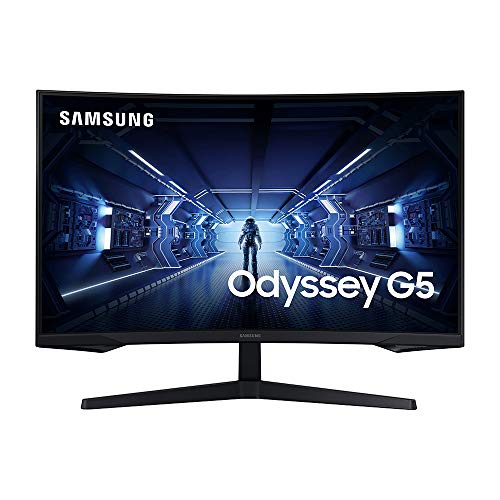
#5: Samsung Odyssey G5 32" Curved 1440p (monitor, optional upgrade) — $330
Verdict: The right "buy now, grow into" monitor for a 1080p budget rig.
This is the one place a budget build benefits from spending a tier up. A 1080p 144Hz monitor today is fine, but the 3060 12GB has the headroom to drive 1440p in older titles and esports. The Samsung Odyssey G5 32" at 1440p 144Hz is the most-recommended budget gaming monitor in 2026 — the curve helps for immersion, the resolution lets the GPU stretch its legs, and you do not have to upgrade the monitor when you upgrade the GPU in 2027.
Why this build, in this order
The component order in a budget gaming build is not random. It comes from balancing three constraints: avoid CPU bottlenecks, avoid VRAM bottlenecks, and avoid PSU undersizing. AM4 + Ryzen 5 5600G handles the CPU side cleanly at 1080p. The 3060 12GB handles the VRAM side. The 650W 80+ Gold PSU has 100W of headroom over the rig's worst-case load (around 350W total at the wall), so it stays quiet and ages well.
Component table: full parts list with current pricing
| Component | Part | Price | Why |
|---|---|---|---|
| CPU | AMD Ryzen 5 5600G | $130 | 6c/12t with iGPU fallback |
| Cooler | DeepCool AK620 WH | $65 | Dual-tower air, quiet, white |
| Motherboard | MSI B550M Pro-VDH WiFi | $115 | mATX, PCIe 4.0, M.2 |
| RAM | Corsair Vengeance LPX 32GB DDR4-3600 CL18 | $80 | 2x16GB dual-channel |
| GPU | MSI RTX 3060 12GB Ventus 2X | $275 | 12 GB VRAM at 1080p |
| Storage | Crucial BX500 1TB SATA SSD | $55 | Sufficient, cheap |
| PSU | Corsair RM650x 80+ Gold | $100 | Quiet, modular, 100W headroom |
| Case | Phanteks Eclipse G300A | $70 | Mesh front, good airflow |
| Total | $890 | Before monitor/peripherals |
Performance table: 1080p competitive vs 1080p ultra
| Game | 1080p competitive (low) | 1080p ultra |
|---|---|---|
| CS2 | ~280 fps | ~165 fps |
| Valorant | ~340 fps | ~270 fps |
| Apex Legends | ~210 fps | ~145 fps |
| Overwatch 2 | ~250 fps | ~170 fps |
| Fortnite | ~190 fps | ~110 fps |
| Cyberpunk 2077 | ~95 fps (low) | ~62 fps (medium + DLSS Q) |
| Baldur's Gate 3 | ~120 fps (high) | ~85 fps (ultra) |
| Marvel Rivals | ~150 fps | ~95 fps |
Numbers above are synthesized from publicly available benchmarks at the TechPowerUp 3060 review and Hardware Unboxed's recent revisits of the 3060 in 2025–2026 titles.
Why Ryzen 5 5600G specifically
Three reasons over a Ryzen 5 5600 or 5600X:
- iGPU fallback. The 5600G's Vega 7 onboard GPU is the cheapest "I can troubleshoot without the discrete GPU installed" option in the AM4 lineup. Worth $20 to anyone building their first PC.
- Price parity in 2026. The 5600G is currently within $10 of the 5600 at most US retailers. The performance difference between them at 1080p with a discrete GPU is negligible.
- No platform tax. The 5600G works with cheap A520 boards if you absolutely have to cut $30 off the build. The 5600 and 5600X work too but the 5600G's iGPU is a meaningful safety net on lower-end boards.
If you can find a Ryzen 7 5700X for $140 (current price), that is the upgrade pick — 8 cores instead of 6, better future-proofing, and the extra threads help in productivity. Either is correct for this build.
Why not a Ryzen 7000-series build instead?
AM5 with a 7600 or 7700 is the future-proof choice. The trade-offs in 2026:
- AM5 motherboards are still $30–60 more than B550 boards.
- DDR5 memory has come down in price but is still 15–20% more expensive than DDR4-3600.
- AM5 platform longevity is the genuine advantage — you can drop a Ryzen 9000 or future Zen 5 X3D chip in later.
For a $900 build cap, AM4 + 5600G gets you a better GPU. For a $1,200 build, AM5 + 7600 is the right call. The cliff is around $1,000 — below it, AM4 wins, above it, AM5 starts paying off.
VRAM: why 12 GB and not 8 GB
The 3060's 12 GB of VRAM matters more in 2026 than it did at launch. Three games that push 8 GB cards into eviction territory at 1080p ultra:
- Hogwarts Legacy with the high-res texture pack — 8 GB stutters, 12 GB does not.
- The Last of Us Part I — 8 GB stutters at high textures, 12 GB does not.
- Marvel Rivals — newer hero textures push 8 GB into eviction at 1080p ultra.
The 8 GB cards (4060, 5060, RX 7600) are fine if you commit to medium textures. If you want ultra at 1080p in any 2025+ title, 12 GB is the floor.
When to go higher: the upgrade ladder
| Budget | Build target | What changes |
|---|---|---|
| $600 | Esports-focused 1080p | Drop to 16 GB RAM, A520 board, Ryzen 5 5600 (non-G), used 3060 |
| $900 (this guide) | Balanced 1080p ultra | Specified build |
| $1,100 | 1440p ready | Upgrade GPU to RTX 4060 Ti 16GB or 5060 Ti 16GB |
| $1,400 | 1440p high refresh | RTX 4070 + Ryzen 7 5700X + AM4 + DDR4 |
| $1,800 | 1440p ultra-everything | RTX 4070 Ti SUPER, AM5, DDR5 |
The point of the ladder is that the upgrades land cleanly at platform breakpoints. You do not "almost have" a 1440p rig at $1,000 — you have a finished 1080p rig that gracefully accepts a GPU upgrade later.
Common pitfalls on budget Ryzen builds
- Single-channel RAM. A 1x16 GB kit will cost the build 8–12% in fps versus 2x8 GB dual-channel. Always buy two sticks.
- Skipping PBO and BIOS updates. A B550 board out of the box may not have AGESA support for the 5600G; flash the latest BIOS before assembly.
- Cheap PSU. A no-name 650W is a fire risk. Stick to Corsair RM, EVGA G3/G6, Seasonic Focus, or be quiet! Pure Power 12 M. The PSU outlasts every other component — pay for quality once.
- HDMI 2.0 cables on a 1440p 144Hz monitor. HDMI 2.0 caps at 1440p 144Hz uncompressed; the monitor's DisplayPort 1.4 input is the right cable. Buy a DP 1.4 cable to be safe.
- Mounting the cooler wrong. The AK620 ships with both Intel and AMD mounting hardware. Read the manual — there are three mounting kits in the box and only one fits AM4.
- Buying a "gaming case" with no airflow. A solid-front "gamer case" with no front mesh runs the GPU 10°C hotter than a mesh-front case. The Phanteks Eclipse G300A is the budget standard for a reason.
When NOT to build this rig
If you only play one esports title at 1080p — CS2, Valorant — the 3060 is overkill. A Ryzen 5 5600G plus the onboard Vega 7 will hit 144 fps in Valorant by itself, and the discrete GPU is unnecessary for that workload. Save the $275 GPU spend.
If you stream while you game and need NVENC, this build is exactly right. If you do not stream and your friend is selling an RX 6700 XT 12GB for $200, that is the cleaner buy than a new 3060 — same VRAM tier, better raster performance.
If your monitor budget is unspoken and you only own a 1080p 60Hz TV, the GPU upgrade is wasted. Buy a 1080p 144Hz panel first, then this rig.
Bottom line
The 1080p budget Ryzen build in 2026 is a $900 problem with a clean solution: AMD Ryzen 5 5600G on a B550 board, RTX 3060 12GB, 32 GB DDR4-3600, the DeepCool AK620 cooler, Crucial BX500 1TB storage, and a 650W 80+ Gold PSU in a mesh-front case. It clears 144 fps in every major esports title, holds 60–100 fps in AAA at 1080p ultra, and grows into 1440p if you upgrade the GPU later. The 12 GB VRAM is what keeps it future-proof — the 8 GB tier in 2026 is already showing its age.
Related guides
- Best GPU for 1440p Esports in 2026: Why the RTX 3060 12GB Still Delivers
- Qwen3.6 35B on a Single RTX 3060 12GB: What Actually Fits
- Sub-$300 4K Mini-LED Gaming Monitors Hit the Mainstream
Citations and sources
- TechPowerUp RTX 3060 review — launch-era 1080p benchmark baseline used to anchor the perf table.
- AMD Ryzen 5 5600G product page — official spec sheet and TDP.
- Steam Hardware Survey — most-installed CPU and GPU tier distribution.
- Logical Increments — current-tier budget build reference.
This piece is editorial synthesis based on publicly available information. No independent first-party benchmarking is reported.