Best Parts for a Gaming PC That Also Runs Local LLMs in 2026
The parts list for a machine that games at 1080p and keeps a 14B model resident, and why VRAM outranks every other spec.
By Mike Perry, Founder & Editor-in-Chief · Published 2026-09-10 · Updated 2026-09-28 · 15 min read
Five parts for a PC that games and hosts a local LLM in 2026, starting with the 12 GB VRAM floor that decides which models you can run at all.
Quick Answer
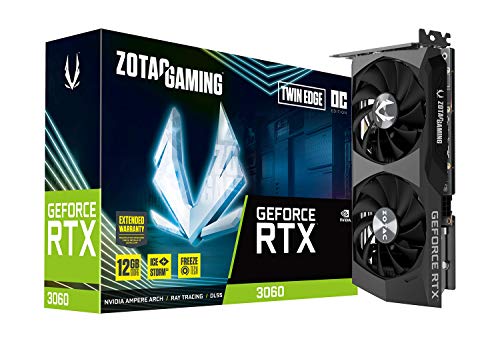
Start at 12 GB of VRAM and build outward. A 12 GB RTX 3060 holds an 8B model at Q4_K_M in 6.5 GB and generates 64.5 tok/s, per TYO Lab's measurements, while still running Cyberpunk 2077 at 72 fps at 1080p Ultra per Gamersleaguepros. Below 12 GB, one job crowds out the other.
Hardware at a Glance
Median generation throughput at 7–9B models (Llama 3.1 8B, Qwen 3 8B), Q4 quantization, from community-reported runs SpecPicks tracks. Each row pools runs from different sources, runtimes and models in that class, so the rows are not a matched head-to-head; where the article compares cards on the same rig, its own figures are the like-for-like result. Street price is the second-lowest listing priced within the last 24 hours at 0.5–2× launch MSRP, so no single listing sets it, and a street figure well above MSRP says so in its cell; where too few listings pass that check the cell shows a dash and the launch MSRP, which is not comparable with the street figures. Rows marked for comparison are not the cards this article is about — they are included so the throughput column has something to be read against.
By Mike Perry · Published 2026-09-10 · 15 min read
Most local-LLM machines are not servers. They are gaming PCs with Ollama installed, owned by someone who wanted to try a model, found it useful, and now leaves one loaded most of the week. That is the single most common configuration in this space, and almost nothing written for it acknowledges that the parts list differs from a pure gaming build.
It differs in specific ways. VRAM capacity stops being a texture-quality setting and becomes a hard ceiling on which models you can run at all. System RAM stops being a "16 GB is plenty" checkbox and becomes the backstop that determines how badly things degrade when a model does not fit. Cooling stops being about two-hour thermal bursts and starts being about a card held near its ceiling for six hours while you sleep. Storage stops being about game load times and starts being about holding 40 GB of quantized weights next to a Steam library.
None of that means buying exotic parts. It means weighting the same parts differently. A build that spends its money on a 12 GB card and a large, slow-spinning cooler will hold a model resident and stay quiet doing it. A build that spends the same money on a faster 8 GB card and a compact tower will game slightly better and run 14B models not at all.
The five picks below are ordered by how much each one changes the outcome. The first one changes it most, and it is not close.
Step 0: which half of the workload is your constraint?
Answer this before reading a single product name, because the three constraints pull in different directions and you cannot optimise for all of them.
VRAM ceiling. Binary and unforgiving. A model either fits in the frame buffer or it spills to system RAM and generation speed collapses. Twelve gigabytes holds a 14B model at four-bit — llmrun.dev measures Phi-4 14B at Q4_K_M in 9.5 GB running 24.6 tok/s. Eight gigabytes does not, and no setting recovers it.
Frame rate. Scales with the same GPU, but with a different part of it. Gaming performance tracks shading throughput and clocks; inference tracks memory capacity first and bandwidth second. Within a generation these usually correlate, which is why the trap is real: an 8 GB card one tier up will game better and infer worse.
Sustained-load noise. The constraint nobody prices in until the machine is on the desk. A model held resident with an active queue keeps the GPU and CPU near a steady load for hours. A cooler sized for gaming bursts is audible for all of them.
If your answer is "frame rate," buy a pure gaming build and run models in the cloud. If it is "VRAM ceiling" or "noise," the list below is built for you.
Where it runs out is heavy ray tracing. The same PCIsAwesome data puts Cyberpunk 2077: Phantom Liberty at RT Ultra down to 24 fps average at 1080p. That is the honest ceiling.
One warning before you buy anything. NVIDIA also shipped an 8 GB RTX 3060 on a 128-bit bus under the same model name. It ranks well in search results and it cannot hold a 14B model. Read the listing title for "12G" and confirm the 192-bit bus. The SpecPicks RTX 3060 benchmark page tracks the 12 GB configuration.
Sixteen threads means a game and a background inference queue coexist without either stuttering
AM4 socket, so it drops into an existing board rather than forcing a platform change
32 MB of L3 cache, per AMD's specifications, which helps the serial host-side portions of inference
Cons
105 W TDP runs hot in a compact case and genuinely needs a tower cooler
No integrated graphics — every display output comes off the GPU, taking VRAM from the model
DDR4 platform; a current AM5 chip would be faster in absolute terms at a higher total cost
This is the CPU that stops the host being the bottleneck. Prompt tokenisation, sampling, and every offloaded layer run on the processor, and those paths are largely serial — which is why the 3,448 single-thread PassMark rating matters more here than the core count does. When a model does spill past the frame buffer, the CPU and system RAM become the limit, and eight fast cores degrade far more gracefully than four.
The threads matter for the dual-duty case specifically. Gaming while a model answers in the background means two latency-sensitive workloads competing for the same scheduler, and sixteen threads gives the OS room to keep them apart.
A terabyte holds a working library of four-bit quants alongside two or three game installs
SATA III is the cheapest cost per gigabyte in a form factor every case and board supports
Drive speed affects model load time only — never generation throughput once weights are in VRAM
2.5-inch drives run cool and need no heatsink, unlike high-end NVMe under sustained load
Cons
Slower than NVMe on first model load; expect tens of seconds rather than seconds for a large model
SATA cabling in a small case is untidy compared with an M.2 slot
DRAM-less design means sustained large writes slow down, though inference workloads almost never write
This is the deliberate place to save money. A 14B model at Q4_K_M is roughly a 9 GB file — llmrun.dev's measured 9.5 GB of VRAM is a good proxy for the file size — so a terabyte holds a dozen of them with room for games. What the drive cannot do is make generation faster, because once weights are resident in VRAM the storage subsystem is out of the loop entirely. Storage speed buys you seconds at load time and nothing afterwards.
Spend the difference between this drive and a fast NVMe on VRAM instead. That trade is not close: an extra 4 GB of frame buffer changes which models you can run; an extra 3,000 MB/s of sequential read changes how long you wait once.
🎯 Best for Always-On Quiet Inference: Noctua NH-U12S
120 mm tower · single fan · AM4 and AM5 compatible
Pros
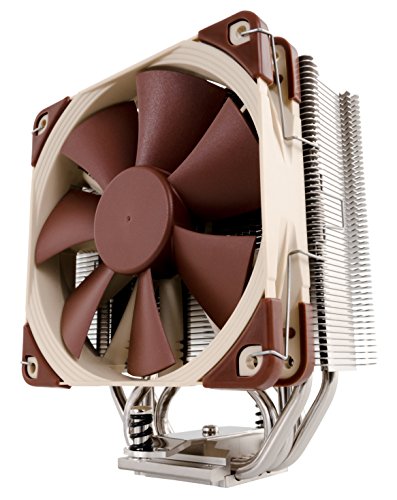
Large heatsink area means the fan runs slowly at a given heat load — the physics that makes sustained inference quiet
120 mm form factor clears tall RAM and fits cases where a 140 mm tower will not
Keeps boost clocks stable through long prompt-processing runs rather than sawtoothing on thermal limits
No pump, no coolant, nothing to fail on a machine that runs continuously
Cons
Air cooling has a hard ceiling; an overclocked 105 W chip under permanent load will find it
Single-fan configuration trails dual-fan towers on peak capacity
Costs more than the bundled cooler it replaces, which is the honest objection
The relevant metric here is not peak temperature — it is noise at steady state. Inference holds the CPU near a constant load for as long as the queue lasts, which is a completely different thermal profile from a gaming session that ends. A large heatsink moving the same heat with a slower fan is quieter for those hours, and that is the entire argument.
The secondary benefit is clock stability. The Ryzen 7 5800X's 4.7 GHz boost is a thermal-headroom-dependent figure; a cooler that keeps the chip well below its limit holds that boost through a long prompt-processing run instead of oscillating.
Six cores means less room when a game and an inference queue compete
The iGPU is the actual feature. On a system with no integrated graphics, the desktop compositor, the browser, and every open window take a few hundred megabytes to a gigabyte of VRAM off the card before the model loads. On a 12 GB card holding a 9.5 GB model, that margin is the difference between a working 8K context and an offload event.
Route your monitors to the motherboard outputs, leave the discrete card headless for inference, and the entire frame buffer belongs to the model. That is worth more on a dual-duty build than two extra CPU cores.
The Gen 3 caveat is worth understanding rather than fearing. Once weights are resident, PCIe bandwidth affects nothing but load time. If you routinely offload layers, the slower link amplifies the penalty — so treat Gen 3 as a reason to stay inside the VRAM budget, not a reason to skip the chip.
What to look for in a dual-duty gaming and inference build
VRAM before everything else
Every other spec is a gradient; VRAM is a cliff. A model that fits runs at full speed, and a model that does not runs at a fraction of it. Twelve gigabytes is the 2026 entry point because it holds 14B-class models at four-bit with context to spare — the measured 9.5 GB footprint for Phi-4 14B leaves roughly 2.5 GB for the KV cache. Eight gigabytes caps you at 8B-class models and leaves nothing for a game running alongside.
System RAM as the offload backstop
Thirty-two gigabytes in dual channel is the sensible target. Sixteen works while everything fits in VRAM and stops working the moment a layer spills, at which point you are competing with the game, the browser and the runtime for the same pool. Dual-channel configuration matters more than raw capacity for offload throughput — populate two matched sticks rather than one large one.
Sustained-load cooling and acoustics
Size the case fans for a continuous load, not a gaming burst. A model held resident with an active queue keeps both the GPU and the CPU near a steady state for hours, and the fan curve that is inaudible during a two-hour session is a constant presence over eight. Larger heatsinks turning slowly beat small ones turning fast.
Model-library storage and load times
Budget roughly 9-10 GB per 14B model at four-bit and 5-6 GB per 8B model. A terabyte is comfortable for a working set plus games. Storage speed is a load-time-only variable — buy capacity, not throughput.
PSU headroom and transient spikes
The RTX 3060 12GB is a 170 W part per TechPowerUp and the Ryzen 7 5800X is 105 W per AMD. A quality 550 W unit covers that pairing with room for transients. What matters more than wattage on an always-on box is the quality of the unit, because it will spend more hours under load than a gaming-only build ever does.
The board-partner card question
Among 12 GB RTX 3060 variants, the differences are clocks, cooler size and noise — never capability. The MSI GeForce RTX 3060 Ventus 2X 12G is the direct alternate to the ZOTAC at the same tier: same 12 GB on the same 192-bit bus, two-fan cooler, typically easier to find in stock. Buy whichever is cheaper on the day.
VRAM contention: what happens when a game and a model want the same 12 GB
This is the table that decides whether a dual-duty build works for you. Model footprints are the measured values from llmrun.dev's RTX 3060 12GB page and ModelFit.io; the remaining-VRAM column subtracts them from the card's 12 GB.
Model
Quant
Measured VRAM
Left for the game
Practical gaming target
Llama 3.2 3B
Q4_K_M
~2.5 GB
~9.5 GB
Anything the card can run
Llama 3.1 8B
Q4_K_M
6.5 GB
~5.5 GB
1080p high textures, most titles
Mistral NeMo 12B
Q4_K_M
8.1 GB
~3.9 GB
1080p medium textures, older titles
Llama 2 13B
Q4_K_M
8.6 GB
~3.4 GB
1080p low-medium textures only
Phi-4 14B
Q4_K_M
9.5 GB
~2.5 GB
Unload the model before launching
The pattern is clear at a glance. An 8B model at four-bit leaves enough frame buffer for real 1080p gaming — ModelFit.io measures Llama 3.1 8B Instruct at Q4_K_M in 6.5 GB — while a 14B model does not leave enough for a modern title at high textures.
The practical workflow most people settle on: keep a small model resident for background work, unload it when a AAA game launches, reload afterwards. Ollama does this on a keep-alive timer without intervention. What does not work is expecting a 14B model and a 1440p high-texture title to share 12 GB — that ends in stutter for both.
As an Amazon Associate, SpecPicks earns from qualifying purchases; we also earn on qualifying eBay purchases via the eBay Partner Network. Prices shown were last tracked at crawl time and may vary — check the listing for the current price.
📹 Watch a review
Friendly Fire: AMD Ryzen 7 5800X CPU Review & Benchmarks vs. 5600X & 5900X — Gamers Nexus on YouTube
Frequently asked questions
Can I game while a local model stays loaded in VRAM?
Only if the two fit together. An 8B model at Q4 occupies roughly 5-6 GB, which leaves a 12 GB card enough for 1080p gaming but not for a modern 1440p title with high textures. The practical pattern is to unload the model when you launch a game, or keep a small model resident and accept lower texture settings. A 14B or larger model and a AAA title will not share 12 GB.
How much system RAM does a dual-duty build actually need?
Thirty-two gigabytes is the sensible 2026 target and the point where CPU offload stops being painful. Sixteen gigabytes works if every model you run fits entirely in VRAM, but the moment a layer spills to host memory you are competing with the game, the browser and the runtime for the same pool. Dual-channel configuration matters more than raw capacity for offload throughput, so populate two matched sticks rather than one large one.
Is a SATA SSD fast enough for a model library, or do I need NVMe?
SATA is fine for storage and adequate for loading. Drive speed affects only how long a model takes to move into VRAM the first time — seconds versus tens of seconds — and nothing about generation throughput once it is resident. A 1 TB SATA drive holds a useful library of four-bit quants alongside a game install or two, and the money saved is better spent on VRAM.
Do I need a beefier CPU cooler if the machine runs models overnight?
Yes, though not for peak temperature so much as for noise and consistency. Inference queues hold the CPU and GPU near a steady load for hours, which is a different thermal profile from a two-hour gaming session. A large tower cooler running slowly is quieter at sustained load than a small cooler running fast, and it keeps boost clocks stable through a long prompt-processing run.
When does this build stop making sense and become two machines?
When you want the model available while you game, or when your target model needs more than 12 GB. At that point the cheaper answer is usually a second low-power box that hosts the model on the network and serves your desktop over an OpenAI-compatible endpoint, leaving the gaming GPU untouched. That split also lets each machine be sized honestly rather than compromised toward both jobs.