See our review methodology. Prices below are catalog street prices observed in 2026 and move constantly — check the retailer for the live number.
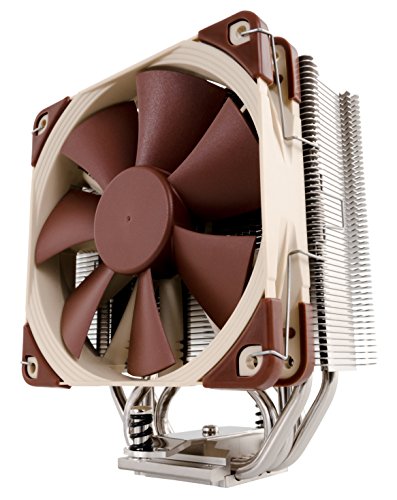
For a stock or lightly-overclocked Core i7-9700K, the Noctua NH-U12S is the right default: a 158 mm single-tower with LGA115x mounting hardware in the box, around $85. If you are chasing a 5.0 GHz all-core overclock or want near-silence under sustained load, step up to a 360 mm AIO like the Corsair iCUE H150i Elite Capellix.
Step 0 — diagnose your actual thermal problem before you buy
A new cooler only fixes one specific failure. Before you spend anything, work out which of these you actually have, because three of the four are free to fix.
- Log package temperature under a real load, not a synthetic one. Run HWiNFO64's sensor log alongside twenty minutes of the game or workload you actually care about. Note peak package temperature and, separately, whether the effective clock drops below your expected all-core turbo. Intel specifies a maximum junction temperature of 100 °C for this part (Intel ARK); if you never approach it, you do not have a cooling problem.
- Check VRM temperature, not just the CPU. On budget Z390 and B365 boards, an all-core overclock on an eight-core part frequently pushes the motherboard's power stages harder than it pushes the cooler. A VRM-limited board throttles the same way a hot CPU does, and no CPU cooler in this list will change that.
- Look at case airflow before you look at coolers. A tower cooler that has to breathe pre-heated GPU exhaust behaves like a much smaller cooler. One intake fan at the front and one exhaust at the rear is the floor, not a nice-to-have.
- Check the age of the thermal paste. A 9700K bought at launch is a seven-year-old mount in 2026. See the re-paste section below — this is the single most-missed step.
If, after all four, the chip is still hitting 100 °C and dropping clocks, you have a cooler problem and the rest of this guide applies.
Who still runs a 9700K in 2026, and why it responds so well to cooling
The Core i7-9700K sits in an unusual spot for a seven-year-old CPU. It is an eight-core, eight-thread Coffee Lake Refresh part with a 3.60 GHz base clock, a 4.90 GHz maximum turbo and 12 MB of cache (Intel ARK). It is unlocked, it uses solder between the die and the heat spreader rather than paste, and it has no hyperthreading — which means every one of its eight threads is a full physical core. In practice that combination still delivers usable frame rates in the majority of 2026 titles paired with a mid-range GPU, which is exactly why so many of these chips are still in service in secondhand gaming builds rather than in drawers.
Soldered die attach is the reason cooling matters more here than on a paste-TIM part of the same era. The thermal path from die to heat spreader is genuinely low-resistance, so improvements you make on the outside of the heat spreader — a better cold plate, more fin area, more airflow — actually show up in package temperature instead of being swallowed by a bad internal interface. A 9700K rewards cooler spend in a way a 7700K never did.
The gating problem in 2026 is not performance, it is mounting hardware. LGA1151 is two socket generations behind LGA1700 and three behind LGA1851. Cooler vendors ship the brackets that sell units, and several have quietly dropped pre-2020 Intel sockets from the retail box. Every recommendation below is here partly because its LGA115x bracket situation is known-good — that is the compatibility check that actually decides this purchase, and it is the one buyers skip.
Budget accordingly: Intel ships no bundled heatsink with any K-suffix Coffee Lake Refresh part, so the cooler is a mandatory line item, not an upgrade. The chip itself lists at $259 in our catalog as a secondhand-market staple.
Key takeaways
- The 95 W figure is a floor, not a ceiling. Intel's 95 W is the processor base power at the 3.60 GHz base clock (Intel ARK). Sustained all-core turbo draws materially more, and an overclock with raised power limits more again.
- LGA1151 bracket availability is the real buying constraint. Read the socket list on the spec sheet, not the marketing copy.
- A 158 mm tower is enough for stock. Radiator area buys acoustics and overclocking headroom, not baseline stability.
- Case clearance kills more air-cooler purchases than temperature does. Measure before you order.
- Re-paste first. Dried-out or pumped-out paste on a seven-year-old mount undoes any cooler you bolt on top of it.
What thermal load does the Core i7-9700K actually put on a cooler?
Intel's published figure for this part is a 95 W processor base power (Intel ARK). That number is defined at the base frequency of 3.60 GHz, and it is the single most misread specification on the whole spec sheet. It is not what the chip draws when eight cores are sitting at 4.60 GHz in a rendering workload, and it is definitively not what it draws with a manual all-core multiplier and unlocked long-duration power limits.
What that means when you are shopping: pick a cooler by class, not by matching a wattage number to a marketing "TDP rating." The classes that matter here are the 120 mm single tower, the 240 mm AIO, and the 360 mm AIO. Anything below a 120 mm tower — including the low-profile coolers that ship in prebuilt LGA1151 systems — is where this chip runs out of headroom first, and it is where most secondhand 9700K builds are today.
Two hard limits bound the decision. Intel specifies maximum junction temperature at 100 °C (Intel ARK); that is where thermal throttling begins and where a stock-clocked chip on an inadequate cooler will park itself under load. The other limit is acoustic: past a certain point you stop buying lower temperatures and start buying the ability to hit the same temperature at a lower fan speed. For most people upgrading a 9700K in 2026, the second one is the purchase that actually improves daily use.
Spec-delta table — the four picks
| Cooler | Type & height / radiator | Rated fan spec | LGA1151 bracket included | Street price band |
|---|---|---|---|---|
| Noctua NH-U12S | Single tower, 158 mm with fan | 1× NF-F12 PWM, 120 mm, up to 1500 RPM, 22.4 dB(A) (Noctua) | Yes — SecuFirm2, LGA115x | ~$85 |
| Corsair iCUE H150i Elite Capellix | 360 mm AIO, 3× 120 mm fans | 3× ML120 RGB magnetic-levitation PWM (Corsair) | Yes — Intel 115x/1200 bracket in box | ~$135 |
| CoolerMaster MasterLiquid ML240L RGB V2 | 240 mm AIO, 2× 120 mm fans | 2× SickleFlow 120 ARGB PWM | Yes — LGA115x hardware in box | ~$90 |
| NZXT Kraken M22 | 120 mm AIO, 1× 120 mm fan | 1× Aer P120 PWM (NZXT) | Yes — Intel 115x bracket in box | ~$90 |
Prices are catalog street prices observed in 2026 and change frequently — confirm the live figure at the retailer before buying.
Air or AIO for a 9700K?
A 158 mm single tower is the right call more often than the internet suggests. It has no pump to fail, no coolant to permeate out over a five-year ownership window, and — critically for a secondhand platform — its resale and reuse value survives your next motherboard. If your 9700K is running at stock or with a modest multiplier bump, and your case takes a 158 mm cooler, the tower is the answer and you can stop reading this section.
There are two explicit cases where it is the wrong call.
Small-form-factor and slim chassis. The NH-U12S measures 158 mm tall with its fan fitted (Noctua). Any case rated below about 160 mm of CPU-cooler clearance will not close, and slim mATX and SFF chassis frequently sit in the 120–155 mm band. In those builds a 120 mm AIO like the Kraken M22 is not a compromise — it is the only class that fits, because it moves the bulk of the cooler to a fan mount you already have.
Radiator mounts you do not actually have. A 360 mm AIO needs a 360 mm mount, and a large share of 2018-era mid-towers — exactly the cases these chips live in — top out at a 240 mm top mount, with the front bay occupied by drive cages. Measure the mount before you buy the radiator. Buying a 360 mm unit for a case with one 240 mm mount is the most common return in this category.
The honest framing: for a 9700K, air versus AIO is a fit and acoustics decision, not a performance one. Both classes will keep a stock-clocked chip well clear of its 100 °C junction limit in a case with functioning airflow.
Which cooler suits which build?
Noctua NH-U12S — the quiet stock and mild-overclock default
The NH-U12S is a 120 mm single-tower running one NF-F12 PWM fan, rated up to 1500 RPM at 22.4 dB(A), and it stands 158 mm tall with the fan mounted (Noctua). It ships with the SecuFirm2 mounting system, which has carried LGA115x support across its entire production life — meaning the bracket you need is in the box rather than a support-ticket away. Around $85, it is the pick for anyone running stock clocks or a modest multiplier bump who wants the machine to be quiet and to stay that way for another five years. It is also the pick if you plan to move this cooler to a future platform: Noctua's upgrade-kit program is the reason these coolers survive three builds.
Corsair iCUE H150i Elite Capellix — 360 mm headroom for a 5.0 GHz attempt
The H150i Elite Capellix is a 360 mm all-in-one with three ML120 RGB magnetic-levitation fans and the Commander CORE controller (Corsair). Around $135, it is the most expensive pick here and the only one with enough radiator area to make a serious 5.0 GHz all-core attempt on this chip sensible. Buy it for one of two reasons: you are genuinely overclocking with raised power limits, or you want the fans to sit at low RPM during long sessions. Do not buy it because 360 mm sounds better than 240 mm — buy it because you have measured a 360 mm mount in your case.
CoolerMaster MasterLiquid ML240L RGB V2 — best cost per unit of radiator
The ML240L RGB V2 is a 240 mm AIO with two SickleFlow 120 ARGB fans and Cooler Master's third-generation dual-chamber pump, at around $90. It is the value position in this list: it lands at roughly the same price as the single-tower NH-U12S while carrying twice the radiator area, and 240 mm mounts are far more common in 2018-era mid-towers than 360 mm mounts. The trade against the Noctua is longevity and failure mode — a pump is a moving part with a finite life, and a tower is not.
NZXT Kraken M22 — the constrained-case answer
The Kraken M22 is a 120 mm AIO with a single Aer P120 fan and NZXT's infinity-mirror pump head (NZXT). At roughly $90 it is not the value pick on paper, and in a mid-tower it would be the wrong choice. Its case is specific: chassis that cannot take a 158 mm tower and have no 240 mm mount, but do have a 120 mm rear or top fan position. In that build it is the difference between an adequately cooled 9700K and a low-profile cooler pegged at the junction limit.
Intel Core i7-9700K — the platform these picks are sized against
Worth stating plainly: every recommendation above is sized for this specific chip — eight cores, eight threads, 4.90 GHz maximum turbo, 100 °C junction limit, LGA1151 (Intel ARK). If your build is a 9900K, which adds hyperthreading and materially more heat output, shift one class up from whatever this guide recommends for your case.
What the published numbers actually say
SpecPicks does not operate a first-party thermal testbench, and this synthesis will not print a delta-over-ambient figure it cannot attribute. What the manufacturer spec sheets and published roundups do support is a comparison by class and by acoustic rating — which is the axis that actually differs between these four units.
| Cooler class | Dissipation surface | Published acoustic rating | Source |
|---|---|---|---|
| 120 mm single tower (NH-U12S) | 1× 120 mm fin stack | Up to 22.4 dB(A) at 1500 RPM | Noctua NH-U12S spec sheet |
| 120 mm AIO (Kraken M22) | 1× 120 mm radiator | Aer P120 PWM, vendor-published curve | NZXT Kraken M22 |
| 240 mm AIO (ML240L RGB V2) | 2× 120 mm radiator | SickleFlow 120 ARGB PWM, vendor-published curve | Cooler Master product documentation |
| 360 mm AIO (H150i Elite Capellix) | 3× 120 mm radiator | 3× ML120 RGB maglev PWM | Corsair H150i Elite Capellix |
For cross-vendor tested comparisons at a controlled ambient, Tom's Hardware maintains a rolling best-CPU-coolers roundup with its own testbench methodology — that is the source to read if you want measured delta-T tables rather than the class-level guidance here.
What you'll need — mounting checklist
Run this list before you order, not after the box arrives.
- LGA1151 backplate and bracket. Confirm the socket appears on the manufacturer's own spec sheet. If it does not, contact the vendor about a bracket before purchase, not after.
- Case CPU-cooler clearance, in millimetres. From your case manual. Compare against 158 mm for the NH-U12S.
- Radiator mount size and position. 240 mm and 360 mm are not interchangeable, and a top-mounted radiator eats vertical clearance above the RAM slots.
- RAM height. Single-tower 120 mm coolers clear standard-height DIMMs but can foul tall RGB heatspreaders in the first slot.
- Fan headers and a PWM plan. A 360 mm AIO wants three fan connections plus a pump header. Budget a splitter if your Z390 board is short on headers.
- Thermal paste. Most coolers include a pre-application or a small tube. Buy a separate tube anyway — see the next section.
- Isopropyl alcohol and lint-free cloth for cleaning the old paste off the heat spreader.
The most-missed step: re-pasting a seven-year-old chip
This is the part of the job that changes outcomes most and gets skipped most often. A 9700K bought near launch has a thermal interface that is somewhere between six and eight years old. Two failure modes accumulate over that period: the paste dries and loses conductivity, and pump-out gradually migrates paste away from the centre of the die under repeated thermal cycling. Both raise package temperature slowly enough that owners adapt to it rather than noticing it.
The practical consequence is that a meaningful share of "my 9700K runs hot" cases are not cooler problems at all. Bolting a $135 360 mm AIO on top of a degraded interface buys far less than a $10 tube of paste and thirty minutes. Clean the heat spreader and the cold plate down to bare metal with isopropyl alcohol, apply fresh paste, and mount with even pressure across all four corners — an uneven mount produces exactly the same symptom as a dead cooler.
Do this step first even if you have already decided to buy a new cooler. It removes the largest confounding variable, so you find out what the new cooler actually bought you.
Perf-per-dollar: dollars per 120 mm of cooling surface
Since a defensible delta-T figure is not available without a controlled testbench, here is the arithmetic that is defensible — catalog price divided by the number of 120 mm fan-and-fin positions each unit provides.
| Cooler | Price | 120 mm cooling positions | Cost per position |
|---|---|---|---|
| CoolerMaster ML240L RGB V2 | $89.99 | 2 | $45.00 |
| Corsair iCUE H150i Elite Capellix | $134.88 | 3 | $44.96 |
| Noctua NH-U12S | $84.95 | 1 | $84.95 |
| NZXT Kraken M22 | $89.99 | 1 | $89.99 |
Read that table carefully, because the ranking it produces is not the ranking you should buy on. It says the two multi-radiator AIOs deliver surface area most cheaply, which is true and is why they are the picks for overclocking and for quiet operation. It does not price in the tower's absence of a pump, its transferability to your next socket, or the fact that surface area you cannot physically mount is worth zero. Use it to sanity-check a price, not to choose.
Verdict matrix
Get the Noctua NH-U12S if your 9700K runs at stock or a mild multiplier bump, your case clears 158 mm, and you want a cooler with no moving parts beyond one fan that you can carry to your next build.
Get the Corsair iCUE H150i Elite Capellix if you have a confirmed 360 mm mount and you are actually pursuing a 5.0 GHz all-core overclock with raised power limits, or you want the lowest achievable fan speed under sustained multi-hour load.
Get the CoolerMaster ML240L RGB V2 if you have a 240 mm mount and want the most radiator area per dollar, and you are comfortable owning a pump.
Get the NZXT Kraken M22 if your chassis cannot take a 158 mm tower and has no 240 mm radiator mount — this is a fit-driven pick, not a value-driven one.
Get none of them if your temperatures are already comfortably clear of 100 °C under real load. In that case the eight threads are your bottleneck, not the thermals, and the money belongs in a GPU.
Recommended pick
The Noctua NH-U12S is the recommendation for the typical 2026 Core i7-9700K owner. The reasoning is specific rather than generic: the SecuFirm2 mounting system carries LGA115x support in the retail box, which is the one compatibility risk that actually threatens this purchase on a three-socket-old platform; the NF-F12 PWM's 22.4 dB(A) rating at 1500 RPM (Noctua) targets the acoustic outcome most upgraders are really after; and at 158 mm it fits the mid-towers these chips overwhelmingly live in. It has no pump, so its failure surface over another five years of ownership is one replaceable fan.
The H150i Elite Capellix is the correct answer instead if — and only if — you have measured a 360 mm mount and intend to overclock. That is a real use case, not a hypothetical one, but it is a minority of 9700K builds.
Bottom line
The Core i7-9700K is still a competent eight-core gaming CPU in 2026, and it responds unusually well to cooling because of its soldered heat spreader. Before you buy anything, log your temperatures under a real load, check your VRM and case airflow, and re-paste a mount that is likely older than the last two socket generations. If you still need a cooler after that, buy by fit: a 158 mm tower for a normal mid-tower at stock clocks, a 240 mm AIO if you want more radiator for the same money, a 360 mm AIO only with a confirmed mount and an overclocking plan, and a 120 mm AIO only when nothing else physically fits. In every one of those cases, confirm LGA1151 appears on the manufacturer's own socket list before you place the order.
Related guides
- Best CPU Cooler for the Ryzen 7 5800X in 2026 — the AM4 equivalent of this decision, where the thermal-density problem is very different.
- Best CPU Cooler for the Ryzen 7 3700X in 2026 — the lower-power AM4 case, and a useful contrast on when a tower is enough.
- Intel Core i7-9700K — full specs, pricing and listings — the platform page, with live catalog pricing.
- Best Budget Gaming Peripherals Under $100 in 2026 — where the money goes once the thermals are handled.
— Mike Perry
Citations and sources
- Intel ARK — Core i7-9700K processor specifications — core/thread count, 3.60 GHz base, 4.90 GHz max turbo, 12 MB cache, 95 W processor base power, 100 °C maximum junction temperature, LGA1151 socket. Accessed 2026-08-24.
- Noctua — NH-U12S product page — 158 mm height with fan, NF-F12 PWM 120 mm fan up to 1500 RPM at 22.4 dB(A), SecuFirm2 LGA115x mounting. Accessed 2026-08-24.
- Corsair — iCUE H150i Elite Capellix Liquid CPU Cooler — 360 mm radiator, three ML120 RGB magnetic-levitation fans, Commander CORE controller, Intel 115x mounting. Accessed 2026-08-24.
- NZXT — Kraken M22 — 120 mm radiator, Aer P120 fan, infinity-mirror pump head, Intel 115x bracket. Accessed 2026-08-24.
- Tom's Hardware — Best CPU Coolers — third-party controlled-ambient cooler testing methodology and measured delta-T comparisons. Accessed 2026-08-24.
This piece is editorial synthesis based on publicly available information. No independent first-party benchmarking is reported.