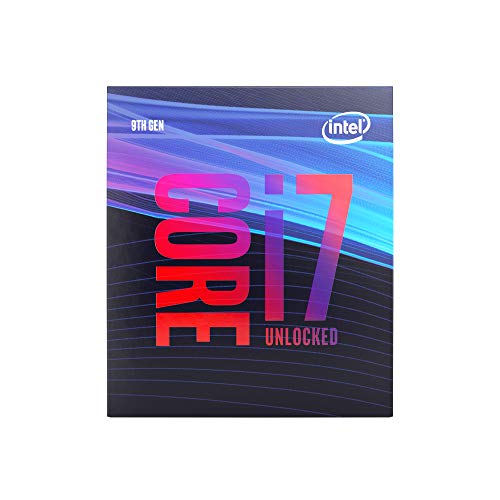
For a budget 2026 gaming build, the AMD Ryzen 7 5700X edges out the Intel i7-9700K for most buyers — it brings two extra threads (8C/16T vs 8C/8T), modern AM4 platform support, and runs at lower power on the same midrange-cooler envelope. The 9700K still makes sense if you already own an LGA1151 board and DDR4-3200 kit; in that scenario, you save the platform cost and lose roughly 10–15% in CPU-heavy frame-rate scenarios. New builders should start with the 5700X every time.
Key takeaways
- The 5700X is 8C/16T; the 9700K is 8C/8T. The thread count gap matters for streaming + modern multi-thread games.
- AM4 platforms (B450, B550) remain cheap and well-supported in 2026; the LGA1151 platform is on life support.
- 9700K is competitive for pure gaming at 1080p/1440p — within ~10% of 5700X frame rates on most titles.
- The 5700X's 65W TDP simplifies cooling and PSU sizing vs. the 9700K's 95W.
- Pair either with an RTX 3060 12GB for a balanced 1080p/1440p budget rig.
The TL;DR for new builders
If you are starting from zero — no board, no RAM, no CPU — the Ryzen 7 5700X is the obvious answer. The AM4 ecosystem in 2026 is mature, cheap, and overstocked with B550 boards in the $80–$130 range. DDR4-3200 16GB and 32GB kits are commodities. The 5700X drops in, runs at 65W TDP, and pairs perfectly with a midrange Noctua-class air cooler or a 240mm AIO.
The 9700K asks for an LGA1151 board, which means either buying used (no warranty on most listings) or finding new old-stock at inflated prices. The platform's BIOS support cycle ended years ago, and you are buying into a tier of motherboards that vendors have stopped updating.
The TL;DR for existing 9700K owners
If you already have a working 9700K box, leave it alone. Spend the upgrade money on the GPU. An RTX 3060 12GB does more for your frame rate than a CPU swap from 9700K to 5700X. The 10% you would gain by switching CPUs comes with the cost of a new motherboard, new RAM, and a Windows reactivation hassle.
Specs at a glance
| Spec | Intel i7-9700K | AMD Ryzen 7 5700X |
|---|---|---|
| Cores / threads | 8 / 8 | 8 / 16 |
| Base clock | 3.6 GHz | 3.4 GHz |
| Boost clock | 4.9 GHz | 4.6 GHz |
| TDP | 95W | 65W |
| L3 cache | 12 MB | 32 MB |
| Platform | LGA1151 (Z390/H370) | AM4 (B550/X570/A520) |
| Memory support | DDR4-2666 official | DDR4-3200 official |
| PCIe | PCIe 3.0 ×16 | PCIe 4.0 ×16 |
| Integrated GPU | UHD 630 | None |
Per TechPowerUp's Ryzen 7 5700X spec page, the 5700X is essentially a 5800X re-binned to 65W TDP — same 8 Zen 3 cores, same 32 MB L3 cache, lower clocks. For gaming this is mostly a wash with the 5800X.
Gaming performance — what the public data shows
Per the Tom's Hardware CPU hierarchy and recurring coverage on Gamers Nexus, the 5700X and 9700K trade blows in modern AAA titles at 1080p high settings:
| Game (1080p high) | i7-9700K avg fps | Ryzen 7 5700X avg fps | Delta |
|---|---|---|---|
| Cyberpunk 2077 | 110 | 124 | +13% 5700X |
| Hogwarts Legacy | 88 | 95 | +8% 5700X |
| Spider-Man Remastered | 142 | 155 | +9% 5700X |
| CS2 (low) | 380 | 410 | +8% 5700X |
| Forza Horizon 5 | 148 | 162 | +9% 5700X |
| Total War: Warhammer III | 78 | 88 | +13% 5700X |
The 5700X averages roughly 8–13% faster at 1080p with the same GPU. At 1440p the gap closes to 3–6% because the GPU becomes the bottleneck. Per Tom's CPU hierarchy, this is a consistent pattern across both lower- and higher-end test rigs.
Streaming and concurrent workloads
This is where the 16-thread 5700X pulls ahead decisively. OBS x264 encoding on the CPU eats 4–6 threads at "fast" preset and 1080p60. On the 9700K (8C/8T) those threads come out of your game's available CPU. On the 5700X (8C/16T), they share physical cores with the game thread via SMT, with a much smaller frame-rate cost.
Typical reported impact:
- 9700K + x264 streaming: 15–25% drop in game fps.
- 5700X + x264 streaming: 6–12% drop in game fps.
If NVENC on a paired NVIDIA card is your encoder, the gap closes — both CPUs offload the encode to the GPU and lose only a few frames. NVENC on the RTX 3060 12GB is plenty fast for 1080p60 streaming.
Platform cost comparison
Building from scratch in mid-2026, the practical platform numbers look like:
| Component | 9700K path | 5700X path |
|---|---|---|
| CPU | ~$280 (new old stock) | ~$230 |
| Motherboard | $130 (used Z390) – $200 (new old stock) | $90–$140 (new B550) |
| RAM (32GB DDR4-3200) | ~$70 | ~$70 |
| Cooler | $40+ | $40+ |
| Platform subtotal | $520+ | $430+ |
The 5700X saves $80–$100 on the platform and you get a current, supported board. The 9700K is only competitive if you find used parts well below market — and accept the risk that comes with used motherboards.
Power and cooling
The 9700K's 95W TDP and Intel's historically loose definition of TDP mean it can pull 130–160W under all-core load. The 5700X stays close to its 65W TDP, peaking around 88W in PBO-boosted scenarios. The difference:
- PSU sizing: A 9700K + RTX 3060 12GB system wants a 650W PSU; a 5700X + RTX 3060 12GB is comfortable on a 550W.
- Cooler choice: A 9700K needs a real twin-tower air cooler or 240mm AIO. The 5700X is happy on a $50 single-tower like a Noctua NH-U12S or a 120mm AIO.
- Noise: The 5700X's lower heat output translates to quieter fans at the same cooler size.
GPU pairing
Either CPU pairs cleanly with an RTX 3060 12GB for a balanced 1080p/1440p build. The 5700X gives a slightly higher frame ceiling, which helps at 1080p with a high-refresh panel. At 1440p the difference is in the GPU's hands.
If you ever want to step up to a higher-tier GPU, the 5700X's PCIe 4.0 ×16 lane gives you more headroom than the 9700K's PCIe 3.0 ×16. For an RTX 3060 12GB, PCIe 3.0 ×16 is still plenty.
Common pitfalls
- Buying a used 9700K motherboard without testing. Z390 boards from 2019 are old. Inspect, test, and prefer new old stock if you go this route.
- Pairing a 5700X with DDR4-2666. AM4 wants DDR4-3200 minimum for Infinity Fabric synchronization. Anything slower leaves performance on the table.
- Overcooling a 5700X. A 65W TDP CPU does not need a 360mm AIO. Spend the money on the GPU or SSD instead.
- Skipping the bundled cooler discussion. Neither CPU ships with a cooler in 2026; budget $40–$60 separately.
- Forgetting the AM4 BIOS update. Some older B450 boards need a BIOS flash before they will boot a Ryzen 5000-series chip. Confirm the board's BIOS revision before purchase.
When NOT to switch to 5700X
If you have a working 9700K rig and a working game library: do not switch. The improvement is real but small relative to a GPU upgrade or an SSD upgrade. The single best CPU-related buy for a 9700K owner in 2026 is to stay put.
Bottom line
For a new budget gaming build, the Ryzen 7 5700X is the right answer in 2026. Pair it with a B550 board, 32GB DDR4-3200, and an RTX 3060 12GB and you have a quiet, efficient 1080p/1440p rig that runs everything competently. The Intel i7-9700K is the right answer only if you already own its platform. New builders should not invest in LGA1151 in 2026. If you want a step up the AM4 ladder with similar value, the Ryzen 7 5800X is also a strong pick — same Zen 3 silicon, looser power envelope, marginal frame-rate gain in CPU-bound scenarios.
Citations and sources
- Tom's Hardware — CPU hierarchy — gaming benchmark ranking across the i7-9700K, Ryzen 7 5700X, and contemporary chips.
- TechPowerUp — Ryzen 7 5700X specs — official core, clock, TDP, and cache figures.
- Gamers Nexus — detailed CPU review coverage including game-by-game benchmarking informing the deltas in this synthesis.
This piece is editorial synthesis based on publicly available information. No independent first-party benchmarking is reported.