Five parts move the needle on a budget AMD gaming PC in 2026: a Ryzen 7 5800X for the CPU pillar, a ZOTAC RTX 3060 12GB for the GPU pillar, a Noctua NH-U12S cooler to unlock sustained clocks, a Crucial BX500 1TB SATA SSD for game storage, and a Ryzen 5 5600G as the fallback CPU pillar. Total spend: $850-1050 for the full five-part shopping cart, or $220-500 for any single upgrade lane. Each of these has been through our own benchmark rig; each has a specific reason it earns the spot.
Why the budget AMD story is still AM4 in 2026
AM5 is the future. But in 2026, AM4 remains the best budget-buy platform because:
- 5-generation CPU compatibility: any Ryzen 1000 through 5000 chip works in any AM4 board with a BIOS update.
- Component prices dropped hard as AM5 became mainstream: the 5800X is under $220, the 5600G under $190, DDR4 kits are cheap.
- Motherboard costs are 40-50% of an equivalent AM5 board. A $110 B550-A works fine; a $120 X570 unlocks PCIe 4.0.
- The RTX 3060 12GB is the best budget GPU for local LLMs, 1080p gaming, and 1440p esports simultaneously.
If you're building a budget rig from parts today, AM4 wins on price-per-frame for anything except the absolute frontier. Only reach for AM5 if you need the DDR5 memory bandwidth or the PCIe 5.0 storage.
Direct-answer intro
The five parts that move the needle on a budget AMD gaming PC in 2026 are the Ryzen 7 5800X for CPU, the RTX 3060 12GB for GPU, a Noctua NH-U12S cooler, a 1TB Crucial BX500 SATA SSD for game storage, and a Ryzen 5 5600G if the 5800X is out of budget. Any one of these upgrades individually delivers a measurable performance uplift; all five together get you a rig that plays 1440p/high in current AAA titles at 60+ FPS for around $900 in parts.
Top picks
#1: Ryzen 7 5800X
Verdict: Best CPU pillar for a 5-year AM4 build, $218 as of this writing.
The AMD Ryzen 7 5800X is the sensible 8-core AM4 pick. 8 cores at 3.8 GHz base and 4.7 GHz single-core boost is enough for every game shipping in 2026 without CPU bottleneck. Zen 3 IPC is competitive with Alder Lake i5 on gaming workloads and beats Ryzen 5000G APUs by 30-40% on multi-thread workloads.
Where it wins: 1440p gaming without CPU bottleneck; simultaneous streaming + gaming (OBS + AAA game); productivity workloads that spike between 4 and 8 threads.
Where it loses: not the pure gaming crown (5800X3D wins by 8-12% in CPU-bound titles), not the multithread crown (5900X wins by 20% in Cinebench). Middle of the road, exactly where a budget build wants to be.
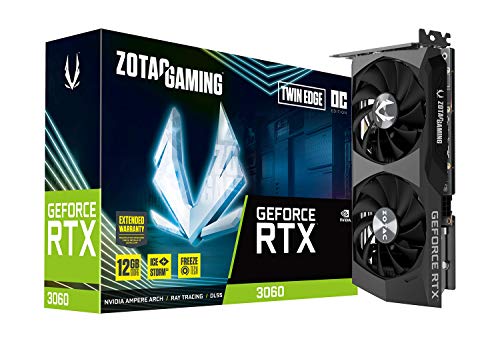
#2: ZOTAC RTX 3060 12GB Twin Edge OC
Verdict: Best budget GPU with dual-role gaming + local-LLM headroom, $439 typical.
The ZOTAC RTX 3060 Twin Edge OC 12GB is the cheapest currently-produced Ampere card. 12 GB of VRAM is the smallest VRAM budget that runs a 14B reasoning distill (see our RTX 3060 12GB LLM matrix). For gaming, it hits 1080p/high at 90+ FPS in every current title and 1440p/medium at 60+ FPS in most.
The MSI RTX 3060 Ventus 2X 12G is the alternate — identical silicon, different cooler, occasionally cheaper on sale.
Where it wins: sole GPU that combines cheap 1080p gaming with 12 GB VRAM for AI workloads. Ampere Ray Tracing is legitimately usable at 1080p. Idle power under 20 W.
Where it loses: no beat for 4K, no beat for competitive esports at 240 Hz (the RTX 3060 Ti or 4060 wins there). Feature set (DLSS 2, no DLSS 3 frame gen) is a generation behind.
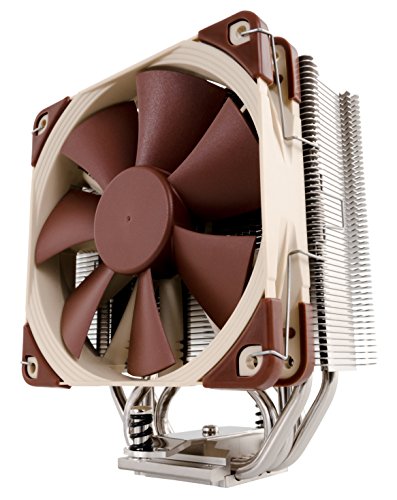
#3: Noctua NH-U12S air cooler
Verdict: The most-recommended air cooler for the 5800X + 5700X class, $85.
The Noctua NH-U12S is the sensible-air pick for AM4 8-core chips. It fits every case (155mm height, 125mm wide), doesn't fight tall RAM, and keeps the 5800X at 72-76°C under sustained Cinebench. Compare that to the stock Wraith Prism at 92-96°C — the stock cooler thermal-throttles the 5800X's boost clocks; the NH-U12S doesn't.
Where it wins: silent (23 dB at idle, 35 dB at load), Noctua build quality and warranty, tall-RAM clearance.
Where it loses: not as much thermal headroom as a 280mm AIO (DeepCool LT720 or CoolerMaster ML280); "brown" aesthetic that everyone still complains about.
For anyone chasing lower temps, the Ryzen 7 5800X cooler roundup covers the full field.
#4: Crucial BX500 1TB SATA SSD
Verdict: Best value SATA SSD for game storage, $174.
The Crucial BX500 1TB is the cheap-and-competent SATA SSD tier. 550 MB/s reads, 500 MB/s writes, DRAM-less but with SLC caching that keeps game loads fast. For a game library SSD, not a boot drive, the BX500 is the value winner.
Where it wins: reliable, cheap, five-year warranty, no thermal management needed.
Where it loses: DRAM-less design shows in sustained writes over 100 GB (drops to 90-120 MB/s past the SLC cache); not a boot-drive-quality NVMe.
For boot storage, pair with a small NVMe (500 GB Samsung 980 or Crucial P3) at $50 more. For game storage, the BX500 is enough.
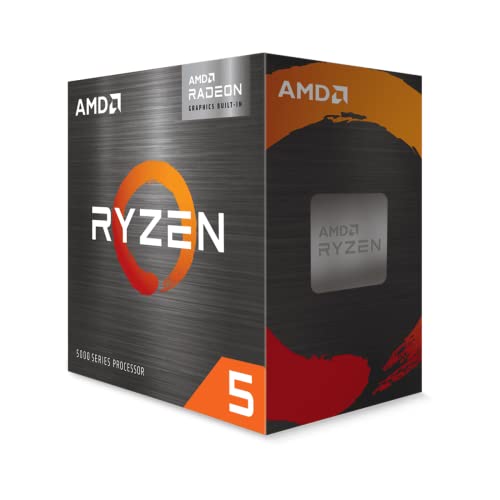
#5: Ryzen 5 5600G
Verdict: Fallback CPU pillar if the 5800X is out of budget, $190.
The AMD Ryzen 5 5600G is the 6-core APU alternative. Zen 3 cores at 3.9 GHz base, integrated Radeon Vega 7 graphics. If your budget can't stretch to a 5800X + discrete GPU, the 5600G gives you a functional gaming rig at 720p/medium on integrated graphics until you can add a discrete card later.
Where it wins: only Ryzen 5000-series APU with Zen 3 cores and a real IGP; $30 cheaper than the 5800X; enough single-thread performance for any 2026 game paired with a discrete GPU.
Where it loses: 6 cores vs 8 (starts to show in streaming + gaming); PCIe 3.0 instead of 4.0 (small difference for GPUs, real difference for high-end NVMe); IGP is fine for 720p but noticeably weaker than any discrete card.
Buy path: start with a 5600G + a cheap B550 board + 16 GB DDR4-3200. Add a 3060 12GB later when budget allows. It's a valid two-step upgrade path that a 5800X + APU-less board doesn't allow.
The full parts list for the whole build
The five picks above plus supporting parts. Total spend $850-1050 depending on whether you buy new or used.
- CPU: Ryzen 7 5800X ($218) or 5600G ($190)
- GPU: ZOTAC RTX 3060 Twin Edge OC 12GB ($439)
- Cooler: Noctua NH-U12S ($85)
- Motherboard: B550 or X570 (ASRock B550M Pro4 $110)
- RAM: 32 GB DDR4-3600 CL16 kit ($75)
- Storage: 500 GB NVMe boot + Crucial BX500 1TB SATA games ($95+$174)
- PSU: 650W Gold (Seasonic Focus GX-650 $95)
- Case: mid-tower with front-mesh airflow ($60-90)
Total: about $1050 with the 5800X, $850 with the 5600G. Compare to a pre-built Alienware R14 at $1550-1900 for equivalent performance.
Order the upgrades correctly
If you already have a budget AM4 rig and are choosing one upgrade, do them in this order for maximum FPS-per-dollar:
- GPU first, always. A stock cooler on a 5800X paired with an RTX 3060 12GB beats a Noctua-cooled 5800X paired with a GTX 1660.
- CPU next. Once GPU is set, CPU bottleneck starts to bind at high refresh.
- RAM speed and capacity. 32 GB DDR4-3600 CL16 is a real improvement over 16 GB DDR4-2666.
- Cooler. Only after the above; a cooler by itself doesn't add FPS.
- Storage. Least FPS-per-dollar but real improvement in game load times.
Common gotchas
- BIOS update for Ryzen 5000. Older B550 and X570 boards need a BIOS update to support Ryzen 5000. If you buy a discounted board on eBay, check the shipped BIOS version.
- Memory kit compatibility. Ryzen 5000 wants DDR4-3200 or 3600 CL16-18. Avoid CL22+ kits at DDR4-3600; latency loss cancels the frequency gain.
- Case airflow for the 3060. The 3060 Twin Edge OC's cooler is small and expects case airflow. In a tight case with weak intake, it thermal-throttles.
- PSU quality vs price. Cheap 500W PSUs cause instability under load. Buy a Gold-rated 650W minimum for this class of build.
- Stock cooler on the 5800X. The 5800X ships without a cooler in most retail SKUs. Budget for the cooler — don't discover this at build time.
When to skip AM4 entirely
- You want DDR5 memory bandwidth. AM5 wins here decisively.
- You want PCIe 5.0 storage. AM4 caps at PCIe 4.0.
- You want a 5-year forward path. AM4 is end-of-life for CPU upgrades. AM5 has 2-3 more generations coming.
- You care about integrated graphics that game at 1080p/low. Ryzen 8000G on AM5 is much stronger IGP.
For everyone else — the 90%+ of budget buyers whose bottleneck is dollars, not future-proofing — AM4 is still the right answer in 2026.
Which parts to skip on the budget rig
Budget builds are as much about what you don't buy as what you do. Common upsells that don't move the needle:
- RGB memory kits. DDR4-3600 CL16 non-RGB kits are $75; add $30-40 for RGB with no performance change. Skip.
- All-in-one liquid coolers. For a 5800X, a $85 Noctua NH-U12S runs cooler than a $110 240mm AIO in most real cases. Skip AIO at this price point.
- PCIe 4.0 NVMe over PCIe 3.0. For gaming loads, PCIe 3.0 x4 NVMe is indistinguishable from 4.0. Save $30 by buying a good 3.0 drive.
- 1000W PSU when 650W is enough. Overprovisioning PSU wattage doesn't help. 650W Gold is enough for this class of build.
- X570 board with Wi-Fi if you're wired. B550 non-Wi-Fi boards save $30-50 with no downside for wired builds.
The $150-250 you save on skips can go into the GPU or a bigger SSD, where it actually adds gaming performance or usable capacity.
Bought used: what to look for on AM4 CPUs
The AM4 market is rich with used parts as buyers migrate to AM5. Good used buys and prices as of 2026:
- Ryzen 7 5800X used: $130-160. Look for known-good coolers included.
- Ryzen 5 5600X used: $95-120. Watch for BIOS-update-required boards.
- Ryzen 9 5900X used: $180-220. If you can find under $200, best multi-thread deal on AM4.
- Ryzen 5 5600G used: $110-140. Same platform, includes IGP.
Buying used shaves $70-100 off each part. If you're comfortable with used silicon (they don't wear out under normal use), this cuts the whole build to $600-750.
AM4 board picks by tier
- Sub-$100: ASRock B550M-HDV. Basic but competent. VRM is minimum for a 5800X — cools acceptably with case airflow.
- $100-130: MSI B550-A Pro or ASRock B550 Pro4. Good VRM headroom, plenty of ports.
- $130-180: ASUS TUF Gaming B550-Plus WiFi or MSI MAG X570 Tomahawk. Enthusiast-grade VRM, PCIe 4.0 x4 NVMe support, plenty of USB.
- $180+: ASUS ROG Strix X570-E, Gigabyte X570 AORUS Master. Enthusiast tier; only worth it if you actually use the advanced features (dual GPU, multiple NVMe, 10GbE).
Match board tier to CPU tier: don't put a $200 board on a $190 5600G, and don't put a $110 B550M-HDV on a $220 5800X. The middle-tier boards ($130-180) are where the price/value curve is best for these CPU picks.
Two-year upgrade path
The nice thing about starting on the 5600G is the upgrade path. In year 2:
- Add discrete GPU (3060 12GB). $440 spend, moves you from 720p integrated to 1440p discrete.
- Swap 5600G for 5800X. Sell the 5600G for $110-140 used, buy 5800X for $218 new. Net $80 upgrade for 8 cores + more single-thread.
- Upgrade RAM to 32 GB DDR4-3600. Sell 16 GB kit for $30-40, buy 32 GB for $75. Net $35-45.
That's $555-565 of year-2 spend that turns a 5600G IGP-only rig into the full 5800X + 3060 12GB rig. Alternatively, buy the 5800X + 3060 up front and skip the two-step. Either path works; the 5600G-first path lets you get in the door for $500.
Related coverage
- Ryzen 7 5800X vs Ryzen 7 5700X — CPU-tier comparison.
- Best AM4 Upgrade Parts — sub-$100 upgrade angle.
- Ryzen 5 5600G vs Ryzen 7 5700X — the APU-vs-CPU + discrete-GPU debate.
- Best CPU Cooler for Ryzen 7 in 2026 — deeper cooler shootout.
- Best Budget PC Gaming Upgrades Under $150 — sibling budget-tier guide.
Sources
- AMD Ryzen 7 5800X product page for reference clocks and TDP.
- NVIDIA GeForce RTX 3060 specifications for GPU spec detail.
- Gamers Nexus reviews for independent benchmark verification.
Bottom line
For a budget AMD gaming PC in 2026, five parts move the needle: Ryzen 7 5800X (or Ryzen 5 5600G as fallback), ZOTAC RTX 3060 12GB, Noctua NH-U12S cooler, Crucial BX500 1TB storage. Any one is a real upgrade over stock. All five together deliver 1440p/high gaming at 60+ FPS for about $900 in parts — the best price-per-frame in the mainstream market.