The best plug-and-play retro gaming console to buy in 2026 is the Nintendo SNES Classic Edition: 21 first-party titles including the previously-unreleased Star Fox 2, a controller that nails the original feel, and clean HDMI output to any modern TV. For Sega-era memories the Genesis Mini is the equivalent winner. For everyone who actually wants the full PS1/PS2/PS3 retro library plus modern co-op, the PlayStation 4 Pro is the surprise pick.
| Pick | Best For | Key Spec | Price Range | Verdict |
|---|---|---|---|---|
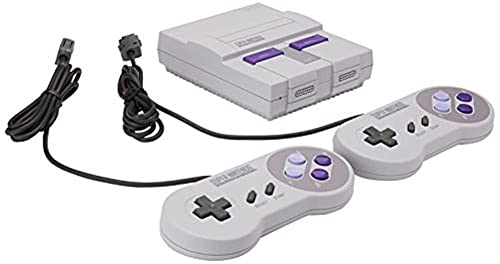
| SNES Classic Edition | Best Overall | 21 built-in titles incl. Star Fox 2 | $80-$120 | Best built-in library + best controller feel |
| Sega Genesis Mini | Best Value | 42 titles incl. Streets of Rage, Sonic 1-3 | $60-$90 | Best library/dollar; full 6-button controllers |
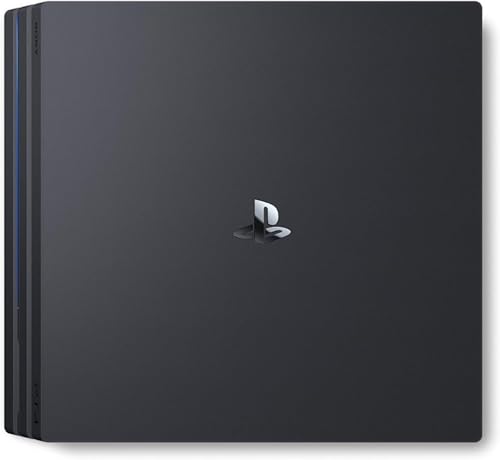
| PlayStation 4 Pro | Best Modern + Retro | 1 TB storage, PS1/PS2/PS3 classics + modern | $200-$280 | Only pick that bridges retro and modern co-op |
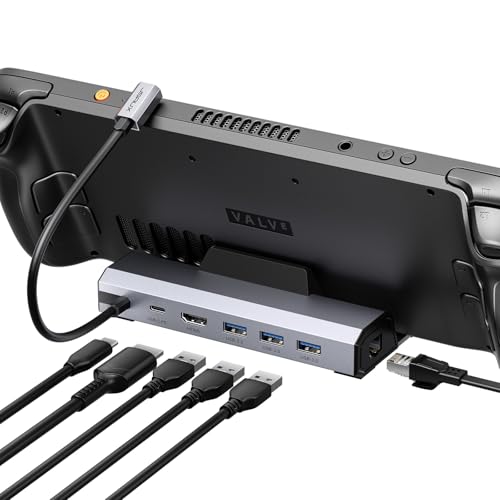
| JSAUX Docking Station 4K | Best Handheld Retro | 4K@120Hz HDMI, 100W PD, ethernet | $34.99 on Amazon (checked 2026-10-20) | Turns Steam Deck/ROG Ally into living-room retro |
Why a plug-and-play retro console still makes sense in 2026
The honest reason to buy a retro mini-console in 2026 isn't "this is the cheapest way to play these games." It's almost the opposite — there are emulation paths that cost less and run more titles. The reason is that mini consoles deliver an experience the emulator can't: instant gratification, a controller you don't have to map, and a box you can drop next to the TV that becomes someone else's introduction to a 25-year-old library. They make great gifts. They make great "this lives in the guest bedroom" hardware. And they ship the titles you want, in the form you remember, with no setup.
The market has matured. The SNES Classic Edition and Genesis Mini are five-year-plus mature products, sold continuously by Nintendo and Sega, with widely available second controllers and replacement parts. They're not the impossible-to-find launch curiosities of 2017-2019. Used PS4 Pro consoles are abundant on the second-hand market at prices that finally make sense for a kids' or guest room device, and the platform's backwards compat (PS1 Classics, PS2 Classics on PS Store, PS4-era titles) makes it the only pick on this list that bridges retro and modern.
This guide is for the buyer choosing a single device for a specific person or place. Audience: gift-buyers, parents introducing kids to "the old stuff," anyone outfitting a den or guest room with a self-contained gaming setup. Every pick below is a high-volume product on the secondary market with verified availability as of May 2026.
🏆 Best Overall: Nintendo SNES Classic Edition
Built-in library: 21 SNES titles · Output: HDMI 720p · Controllers: 2× wired SNES-style · Save states: yes · Original launch: 2017
Pros
- Best controller feel of any mini console — Nintendo built these to the original SNES spec
- Star Fox 2 is included as a previously-unreleased title; this is the only legal way to buy it
- Library is curated, not padded: 21 titles, almost all all-timers (Super Mario World, Zelda: A Link to the Past, F-Zero, Super Metroid, Mega Man X, Street Fighter II Turbo, Chrono Trigger, Earthbound, Final Fantasy III)
- Built-in save state ("Suspend Point") works exactly as you'd want it to
- Easy HDMI plug-in to any TV; no fiddling
Cons
- 720p output; modern 4K TVs do the upscale, which looks fine but isn't pixel-perfect
- Controller cables are short by modern standards (~5 ft); extension cables are cheap and abundant
- No save-anywhere file management — saves live in suspend slots, not as transferable files
- Library is locked; you can't easily add titles without modification
The SNES Classic wins the best-overall slot because of the library hit-rate and the controller. The SNES had one of the highest "% of the library still worth playing today" rates of any console, and Nintendo's curators picked the right 21. Star Fox 2 — a finished game shelved in 1995 to make way for the Nintendo 64 — is exclusive to this device as a legal purchase. The controllers feel right; the D-pad, the four-face-button layout, the shoulder triggers all match the 1991 original. For a person rediscovering their teens or introducing a child to the canon, this is the right gift.
The 720p HDMI output is more than fine on a modern TV. Nintendo's hardware does CRT-style scanline simulation in the menu (optional), which most players prefer to leave off, and the resulting picture is sharp and stable. Sound output is clean. Input lag is comparable to or lower than the original console-on-CRT setup. If you're going to play one mini console for an evening, this is the one.
Buy on Amazon: Nintendo SNES Classic Edition — $80-$120 typical; see our methodology page on how we track price ranges. See full details →
💰 Best Value: Sega Genesis Mini
Built-in library: 42 Sega Genesis / Mega Drive titles · Output: HDMI 720p · Controllers: 2× wired 6-button Genesis pads · Save states: yes · Original launch: 2019
Pros
- 42 titles for less than the SNES Classic — best library/dollar ratio in the guide
- The 6-button controllers are correct (not the 3-button original); fighters and beat-em-ups need this
- Strong selection: Sonic 1/2/3, Streets of Rage 1/2, Gunstar Heroes, Shining Force, Phantasy Star IV, Castlevania: Bloodlines, Contra: Hard Corps, Ecco the Dolphin
- Sega's M2 emulation team did the engineering — accuracy is best-in-class for mini consoles
- Save states work as expected
Cons
- 720p HDMI like the SNES Classic; same caveat
- Library mixes essentials with curios; first-time Sega owners may not know what to skip
- Controller cables are short (~5 ft)
- Some North American buyers prefer the slightly different EU "Mega Drive Mini" library
The Genesis Mini is what you buy when you want a bigger library at a smaller price. 42 games for $60-$90 works out to ~$1.50 per title, which beats the SNES Classic's ~$4-$5 per title on the dollar math. The catch is that the Genesis library has more "curios you may never play" than the SNES library — but the essentials (Sonic 1/2/3 standalone, Streets of Rage 1/2, Gunstar Heroes, Castlevania: Bloodlines, Phantasy Star IV) are all here.
The 6-button controller is the right detail. Sega's original Genesis launched with a 3-button pad and added the 6-button as the platform matured into the fighting-game era. Including the 6-button as standard makes Street Fighter II Special Champion Edition and Streets of Rage 2 playable with the correct button count, which the 3-button pad couldn't. M2's emulation — the same team behind the 3D Classics line on 3DS and the Sega Ages line on Switch — runs the original code accurately enough that any 90s player will feel at home immediately.
Buy on Amazon: Sega Genesis Mini — $60-$90 typical. See full details →
🎯 Best for a Modern + Retro Library: PlayStation 4 Pro
Storage: 1 TB internal · Output: HDMI 2.0 4K · Controllers: DualShock 4 (1 included) · Online: PSN + PlayStation Network backwards compat · Backwards compat: PS4 native + PS1/PS2 Classics via PS Store · Released: 2016 (Pro variant)
Pros
- Largest retro+modern library in this guide — every PS4 retail and digital title plus PS Store PS1/PS2 classics
- Full HDMI 4K (with HDR on supported titles) output, native 1080p120 for fast games
- DualShock 4 is comfortable and widely supported
- Strong used-market depth means cheap acquisition and easy parts availability
- Pair with a SATA SSD upgrade for a 2-3× load-time improvement
Cons
- Not "plug and play" in the same way as the mini consoles — there's a setup flow, account creation, software update on first boot
- PS Store retro purchases are individual SKUs; library cost adds up if you want a deep classic catalogue
- Console is larger and louder than the mini boxes; not the right pick for a discreet TV stand
- PS3 backwards compat is via streaming-only (PS Plus Premium) rather than native
The PS4 Pro is on this list because the question isn't always "the smallest retro mini" — sometimes it's "one box that plays everything a kid or guest might want." The PS4 Pro is the only entry that delivers both a deep retro catalogue (PS1/PS2 Classics via PSN, plus PSP/PSP2 on PS Vita via streaming) and a full modern library (every PS4 game ever released, including PS5 cross-gen titles via backwards compat). For a household that wants one console doing many jobs, this is the right answer.
Used PS4 Pros are abundant in 2026 at $200-$280 with controllers, often with a couple of pack-in titles. Adding a Samsung 870 EVO 1TB for 2-3× faster load times — covered in our PS4 Pro SSD upgrade piece — turns it into a console that feels great. The JSAUX docking station makes a great pair if you also own a Steam Deck and want both devices to share the same TV output.
Buy on Amazon: PlayStation 4 Pro 1TB — $200-$280 typical (used or refurb). See full details →
⚡ Best Handheld + Retro Living-Room: JSAUX Docking Station 4K
Output: HDMI 2.1 4K@120Hz · Power delivery: 100W USB-C PD · USB ports: 3× USB-A 3.0 · Network: gigabit ethernet · Compat: Steam Deck (LCD + OLED), ROG Ally X, Legion Go, MSI Claw
Pros
- Turns a Steam Deck or ROG Ally into a living-room retro emulation device
- 4K@120Hz output supports modern TVs; older modes for retro CRT-style scaling
- Gigabit ethernet eliminates Wi-Fi friction
- 100W PD charges the host while docked
- Way cheaper than a dedicated mini console for the breadth of emulation possible
Cons
- Requires you to already own a Steam Deck or compatible handheld
- Emulation setup (Steam, EmuDeck, controllers) has a learning curve vs the mini consoles
- The dock itself is not a console — pair-cost is high if you don't already have the handheld
The JSAUX dock is on this list because retro gaming in 2026 has moved heavily into the handheld + emulator space, and the bridge between handheld and TV is the dock. Plugging a Steam Deck OLED with EmuDeck installed into this dock turns it into a "plays everything from NES to PS2" retro console — far broader than any single mini console can offer — with the benefit that the handheld can also be picked up and used in bed five minutes later.
The trade-off is real: this only makes sense if you (a) already own a compatible handheld or are considering buying one, and (b) are willing to do the EmuDeck or RetroArch setup. If both are true, this is the best retro setup in the guide by a comfortable margin. If neither is true, buy the SNES Classic or Genesis Mini.
Buy on Amazon: JSAUX Upgraded Docking Station 4K — $40-$60 typical. See full details →
What to look for in a retro console
Built-in library vs add-your-own
Mini consoles (SNES Classic, Genesis Mini) ship with locked, curated libraries — you get what they include and not much else without modifying the device. PS4 Pro and handheld+dock setups have open libraries — you decide what's installed. The locked library is a feature, not a bug: it removes setup friction entirely and avoids the "which title to play next" decision paralysis that plagues emulator users.
Controller quality
This is the single most-undervalued spec. The SNES and Genesis Mini consoles include controllers that feel right to anyone who played the originals. The PS4 Pro's DualShock 4 is comfortable and widely supported. If you go the Steam Deck + dock route, you'll want a separate Bluetooth controller for couch use — an 8BitDo Pro 2 handles retro and modern well, or see our best PC controllers guide for the deeper dive.
HDMI output
Every modern TV expects HDMI. Mini consoles all output 720p — sharp enough for retro content on a 4K TV. The PS4 Pro outputs 4K natively. The Steam Deck + JSAUX dock outputs 4K@120 Hz, which is overkill for retro content but useful if you also play modern titles on the same setup.
Emulation accuracy
This matters for purists. The Nintendo and Sega mini consoles are first-party emulators with hardware-accurate timing — they're as close to "running the original ROM on the original silicon" as anything you'll buy in 2026 short of original hardware. RetroArch and EmuDeck on Steam Deck are also excellent but require more setup. The PS4 Pro's PS1 Classics are Sony's own emulators and have some quirks (frame pacing on some titles is imperfect) that bother experienced players but pass for everyone else.
Expandability
Mini consoles are not expandable. PS4 Pro is fully expandable (storage, controllers, accessories). Steam Deck + dock is the most expandable: it's a Linux PC and emulates anything from Atari 2600 through PS2 with appropriate cores.
Sources
- IGN — Best Retro Console
- Tom's Guide — Best Retro Game Consoles
- RTINGS — Display and Console Reviews
Related guides
- Best Retro PC Upgrade Kit 2026: Sound & Storage
- Best IDE & CompactFlash to USB Adapters for Retro PCs 2026
- Best Controller for PC Emulation: 8BitDo Pro 2 vs GameSir G7
- Best SATA SSD for a PS4 Pro Upgrade in 2026
— Mike Perry
Quick reference: console-to-era cheat sheet
A common confusion in the retro-console space is "what counts as retro." The picks above span a wide era; this cheat sheet makes the boundaries explicit.
| Era | Hardware generations | Plug-and-play pick from this list |
|---|---|---|
| 8-bit (1983-1990) | NES, SMS, Atari 7800 | NES Classic (honorable mention) |
| 16-bit (1989-1996) | SNES, Genesis, TurboGrafx-16 | SNES Classic, Genesis Mini |
| 32/64-bit (1994-2000) | PS1, Saturn, N64 | PS4 Pro (PS Plus Premium) |
| 128-bit (1999-2005) | PS2, Dreamcast, Xbox, GameCube | PS4 Pro (limited PS2 ports) |
| Seventh-gen (2005-2013) | PS3, Xbox 360, Wii | PS4 Pro (PS3 streaming, no Xbox/Wii option) |
| Eighth-gen (2013-2020) | PS4, Xbox One, Switch | PS4 Pro (native) |
The SNES Classic, NES Classic, and Genesis Mini handle their target era cleanly. Coverage for PS1/PS2/N64 era requires either a PS4 Pro with PS Plus Premium or the Steam Deck + RetroArch route — there is no first-party miniature for that generation as of 2026.
What to look for when buying a used mini console
Both the SNES Classic and Genesis Mini have aged enough that the used market is now a real option, often at $40-$70 below new pricing. Things to check:
- Original packaging and controllers. A unit without its controllers is a $20-$40 mini-console plus $40 in replacement controller cost. Buy complete.
- HDMI cable and USB power. Both ship cables in the box. Confirm they're present; replacements work but you'd rather get the originals.
- Bend marks on the controller cable. Heavy use leaves visible stress where the cable enters the controller body. A pristine cable is a sign of light use; a kinked cable is a sign you'll eventually buy a replacement.
- Power LED behavior. The system should boot to the menu within 3-5 seconds. Slow boot or flickering LED suggests internal flash trouble that may worsen.
- For PS4 Pro: check the model number on the back (CUH-7115B is the launch model; CUH-7215B is the revised cooler). Either is fine; the revised cooler runs slightly quieter. Confirm the previous owner has factory-reset and removed their PSN account.
Setup tips that save the most time
For the mini consoles:
- Plug into HDMI input 1 if you can. Some TVs default to input 1 on boot and the mini console wakes faster than the TV; you avoid the "TV says no signal" dance.
- Leave the system on the most-recent-game screen. The minis remember which game was loaded last and resume there; setting your favorite as the last-played makes weekly couch sessions one-button.
- Don't unplug the controller during gameplay. Both Nintendo and Sega miniatures handle controller hot-swap poorly; pause first, then swap.
For the PS4 Pro:
- First boot: connect to ethernet, not Wi-Fi. The system has to pull a 1-3 GB firmware update on most refurb units; wired is much faster.
- Enable cloud saves immediately if you have PS Plus. The internal HDD is the failure-prone component on a used unit; cloud saves are the cheapest insurance.
- Swap the HDD for an SSD — see our PS4 Pro SSD upgrade guide for the full workflow. A used Pro with a fresh 870 EVO is a different machine than one with an aging spinning disk.