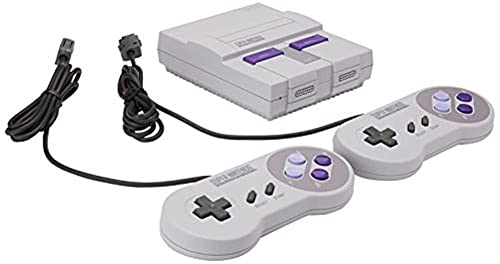
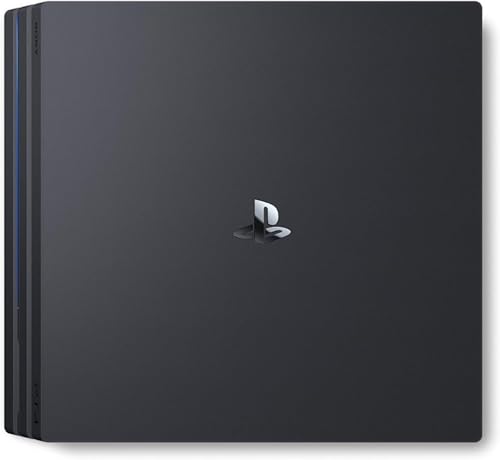
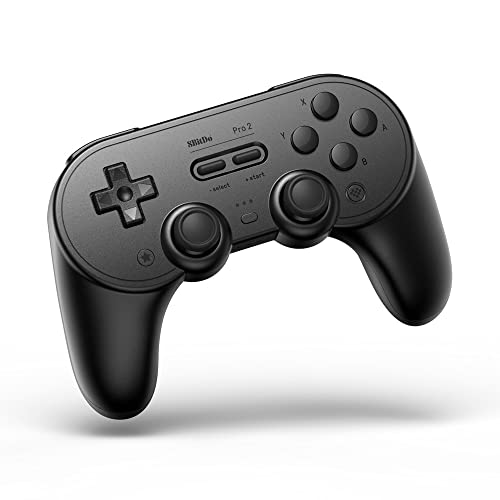
For 2026, the best plug-and-play retro gaming console is the Nintendo Super NES Classic Edition — 21 first-party SNES titles preloaded, HDMI out, the original-shape controllers in the box, and dead-simple setup. If you want a deeper Sega library or a more modern controller for emulation on PC, our value pick is the Sega Genesis Mini and our best controller pick is the 8BitDo Pro 2. For people who want a real Sony console for back-catalogue PS1/PS2/PS4 work, the PS4 Pro 1TB is the answer in 2026. This guide walks five picks across plug-and-play, modern back-catalogue, and best-in-class controllers, with concrete buying criteria for each.
5-pick comparison
| Pick | Best for | Key spec | Price range | Verdict |
|---|---|---|---|---|
| SNES Classic | Best overall | 21 preloaded games, HDMI | $200–$240 | Easiest plug-and-play in 2026 |
| Genesis Mini | Best value | 42 preloaded games, dual controllers | $200–$220 | Best Sega library for the money |
| PS4 Pro 1TB | Best modern library | 4K BD player, 1TB HDD, full PS4 library | $220–$260 | Bridges retro and modern eras |
| 8BitDo Pro 2 | Best performance controller | Bluetooth, 2.4G, USB-C, dual-stick | $50–$60 | Top-tier for emulation on PC, Switch, mobile |
| 8BitDo Sn30 Pro | Budget pick controller | Bluetooth, USB-C, SNES form factor | $40–$50 | Authentic retro feel at half the price |
Pick 1 — Best overall: Nintendo Super NES Classic Edition
- Library: 21 first-party SNES titles preloaded (Super Mario World, A Link to the Past, Super Metroid, F-Zero, Star Fox, Star Fox 2 (previously unreleased), and more)
- Output: HDMI 720p, AC adapter (USB), micro-USB power
- Controllers: Two SNES-shape wired controllers in the box
- Verdict: Best for "set it up and play tonight"
The SNES Classic remains the best-balanced plug-and-play retro console four years after its initial production run. The library curation is excellent — every preloaded title is a genuine SNES showcase, not filler — and the HDMI output is clean and properly scaled. Both controllers are the original SNES shape with full-length cables that actually reach a couch.
Two facts worth noting for 2026 buyers. First, the Hakchi modding scene is well-documented and stable; if you want to add more games to the device, the process is non-destructive and reversible. Second, Nintendo's hardware run was limited to roughly 2017–2018, so all SNES Classic units on sale today are aftermarket. Confirm the seller is a reputable Amazon Associate or a verified eBay listing before paying retail. The Eurogamer SNES Classic review details emulator behavior if you want to dive deeper.
Prices vary in 2026 by stock. Always check current price; affiliate disclosure: as an Amazon Associate we earn from qualifying purchases. See full details on the SNES Classic →
Pick 2 — Best value: Sega Genesis Mini
- Library: 42 preloaded Sega Genesis titles (Sonic 1/2, Streets of Rage 2, Phantasy Star IV, Castlevania Bloodlines, more)
- Output: HDMI 720p
- Controllers: Two original-shape wired controllers in the box
- Verdict: Best for Sega fans who want the most games per dollar
Twice the library count of the SNES Classic at roughly the same price. Sega included a deep, well-curated set that includes both the obvious headliners and a few cult titles (Mega Man: The Wily Wars, Light Crusader, Eternal Champions). The controllers in the box are the authentic six-button Genesis layout, which is a meaningful detail for fighting games where the three-button original is awkward.
Picture quality is solid via HDMI; the 16-bit pixel art holds up sharply on modern 4K panels. Output is 720p, but the integer-scaled look is what you actually want for 240p-source content — sharper than any upscaler chain. The Tom's Hardware Genesis Mini review confirms the emulator runs at native cycle accuracy.
Like the SNES Classic, Sega's production was limited; aftermarket pricing varies. Modding via Project Lunar is well-documented. Always check current price.
See full details on the Genesis Mini →
Pick 3 — Best for modern library: PlayStation 4 Pro 1TB
- Library: Full PS4 library (2,000+ titles), PS1/PS2/PS4 backwards via PS Plus Premium streaming, 4K Blu-ray player
- Output: HDMI 2.0 with 4K HDR
- Storage: 1TB SATA HDD (upgradeable to SATA SSD — see our PS4 Pro SSD guide)
- Verdict: Best for combining retro back-catalogue play with a real living-room media center
For buyers who want to dip into retro without committing to a plug-and-play museum piece, a used PS4 Pro is the best 2026 option. It plays the entire PS4 library at full quality, streams PS1/PS2/PS3 classics via PS Plus Premium, and doubles as a 4K Blu-ray player — itself increasingly hard to find as a standalone device. The 1TB HDD inside is the only weak point; pop in a SATA SSD and load times improve dramatically.
A 2026 used PS4 Pro typically lands in the $230–$280 range depending on condition and bundled games. Watch eBay listings; Sony stopped shipping major firmware updates in 2024 but the console remains stable and the PS Network back-end is fully operational.
If you are upgrading the internal drive, the Samsung 870 EVO 1TB is our pick for the swap — see the detailed guide linked above for the full procedure.
See full details on the PS4 Pro 1TB →
Pick 4 — Best performance controller: 8BitDo Pro 2
- Connectivity: Bluetooth 5.0, 2.4 GHz USB dongle, USB-C wired
- Compatibility: Switch, Switch OLED, Windows, macOS, Android, Steam Deck, Raspberry Pi
- Layout: Dual analog sticks, twin shoulder triggers, D-pad
- Battery: 20 hours per charge, USB-C charge
- Verdict: The best emulator and modern-gaming controller under $60
The 8BitDo Pro 2 is the controller most retro-emulation users land on after they try the cheaper options. Pairing is fast over Bluetooth, the 2.4 GHz dongle gives latency competitive with wired play, and the build quality is genuinely premium. It works as a Switch Pro Controller out of the box, as an Xbox-style controller on Windows, and as a generic HID on Steam Deck and Pi.
The customization software (8BitDo Ultimate) is the differentiator. Map any button to any function, save four profiles, switch profiles with a button combo. For RetroArch on a Pi 5 or for emulation on Steam Deck this is the difference between fighting your controls and forgetting they exist.
The only meaningful downside: the D-pad is good but not perfect for high-precision fighting-game inputs. If you play Street Fighter or Marvel vs Capcom seriously, consider a fight stick instead. For everything else, this is the controller.
See full details on the 8BitDo Pro 2 →
Pick 5 — Budget pick: 8BitDo Sn30 Pro
- Connectivity: Bluetooth, USB-C wired
- Layout: SNES-shape with two analog sticks added
- Compatibility: Switch, Windows, macOS, Android, Raspberry Pi
- Battery: 18 hours per charge
- Verdict: The authentic retro feel without compromising on modern features
The 8BitDo Sn30 Pro is the SNES-form-factor controller that adds analog sticks without ruining the original shape. It is the right pick if you grew up with SNES pads and want that exact button feel for emulation and Switch Virtual Console play, while still being usable for modern indie titles that need analog input.
The build is plastic-shell light; this is not the premium-feel chassis of the Pro 2. It is also a smaller controller — adults with large hands will find their pinky off the edge during longer sessions. None of those caveats matters if you specifically want the SNES form factor; the controller delivers what it sets out to deliver at half the price of the Pro 2.
For families with a Switch and a Pi-based emulation box this is the sweet pick. Two of these run you $80 total and equip both setups.
See full details on the 8BitDo Sn30 Pro →
What to look for in a retro gaming console
Library curation
The single most important spec for a plug-and-play console is the preloaded library. Twenty games you actually want to play beats fifty you have never heard of. The SNES Classic, Genesis Mini, and TurboGrafx-16 Mini all had genuinely curated lists. Lesser plug-and-play boxes from Atari or generic Chinese vendors typically include hundreds of titles, mostly homebrew or ROM-hack filler. Read the included-games list before buying; do not buy on game count alone.
Output and scaling
Modern 4K panels are not friendly to 240p original content. The best plug-and-play consoles upscale internally to 720p or 1080p with sensible pixel handling — sharp, no blur, no aspect-ratio distortion. Look specifically for HDMI output and 720p+ resolution. Avoid composite-only retro hardware unless you already own an OSSC upscaler.
Controllers in the box
A good retro console ships with two original-shape controllers with cables that actually reach a couch. The SNES Classic's controllers are notoriously short (about 5 feet); the Genesis Mini's are full length (about 9 feet). If the included controllers are short, factor in an extension cable or the cost of replacement 8BitDo Pro 2 units.
Emulation legality
The plug-and-play consoles we recommend here ship with first-party licensed ROMs. Modding them to add additional games via tools like Hakchi (SNES Classic) or Project Lunar (Genesis Mini) takes you into legally grey territory if the ROMs are not from your own dumped cartridges. We do not recommend or assist with adding non-licensed ROMs; the curated libraries are deep enough on both consoles to provide many hours of content.
Build quality and longevity
Plug-and-play consoles are aging hardware. Inspect the AC adapter on used units; the micro-USB connector is the most common failure point on the SNES Classic. The controllers' cables are also a common wear item. For long-term reliability buy from sellers who include the original box and accessories.
Sources
- Eurogamer Digital Foundry — SNES Classic review
- Tom's Hardware — Sega Genesis Mini review
- The Verge — 8BitDo Pro 2 review
Related guides
- Best SSD to upgrade your PS4 Pro in 2026
- Best budget gaming peripherals for a new PC setup
- How to image and preserve vintage IDE and CompactFlash drives
— Mike Perry