Prices change frequently — check the current price before ordering.
For most old PCs, the best SATA SSD is a 1TB Crucial BX500: it is a 2.5-inch SATA III drive with 3D TLC NAND, it drops into any machine with a SATA port and a drive bay, and it turns a decade-old boot experience from minutes into seconds. If budget is the binding constraint, the Kingston A400 does 90% of the same job for less.
Who this guide is for
This is a guide for machines that do not have an M.2 slot. That covers a surprising amount of still-useful hardware in 2026: Core 2 and first-generation Core i-series desktops, Sandy Bridge and Ivy Bridge office boxes bought secondhand for the price of a takeaway, laptops with a single 2.5-inch bay, retro builds where an IDE bridge is doing the talking, and the small-form-factor Optiplex and ThinkCentre machines that keep turning up in homelabs.
On all of those, a SATA SSD is the single highest-impact upgrade per dollar you can make — not because of sequential throughput, which the old chipset will cap anyway, but because of random-access latency. A mechanical drive services a random read in milliseconds. An SSD services it in microseconds. Every part of using a computer that feels slow on old hardware — boot, login, application launch, the first thirty seconds after you open a browser — is dominated by small random reads. That is the number the SSD fixes, and the SATA generation of your port does not change it.
What follows are five picks, the compatibility checks that actually bite, the migration hardware you need if the old machine predates SATA entirely, and the honest cases where a SATA SSD is the wrong upgrade. The overall winner is the Crucial BX500 1TB — but read the Step 0 section first, because a meaningful fraction of people asking this question have a RAM problem, not a storage problem.
Step 0 — Diagnose the bottleneck before you spend
A SATA SSD fixes storage latency. It does not fix anything else. Before ordering, spend ten minutes working out whether storage is actually your constraint.
Check disk activity under load. Open Task Manager (or iostat on Linux) and watch the disk during the slow part. If the drive sits pinned at 100% active time with a queue depth backing up, you are storage-limited and an SSD is the correct fix.
Check memory pressure. If the machine is swapping — committed memory above physical, constant paging activity — you have a RAM problem. An SSD will make swapping less painful, but it will not make it stop. On a 4GB machine running a modern browser, adding RAM is the better first purchase, and it is usually cheaper.
Check the CPU. If a single core is pinned at 100% while the disk idles, no storage upgrade will help. This is common on very old dual-core machines running modern web content.
The honest answer is that a lot of "my old PC is slow" cases are a mix — an SSD plus a RAM top-up transforms these machines, and either one alone disappoints. If you can only do one and the machine has 8GB or more, do the SSD.
The picks at a glance
| Pick | Best for | Key spec | Price band | Verdict |
|---|---|---|---|---|
| Crucial BX500 1TB | Best overall | 3D NAND, up to 540 MB/s read | $ | The capacity-per-dollar sweet spot |
| Kingston A400 960GB | Best value | Up to 500 MB/s read, DRAM-less | $ | Nearly the same experience, less money |
| Kingston A400 480GB | Legacy and retro builds | Small capacity, wide compatibility | $ | Right size for a period-correct install |
| SanDisk SSD PLUS 480GB | Best performance per gigabyte | SATA III, 7mm 2.5-inch | $ | Strong street pricing, proven controller |
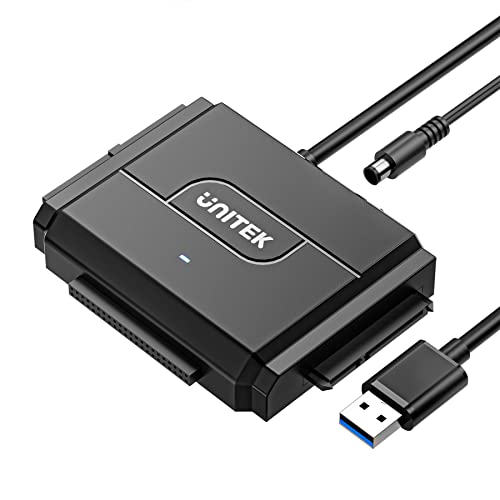
| Unitek SATA/IDE USB 3.0 adapter | Migration hardware | Dual-drive, SATA + IDE | $ | The cloning tool, not the destination |
🏆 Best Overall: Crucial BX500 1TB
Specs that matter: 2.5-inch 7mm form factor · SATA III 6 Gb/s · 3D NAND · sequential reads up to 540 MB/s and writes up to 500 MB/s per Crucial's product page · 360TB endurance rating at the 1TB capacity.
Pros
- 1TB is enough to hold a full OS install, an application set, and a real game library without capacity anxiety.
- Larger capacities on this family also carry the highest endurance rating in the range, which matters if the drive will be a boot volume for years.
- Micron's own NAND, which means a supply chain with a single owner rather than a bin-sorted mix.
- 7mm height fits every 2.5-inch bay including thin laptops.
Cons
- DRAM-less design, like every drive in this price class — sustained large writes fall off after the SLC cache fills.
- Not the fastest SATA drive available; a Samsung 870 EVO beats it on paper and on price.
The BX500 is the drive to buy when the machine is going to keep working for a while. On a SATA III port it saturates most of the interface on sequential reads; on a SATA II port it negotiates down and you lose peak throughput while keeping every bit of the latency improvement. Published comparisons place it behind DRAM-equipped drives under sustained random writes and effectively level with them under desktop workloads — the pattern Tom's Hardware's SSD roundup reports consistently across this tier.
Where the BX500 earns the top slot is capacity. A 1TB drive means you clone the old disk once and never think about storage again, which on a machine you are reviving is worth more than a marginal benchmark win. Check current price on the Crucial BX500 1TB.
For a direct comparison against the obvious step-up, see Samsung 870 EVO vs Crucial BX500.
💰 Best Value: Kingston A400 960GB
Specs that matter: 2.5-inch 7mm · SATA III 6 Gb/s · sequential reads up to 500 MB/s, writes up to 450 MB/s per Kingston's A400 product page · 300TB endurance at 960GB · DRAM-less controller.
Pros
- One of the most widely-deployed budget SSDs ever made, with a review count in the hundreds of thousands — the failure modes are extremely well documented.
- 960GB lands within a rounding error of 1TB for consistently less money.
- Kingston's firmware has been stable across a long production run.
Cons
- Slower on paper than the BX500 and slower still under sustained write load.
- DRAM-less, with all the caveats that implies for heavy random-write workloads.
The A400 is the correct answer when the goal is "make this machine usable again" rather than "build the best drive I can afford." On an old SATA II port the difference between 500 MB/s and 540 MB/s rated read speed is entirely academic — both drives negotiate down to roughly 275 MB/s practical throughput, and the user-visible experience is identical. Buy the cheaper one. Check current price on the Kingston A400 960GB.
🎯 Best for Legacy and Retro Builds: Kingston A400 480GB
Specs that matter: identical controller and NAND family to the 960GB, 160TB endurance rating, 480GB capacity.
Pros
- The right size for period-correct installs. A Windows XP or Windows 98 build does not need a terabyte, and some older BIOSes and OS installers get unhappy with large volumes.
- Small capacity keeps imaging and backup times short, which matters when you are iterating on a retro build.
- Cheap enough to buy two and keep a spare.
Cons
- Lower endurance rating than the 960GB — still far beyond a desktop workload, but worth noting.
- Capacity-per-dollar is worse than the larger drive.
This is the drive for the machine that is going to run a period-correct install behind an IDE-to-SATA bridge, or the second drive in a dual-boot retro box. The best SATA SSD for a retro PC upgrade guide covers the bridge-adapter side of that build in detail. Check current price on the Kingston A400 480GB.
⚡ Best Performance per Gigabyte: SanDisk SSD PLUS 480GB
Specs that matter: 2.5-inch 7mm · SATA III 6 Gb/s · rated sequential reads in the same 500-535 MB/s band as its peers · SanDisk controller and NAND.
Pros
- Consistently one of the strongest street prices in the sub-500GB tier.
- SanDisk's own NAND, with the vertical integration that implies.
- Very large review base with a long track record as a boot drive.
Cons
- SanDisk does not publish endurance as prominently as Kingston or Crucial, which makes the spec comparison harder.
- Shorter warranty than the Crucial and Kingston equivalents in most regions.
Pick the SanDisk when it is materially cheaper than the A400 480GB on the day you buy — which happens often enough to be worth checking. The two drives are functionally interchangeable for a boot-drive workload on old hardware. Check current price on the SanDisk SSD PLUS 480GB.
🧪 Budget Pick: whichever 480GB drive is cheaper today
This is not a cop-out. The Kingston A400 480GB and the SanDisk SSD PLUS 480GB occupy the same performance class, use the same interface, fit the same bay, and serve the same workload. Neither has a decisive technical advantage for reviving an old PC. Their street prices move independently, and on any given week one is meaningfully cheaper than the other.
The buying rule: check both, buy the cheaper one, and spend the difference on RAM. On a machine old enough to need this guide, an extra 4GB of DDR3 will do more for perceived speed than the delta between these two drives ever will.
What to look for in a SATA SSD for an old PC
DRAM-less vs DRAM cache
Every drive in this guide is DRAM-less. That design uses a portion of the host system's RAM (via the Host Memory Buffer protocol on NVMe, or simply smaller mapping tables on SATA) instead of an onboard DRAM cache. It costs money and it costs sustained random-write performance.
For a boot drive on an older machine, that trade is almost always correct. DRAM-less drives lose ground under sustained heavy random writes — large file transfers, database work, heavy virtual machine use. For web browsing, office work, game loading and general desktop use, the difference against a DRAM-cached drive is not something most users notice. If the machine is doing sustained write-heavy work, step up to a Samsung 870 EVO or equivalent.
TLC vs QLC endurance
TLC (three bits per cell) is what you want in this tier and it is what all four picks use. QLC (four bits per cell) trades endurance and sustained write speed for density, and shows up in cheaper large-capacity drives. On a boot drive that will be written to for years, TLC is the safer buy.
The endurance numbers themselves are almost never the limiting factor. Rated endurance is expressed as terabytes written; typical desktop use writes a few terabytes per year. A 160TB-rated drive at 3TB/year has a paper lifetime measured in decades. Controller or firmware failure is the realistic risk, not NAND exhaustion — which is why the advice is the same at every tier: keep backups.
SATA II vs SATA III negotiation
If your motherboard has SATA II ports (3 Gb/s, roughly 275 MB/s practical), a SATA III drive will negotiate down automatically. Nothing breaks, nothing needs configuring. You lose peak sequential throughput and keep the entire latency benefit. This is not a reason to buy a cheaper drive — SATA II SSDs are not sold anymore, and the price of a SATA III drive is not a premium.
One thing worth checking on genuinely old boards: set the SATA controller to AHCI rather than IDE/legacy mode in BIOS if the option exists. AHCI enables native command queuing and TRIM. On a Windows install that was set up in IDE mode, switching modes without preparing the OS first will cause a boot failure — search for the registry change specific to your Windows version before flipping it.
2.5-inch bay and 7mm vs 9.5mm clearance
All four picks are 7mm-height 2.5-inch drives. Older laptops sometimes have 9.5mm bays, which means a 7mm drive will fit but may rattle without a spacer — many drives ship with one, and a strip of foam works fine if yours does not. Desktop 3.5-inch bays need an adapter bracket, which costs a few dollars and is often bundled.
Cloning vs clean install
Clone when the existing installation is healthy and you want zero reconfiguration. Do a clean install when the machine is old enough that the installation has accumulated years of cruft — a fresh OS on a fresh SSD is where the perceived speed gain is largest.
The most-missed step in cloning is verifying that the source partition's used data actually fits inside the target capacity before starting. Cloning a 500GB drive with 200GB used onto a 480GB SSD works fine; cloning it with 400GB used onto the same drive does not, and most tools tell you this late. Shrink the source partition first if you are close.
Complete the migration
If the old machine is old enough that its drive is not SATA, you need bridge hardware.
The Unitek SATA/IDE USB 3.0 adapter handles both 2.5-inch and 3.5-inch drives on either interface, which makes it the single tool that covers every migration path from a pre-SATA machine: read the old IDE drive over USB, write the image to the new SATA SSD, done. It is a dual-drive unit, so it can host both ends of the clone simultaneously. This is bench hardware, not a permanent install.
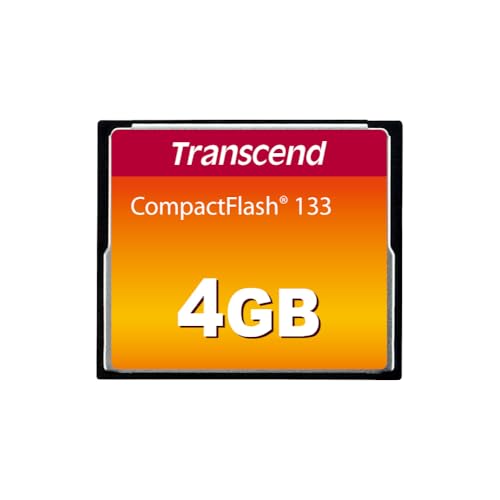
For genuinely pre-SATA machines — DOS, Windows 95, Windows 98 — the period-correct route is CompactFlash rather than a SATA SSD behind a bridge. A Transcend 4GB CompactFlash card in a CF-to-IDE adapter presents as a plain IDE drive with no drivers, no BIOS capacity headaches, and no moving parts. The retro community generally prefers this route for reliability and silence, and the CompactFlash vs SATA SSD comparison for retro storage works through the trade-offs.
Common pitfalls
- Buying a large drive for a machine with a 2TB BIOS limit. Very old boards cannot address beyond 2TB. Stay at or below 1TB and the issue never arises.
- Cloning without checking used capacity. The single most common failed migration. Check before you start.
- Leaving the SATA controller in IDE mode. You lose TRIM and NCQ. Switch to AHCI — but prepare the OS first if it was installed in IDE mode.
- Expecting sequential speed on a SATA II port. You will get roughly half the rated throughput and the full latency benefit. That is the deal, and it is a good one.
- Skipping the RAM check. An SSD on a 4GB machine running a modern browser is a partial fix at best.
When a SATA SSD is NOT the right upgrade
If the machine has an M.2 slot, buy an NVMe drive instead — it is usually the same price and several times faster. If the machine is CPU-limited on the specific workload you care about, storage will not help. And if the machine is so old that its power supply capacitors are of an age with its hard drive, spend the money on a PSU first; a dead PSU can take the new SSD with it.
Related guides
- Best Budget SATA SSD for a Retro PC Build
- Samsung 870 EVO vs Crucial BX500: Best Budget SATA SSD
- Best SATA SSD Boot-Drive Upgrade for Aging Desktops
- CompactFlash vs SATA SSD vs IDE-USB for Retro PC Storage
- Best SATA/IDE-USB Adapters for Ripping Old Drives
Citations and sources
- Crucial — BX500 SSD product page (accessed August 2026)
- Kingston — A400 solid-state drive product page (accessed August 2026)
- Tom's Hardware — Best SSDs roundup (accessed August 2026)
This piece is editorial synthesis based on publicly available information. No independent first-party benchmarking is reported.
— Mike Perry