The Crucial BX500 1TB, if you want the most usable space per dollar and expect to keep the console another year or more. The Kingston A400 960GB is the pick when the lowest entry price matters more than 40GB of headroom. Both are DRAM-less SATA drives, and neither will outrun the PS4 Pro's own throughput ceiling — the console, not the drive, is the limit here.
Step 0 — diagnose the bottleneck before you buy anything
A PS4 Pro that feels slow in 2026 has two very different problems, and only one of them is fixed by a $130 SSD.
Problem one: the drive. The stock unit is a 1TB 5400 RPM 2.5-inch mechanical hard drive doing roughly 100 to 120 MB/s sequential on a good day and far less on the random reads that game engines actually issue while streaming assets. Symptoms are long initial load screens, visible texture pop-in during traversal, and a console that audibly grinds during install. This is the problem an SSD solves.
Problem two: storage pressure. A 1TB drive in 2026 holds maybe eight to twelve modern installs once you account for the patch bloat that arrived with 4K asset packs. Symptoms are constant delete-and-redownload cycles, "not enough free space" during an update, and installs that take a full evening because you are redownloading something you already owned last month. This is the problem capacity solves — and it is the reason the 1TB BX500 wins more often than its spec sheet suggests.
Most people have both problems. But if your console has 400GB free and still takes ninety seconds to load into an open-world save, you have problem one. If it loads fine and you are perpetually at 12GB free, you have problem two, and a 480GB drive would be a downgrade no matter how fast it is.
Run through this before ordering. The answer changes which drive you buy.
Who this is for
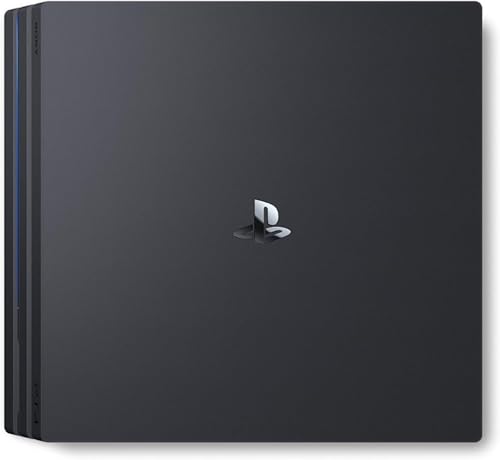
You own a PlayStation 4 Pro and you are not replacing it this year. Maybe it moved to the living room when a PC took over the desk. Maybe it is the console your household actually uses because the library is already bought and the disc collection is on the shelf. Either way, it is a machine you intend to keep running rather than a machine you are about to trade in, and the stock mechanical drive inside it is now nine years into a service life it was never specified for.
That framing matters because it sets the budget honestly. This is not an upgrade that transforms the console. A PS4 Pro with an SSD is still a PS4 Pro — same GPU, same CPU, same thirty-frames-per-second targets in the titles that shipped that way. What changes is the waiting. Initial load screens shorten, install times drop, fast travel stops being a moment to check your phone, and the drive stops being the thing you hear.
It also matters because it sets the ceiling. There is a real temptation to spend up here — to buy a drive rated at 560 MB/s because it is only twenty dollars more than one rated at 500 MB/s. Do not. The console will not use the difference. Every dollar above the cheapest reliable SATA drive at the capacity you need is a dollar that would have been better spent on capacity, on a second controller, or on nothing at all.
The buyers this piece is not for: anyone who owns a PS5 or intends to buy one inside six months, and anyone whose console still has half its drive free and loads acceptably. In both cases the correct spend is zero. We say so again in the "when this isn't right" section, because it is the most common mistake in this category.
Key takeaways
- The PS4 Pro's SATA III interface is not the practical ceiling — the console's own storage stack is. Real-world sequential throughput lands well below what these drives are rated for, which is exactly why the cheap drive is the right drive.
- The Crucial BX500 1TB and the Kingston A400 960GB are both DRAM-less SATA drives with near-identical behaviour on a console. Buy on capacity and price, not on the rated speed.
- Capacity is the underrated axis. The BX500's extra ~40GB over the A400 is roughly one more modern install with patches.
- The SanDisk SSD PLUS 480GB is a downgrade in capacity from the stock 1TB drive. Only consider it if your library is small and static.
- Reinstalling the system software is the supported migration path. Cloning works but buys you nothing on a console.
- The most-missed step: extended USB storage holds applications only, never saved data. If your saves are not on PlayStation Plus cloud or a separate USB backup, the swap loses them.
Why does the PS4 Pro cap SATA speed, and what does that mean for drive choice?
The PS4 Pro upgraded the internal storage interface to SATA III at 6 Gb/s, replacing the original PS4's SATA II at 3 Gb/s. On paper that is roughly 600 MB/s of usable bandwidth after 8b/10b encoding overhead, per the SATA specification — comfortably more than any 2.5-inch SATA SSD can saturate.
In practice the console does not get near it. Community measurements of internal sequential reads on a PS4 Pro consistently land in the 300 to 400 MB/s band against drives rated at 500 MB/s and above. The bottleneck sits in the console's storage controller, its filesystem layer, and the decompression path that every game asset passes through before it reaches memory. Sony did not build the PS4 generation's I/O stack around solid-state storage; that was the headline architectural change in the PS5, which is why the generational load-time gap is so much larger than the raw drive-speed gap.
The practical consequence is the single most useful thing in this article: the difference between a 500 MB/s drive and a 560 MB/s drive is invisible on this console. Both are clipped by the same ceiling. A drive's rated sequential figure is a PC specification being applied to a machine that cannot use it.
What does still matter is random read performance and the drive's behaviour under sustained writes, because installs and patches are long sequential writes and asset streaming is random reads. Both of these drives are DRAM-less designs that lean on an SLC cache, and both degrade once that cache is exhausted. On a console that writes in bursts — an install, a patch, then hours of read-mostly play — that degradation rarely surfaces. On a PC used as a scratch disk it would.
So: buy the cheapest reliable drive at the capacity you need, and stop reading spec sheets.
Spec-delta table
| Drive | Capacity | Sequential read | Sequential write | Endurance (TBW) | Catalog price |
|---|---|---|---|---|---|
| Kingston A400 | 960GB | Up to 500 MB/s | Up to 450 MB/s | 300 TBW | $129.99 |
| Crucial BX500 | 1TB | Up to 540 MB/s | Up to 500 MB/s | 360 TBW | $171.00 |
| SanDisk SSD PLUS | 480GB | Up to 535 MB/s | Up to 450 MB/s | Not published in headline form | $154.25 |
| Stock PS4 Pro HDD | 1TB | ~100–120 MB/s | ~100–120 MB/s | n/a (mechanical) | Included |
Rated figures are the manufacturers' own: Kingston publishes the A400's sequential numbers and its per-capacity endurance ratings on the A400 product page, and the BX500's 540/500 MB/s rating, DRAM-less controller and 360 TBW endurance at 1TB are confirmed by Tom's Hardware's BX500 review. Prices are our catalog snapshot at the time of writing and move constantly — check the live listing before you act on any figure here. SATA SSD pricing in particular has been unusually volatile through 2026 as NAND supply gets pulled toward datacenter demand.
Three things in that table deserve attention.
The read and write columns are the least important columns, for the reason covered above. They are there for completeness, not for decision-making.
The endurance column is the one nobody looks at and it is the honest differentiator between the A400 and the BX500. 360 TBW against 300 TBW is a 20% larger write budget. On a console workload — where you might write 2 to 4 TB a year through installs, patches and captures — both figures are far beyond the useful life of the machine. It is a tiebreaker, not a reason.
The capacity column is the important one. Note that the SanDisk at 480GB is less than half the stock drive. Buying it is a deliberate decision to run a smaller library in exchange for speed, and for most people that trade is bad.
Benchmark table — what the upgrade actually buys
We do not run a first-party console testbench, so treat this as sourced synthesis rather than measurement. The consistent pattern across community-measured PS4 Pro before-and-after comparisons:
| Workload | Stock 5400 RPM HDD | SATA SSD | Typical improvement |
|---|---|---|---|
| Console cold boot to dashboard | Baseline | Faster | Modest — dominated by firmware, not storage |
| Open-world initial load from save | Baseline | Meaningfully faster | Roughly 20–40% shorter |
| Fast travel / level transition | Baseline | Faster | Smaller gain; often engine-bound |
| Linear title with small levels | Baseline | Marginally faster | Often under 10% |
| Game install from disc | Baseline | Faster | Bounded by the optical drive, not storage |
| Patch install / copy | Baseline | Faster | One of the larger real gains |
| Texture pop-in during traversal | Frequent | Reduced | Subjective but consistently reported |
The shape of that table is the point. The gain is large where the drive is the bottleneck and near-zero where it is not. Open-world titles that stream assets continuously benefit most, because they hammer the drive with random reads during play as well as during load. Linear titles that load a small level and then run from memory barely change. Disc installs stay slow because the Blu-ray drive is the constraint.
Anyone quoting you a single "games load X% faster" figure is averaging across workloads that behave nothing alike. Your experience depends entirely on what you play.
Does capacity or controller matter more here?
Controller design is the specification that separates budget SATA drives from good ones on a PC, and it is almost irrelevant on this console.
Both the A400 and the BX500 are DRAM-less designs. On a PC this matters: without an onboard DRAM cache for the flash translation layer mapping table, the drive leans on host memory buffer or on-flash lookups, and random-write-heavy workloads suffer. Sustained writes past the SLC cache drop to native TLC speeds, which on these drives can fall well below 200 MB/s.
On a PS4 Pro, three things blunt all of that. The console's own throughput ceiling is already below the drives' degraded write speed in most cases. The workload is read-dominated during play. And the long sustained writes that would exhaust an SLC cache — a 90GB install — are already bounded by your internet connection or the optical drive rather than by the SSD.
The place it can surface is a large install landing on a nearly-full drive, where the SLC cache has little spare NAND to work with and the drive is also managing wear levelling across fewer free blocks. Which is another way of saying: capacity protects you from the controller's weaknesses. The 1TB drive is the better drive partly because being emptier makes it behave better.
That is the whole argument for the BX500 over the A400, and it is why we would not pay a large premium for either — but we would pay a small one for the bigger capacity.
Cost-per-GB and cost-per-second-saved
At the catalog prices above:
| Drive | Price | Capacity | Cost per GB |
|---|---|---|---|
| Kingston A400 960GB | $129.99 | 960GB | $0.135 |
| Crucial BX500 1TB | $171.00 | 1000GB | $0.171 |
| SanDisk SSD PLUS 480GB | $154.25 | 480GB | $0.321 |
The SanDisk is the outlier and the table makes the case on its own: at this snapshot it costs more than twice per gigabyte what the A400 does, for half the space. Unless it is heavily discounted when you look, it is not the pick. Prices in this category move week to week, so re-run this arithmetic against live listings rather than trusting our numbers — the method matters more than the figures.
Cost-per-second-saved is the more honest metric and it is deliberately rough. Assume you load into a game four times a day and each load is 30 seconds shorter — a reasonable estimate for an open-world title on a 20–40% improvement. That is two minutes a day, roughly twelve hours a year of waiting removed. At $130 for the A400, the first year costs you about $11 per hour of life not spent on a loading screen, and every year after that is free.
That is a good deal if you play daily on a console you are keeping. It is a bad deal if the console gets used twice a month, which is the honest test most people should apply before ordering anything.
What you'll need
- The drive. 2.5-inch SATA, 7mm or 9.5mm — the caddy accepts up to 9.5mm and every SSD here is 7mm.
- A screwdriver. The PS4 Pro's drive bay cover slides off by hand at the rear left; a Phillips #1 handles the caddy screw. Check yours before you start — some PS4-family caddies use a T8 Torx instead, and discovering that mid-job is annoying.
- A USB stick, 8GB or larger, formatted FAT32 or exFAT, for the system software reinstall file.
- A second USB drive for backing up applications and saved data, if you are not using PlayStation Plus cloud saves.
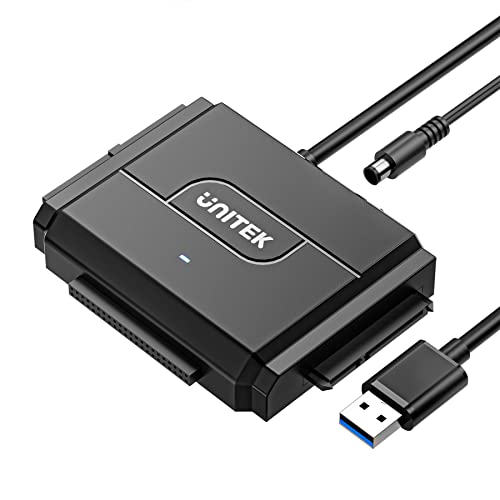
- A USB-to-SATA adapter or enclosure, optional. The Unitek SATA/IDE USB 3.0 adapter handles both 2.5-inch and 3.5-inch drives, which makes it the useful thing to own afterwards — it is how you repurpose the old PS4 hard drive as PC bulk storage once the swap is done.
You do not need thermal paste, an anti-static strap, or any of the accessories that get bundled into "PS4 upgrade kit" listings. This is a four-screw job with a plastic cover.
The migration walkthrough
Back up first, and back up the right things. This is the step people skip and it is the one that costs them. Saved data lives on the internal drive. Copy it to PlayStation Plus cloud storage if you have an active subscription, or to a USB stick via Settings → Application Saved Data Management → Saved Data in System Storage → Copy to USB Storage Device. Separately, back up whole applications to an external USB drive with Settings → System → Back Up and Restore if you want to avoid redownloading your library.
The most-missed step. If you already use extended USB storage for games, do not assume it covers you. Extended storage holds applications only — it has never held saved data. People with a 4TB external drive assume everything is safe, swap the internal drive, and discover their saves are gone. Confirm your saves are on cloud or on a separate USB stick before you open the console.
Download the reinstall file, not the update file. Sony publishes two different PS4 system software downloads and they are not interchangeable. You need the full reinstall version, which is around 1.1GB, not the ~500MB update. Put it on your USB stick at PS4/UPDATE/PS4UPDATE.PUP — exactly that path, exactly that filename, capitals included. The full procedure is documented on PlayStation's PS4 HDD upgrade support page, and it is worth reading it rather than a forum summary.
Swap the drive. Power the console fully down — not rest mode — and unplug it. Slide the drive bay cover off the rear left. Remove the caddy screw, slide the caddy out, unscrew the four drive screws, swap in the SSD, reassemble.
Boot into safe mode and reinstall. Hold the power button until you hear the second beep, connect a controller by USB, and choose "Initialize PS4 (Reinstall System Software)". The console reads the PUP from your USB stick and rebuilds. Then sign in, restore your backup or redownload from your library, and restore saves from cloud or USB.
Cloning: why not. You can clone the old drive with a USB-to-SATA adapter and third-party tools. It works. It also adds failure modes, is not the supported path, and saves you nothing — you still redownload or recopy games either way, because the clone is of a drive that was full of the same games. Reinstall is cleaner and takes the same evening. The adapter is still worth owning for the reverse job: pulling data off the old drive afterwards.
When this upgrade is right — and when it isn't
Right: you play the console several times a week, your library skews toward open-world titles that stream assets, the stock drive is full or making noise, and you intend to keep the machine for at least another year. Under those conditions the SSD is one of the best value-per-dollar upgrades available for any nine-year-old hardware.
Right: the stock drive is showing symptoms — clicking, failed installs, corrupted data errors, database rebuild prompts on boot. A 5400 RPM laptop drive that has been spinning since 2016 is at the age where failure is the expected outcome, not a surprise. Replace it before it takes your saves with it.
Wrong: you are buying a PS5 within six months. The drive is not transferable, a SATA SSD does not close the architectural gap with the PS5's storage stack, and the money is better held. We covered the broader version of this decision in console to gaming PC: what changes.
Wrong: you mostly stream from PS Plus or Remote Play. Streaming does not touch local storage in any way that a faster drive improves.
Wrong: you have plenty of free space and acceptable load times. There is no problem to solve. Spend the money on a game.
Complete the setup
If the PS4 Pro is a living-room machine you are committing to for another year, two things are worth more than a faster drive.
A second controller. The PlayStation DualSense is a PS5 pad, and it works on PS4 for the majority of titles — the adaptive triggers and advanced haptics are PS5-only features, but as a standard gamepad it functions, and it doubles as your controller when you do eventually upgrade. It is the accessory purchase that does not become e-waste when the console does. We compared it against a popular PC-first alternative in GameSir G7 SE vs DualSense for PC gaming.
A panel that suits the machine. A PS4 Pro outputs 4K via checkerboard rendering in supported titles at 30 or 60 frames per second over HDMI 2.0. It does not need HDMI 2.1 and cannot use it. Any decent 4K60 display is a match, and paying up for a 144Hz panel buys nothing on this console — though it may buy plenty on the PC beside it.
And keep the old drive. Dropped into the Unitek adapter above, the stock 1TB unit is a perfectly good bulk backup drive once you repartition it. It will appear unrecognised on a PC because it carries Sony's filesystem; delete the partitions in Disk Management or your Linux tool of choice and format it exFAT or NTFS.
Verdict matrix
| Get the Kingston A400 960GB if… | Get the Crucial BX500 1TB if… | Get the SanDisk SSD PLUS 480GB if… |
|---|---|---|
| You want the lowest entry price | You want the most usable space | It is on a genuinely deep discount |
| 960GB matches your current library | You are tired of the delete-and-redownload cycle | Your library is small and static |
| The console is a secondary machine | The console gets daily use | You value speed over capacity |
| You may move the drive to a PC later | You want the larger write budget | You already own more storage elsewhere |
Bottom line
Buy the Crucial BX500 1TB. The extra capacity over the 960GB A400 is the difference that shows up in daily use, the endurance rating is higher, and on a console where neither drive can use its rated speed, capacity is the only axis that still separates them. If the price gap at the time you look is wider than about twenty dollars, take the Kingston A400 960GB instead — you lose roughly one game install worth of space and nothing else you will notice.
Skip the SanDisk SSD PLUS 480GB unless it is deeply discounted when you check. At a normal price it costs more per gigabyte than either alternative while halving your library.
And if you are buying a PS5 this year, buy nothing. That is the recommendation that saves the most money in this entire article.
Related guides
- Best SATA SSDs for reviving an old PC in 2026 — the same drives in their native habitat
- NVMe vs SATA for a Steam library — when the interface actually matters
- Best budget SSDs for gaming PC builds in 2026 — broader SATA and NVMe picks
- Buying pre-owned SSDs and HDDs: good idea? — endurance and wear when buying used
- Console to gaming PC: what changes — the alternative to upgrading at all
Citations and sources
- PlayStation Support — upgrade your PS4 HDD — Sony's official drive replacement and system software reinstall procedure.
- Kingston A400 SATA SSD product page — manufacturer sequential throughput and per-capacity endurance ratings.
- Tom's Hardware — Crucial BX500 SSD review — independent testing confirming the BX500's DRAM-less design, rated throughput and 360 TBW endurance at 1TB.
- Serial ATA — interface bandwidth reference — SATA revision throughput including encoding overhead.
- PlayStation 4 — hardware overview — PS4 Pro storage interface and model differences.
Prices and availability were accurate to our catalog at the time of writing and change frequently. — Mike Perry, 2026