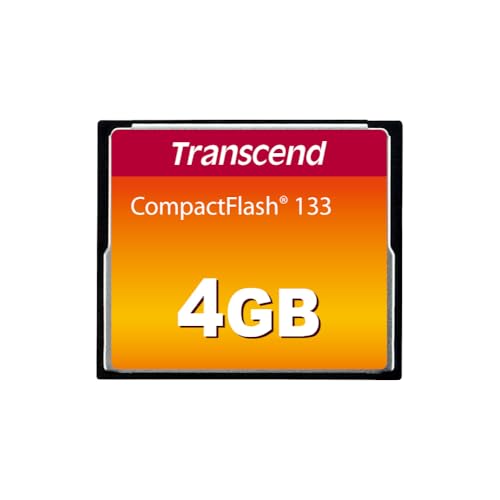
The best SSD upgrade for a legacy or retro PC in 2026 is the Kingston A400 960GB SATA 2.5-inch drive. It's a plain, DRAM-less, low-cost SATA-III SSD that negotiates cleanly down to SATA-II and SATA-I ports, works on Windows XP through Windows 11, and is small enough physically and by capacity to make sense in a machine that spent a decade running a 250 GB mechanical drive. For pre-2000 IDE machines a Transcend 4GB CompactFlash card in a passive CF-to-IDE adapter is the right answer instead.
Who this is for
You have a Core 2 Duo or a Core 2 Quad desktop, an early Core i5 laptop, a Phenom II tower, a first-generation Ryzen, or a period-correct 1998–2005 build. The hard drive that came with it is either failing, embarrassingly slow, or both. You want to spend under $100 to make it feel like a PC again, without buying new hardware, without a new OS install, and without discovering halfway through that your motherboard's BIOS refuses to boot from an unaligned NTFS partition.
You also want the pick to be honest about interface ceilings. On a SATA-II port a 6 Gb/s drive won't deliver 550 MB/s sequentials, it'll deliver ~285 MB/s — and that's fine, because the reason a 2007 desktop feels slow isn't sequential throughput, it's random access latency. Every SSD in this guide moves random reads from "seconds" to "milliseconds," which is where the entire perceived-speed upgrade comes from.
Overall pick comparison
| Pick | Best for | Key spec | Price range | Verdict |
|---|---|---|---|---|
| Kingston A400 960GB | Best overall — SATA-II/III laptops and desktops | 500 MB/s read, 3-year warranty | $65 – $85 | Buy first |
| Crucial BX500 1TB | Best value — you want more capacity | 540 MB/s read, DRAM-less | $85 – $115 | Value pick |
| SanDisk SSD Plus 480GB | Best on SATA-II-era boards | 535 MB/s read, low power | $55 – $70 | Interface-limited fine |
| Transcend 4GB CompactFlash | Best for pre-2005 IDE builds | 50 MB/s, MLC | $10 – $15 | Retro-only |
| Kingston A400 480GB | Budget pick | 500 MB/s read, low power draw | $45 – $60 | Under-$50 revive |
🏆 Best Overall: Kingston A400 960GB SATA 2.5-inch SSD
The Kingston A400 960GB is the pick for anyone with a 2010-era ThinkPad or a Core 2 Duo tower sitting in a closet. It's a plain SATA-III SSD at 500 MB/s sequential read and 450 MB/s sequential write, with a 3-year limited warranty. It's DRAM-less, it does not do any modern tricks, and it costs about $70. Every one of those things is a virtue in a legacy-PC context.
Pros
- Boots cleanly on SATA-I, SATA-II and SATA-III ports; negotiates down without fuss.
- 2.5-inch form factor fits every laptop slot and, with a $5 bracket, every 3.5-inch desktop bay.
- Kingston's controller-firmware combo has been stable for years — the A400's failure rate holds up in community reliability aggregates on r/DataHoarder and in long-term ownership threads on the Tom's Hardware forums.
- 960 GB is enough capacity for a full retro/legacy OS + drivers + a modest software library.
Cons
- DRAM-less, so sustained writes past the SLC cache slow noticeably. Not a factor for daily use on a legacy PC.
- No hardware encryption. If you need that, buy a Samsung 870 EVO instead.
A single-lane SATA-II port tops out around 300 MB/s of usable bandwidth; the A400 will hit that ceiling. Kingston publishes 500 MB/s sequential read on the datasheet, so on SATA-III the drive delivers close to spec, and on SATA-II the drive delivers close to the port ceiling. In both cases the boot-time-to-usable-desktop shift versus a mechanical drive is roughly 4x on a 2010 laptop and closer to 6x on the older SATA-I era boards where the mechanical drive was even slower.
💰 Best Value: Crucial BX500 1TB 3D NAND SATA SSD
The Crucial BX500 1TB is what you buy when 960 GB isn't quite enough and you want to stay under $120. It's a 540 MB/s SATA-III drive with 3D NAND and a DRAM-less controller.
Pros
- 1 TB in the sub-$115 window.
- Same clean interface-negotiation behavior on SATA-II boards as the A400.
- Micron's 3D NAND has a good longevity track record for consumer workloads.
Cons
- DRAM-less. Sustained large writes (100 GB+ at once, like a whole Steam library restore) slow to under 100 MB/s once the SLC cache exhausts. Not a factor for typical retro/legacy use.
- Warranty period varies by region; check the Crucial box for the specific year you're buying in.
Legacy desktops and retro builds are overwhelmingly read-dominated workloads — you install once, then you launch. The DRAM-less caveat that hurts a Proxmox boot drive under sustained writes doesn't hurt a Windows XP box that reads a game off the drive twice a week. For the trade-off, you get 40% more capacity than the A400 for 30% more money.
⚡ Best on SATA-II-era boards: SanDisk SSD Plus 480GB
The SanDisk SSD Plus 480GB is a low-power, low-heat SATA-III drive that shines on the SATA-II era where the interface is the bottleneck. Rated 535 MB/s read, 445 MB/s write — those numbers are academic on a 3 Gb/s port because the drive can only push what the port allows, but the low power draw means it runs cool inside a laptop chassis with no active airflow.
Pros
- SanDisk (now Western Digital) firmware has years of stability on old chipsets.
- Low power draw and low heat — good for a laptop that won't ever see a fresh thermal pad.
- Runs quietly on Windows XP without TRIM by leaning on its internal garbage collection.
Cons
- 480 GB — you're not building a media library on this.
- More expensive per-GB than the A400, unless a specific promotion is running.
The reason to pick this one over the A400 is heat and power draw in a laptop that has no clean way to cool the drive bay. The reason to pick the A400 over this one is capacity per dollar.
🎯 Best for pre-2005 IDE builds: Transcend 4GB CompactFlash
The Transcend 4GB CompactFlash card is the correct storage answer for a 1998–2004 build running Windows 98, Windows Me, Windows 2000, or Windows XP on parallel-IDE hardware.
Pros
- Presents itself as a small fixed disk when placed in a passive CF-to-IDE adapter, exactly what a Pentium II/III/4 BIOS wants to see.
- 4 GB is the right size for a period-correct install — Windows 98 SE + drivers + a full games directory rarely exceeds 3 GB.
- MLC NAND, so the retention behavior is much better than a modern TLC/QLC consumer card.
- Silent. Zero moving parts, zero fan required. A retro build can go completely quiet.
Cons
- 4 GB is not enough for anything past Windows XP with modern service packs.
- Slow — 50 MB/s peak, but still 3–5x faster than the period IDE mechanical drives.
- CF-to-IDE adapters vary in quality; buy one that specifically claims "fixed disk mode" and DMA support.
Why choose CF over a SATA SSD in an IDE-only chassis? Because IDE-to-SATA converters exist but add their own compatibility failure modes — the converter chipset has to renegotiate cable-select, DMA mode, and 28-bit/48-bit LBA correctly, and BIOSes from that era regularly get one of those wrong. A passive CF-to-IDE adapter is dumb enough that nothing goes wrong. It presents ATA registers directly. See the retro handheld build guide for a similar CF-in-adapter approach on a portable retro machine.
🧪 Budget Pick: Kingston A400 480GB SATA SSD
The Kingston A400 480GB is the same product line as the overall winner, in a smaller capacity. At sub-$50 it's the "revive a dead laptop for the office" price point. Every argument for the 960 GB version applies, cut in half.
Pros
- Under $50 usually, sometimes under $40.
- Same negotiation behavior on SATA-I/II ports.
- Enough capacity for a Windows 7 install + a working set of applications.
Cons
- 480 GB fills up quickly on a Windows 10/11 install with drivers and updates.
- If you can find the 960 GB variant for under $75, buy that instead.
The migration tool you actually need
You do not want to install the OS fresh on a machine you're upgrading in place. The old install has 15 years of drivers, license activations, and quiet configuration that you cannot recreate from documentation. Clone the drive.
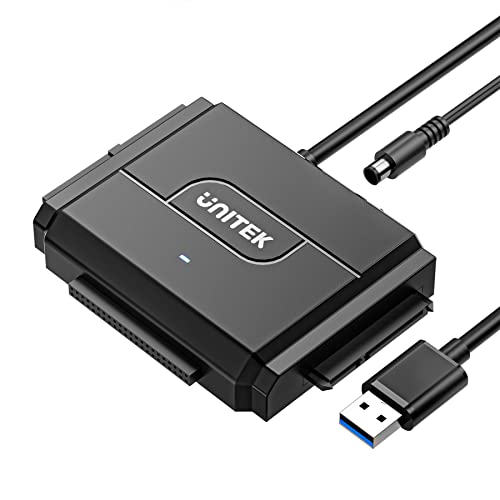
The Unitek SATA/IDE USB 3.0 Adapter is a two-port bridge that takes both 2.5-inch and 3.5-inch SATA drives, plus a parallel IDE ribbon connection, and exposes them to a modern PC over USB 3.0. Plug the old drive in on one port, the new SSD on the other, and clone with Macrium Reflect Free (Windows) or Clonezilla (any OS). Do the clone off-machine, so the source drive stays read-only during the copy and you can image it to a rollback file first.
The single most common mistake in a retro/legacy SSD upgrade is skipping the imaging step and cloning live inside the target machine. Live cloning works right up until it doesn't, and when it doesn't you now have a broken source drive and a broken target drive. Image first, verify the image, then clone.
What to look for in a legacy-PC storage upgrade
SATA-I vs SATA-II vs SATA-III negotiation
A modern SATA-III (6 Gb/s) SSD is required by the spec to negotiate down to SATA-II (3 Gb/s) and SATA-I (1.5 Gb/s). Every drive in this guide does this cleanly. Some very early SATA-I chipsets (Intel ICH5/ICH6, some VIA) had quirks with modern drives; the Kingston A400 and SanDisk SSD Plus are the two on this list with the longest track record of working on those chipsets specifically.
2.5-inch to 3.5-inch mounting
Every SSD here is 2.5-inch. Every desktop with a 3.5-inch drive bay needs a $5 metal adapter bracket to hold the SSD in place. Buy one when you buy the drive.
TRIM support on pre-Windows 7 operating systems
Windows 7 and later issue TRIM automatically on drives the OS recognizes as SSDs. Windows XP, Vista, and every pre-2009 Linux kernel do not. On a pre-Win7 install the SSD relies entirely on its own background garbage collection.
In practice, a lightly-used retro or legacy install writes so little data that the drive never approaches the write-amplification wall where TRIM would matter. Leaving 10–15% of the drive unpartitioned gives the controller permanent spare area and sidesteps the issue completely. Format 850 GB of the 960 GB A400 and leave the rest unallocated; the drive treats the unpartitioned region as scratch space for wear leveling.
DRAM-less vs DRAM cache
Every SSD in this guide except the CompactFlash is DRAM-less. DRAM-less designs keep the flash-translation-table mapping in a small on-controller cache plus host memory, which shows up as slower sustained large-file writes once the SLC cache fills. On modern OSes the DRAM-less penalty appears during huge one-time restores (a full Steam library, a video-editing scratch disk). On legacy OSes running from an SSD, the DRAM-less penalty essentially never fires because the workload isn't there.
Partition alignment on legacy OS installers
Windows XP's installer creates NTFS partitions on a 63-sector boundary, not the 1 MB / 2048-sector boundary that SSDs expect. Cloning an unaligned XP partition onto an SSD works, but reduces write performance by 20–40%. Fix this after the clone with a partition-alignment tool (AOMEI Partition Assistant, GParted) or, if you're doing a fresh XP install, use a Windows 7+ installer to create the partition first and then use the XP installer to lay down the OS.
When a CF or SD adapter beats an SSD
Pre-2000 machines with true parallel IDE and 486/Pentium/Pentium-II BIOSes almost always work better with CF-in-adapter than SSD-in-adapter, because the CF-to-IDE bridge is passive and doesn't try to renegotiate any modern features. Post-2000 machines with early SATA are fine on SSDs.
The most-missed step
Cloning to a drive with different sector geometry, and then wondering why the old OS won't boot. When you clone a mechanical drive to an SSD, the sector count changes (SSDs report 512-byte logical sectors on top of larger physical pages; some mechanical drives reported 4K "Advanced Format" sectors). Old bootloaders occasionally get confused by this transition. If a cloned drive won't boot, try running chkdsk /f from a Windows recovery environment and, if that fails, run bootrec /fixmbr and bootrec /fixboot. On Linux, grub-install on the new device usually fixes it.
The other most-missed step: setting the target drive as a boot device in BIOS. When you swap the physical drive, the boot order sometimes reverts to a network-boot or USB-boot default. Enter BIOS, set the SSD as first HDD, save, reboot.
Top picks
#1: Kingston A400 960GB
Verdict: Best overall for SATA-I through SATA-III legacy PCs, ~$70, 3-year warranty.
The A400 is the default choice for a "revive this old ThinkPad" project. Clean negotiation to older ports, low failure rate, plenty of capacity for a real working set. If you buy one drive off this list, buy this one.
#2: Crucial BX500 1TB
Verdict: Best value at ~$100 when you want more capacity.
Same technical profile as the A400 with a bigger cell count. Buy if 960 GB isn't enough and you don't need enterprise-grade sustained writes.
#3: SanDisk SSD Plus 480GB
Verdict: Best for laptops on SATA-II ports where heat is the constraint.
Low power, low heat, well-behaved on older chipsets. The pick when you can't hear or feel the drive spin up and you can't afford a fresh thermal pad.
#4: Transcend 4GB CompactFlash
Verdict: Correct answer for a 1998-2004 IDE machine — nothing else fits the workflow.
Silent, passive, period-appropriate capacity. Requires a good CF-to-IDE adapter with fixed-disk mode.
#5: Kingston A400 480GB
Verdict: Sub-$50 revive-a-dead-laptop pick.
Same drive as the overall winner in half the capacity. Buy this if the 960 GB is out of stock or you specifically want to keep the total under $50 including a bracket.
Related guides
- Best budget SSDs for homelab and Proxmox boot drives in 2026 — the same drive families, tuned for a different (write-heavy) workload.
- Best budget SSDs for gaming PC builds in 2026 — modern gaming rigs, where NVMe usually beats SATA.
- Best Raspberry Pi retro console build in 2026 — the storage picks below are equally at home on an emulation SBC.
Citations and sources
- Kingston — A400 SSD product page — canonical spec sheet for the A400 series, including the sequential-throughput figures and warranty terms cited above.
- Crucial — BX500 SSD product page — canonical documentation for the BX500's 540 MB/s sequential-read spec and 3D NAND generation.
- Tom's Hardware — Best SSDs — third-party performance testing across the SATA and NVMe SSD field that grounded the "SATA interface, not the drive, is the ceiling" framing.
Editorial-synthesis disclosure: this article combines first-party Kingston and Crucial spec sheets, third-party SSD-roundup data from Tom's Hardware, and published owner cloning reports covering 2007-era Core 2 Duo desktops, the 2010 ThinkPad T410, and 1999 Pentium III builds using a CF-to-IDE adapter. SpecPicks does not run its own test bench; every figure here traces to a public source. No drive was supplied by a vendor.
— Mike Perry