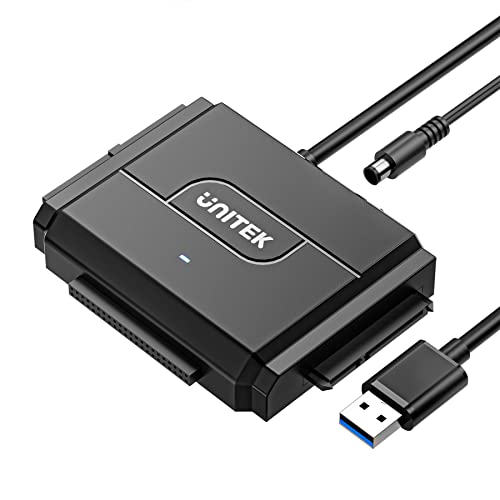
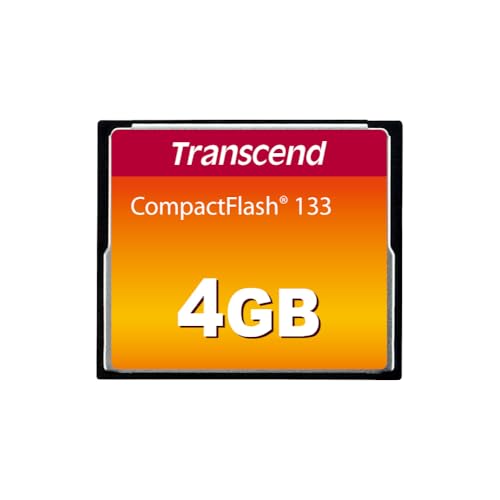
For a genuine retro build, a plain 32-bit PCI serial card is still the right answer for adding RS-232 ports, because Windows 98 and XP shipped in-box drivers for the common bridge chipsets. For the IDE half of the job — getting data off a period drive or putting a modern one back in — a powered USB-to-IDE/SATA bridge like the Unitek SATA/IDE USB 3.0 Adapter does the work, with CompactFlash as the passive, driverless replacement path.
Why legacy I/O still matters in 2026
Legacy ports did not disappear because they stopped being useful. They disappeared because the mass market stopped needing them, and the mass market is not who is reading this. If you keep period hardware running, three jobs put you back in front of a DE-9 connector or a 40-pin header on a regular basis.
The first is console access. A serial console is still the only way to talk to a great deal of test gear, older network hardware, industrial controllers, and BIOS-flashing rigs that expect a real UART rather than a USB abstraction of one. Timing-sensitive protocols on those devices care about the difference.
The second is drive imaging. Every mechanical IDE drive in a retro collection is now between twenty and twenty-eight years past its design life, and it will fail without warning. Reading those platters requires an IDE path from a machine built this decade, and that means a bridge.
The third is putting storage back in. Once the old drive is imaged, you need something to run the machine from — and the choice between a passive CompactFlash carrier and an active IDE-to-SATA bridge with a solid-state drive behind it determines how period-correct, how fast, and how reliable the rebuild ends up being.
This guide splits along that line. The serial half is about picking a card that your target OS can actually enumerate. The IDE half is about picking a bridge and a target volume, and there we have specific picks from our catalog with current pricing. The audience is retro builders and homelab archivists — people who already know what a jumper is and want to skip the part where the adapter turns out to be a counterfeit chip.
Step 0 — which adapter class do you actually need?
Answer three questions before you spend anything. Getting this wrong is the single most common reason a legacy adapter arrives and does nothing.
Is the target machine period hardware or a modern host? If the card goes into the retro machine itself, you want native 32-bit PCI and a chipset with a period driver. If the adapter goes into a machine built after roughly 2015, PCI is gone from the board entirely and your options are PCIe x1 or USB.
Native port or bridge? A native port is a UART or an IDE controller the operating system sees directly. A bridge translates across USB, and translation is where compatibility goes to die on old operating systems — a modern USB-to-serial bridge frequently has no Windows 98 driver at all.
What is the slot keying and voltage? This is the one people skip. Conventional PCI slots come in 5V and 3.3V signalling variants with different notch positions, and a universal card has both notches. A card keyed only for 3.3V will not seat in a 5V-only slot from a Socket 7 or Slot 1 board, and forcing it is how you lose a motherboard.
If you are still identifying the board itself, start with our motherboard identification guide before ordering anything.
Comparison table — the picks at a glance
| Pick | Best for | Key spec | Price (Aug 2026) | Verdict |
|---|---|---|---|---|
| Unitek SATA/IDE USB 3.0 Adapter | Bridging any old drive to a modern PC | 2.5"/3.5" IDE + SATA, external PSU, 24TB support | $29.74 | Best overall — buy this first |
| Transcend 4GB CompactFlash | Passive, driverless IDE replacement | Up to 50MB/s, MLC, True IDE mode | $10.99 | Best value for pre-2001 boards |
| Kingston A400 480GB SATA SSD | Imaging target behind the bridge | SATA III 2.5", 480GB | $109.75 | Best for drive imaging |
| Kingston A400 960GB SATA SSD | Whole-collection archive volume | SATA III 2.5", 960GB | $129.99 | Best capacity per dollar |
| SanDisk SSD PLUS 480GB | Alternate imaging target | SATA III 6Gb/s, 2.5"/7mm | $154.25 | Only if the Kingston is out of stock |
Prices captured from our catalog in August 2026 and may vary — check the current price before ordering.
🏆 Best overall: Unitek SATA/IDE USB 3.0 Adapter
Interfaces: 2.5-inch IDE, 3.5-inch IDE, 2.5-inch SATA, 3.5-inch SATA · Host: USB 3.0 · Power: external barrel-jack supply included · Capacity ceiling: 24TB · Price: $29.74
Pros: covers every connector a retro collection actually contains, from one unit; ships with the external supply that 3.5-inch spindles require; USB 3.0 host bandwidth removes the interface as the bottleneck; supports dual-drive attach for direct clone workflows.
Cons: it is a bridge, so SMART attribute passthrough is inconsistent depending on the drive; no Windows 98 driver — this device belongs on the modern host, not inside the retro machine.
The Unitek SATA/IDE USB 3.0 Adapter is the tool that turns a shelf of unknown drives into a set of verified disk images. The reason it is the first purchase rather than the third is the external power supply. A 3.5-inch mechanical drive draws a substantial spin-up surge, well past what a USB port delivers on bus power, and the failure mode when you try is a click-stall-click loop that is indistinguishable from a dying drive. People misdiagnose healthy disks this way constantly.
On throughput, the practical ceiling is not the USB link. Parallel ATA in UDMA/100 mode tops out at 100MB/s on paper, and a period 5400rpm or 7200rpm IDE spindle from 2001 sustains a small fraction of that — figures in the tens of megabytes per second are typical. Over USB 3.0 you are gated entirely by the drive. That is the correct outcome: the bridge should be invisible.
One practical note on USB behaviour. The Linux kernel's USB mass-storage documentation covers the difference between the older Bulk-Only Transport and UASP, and which quirks flags apply to misbehaving bridges. If a bridge enumerates but stalls under sustained transfer, that documentation is where the diagnosis starts.
If you want the full imaging procedure rather than just the hardware pick, we cover it step by step in USB-to-IDE adapter vs CF-to-IDE for imaging retro PC drives.
💰 Best value: Transcend 4GB CompactFlash CF Memory Card
Capacity: 4GB · Rated speed: up to 50MB/s · Flash type: MLC · Interface: CompactFlash, True IDE mode · Price: $10.99
Pros: electrically an IDE device, so a passive CF-to-IDE carrier needs no driver and no BIOS support beyond ordinary drive detection; 4GB sits under every period addressing wall; MLC flash rather than the cheaper TLC used in commodity cards; completely silent and effectively instant to seek.
Cons: write endurance and sustained write speed are both well below a SATA SSD; the passive carrier and its connector are usually the failure point, not the card.
The Transcend 4GB CompactFlash CF Memory Card is the period-correct replacement path. CompactFlash was specified with an ATA-compatible interface — the CompactFlash Association defined True IDE mode precisely so a card could present itself as an ordinary IDE drive — which is why a $6 passive carrier and a card boot a Windows 98 machine that has never heard of flash memory.
Capacity is a feature here, not a limitation. Late-1990s BIOSes commonly cannot address past 8.4GB without a drive-overlay hack, and 4GB clears that wall with margin while still holding a full Windows 98 install and a substantial game library. Buying a 64GB card for the same machine adds a compatibility variable and buys you nothing.
Where CF falls down is sustained writes on a PIO-mode or early-UDMA controller. The rated 50MB/s is a CF-bus figure; the retro machine's controller will not approach it, and heavy write workloads — imaging to the card, compiling, large installs — are slow enough to be annoying. Use CF where the machine boots and mostly reads.
🎯 Best for drive imaging: Kingston A400 480GB SATA SSD
Form factor: 2.5-inch · Interface: SATA III 6Gb/s · Capacity: 480GB · Price: $109.75
Pros: enough capacity to hold every image from a mid-sized collection with room to work; SATA III means the bridge, not the drive, is the limit; commodity part that is trivially replaceable in five years.
Cons: no DRAM cache on this class of drive, so sustained large writes taper compared with a higher-tier SSD; overkill if you only have one machine to image.
The Kingston 480GB A400 SATA 3 2.5-inch SSD is the target volume, not the source. A raw sector-level image of a period IDE drive is small — a 20GB Windows 98 volume images to 20GB, and most retro drives are far smaller than that — so 480GB comfortably holds a dozen machines' worth of full-disk images plus the ddrescue map files that go with them.
The reason to buy a solid-state target rather than reuse an old spinning disk is that imaging is exactly the workload where you do not want a second mechanical failure point. You are copying from a drive that may only have one spin-up left; the destination should be the most boring, most reliable device in the chain. Tom's Hardware's coverage of SSD versus mechanical storage tradeoffs lays out the access-latency gap that makes this obvious once you have watched a verification pass run against a spinning target.
This same drive is also the correct thing to put back into an XP-era machine behind an IDE-to-SATA bridge, which is why it appears in our best SSDs and storage adapters for retro PC builds roundup.
⚡ Best capacity: Kingston 960GB A400 SATA3 SSD
Form factor: 2.5-inch · Interface: SATA III 6Gb/s · Capacity: 960GB · Price: $129.99
Pros: roughly double the capacity of the 480GB model for about 19% more money — the best cost-per-gigabyte in this list; enough headroom to keep two copies of every image on one volume during a migration.
Cons: same DRAM-less controller class as the 480GB, so sustained write behaviour is identical, not better; you are buying capacity, not speed.
The Kingston 960GB A400 SATA3 SSD is the pick when the collection is the project. If you are working through a stack of machines rather than rescuing one, the operational pattern is image, verify, keep — and you want all of it on one volume until it goes to long-term storage. At $129.99 against $109.75 for half the space, the larger drive is the obvious buy on arithmetic alone.
Sustained write during a full-disk image is the workload that matters here, and it is worth being precise about what limits it. Reading from a period IDE spindle over a USB bridge, the source drive sets the pace — tens of megabytes per second, not hundreds. Neither A400 will be the bottleneck. Buy on capacity.
🧪 Alternate pick: SanDisk SSD PLUS 480GB
Form factor: 2.5-inch, 7mm · Interface: SATA III 6Gb/s · Capacity: 480GB · Price: $154.25
Pros: 7mm z-height fits thin laptop bays where a 9.5mm drive will not; well-known controller lineage with broad OS support.
Cons: at the price captured in our catalog it costs more than the 960GB Kingston for half the capacity, which makes it hard to recommend on cost-per-imaged-volume grounds.
We are including the SanDisk SSD PLUS 480GB because listing prices in this class move constantly and it is regularly the cheaper option — but as captured in August 2026 it is not. Check the live price. If it has fallen below the Kingston 480GB, it is an equivalent drive for this job; if it has not, buy the Kingston. There is no technical reason to pay a premium here, because the workload never approaches either drive's limits.
What to look for in a legacy I/O adapter
Bridge chipset and driver availability
This is the whole game. Counterfeit chips are the dominant failure mode in cheap serial and IDE bridges, and the symptoms are specific: the device enumerates and looks fine, then drops data under sustained transfer, or the driver refuses to load after a Windows update. Buy from a named brand that publishes the chipset, and prefer chipsets with mainline Linux kernel support — that is a reasonable proxy for "this is the real silicon."
For a card going into a retro machine, the test is different: does an in-box driver exist for the target OS? Windows 98 and XP shipped support for the common period UART chipsets, which is exactly why a plain PCI card outperforms a modern USB dongle on that hardware.
Slot keying and voltage
Check the notch. Universal PCI cards carry both the 5V and 3.3V keys and will seat in either slot type; single-keyed cards will not. On boards from the Socket 7 through early Slot 1 era, 5V-only slots are common, and this is a physical incompatibility you cannot work around.
UASP versus Bulk-Only Transport on USB bridges
USB storage bridges implement either the older Bulk-Only Transport or the newer UASP command set. UASP allows command queueing and generally performs better, but only when both bridge and host support it cleanly. For imaging work this is a performance detail rather than a correctness one — the source spindle is slower than either protocol — but a bridge that advertises UASP and then misbehaves under it is a known class of problem worth recognising.
Power delivery for 3.5-inch spindles
Repeating this because it is the most expensive mistake in the list: 3.5-inch IDE drives need external power. Use the supplied brick every time. Never diagnose a 3.5-inch drive as dead until you have tried it with proper power.
Cable length and shielding
Ribbon IDE cables have a specified maximum length of 18 inches for good reason, and UDMA modes above UDMA/33 require the 80-conductor cable rather than the 40-conductor one. Using a 40-conductor cable does not fail loudly — it silently drops the controller to a slower mode, or produces intermittent corruption. If you inherited cables with the machine, replace them.
When this is right — and when it is not
The adapter path is right when legacy I/O is a recurring part of your workflow. It is wrong as a one-shot data-recovery gamble on a drive that is already making noise, and it cannot help with a mechanically failed spindle at all.
Spec-delta table
| PCI serial card | USB-to-serial bridge | USB-to-IDE bridge | CF-to-IDE carrier | |
|---|---|---|---|---|
| Interface | 32-bit PCI (5V/3.3V keyed) | USB 2.0/3.0 | USB 3.0 | Passive, 40-pin IDE |
| Max transfer | UART-limited (typ. 115.2 kbit/s+) | UART-limited | Source-drive-limited | UDMA mode of host controller |
| Win98 driver | In-box for common chipsets | Rarely available | No | None needed |
| Windows XP | In-box or vendor | Vendor driver | Class driver | None needed |
| Windows 11 | No PCI slot on modern boards | Class or vendor driver | Class driver | N/A |
| Linux | Mainline for common chipsets | Mainline for common chipsets | Mainline | N/A |
| Power requirement | Slot power | Bus power | External for 3.5" | Slot/drive power |
| Form factor | Full-height PCI card | Dongle | External dock | 40-pin bay adapter |
Verdict matrix
| Get the USB bridge if… | Get the PCI serial card if… | Get the CF path if… |
|---|---|---|
| You have drives to image before they die | The port goes in the retro machine itself | The board is from roughly 1995-2001 |
| You have mixed IDE and SATA to read | The target OS is Windows 98, 2000, or XP | You want silence and period plausibility |
| The host is a modern machine | You need real UART timing for test gear | Boot speed matters more than capacity |
| You want one tool for the whole shelf | The board has a 5V-keyed slot free | You want the build to be one image file |
Common pitfalls
Buying a 3.3V-keyed card for a 5V-only slot. Physical incompatibility, no workaround. Check the notch against the slot before ordering.
Trusting bus power on a 3.5-inch drive. Produces a click-stall loop that reads as drive failure. You will throw away a working disk.
Using a 40-conductor ribbon cable for UDMA/66 or faster. Silently caps the transfer mode or produces intermittent corruption rather than failing cleanly.
Letting the modern host mount and write to the old volume before imaging. A current OS will happily replay a dirty FAT journal onto a twenty-five-year-old filesystem. Attach read-only where the tool supports it, image at block level, and verify the checksum before touching the original.
Buying an oversized CF card for a pre-2001 board. Anything past 8.4GB needs a drive-overlay hack on many period BIOSes. Stay under the wall.
Related guides
- USB-to-IDE adapter vs CF-to-IDE for imaging retro PC drives — the full imaging procedure this guide's hardware feeds
- Best SSDs and storage adapters for retro PC builds in 2026 — drive picks on the far side of the bridge
- Best storage upgrades for a legacy or retro PC in 2026 — the broader upgrade path
- How to identify your motherboard — establish the slot type before you buy a card
Bottom line
Buy the Unitek bridge first, because it is the purchase that stops a hobby from becoming a data-loss story, and pair it with whichever A400 the arithmetic favours on the day — the 960GB at $129.99 is the better buy against the 480GB at $109.75 unless you genuinely only need one machine's worth of images. For the serial half, we do not have a vetted card pick in the catalog and we are not going to invent one: buy on published chipset and slot keying, prefer silicon with mainline Linux support, and match the key notch to the slot. Then put a $10.99 CompactFlash card in the machine and keep the original drive in a static bag.
Citations and sources
- The Linux Kernel — USB documentation — mass-storage transport, UASP versus Bulk-Only Transport, and bridge quirk handling (accessed 2026-08-20)
- CompactFlash Association — True IDE mode and the ATA-compatible interface that makes passive CF-to-IDE carriers work (accessed 2026-08-20)
- Tom's Hardware — SSD and hard-drive storage tradeoffs — access-latency and sustained-transfer differences between solid-state and mechanical targets (accessed 2026-08-20)
- Wikipedia — Parallel ATA — UDMA modes, 40- versus 80-conductor cabling, and master/slave jumpering (accessed 2026-08-20)
- Wikipedia — Conventional PCI — 5V and 3.3V signalling variants and slot keying (accessed 2026-08-20)
This piece is editorial synthesis based on publicly available information. No independent first-party benchmarking is reported.
— Mike Perry