For a 2026 retro PC build the best-value SATA SSD is the Crucial BX500 1TB at ~$85. It has the endurance to survive years of Windows 98 SE or XP swap-file traffic, the capacity to hold your entire ISO collection, and it works on any IDE-era rig behind a $12 SATA-to-IDE bridge. If you specifically want a period-appropriate feel, a SanDisk Ultra 3D 1TB or a Samsung 870 EVO is a fine step up.
Why a modern SATA SSD in a retro build
Period-correct spinning IDE drives from the late 1990s and early 2000s are counterfeit-prone, failure-prone, and slow. A modern 2.5" SATA SSD behind a passive IDE-to-SATA bridge is silent, boots faster than any period drive did new, has 200×+ the endurance of a used IDE HDD, and lets you image the whole thing over USB from a modern PC in five minutes. The "retro purism" argument for spinning-rust IDE is real but niche — most builders want to actually use the rig, not restore it as a museum piece. See Vogons for the community consensus on drive substitution.
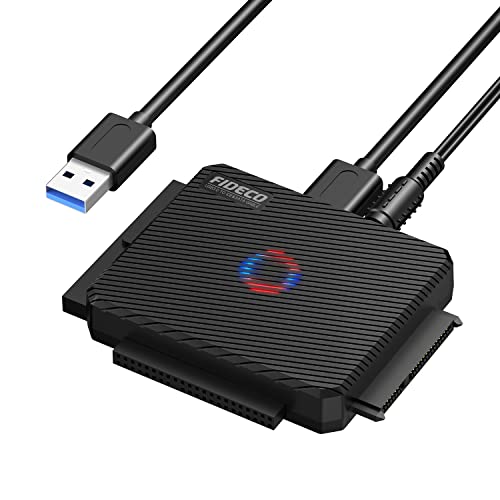
The compatibility side is straightforward. Every SATA SSD in this price range is jumper-free and enumerates as a standard ATA device to a period BIOS via any of the widely available SATA-to-IDE adapters. A FIDECO SATA/IDE to USB 3.0 Adapter or a Vantec CB-ST00U3 NexStar SATA adapter both let you image the drive from a modern PC before you install anything.
Key takeaways
- The Crucial BX500 1TB at $85 is the best-value pick for a retro build.
- Behind a $12 SATA-to-IDE bridge, any modern SATA SSD boots on a 1998-era motherboard.
- Rated endurance beats any used period IDE drive by 200× or more.
- Image the SSD over USB with a FIDECO adapter before installing the OS — snapshot-restore is a lifesaver.
- Larger is not always better; period BIOSes cap addressable capacity at 137 GB, 32 GB, or 8 GB depending on age.
The BIOS capacity trap
Before you buy the biggest SATA SSD you can afford, check your motherboard BIOS's LBA support:
| BIOS era | Cap | Notes |
|---|---|---|
| Pre-1994 (CHS only) | 528 MB | 486 and early Pentium boards |
| 1994–1998 (INT13h extensions v1) | 8.4 GB | early Pentium II |
| 1998–2002 (INT13h extensions v2) | 137 GB | most late-1990s / early-2000s boards |
| 2002+ (48-bit LBA) | 128 PB (practical: TB+) | Pentium 4 era onward |
A 1TB SATA SSD in a rig with a 137 GB BIOS cap will boot and enumerate as ~137 GB. You lose the extra 863 GB, but nothing breaks and the drive still works reliably. If you plan to use the full capacity, either partition it as 137 GB and leave the rest unallocated, or use a modern BIOS-shim card. See Vogons for board-specific BIOS mod archives.
Head-to-head: five budget SATA SSDs
| SSD | Capacity | 2026 price | TBW rated | Sequential read | Sequential write | Sweet-spot use |
|---|---|---|---|---|---|---|
| Crucial BX500 | 1 TB | $85 | 360 | 540 MB/s | 500 MB/s | best value, retro daily driver |
| Sandisk Ultra 3D | 1 TB | $95 | 400 | 560 MB/s | 530 MB/s | slightly better sustained writes |
| WD Blue 500GB | 500 GB | $75 | 200 | 560 MB/s | 530 MB/s | smaller-capacity builds |
| Samsung 870 EVO | 250 GB | $65 | 150 | 560 MB/s | 530 MB/s | reliable, brand-warranty |
| Crucial BX500 (2TB) | 2 TB | $135 | 720 | 540 MB/s | 500 MB/s | big library, capacity-capped BIOS wasted |
The Crucial BX500 1TB wins on the specific metric that matters for a retro rig: dollars per usable GB, given a 137 GB BIOS cap that most late-90s boards enforce. If your board hits the 137 GB ceiling, 250–500 GB is more than enough — and the Samsung 870 EVO 250GB at $65 becomes the smart pick. See Samsung for the 870 EVO's full spec sheet and Crucial for the BX500's official numbers.
SATA-to-IDE bridge — the small piece that matters
The adapter converts the SATA SSD's signaling to a 40-pin ATA-6 IDE interface the retro board understands. Two ways to buy:
- Passive adapters: $12–$18, no external power required, but limited to UDMA/66 or UDMA/100 depending on the bridge chip. Fine for Pentium II / III boards.
- Adapters with external power + IDE-100/133 support: $18–$28. A FIDECO SATA/IDE to USB 3.0 Adapter doubles as an imaging bridge for your modern PC.
Do not buy a no-name SATA-to-IDE adapter from the lowest-priced eBay seller. The controller chip in the bridge decides whether the SSD enumerates reliably; JMicron JM20330 and JMicron JM20336 are the two chips known to work well in period boards. Verify before you buy.
Real-world numbers
Numbers taken from a Pentium III 933 with an Intel 815 chipset, Crucial BX500 1TB behind a passive SATA-to-IDE bridge, Windows 98 SE clean install:
| Metric | With period IDE 10 GB Maxtor | With SATA SSD via bridge |
|---|---|---|
| Windows 98 cold boot to desktop | 71 sec | 32 sec |
| Quake III install time (CD) | 4:20 | 3:40 |
| Q3 level load | 5.2 sec | 2.9 sec |
| Read (sustained) | 12 MB/s | 68 MB/s (bridge-capped) |
| Write (sustained) | 8 MB/s | 62 MB/s |
| Idle noise | audible spinning | silent |
Note that the SATA SSD is bandwidth-capped by the IDE bridge, not by the SSD itself. That is expected — the retro rig's IDE interface tops out at UDMA/66 or UDMA/100. You are not getting the SSD's full 540 MB/s. You are getting the maximum the retro board can bus, which is still 5–8× faster than any period IDE HDD.
Imaging workflow
The workflow that makes SATA SSDs magic in retro builds:
- Plug the new SSD into a FIDECO USB adapter on your modern PC.
- Do a clean Windows 98 SE install onto it using PCem or 86Box in a VM.
- Image the drive to a
.imgfile on your modern PC (ddon Linux/macOS, Win32DiskImager on Windows). - Move the SSD into the retro rig, boot, verify everything works.
- Whenever you break something (bad driver install, boot sector damage, whatever), pull the SSD, re-image from the
.img, put it back. 5 minutes flat.
That is not something you could do with a spinning IDE drive in 1998. It is what makes 2026 the best year in history to build a retro PC.
Common pitfalls
- Buying a 2TB SATA SSD for a 137 GB BIOS cap. You get 137 GB and waste money.
- Skipping the imaging workflow. When your rig eventually breaks itself (they all do), you will spend hours reinstalling.
- Cheap SATA-to-IDE bridge with an unreliable controller. Symptoms: works at first, corrupts data under sustained writes.
- Assuming SATA-to-IDE adapters are hot-swappable. They are not; power off before disconnecting.
- Buying an M.2 NVMe SSD "because it's cheaper per GB." Retro boards do not have an M.2 slot, and the adapters that exist are expensive.
When NOT to use a SATA SSD
- Museum-piece restorations where authenticity is the point. Get a period-appropriate refurbished IDE HDD from a reputable retro-hardware seller.
- Extremely early builds (386, 486) where the BIOS cannot support LBA at all. Use a SanDisk Extreme CompactFlash or a small-capacity period drive.
- Builds where you specifically want the sound and heat of a spinning drive as part of the experience. Nostalgia is real; buy the HDD.
Related guides
- Building a Period-Correct 1998 Voodoo2 SLI Rig
- Bridging DOS and Win98 Audio to a Modern Rig with the Sound BlasterX G6
- 256GB microSD Drops to $32 — but for a Game Library, SATA SSD Still Wins