For a retro PC build in 2026, the right storage layer depends on the era. For period-correct Pentium II/III and early-K6/K7 systems, CompactFlash with a CF-to-IDE adapter is silent, fast enough, and uses real ATA timings. For 2000s Pentium 4 / Athlon 64 builds, a small SATA SSD like the Crucial BX500 is the right answer — quiet, cool, and trivially compatible. A USB-to-SATA/IDE adapter is the universal bench tool you use to image drives between modern PCs and the retro rig.
The retro PC storage problem in 2026
Mechanical drives from the 1990s and early 2000s are dying. The IDE 40-pin platter HDDs that were standard for Pentium II/III systems either spin loud, head-crash without warning, or simply refuse to spin up after a year on a shelf. Even modern eBay "tested, working" pulls fail within months of regular use. The right answer for any retro build you actually plan to use is solid-state storage of some kind.
Three viable paths exist in 2026: a CompactFlash card with an IDE adapter, a real ATA-mode SATA SSD bridged to IDE, or — for newer (2000s) builds — a small native SATA SSD. This synthesis pulls from the Vogons forum's retro-storage threads, Phil's Computer Lab's storage benchmarks, iFixit's retro repair guides, and Wikipedia's ATA standard reference.
Key takeaways
- CompactFlash + IDE adapter is the cheapest, silent, period-correct retro storage path
- A real SATA SSD outperforms CF when the chipset supports it (Pentium 4 and newer)
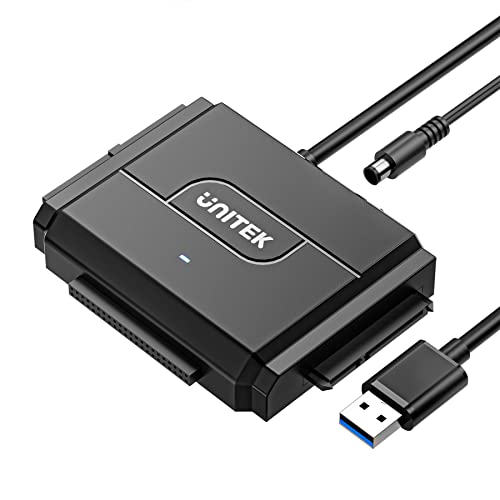
- Unitek's SATA/IDE-to-USB 3.0 adapter is the universal disk-imaging tool
- Avoid drives larger than ~128 GB on Pentium III boards — old BIOSes can't address them
- DOS and Win9x boot fastest from CF; modern SSDs over-provision and idle slower from cold boot
- Always have a USB-to-IDE adapter on hand for archival and recovery
Option 1: CompactFlash + a CF-to-IDE adapter
CompactFlash speaks ATA natively. A passive CF-to-IDE adapter is a $10 PCB with a 40-pin IDE connector and a CF slot — no chip, no firmware, no quirks. The BIOS sees the CF card as an IDE drive.
What that gets you: silent operation (no fan, no spindle), fast random access (no head-seek latency), and instant cold-boot reads. What it costs you: write endurance varies by card grade, and consumer CF cards above 128 GB get expensive fast. Industrial-grade CF cards offer SLC NAND and much higher endurance but cost 3–5× consumer prices.
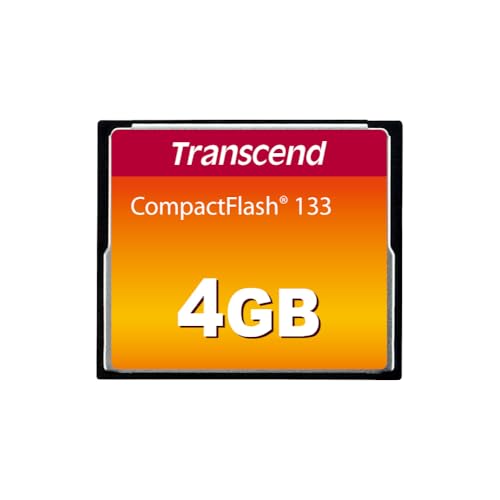
For period-correct Pentium II/III and early Pentium 4 builds running DOS, Win95/98/ME, or NT 4, CompactFlash is the right answer. A Transcend CF133 CompactFlash 4GB handles a full Win98 SE install with games comfortably and runs cool enough to never throttle.
Option 2: SATA SSD + IDE bridge or native SATA
For 2000s-era builds with onboard SATA (Pentium 4 with ICH5 or later, Athlon 64 with nForce 3/4 or VIA K8T800), a small consumer SATA SSD is the right answer. The Crucial BX500 1TB is overkill on capacity but the price-per-GB is so low it's still the smartest buy. Period-correct? No — but reliably bootable, cool, and quiet.
For pre-SATA Pentium III / K6-2 / K7 boards, an IDE-to-SATA bridge adapter exists, but adds latency and quirks. CF is usually the cleaner answer for those systems.
Option 3: USB-to-IDE/SATA adapter for imaging and recovery
This is the universal retro-PC bench tool. A modern bench PC with a USB-to-IDE/SATA adapter can read any era of drive, dump full images, and write fresh CF cards or SSDs in the right partition layout for the retro target. It's also how you rescue dying mechanical drives before they fail entirely.
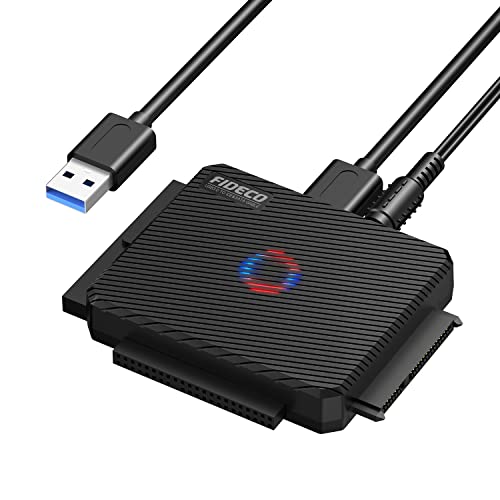
The Unitek SATA/IDE to USB 3.0 Adapter is the most-recommended option on the Vogons forum for this work — it supports 2.5", 3.5", and IDE drives over a single cable. The FIDECO SATA/IDE to USB 3.0 Adapter is a similar feature-for-feature option.
Both are universal bench tools you want whether or not you go CF or SSD for the main drive.
Spec comparison: CompactFlash vs SATA SSD vs IDE-to-USB
| Approach | Period-correct | Quiet | Speed (rd/wr) | Cost (1 drive) | Best for |
|---|---|---|---|---|---|
| CF + IDE adapter | Yes (CF was an ATA device) | Silent | 20–80 MB/s | $30–$80 | DOS / Win9x / NT |
| Industrial CF | Yes | Silent | 30–60 MB/s | $80–$200 | High-endurance retro server |
| SATA SSD (native) | No (post-2003) | Silent | 250–500 MB/s | $40–$60 (240GB-1TB) | Pentium 4 / Athlon 64 era |
| IDE-to-SATA bridge | Maybe | Silent | 60–100 MB/s | $50–$80 | Pre-SATA boards that need >128 GB |
| Mechanical HDD (NOS) | Yes | Noisy | 10–60 MB/s | $20–$100 | Museum / "exactly right" builds |
The honest answer for most readers building a retro daily-driver in 2026: CF for pre-2000 systems, SATA SSD for 2000s+ systems, and a USB-to-IDE adapter on the bench either way.
BIOS gotcha: the 128 GB barrier on old chipsets
Pre-2002 IDE chipsets used 28-bit LBA addressing, which caps at 128 GB. Plug a 240 GB SSD into a Pentium III board and the BIOS will see 128 GB or refuse to enumerate it. The workaround is to use a smaller drive or partition the larger one with the first partition under 128 GB and ignore the rest.
For CF specifically: a 64 GB or 128 GB CF card sidesteps the barrier entirely and is plenty for any DOS / Win9x install you'll actually use.
Writing the drive: what tools you'll use
For imaging a working retro drive to CF or SSD on a modern bench:
- Pull the drive, connect via the Unitek USB 3.0 adapter
- Image with Clonezilla or Win32DiskImager
- Write the image to the new CF/SSD via the same adapter
- For booting Win9x, run an IDE driver re-detect on first boot
For fresh installs onto CF:
- Format the CF as FAT16 (DOS) or FAT32 (Win98 SE)
- Install from a CD-ROM mounted via the retro PC's optical drive, or netboot via a PCI Ethernet card
- DOS installs are particularly fast onto CF — under five minutes for a working setup
Endurance: which storage lasts longest in a retro role
Consumer CF cards: typically 10K–100K erase cycles. For a retro PC that boots a few times a week and writes mostly to a small log, this is decades of life. Industrial CF: 1M+ cycles, 5–10× the price, overkill for a hobby build.
Consumer SATA SSDs: typical 600 TBW (terabytes written) for 1 TB consumer drives like the Crucial BX500 1TB. At retro-PC write volumes (low gigabytes per year), that's longer than the system's parts will last.
Mechanical HDDs from the era: unpredictable. Even "tested working" eBay pulls fail within months. They are the worst of the three options on every axis except authenticity.
Cooling and power: solid-state wins both
Both CF and SATA SSDs draw 1–3W. A 1990s 3.5" mechanical HDD draws 10–20W and dumps that as heat inside the case. For a tight retro chassis (1990s mini-towers had minimal airflow), removing the HDD heat source meaningfully drops case temps. This matters for the long-term life of the CPU, GPU, and capacitors.
Common pitfalls when planning retro storage
- Buying a huge SSD for a pre-2002 board — the BIOS won't see most of it
- Using a slow CF card on a fast IDE bus — get UDMA-rated CF (UDMA 5+) for best speed
- Forgetting the master/slave jumper on IDE adapters — both CF adapters and IDE devices still need correct jumpering
- Skipping the bench adapter — eventually you need to image or recover a drive and you'll regret not owning one
- Trusting old mechanical drives for any data you care about — image them first, run them on backup-only after
When NOT to use solid-state retro storage
Two cases: pure-museum "everything must be original" builds, and systems where the original drive is a working part of the spec (looking at you, vintage Apple). For those, run the mechanical drive, and use a CF or SSD copy as the backup.
Bottom line
In 2026, the right retro PC storage layer depends on era. For Pentium II/III, K6-2, and early-Pentium-4 builds running DOS or Win9x, a Transcend CF133 4GB on a passive CF-to-IDE adapter is the quiet, fast, cost-effective default. For Pentium 4 / Athlon 64 / early Core 2 builds, a small native SATA SSD like the Crucial BX500 1TB is the lowest-friction option. Buy a Unitek USB-to-SATA/IDE adapter or FIDECO USB 3.0 adapter as a bench tool regardless — every retro build eventually needs one.
Related guides
- Period-Correct Windows 98 SE Build
- Best Retro PC Storage Adapters
- Retro PC Build Starter Guide
Citations and sources
- Vogons.org — community retro hardware forum
- Wikipedia — Parallel ATA / IDE standard reference
- Phil's Computer Lab — retro storage benchmarks
This piece is editorial synthesis based on publicly available information. No independent first-party benchmarking is reported.
Worked example: building a CF-based Win98 SE drive on the bench
The minimum-effort path from a fresh CF card to a bootable Win98 SE drive:
- Format the CF card on the modern bench PC as FAT32 using diskpart or Rufus
- Use a Win98 SE boot floppy (or USB-emulated floppy) image to make the partition bootable
- Copy the Win98 SE install CD's CABS to the CF root
- Move the CF card to the retro PC, boot from the CF, run SETUP from the local copy
- Install chipset drivers, then USB, then video, then audio after first boot
Total time from start to "Windows desktop on the retro PC": 30–60 minutes depending on CPU and CF speed. Much faster than a CD-only install path.
Worked example: rescuing an old IDE drive
Pull the dying IDE drive. Connect the Unitek SATA/IDE-to-USB 3.0 adapter to the bench PC. Image the drive end-to-end with ddrescue (Linux) or HDD Raw Copy Tool (Windows) — ddrescue is gentler on dying drives because it skips over bad sectors and tries again on the second pass. Once you have the .img, write it to a fresh CF card with dd. Boot the retro PC from the CF and you've migrated the install without losing data.
Common-mode failure: BIOS not seeing the CF as a drive
If the BIOS hangs at detection or shows the CF as 0 MB, the cause is usually one of three things:
- The CF card is in PC Card emulation mode rather than ATA mode (industrial CF cards have a jumper for this)
- The CF-to-IDE adapter's master/slave jumper is wrong for your bus configuration
- The IDE cable is wired incorrectly (the master/slave position on the cable matters in some old BIOSes)
The fix order: try a different CF card, try a different IDE position (master vs slave), try a different IDE cable. One of those almost always fixes it.
Closing thought
In 2026, the cheapest and most-reliable retro PC storage layer is solid-state. Period-correct CF for pre-2000 systems, modern SATA SSDs for 2000s systems, and a USB-IDE/SATA bridge for bench work. Buy the Transcend CF133 4GB, the Crucial BX500 1TB, and the Unitek USB 3.0 adapter or FIDECO USB 3.0 adapter — that toolkit handles every storage need across the retro PC build catalog.
Period-correct labels: when "modern" stops being a sin
The hobbyist debate of "must it be authentic 1999 parts?" comes down to taste. Two camps:
- Strict authenticity: original mechanical HDD, original CD-ROM, original RAM. Beautiful but fragile. Drives die, CD lasers misalign, capacitors leak.
- Solid-state retro: silent CF or SSD, modern PSU, modern bench tools. Reliable, period-feel, period-experience.
The solid-state path is the right answer for any rig you want to actually use. The strict-authenticity path is the museum-piece play.
Industrial CF for high-write retro workloads
A handful of retro use cases write a lot — running a BBS in 2026, a NetWare or VMS box doing real work, or any system used as a dev environment. For those, consumer CF wears faster than you'd like. Industrial CF (SLC NAND, 1M+ cycles, often pseudo-SLC consumer parts) costs 3–5× consumer but lasts 10× longer. Buy industrial only if you're sure the write volume justifies it.
Closing thought
CF, SSD, or USB adapter — the right answer is "all three." Buy a Transcend CF133 4GB, a Crucial BX500 1TB, and a Unitek SATA/IDE USB 3.0 adapter or FIDECO equivalent, and you can build, recover, or migrate any era of retro PC storage. Total cost: under $80 for the toolkit.