For a period IDE machine — DOS, Win 3.1, Win 9x, early Win 2000 — CompactFlash on an IDE adapter is the smaller, more BIOS-friendly, and more reliably bootable choice. Use a SATA SSD through an IDE adapter only when you need more than 128GB of storage or the CF market for the size you want has dried up. Both are silent, fast, and immortal compared to a period hard drive.
Why period IDE machines need modern silent storage
If you are still running a Pentium III, an early Athlon, or a Slot A on original hardware, the mechanical hard drive is the single most fragile component in the build. Bearings whine, motors seize, and the platters that have been spinning since 1999 are borrowed time. Modern flash storage on an IDE bus is the answer, and there are exactly two mainstream paths: a CompactFlash card on a CF-to-IDE adapter, or a modern SATA SSD like the Crucial BX500 1TB or Samsung 870 EVO 250GB on a SATA-to-IDE bridge.
Both work. Both are meaningfully better than a period hard drive. But they behave differently at the boot-up sequence, at the BIOS, and at the file system level, and picking wrong will cost you an afternoon of head-scratching. This guide walks through what to reach for based on the machine, the era, and the size of the OS install.
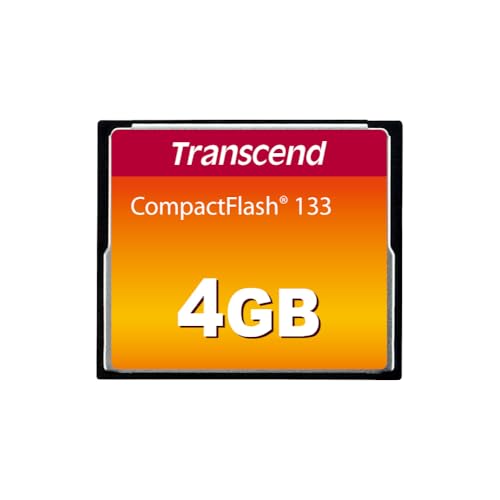
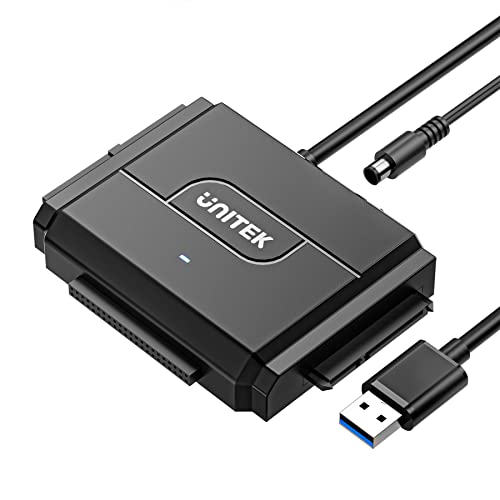
Reference gear referenced throughout: the Transcend CF133 CompactFlash card for the CF path, the Unitek SATA/IDE to USB 3.0 Adapter as a useful bench tool for imaging drives, the Crucial BX500 1TB for a spacious modern SATA SSD, and the Samsung 870 EVO 250GB for a smaller, higher-performance option.
Key takeaways
- CompactFlash on a passive CF-to-IDE adapter is the simplest, cheapest, and most BIOS-compatible path.
- SATA SSD via an IDE bridge is the answer when you need >128GB or want SATA speeds capped by the IDE bus.
- Both drop period boot times from 45-60 seconds to under 15 on a Pentium III class machine.
- BIOS geometry limits — the LBA barriers at 8GB, 32GB, 128GB — matter more than raw speed.
- Choose the Transcend CF133 for the classic build, the Crucial BX500 or Samsung 870 EVO for capacity headroom.
What you'll need — checklist
Whatever path you pick, gather this:
- The storage device. CompactFlash card (fixed-disk-capable), or SATA SSD.
- The bridge. CF-to-IDE 40-pin or 44-pin adapter for the CF path; a SATA-to-IDE bridge board for the SSD path.
- Power. Molex or 44-pin laptop-IDE power depending on your machine and adapter.
- A working install source. A USB-to-IDE dock (such as the Unitek SATA/IDE-to-USB 3.0 adapter) to prep the drive on a modern PC before installing it in the target machine.
- BIOS jumpers checked. Master/slave setting, LBA mode enabled, disk geometry read at POST.
Do not skip the USB-to-IDE step. Prepping the drive on a modern PC — partitioning, formatting to FAT16 or FAT32 depending on the OS, dropping in the install files — saves you the multi-hour DOS-boot-floppy dance.
Spec-delta table
| Attribute | CompactFlash + IDE adapter | SATA SSD + IDE bridge |
|---|---|---|
| Capacity range | 4-256 GB (common) | 120 GB - 4 TB |
| Interface speed | UDMA-4 to UDMA-6 (CF) | SATA III capped by IDE bus (~100 MB/s) |
| Cost per GB (2026) | High for large sizes | Low across the range |
| Noise | Silent | Silent |
| BIOS compatibility | Excellent, appears as fixed disk | Good; some IDE bridges advertise 128GB max |
| Adapter cost | $5-15 | $15-30 |
| Wear leveling | Basic on cheap cards, good on Transcend/SanDisk industrial | Modern SSD wear leveling and TRIM |
The clean read: for anything up to 32GB of installed OS + software, CompactFlash is the smaller, simpler, cheaper path. For anything larger — an all-of-the-90s software library on one drive — SATA SSD via IDE is the winner.
See the Transcend product portal for the CF133 and other CF cards' fixed-disk-mode support (critical — not all CF cards report as fixed disks). See TechPowerUp's SSD specifications database for the SATA SSD internals and cache sizing.
How does a CompactFlash-to-IDE boot drive behave on DOS/Win9x?
Excellent, with two caveats. Modern industrial-grade CompactFlash cards — including the Transcend CF133 — advertise themselves as fixed disks to the BIOS. That is the magic bullet: the BIOS treats the CF card exactly like a hard disk, LBA works, and you can boot MS-DOS 6.22, Win 3.1, Win 95, Win 98, and Win 2000 without any driver hacks.
Boot times on a Pentium III class machine drop from 45-60 seconds to 10-15. That is not "faster" in the incremental sense — it is a full class of user experience improvement.
Caveats: 1. Consumer-grade cards without fixed-disk mode. Cheap SD-to-CF adapters and consumer photography cards may report as removable. DOS and Win 9x will refuse to install to a removable disk. Buy an industrial-grade CF and confirm fixed-disk support before purchase. 2. Wear leveling on cheap cards. Log-heavy workloads (databases, swap-heavy apps) will chew through a $10 no-name card in months. For a period gaming rig this rarely matters; for a real workload, pay for the industrial part.
The Vogons forum has a decade of user reports on which CF cards work with which chipsets — always worth a search before you commit.
How does a SATA SSD through an IDE adapter compare?
Faster on paper, capped by the IDE bus in practice, and with more BIOS compatibility variance.
A Samsung 870 EVO 250GB sitting on a SATA-to-IDE bridge in a Pentium III with UDMA-5 support hits around 60-80 MB/s sequential read on the IDE bus. That is faster than any period IDE hard drive (which topped out around 40 MB/s sustained) and effectively identical in feel to the CF path for boot and application loading.
The advantages are size and reliability. 250GB is more storage than any period PC would ever have shipped with. Modern SSDs have full wear leveling, TRIM (though TRIM does not work through an IDE bridge), and vastly better error correction than any CF card. A Crucial BX500 1TB will outlive the motherboard.
The disadvantages: bridge compatibility, BIOS geometry, and cost per GB at small sizes. Some IDE bridges cap capacity at 128GB regardless of what you plug in, which is a hard problem to debug from POST alone. Some bridges introduce a ~5ms latency on random access that CF adapters do not, though at IDE bus speeds you rarely feel this.
BIOS geometry limits and CHS addressing
Old BIOSes have hard capacity ceilings. The three you need to remember:
- 8.4 GB — the E-IDE/CHS limit. BIOSes older than about 1998 cap here without LBA enabled.
- 32 GB — an intermediate limit on many late-90s Award and AMI BIOSes.
- 128 GB — the 28-bit LBA limit. Cross this and you need a BIOS that supports 48-bit LBA (late 2001+).
For a mid-90s Pentium build, do not put anything larger than 32GB on it and expect it to boot without pain. For a late-90s or early-2000s build with a modern BIOS, 128GB is usually the ceiling. The CF-to-IDE adapter and the SATA-to-IDE bridge both faithfully report whatever the media is; the BIOS is the constraint, not the flash.
If you have a 128GB-limited BIOS and want a larger SSD anyway, most bridges can present the SSD as a smaller capacity via jumper or DIP switch. This wastes space but gets you booting.
Real-world gotchas — DMA modes, cluster alignment, and boot reliability
- UDMA mode. Enable UDMA-4 or UDMA-5 in BIOS if supported. PIO mode strangles both CF and SATA SSD performance to about 8 MB/s.
- Cluster alignment on Win 9x. FAT32 clusters larger than 4KB are fine for period software and reduce metadata overhead.
- Master/slave jumpers. Some CF adapters do not respect the master/slave jumper on the IDE header — check with a single-drive setup first.
- 44-pin vs 40-pin adapters. Laptop IDE (44-pin) and desktop IDE (40-pin) adapters are not interchangeable. Buy the right one.
- Boot sector re-creation. After you image a drive, re-run
fdisk /mbron DOS orsys c:to ensure the boot sector is present. - Backup imaging. Every time you get a working install, image the CF or SSD via the Unitek SATA/IDE-to-USB 3.0 adapter to a modern PC. The next reinstall will thank you.
Verdict matrix
Choose CompactFlash + IDE adapter if:
- Your OS install and software fit inside 32GB
- You want the simplest possible BIOS story
- You are running MS-DOS, Win 3.1, or Win 95
- The rig is a period gaming build with a well-defined software list
Choose SATA SSD + IDE bridge if:
- You want >32GB of storage for a large software library
- You are running Win 98SE, Win 2000, or Win XP
- Your BIOS supports LBA and 48-bit addressing
- You already own a spare SATA SSD from a modern PC
Common pitfalls
- Buying a photography CF card that does not advertise fixed-disk mode. DOS and Win 9x will refuse it.
- Buying an IDE bridge with an undocumented capacity cap. Read the reviews before you commit.
- Skipping BIOS UDMA enable. PIO mode makes both paths slow.
- Ignoring the 32GB / 128GB BIOS ceilings. If your BIOS caps at 32GB, buy a smaller CF, not a larger SSD.
- Trusting no-name cheap CF cards for a daily-driver rig. Cheap wear leveling is real.
- Forgetting to image the drive after a good install. Losing a working Win 98 setup to a bad flash is preventable heartbreak.
When NOT to use either path
If you want authentic period feel — actual mechanical seek noise, slow load times, and the "am I really in 1998" experience — keep the period hard drive. If you are archiving software and demoing at retrocomputing events, half the audience will notice a silent boot.
Recommended pick
For most period IDE builds, Transcend CF133 16-32GB on a CF-to-IDE adapter is the right answer. It is cheap, silent, boots fast, works on almost every BIOS with LBA, and gives your period rig another two decades of uptime.
For late-90s/early-2000s builds with larger software libraries, the Samsung 870 EVO 250GB or Crucial BX500 1TB on a well-reviewed SATA-to-IDE bridge is the winner. Pair either with the Unitek SATA/IDE-to-USB 3.0 adapter for imaging and prep on a modern PC.
Related guides
Citations and sources
- Transcend product portal — CF133 spec and fixed-disk mode documentation
- Vogons forum — community reports on CF card + IDE chipset compatibility
- TechPowerUp SSD specifications database — SATA SSD internals for the BX500 and 870 EVO
As of 2026, industrial-grade CompactFlash remains the safest bet for authentic period IDE builds; SATA-to-IDE bridges continue to improve.