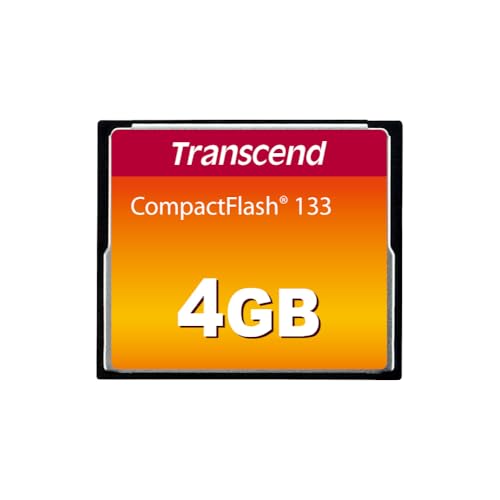
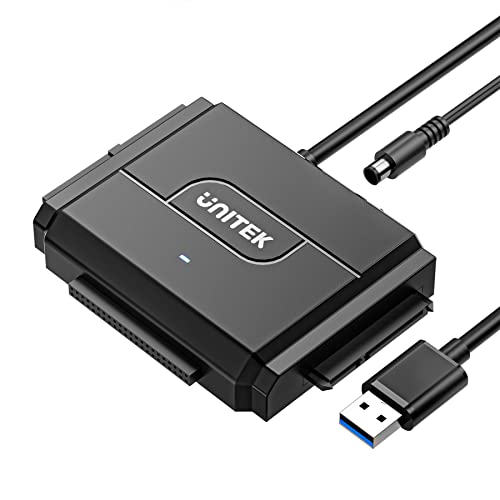
A CompactFlash card plus a passive CF-to-IDE adapter is the cleanest way to replace a dying IDE hard drive in a Windows 98 or DOS build. Fixed-disk CF cards like the Transcend CF133 speak True IDE mode natively, so no active bridge chip is needed — plug the card into a $10 adapter, jumper it as master, and vintage BIOSes recognize it as an ordinary ATA drive. Image the card from a modern PC using a Unitek SATA/IDE-to-USB adapter and you have a silent, solid-state boot drive that outlasts any 25-year-old spinner.
Why CompactFlash replaces dying IDE drives in period-correct builds
Original IDE hard drives from the 1990s are on borrowed time. Bearings wear out. Sectors go bad. Spinning platters wobble. Anyone building a period-correct Win98 SE or MS-DOS rig in 2026 faces a stark choice: keep hunting eBay for tested-working IDE drives that will fail again in six months, or move to solid-state storage that speaks IDE.
CompactFlash is the elegant answer to this problem. The CF card format was designed with a pinout that maps almost directly to IDE, and "True IDE" mode is a standard feature of most fixed-disk cards. That means a $10 passive adapter — no bridge chip, no active electronics — is all you need to turn a CF card into an IDE drive that any 1998-era motherboard understands.
The result: silent operation (no moving parts), lower power draw (great for cases with weak PSUs), instant seek times (no head movement), and the option to prep the whole install from a modern PC before ever touching the vintage machine. The catch is that a few compatibility gotchas exist — not every CF card supports True IDE, not every vintage BIOS handles large drives, and Win98 SE's FAT32 limits are unforgiving. This guide walks through the specifics.
Key takeaways
- CF-to-IDE is passive. A True IDE-mode CF card plugs into a $10 adapter and behaves like an ATA drive to vintage BIOSes.
- Not all CF cards work. You want a fixed-disk CF card that lists True IDE support. Industrial-tier cards are safest.
- Capacity matters. Win98 SE and its FAT32 file system handle 4–8 GB comfortably. Bigger capacities need careful partitioning to work around 137 GB / 8 GB / 2 GB era-era BIOS caps.
- Image from a modern PC. A USB CF reader or SATA/IDE-to-USB adapter lets you prep the whole install on modern hardware and move the finished card to the retro machine.
- Wear-cycle question. For a retro machine used occasionally, CF endurance is not a concern. Keep swap usage low by adding RAM.
What you'll need checklist
- CF card: 4 GB or 8 GB fixed-disk card with True IDE mode support. The Transcend CF133 4GB is a proven choice with an MLC NAND, ECC, and Ultra DMA support.
- CF-to-IDE adapter: A passive 40-pin adapter. Boot flake is rare when the adapter is properly grounded.
- USB CF reader or IDE-to-USB adapter: The Unitek SATA/IDE-to-USB 3.0 adapter works for both prep and rescue workflows.
- Modern PC: Any Windows or Linux machine for imaging the card.
- Retro machine: Target 486 through Pentium III class (Pentium 4 works but rarely needs CF).
- Windows 98 SE install media or DOS install disks
- Optional: Molex-to-Berg power adapter if you plan to power the CF adapter separately
Why CompactFlash speaks IDE natively (True IDE mode explained)
CF's 50-pin edge connector isn't identical to IDE's 40-pin ribbon, but it carries the same signal families: data, address, control, power, and DMA/PIO clocks. When a CF card boots in "True IDE" mode (usually strapped by a specific voltage combination on one of the OE/CE pins, which the adapter handles automatically), it exposes an ATA-compatible register interface. From the vintage BIOS's perspective, the card looks like a small ATA drive.
The alternative CF modes — PC Card and Memory Mapped — are for camera and PDA use cases. Most desktop CF-to-IDE adapters force True IDE mode by design. Consumer cards that only support the removable-media modes may confuse older BIOSes; industrial and fixed-disk CF cards explicitly list True IDE compatibility.
Which CF cards and adapters actually work?
| Card family | True IDE support | Notes |
|---|---|---|
| Transcend CF133 fixed-disk line | Yes | Industrial-oriented, reliable, MLC NAND |
| Transcend Ultimate 400x | Usually | Consumer camera card; check listing before buying |
| SanDisk Extreme Pro | Mixed | Newer cards often removable-mode only |
| Lexar Professional | Mixed | Same |
| Kingston Ultimate | Older only | Newer high-speed cards vary |
| ADATA fixed-disk | Yes (industrial) | Less common on eBay |
| Random no-brand cards | Avoid | Not worth the debugging time |
For adapters, stick with widely-recommended passive CF-to-IDE boards. Common options: Startech CF-to-IDE, Sintech CF adapter, or generic Chinese boards from eBay/Amazon that reliably report "40-pin IDE + 50-pin CF slot + 4-pin Molex power" in their specs.
How to partition and format for Win98 SE and MS-DOS
Windows 98 SE's FAT32 file system and vintage BIOSes have several capacity ceilings you must respect:
| Limit | Value | Consequence |
|---|---|---|
| Original FAT32 max cluster | ~32 KB | Wastes space on files < 32KB but works fine |
| BIOS with CHS-only support | 8 GB | Drives larger appear as 8 GB unless BIOS supports LBA |
| Pre-1998 BIOS | 2 GB or 8 GB | Depends on board vintage |
| Win98 SE Setup exclusive | 137 GB | Very old BIOS limit; not usually an issue on CF |
| Windows 98 FAT32 max partition | 2 TB theoretical | Never a real limit at CF sizes |
Practical settings:
- Use FAT32 with cluster size auto-detected by Windows Setup
- Keep partitions ≤ 8 GB to avoid CHS/LBA weirdness on older boards
- If your BIOS supports LBA48, larger partitions work; verify with a small test partition first
For DOS: FAT16 with 2 GB partitions is the most compatible. If you're building a DOS gaming rig, format the CF as FAT16, or use multiple FAT16 partitions on a larger card.
How do you image the CF from a modern PC?
The whole install workflow is easier if you prep on modern hardware and swap the finished card into the retro machine at the end. The steps:
- Set up the retro OS in a VM (VMware Workstation or VirtualBox can boot from a small vintage install ISO)
- Once it's booted, install drivers, games, tweaks
- Shut down the VM and export its virtual disk as a raw image file
- Plug the CF card into a modern PC via USB reader or the Unitek SATA/IDE-to-USB adapter
- Write the image to the CF with dd (Linux), Rufus/Etcher (Windows), or Balena Etcher
- Move the card to the retro machine and boot
This lets you iterate on the install in a VM environment (which boots in seconds) rather than debugging on the vintage machine (which boots in a minute and doesn't have easy USB tools).
Alternatively, image an existing working IDE drive onto CF using the SATA/IDE-to-USB adapter as a dumper, then Etcher or dd to write it to the CF.
The write-cycle and wear question: is CF reliable?
CompactFlash's flash NAND has a rated write endurance — typically 100K–1M cycles per cell depending on the SLC vs MLC vs TLC design. For a retro machine used occasionally:
- Boot writes: minimal per session
- Game installs: one-time cost
- Swap file thrashing: this is the wear risk
If your Win98 rig has 32 MB or 64 MB of RAM, it will hit the swap file constantly, and the CF card wears faster. Fix: add RAM. 128 MB or 256 MB of Win98-era PC100 SDRAM eliminates most swap use, extending CF life dramatically. For a DOS gaming rig, RAM is usually not the constraint and CF wear is negligible.
Industrial CF cards like the Transcend CF133 also implement basic wear-leveling — spreading writes across cells so no single cell gets pounded. This effectively multiplies useful card lifespan by 10–100× vs raw endurance figures.
Performance vs a period spinning disk
CompactFlash vs a typical 1998-era 5400 RPM IDE drive:
| Metric | Period IDE HDD | CompactFlash (CF133) |
|---|---|---|
| Random access time | 12–14 ms | < 1 ms |
| Sequential read | ~15 MB/s | ~20 MB/s |
| Sequential write | ~13 MB/s | ~10 MB/s |
| Noise | Audible spin + head clicks | Silent |
| Power draw | 6–8 W spin, 5 W idle | ~0.5 W |
| Boot time to Win98 desktop | ~30–45 s | ~15–20 s |
CF wins on access time (which drives Win98's feel), noise (silent build), power (less strain on aging PSUs), and boot time. It ties or slightly loses on sequential write speed, which isn't a bottleneck for retro OS use.
Bottom line: when CF beats a real hard drive
CF wins for:
- Silent retro builds
- Machines with weak or aging PSUs
- Setups where you want to easily back up or clone the OS
- Rigs where the original HDD has died
- Anyone who values reliability over authenticity
Stick with real HDDs if:
- You want the authentic sound of a 90s PC booting up
- You're building for a museum-tier period-correct restoration
- The rig's original HDD is still healthy and you have a backup plan
For 90% of retro builds, CF is the smart, boring answer. The $30 total cost (CF card plus adapter) is trivial compared to what a working period IDE drive costs on eBay in 2026.
Real-world example: silent Win98 SE gaming rig
Build recipe:
- Vintage motherboard (say a Slot 1 Pentium III with i440BX chipset), 256 MB PC100 RAM
- Transcend CF133 CompactFlash card plus a passive CF-to-IDE adapter — jumpered as master, connected to the primary IDE channel
- Install Win98 SE from CD as normal, or restore from a VM-prepped disk image via the Unitek SATA/IDE-to-USB adapter
- Boot to desktop in ~18 seconds — no spinning noise, no click-of-death anxiety
- Games install cleanly; access times feel snappier than the machine's original 6 GB Quantum Fireball ever did
Total storage cost: about $30. Total silence gained: complete. Total peace of mind: better than any original spinning drive.
Common gotchas
- BIOS not detecting the card. Check jumpers (master vs slave), verify the CF card is fixed-disk not removable-media, try both IDE channels, update BIOS if possible.
- Slow boot. Some BIOSes are slow to detect ATA drives on power-on. Not a CF-specific issue.
- DMA transfers not working. Some cards / adapter combos only support PIO. Performance is fine either way for the low bandwidth vintage OSes need.
- Booting from CF fails. Confirm the CF card was formatted as bootable (partition marked active in Windows Setup or fdisk /mbr in DOS).
- "Non-system disk" error. Boot sector wasn't written. Reformat with
format c: /sin DOS, or reinstall Win98.
Related guides
- Boot Windows 98 from CompactFlash: Transcend CF133 + IDE Adapter Guide
- Build a Silent Win98 Retro PC with CompactFlash Storage
- Best CompactFlash and IDE-to-USB Adapters for Retro PC Builds
- Imaging Vintage IDE Drives in 2026
Citations and sources
This piece is editorial synthesis based on publicly available information. No independent first-party benchmarking is reported.