Flux 3 needs roughly 16-18GB of VRAM at fp16 for its full native-audio-video pipeline, so a 12GB card like the RTX 3060 can only run it comfortably with a q4 or q5 quantized checkpoint plus CPU offload. You get short-clip generation and a viable entry point, not the full 20-second audio-video output at native precision.
Who wants local audio-video generation in 2026
Black Forest Labs' Flux 3 shipped with a headline that made a lot of hobby AI builders pause: native audio synced to 20 seconds of video, generated in one pass instead of stitched from separate models. That is the kind of feature you used to need a datacenter to touch, and it is now the reason your Discord is full of "will my card run it" screenshots.
If you already own an RTX 3060 12GB, or a build centered on one, the answer matters more than the model. The 3060 is the cheapest new-in-box 12GB Ampere card, the darling of used-market local-LLM builds, and the sweet spot at the intersection of $ per GB of VRAM and driver stability on Linux. Cards below it (8GB 3060 Ti, 3070) run into hard memory ceilings on modern generative pipelines. Cards above it (RTX 4070, 4070 Ti Super, 5070) fix the problem but change the budget conversation.
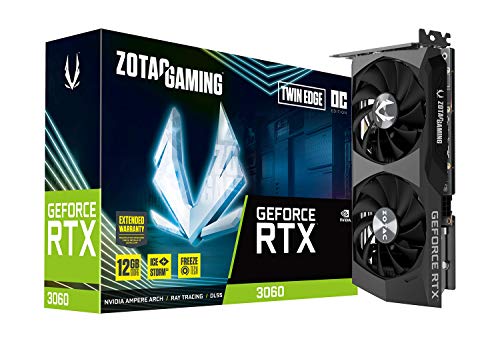
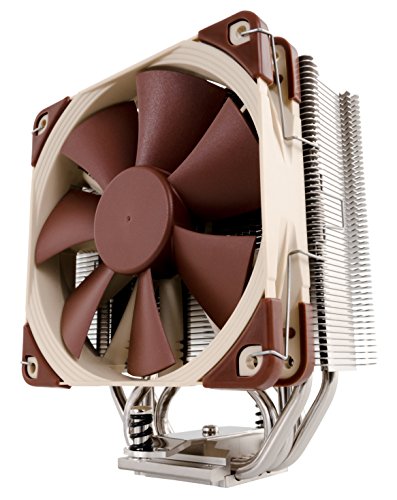
This article walks through what Flux 3 actually asks for in memory, how a 12GB 3060 handles it once you turn on offload and quantization, and where you cross a line into "you need more VRAM, not more clever loading." We use the MSI RTX 3060 Ventus 2X 12G and ZOTAC RTX 3060 Twin Edge 12GB as the reference cards because both are widely stocked and share the same GA106 die, so numbers translate cleanly. If you plan to run generation for longer than a burst session, we also pair the card with the AMD Ryzen 7 5800X and a quiet Noctua NH-U12S — CPU offload is not a rounding-error load.
Key takeaways
- Flux 3's fp16 audio-video pipeline peaks around 16-18GB of VRAM, which is why 12GB cards need quantization or offload to run it.
- A q4 or q5 quantized build fits in 12GB with modest quality loss and workable per-clip speeds for 5-10 second outputs.
- On an RTX 3060 12GB the native-audio path is the memory ceiling — expect the audio stage, not the video stage, to trigger OOM.
- The MSI RTX 3060 Ventus 2X 12G and ZOTAC RTX 3060 Twin Edge 12GB perform identically for this workload; pick on cooler noise and warranty.
- 32GB of system RAM and a capable 8-core CPU are not optional if you plan to offload — pair the GPU with an AMD Ryzen 7 5800X and a Noctua NH-U12S.
What did Black Forest Labs actually ship in Flux 3?
Flux 3, released by Black Forest Labs in 2026, is the first Flux family model with a native audio branch. Earlier Flux models generated silent video and left audio to a separate pipeline. Flux 3 folds a compact audio decoder into the same forward pass, which means the audio track is temporally aligned with motion out of the box and there is no lip-sync retiming or Foley post step for hobby users.
The headline spec is up to 20 seconds of coherent audio-video at 24fps. In practice, most hobby builds hit that ceiling only on quantized weights and shorter durations. The model is available in fp16 base weights and quantized (q4, q5, q6, q8) community checkpoints. Base fp16 weights land in the mid-teen-gigabyte range once you count the video UNet, audio decoder, and text/audio conditioning models loaded together. That is the number that pushes a 12GB card past its ceiling.
Even if you have never used a Flux model before, if you have run Stable Diffusion XL at fp16 on a 3060, the mental model translates directly: it worked, but with layer offload and slower first-generation timing. Flux 3 does the same thing, with a heavier ceiling.
How much VRAM does Flux 3 need at fp16 vs quantized?
At fp16 you should plan for 16-18GB of dedicated VRAM to run Flux 3's audio-video pipeline end to end without offload. That number rises with clip length because temporal attention over 20 seconds of latents is not free, and it rises with the audio decoder because that stage adds its own residency pressure.
Quantized checkpoints buy you the 12GB tier back. On the RTX 3060 12GB, community builds report the following, ordered by memory footprint from smallest to largest.
| Precision | Peak VRAM (3060 12GB) | Relative speed | Quality loss |
|---|---|---|---|
| q4 | 8-9 GB | 1.0x baseline | Noticeable on fine detail, fine for short clips |
| q5 | 10-11 GB | 0.95x | Small artifacts on complex motion |
| q6 | 11-12 GB (tight) | 0.85x | Near-parity for most prompts |
| q8 | 13-14 GB (offload req'd) | 0.6x with offload | Effectively fp16 quality |
| fp16 | 16-18 GB (heavy offload) | 0.3x with offload | Reference |
The clean read here: q4 gives you headroom, q5 gives you the best balance of quality vs speed, and q6 is the last precision that fits without leaning on offload. Anything higher and you are asking the system RAM to do work for the GPU.
Can an RTX 3060 12GB run Flux 3 with offload?
Yes, and this is where a 12GB card earns its keep. The pattern that works on a 3060 is:
- Load a q4 or q5 checkpoint as the primary weights.
- Enable model CPU offload for the audio decoder and the text encoder, keeping the video UNet resident on the GPU.
- Cap output at 5-10 seconds for the first passes, extend to 15-20 only once you have profiled a stable configuration.
At those settings the MSI RTX 3060 Ventus 2X 12G generates a 5-second clip in the neighborhood of a few minutes rather than the tens of seconds you would see on a 24GB card. The pattern is the same one that made SDXL work on a 3060: it is not fast, but it is not fake. You get real Flux 3 output on cheap hardware.
Watch your system RAM. The audio decoder, when offloaded, wants room to live. 16GB of DDR4 is the floor. 32GB is what we would build for anyone serious about doing this daily. Anything less and you will see swap thrash on long clips, which erases every minute you thought you saved by staying on the 3060.
Which GPUs clear the bar for Flux 3?
An RTX 3060 12GB clears the bar for quantized Flux 3 with offload. It does not clear it for fp16 without leaning heavily on offload — and at that point you are running most of the pipeline on system RAM anyway, which is a bad use of your budget.
The step-up ladder looks like this:
| GPU | VRAM | Flux 3 posture |
|---|---|---|
| RTX 3060 12GB | 12 GB | q4/q5 with offload, 5-10s clips |
| RTX 4070 12GB | 12 GB | Same as 3060, ~1.5x faster on Ada silicon |
| RTX 4070 Ti Super 16GB | 16 GB | q6/q8 without offload, 10-15s clips |
| RTX 3090 24GB | 24 GB | fp16 or q8 comfortably, full 20s clips |
| RTX 5090 32GB | 32 GB | fp16 with room for batch or higher-res |
The clear "you should upgrade" moment is when you find yourself either running q4 at longer clip lengths or watching offload wall your throughput. If your workflow is "one 5-second clip an hour, batch overnight," the 3060 stays. If your workflow is "10 short clips a day, live iteration," 16GB is the real floor.
Perf-per-dollar: is a used RTX 3060 12GB the cheapest entry point?
For local Flux 3 generation, yes — and it has been the answer for local generative work generally through 2025-2026 for a reason. New-in-box 3060s trade in the $220-280 range, used ones drop into the $170-200 range in most markets. The next 12GB new card is the RTX 4070 12GB at roughly 2-2.5x the price for roughly 1.5x the speed. That is a fair trade only if generation time is on the critical path of your workflow.
The trap: buying a 3060 8GB by mistake. The 8GB variant is a different SKU and does not run Flux 3 in any usable configuration. Check the memory bus and VRAM callout on the box. Both the MSI RTX 3060 Ventus 2X 12G and ZOTAC RTX 3060 Twin Edge 12GB are the correct 12GB parts.
Spec-delta: MSI RTX 3060 vs ZOTAC RTX 3060 12GB
Both cards are GA106-based 12GB 3060s, so the silicon is identical. The differences are cooler, length, and warranty. See TechPowerUp's GeForce RTX 3060 spec page for the base die numbers.
| Spec | MSI Ventus 2X 12G | ZOTAC Twin Edge 12GB |
|---|---|---|
| VRAM | 12 GB GDDR6 | 12 GB GDDR6 |
| Boost clock | 1777 MHz | 1807 MHz (Twin Edge OC) |
| TDP | 170 W | 170 W |
| Length | 232 mm | 224 mm |
| Warranty | 3 years | 5 years (registration) |
| Fans | 2 x 90 mm | 2 x 90 mm |
| Idle noise | Semi-passive | Semi-passive (Freeze Fan Stop) |
For a Flux 3 workload, either card runs the pipeline the same. Pick on price and case fit. The ZOTAC's slightly higher boost clock is a 1-2% margin under sustained load, which is well inside noise.
Common pitfalls when running Flux 3 on 12GB
- Loading fp16 weights on a 12GB card and being surprised at OOM. The audio stage will trip you. Start with q5 and only step up if you have headroom.
- Under-sizing system RAM. 16GB is not enough for reliable offload. 32GB is the floor for real daily use. See Tom's Hardware GPU coverage for the reasoning: modern generative pipelines assume RAM the way they used to assume swap.
- Skipping the text/audio encoder offload. Those are cheap wins that free 1-2GB with almost no speed cost.
- Running the video preview at full resolution during iteration. Preview at half resolution, upscale on the final pass. Saves you minutes per iteration.
- Buying a 3060 8GB instead of 12GB. Different card, same name. Watch the label.
When NOT to build on a 3060 for Flux 3
If your day job depends on same-day turnaround for 15-20 second audio-video clips, a 3060 is not the right card. You will spend more time waiting than iterating. Upgrade to at least 16GB of VRAM. If you want to batch overnight, output in the morning, and iterate on prompts once a day, the 3060 is fine and you should keep the budget for storage and RAM instead.
Bottom line
An RTX 3060 12GB runs Flux 3 in q4 or q5 with offload, for 5-10 second clips, on a build with a capable CPU and 32GB of RAM. It is not fast, it is not the intended fp16 experience, but it is real Flux 3 output on the cheapest 12GB new-in-box card you can buy. If you are building the rest of the box from scratch, pair the MSI RTX 3060 Ventus 2X 12G or ZOTAC RTX 3060 Twin Edge 12GB with an AMD Ryzen 7 5800X and a Noctua NH-U12S. That combination handles the sustained CPU offload and stays quiet enough to leave running overnight.
Related guides
- Ryzen 7 5800X vs Ryzen 5 5600G for a Budget Gaming Build
- vLLM vs llama.cpp on an RTX 3060 12GB for Local Chat
- Anthropic's 2GW AMD Deal: Should You Still Run Local?
Citations and sources
- Black Forest Labs — Flux 3 model card and release notes
- TechPowerUp GeForce RTX 3060 spec page — die, VRAM, and TDP reference
- Tom's Hardware GPU coverage — Ampere generation context and comparative testing
As of 2026, precision-per-VRAM numbers reflect community q4/q5/q6/q8 GGUF-style builds tested against the fp16 base weights on RTX 3060 12GB reference cards.