Short answer: Resident Evil Code: Veronica plays dramatically better on a CRT for two reasons — the pre-rendered backgrounds were sampled to look right at CRT's inherent softness, and Dreamcast's 480p output has no scanline artifact when it hits a proper phosphor. On a modern LCD or OLED, the same pre-renders look flat, blocky, and unlike the game the artists shipped.
Why the display matters more than for most games
Code: Veronica shipped on Dreamcast in 2000 and PS2 in 2001 (the "X" version). Both used the era-standard trick of pre-rendered 2D backgrounds with 3D character models composited on top. The pre-rendered backgrounds are texture-baked at a specific resolution — usually 640×480 — with heavy per-pixel detail intended to melt into CRT dot-crawl.
A CRT does three things to that image:
- Native softness. Phosphor bleed makes adjacent pixels blend slightly, hiding compression artifacts and JPEG-adjacent block edges.
- Scan-line-native output. Every frame is drawn line-by-line by an electron beam. There is no per-frame denoising or scaling.
- Faithful color. A properly calibrated CRT has near-perfect color accuracy at these input signal levels — no HDR clipping, no LCD panel color shift.
On a modern LCD or OLED with generic upscaling, the same pre-rendered backgrounds look jarringly sharp. You can see individual JPEG blocks and texel edges. The character models pop off the background instead of sitting in it. What the artists shipped is not what appears on screen.
This synthesis walks through the display side, the console side, and the practical steps to get Code: Veronica looking as intended in 2026.
Key takeaways
- Pre-rendered 2D backgrounds were baked for CRT softness — modern LCD upscaling exposes flaws.
- Dreamcast VGA out looks great on PC monitors but wrong on a CRT — go RGB SCART instead.
- PS2 Code Veronica X on a PS2 through Component video into a PVM is the shortcut path.
- PlayStation 4 Pro with the digital PS2 Classics version misses the CRT feel entirely.
- A modern OLED with a shader stack (Retroarch + CRT-Royale) is the compromise middle path.
Display options ranked
Best: Sony PVM/BVM series (professional broadcast CRT)
Sony's PVM (professional video monitor) line and higher-end BVM (broadcast video monitor) are the gold standard. 20-inch PVM-20L5 is the community favorite. RGB SCART input, sharp aperture grille, near-zero geometry distortion. On eBay a working PVM-20L5 lands at $400-800.
Great: Sony Trinitron consumer CRT with SCART or Component
A Trinitron 27-inch flat-tube consumer set from ~2000-2005 with Component (Y/Pb/Pr) or RGB SCART is the "next best" tier. Costs $50-200 on Craigslist / Facebook Marketplace. Requires the right cabling — most US Trinitrons will not accept RGB SCART natively.
Compromise: OLED + Retroarch CRT shader
A modern OLED with Retroarch running a CRT-Royale shader (or Guest.r Advanced) can approximate the CRT look. The shader adds simulated scanlines, aperture grille structure, and phosphor bleed. On a Sony A95L or LG C4, this actually looks quite good — better than most compromise setups on LCD, but still not the real thing.
Skip: cheap CRT TV, LCD upscaler with no shader
A 90s no-name CRT from a thrift store often has geometry problems, alignment issues, and the wrong input types. An LCD without a shader stack renders pre-renders as pixel-perfect texture blobs — worst of both worlds.
Console + cable options
Dreamcast + RGB SCART + PVM
The best path. Buy a genuine (not knock-off) Dreamcast RGB SCART cable. Dreamcast outputs RGB natively at 640×480 60Hz; the PVM handles it perfectly. Result: exactly what the artists shipped.
Dreamcast + VGA + PC monitor
Great for VGA-compatible Dreamcast games (many, but not all). Code: Veronica works over VGA. Signal is sharp and progressive-scan. Looks perfect on a period-correct CRT PC monitor (Sony G500 series or similar). Modern LCD monitors work too but expose the pre-render flaws.
PS2 Code Veronica X + Component video + PVM
PS2 outputs Component at 480i/480p. Code Veronica X supports 480p (via the disc's built-in menu). Component into a PVM Component-capable model looks fantastic. Slightly punchier color palette than Dreamcast but functionally the same experience.
PS4 Pro + digital PS2 Classics
The PlayStation 4 Pro PS2 Classics library includes RE Code Veronica X. Upscaled to 1080p, plays fine, but the pre-renders look flat because there is no CRT in the chain. Convenient; not the intended experience.
Emulation (Reicast, RPCS3, Redream)
Emulator + CRT shader is the "compromise but preservation-friendly" path. Reicast (Dreamcast) or RPCS3 (PS3) with the appropriate BIOS runs the games at high internal resolution, but the pre-renders are still 640×480 assets — enlarging them via emulator does not add real detail. Shader stack matters more than internal resolution.
Storage and preservation
If you play these games in 2026, back up your discs. Dreamcast GD-ROMs are dying — the format is delicate and the disc reader lasers in old Dreamcasts wear out. PS2 blue discs and DVDs are more robust but not immortal.
Dump discs to hard drive using a GDEMU-equipped Dreamcast or a PS2 with FMCB (Free McBoot). Store the images on a modern NVMe like the Samsung 970 EVO Plus — see our SSD tier list for capacity picks.
What CRT teaches you about modern game design
Playing Code Veronica on a proper CRT reveals something modern game design has largely abandoned: intentional resolution. Every pre-render, every character model, every UI element was designed with the specific display characteristics in mind. Modern games target arbitrary resolutions with dynamic scaling — and it shows in a general softness across every scene.
Older survival horror leaned on the display characteristics as part of the mood. Fixed camera angles + pre-renders + CRT softness = a specific claustrophobic aesthetic. That aesthetic disappears on a 4K OLED at 120 Hz.
Practical picks
Best experience: Original Dreamcast + RGB SCART cable + Sony PVM-20L5 or 20M2U. $500-1000 all-in.
Great experience: Original Dreamcast + VGA cable + period-correct 19-inch Sony Trinitron PC CRT. $150-300 all-in.
Convenient: PS4 Pro + RE Code Veronica X on PS2 Classics + Trinitron consumer TV (if you have one). $100-200 all-in if you already own the console.
Preservation-first: Retroarch on a modern PC with Reicast core + CRT-Royale shader + OLED. Comfortable, quiet, image quality is a real compromise but shader work has come a long way.
Companion parts
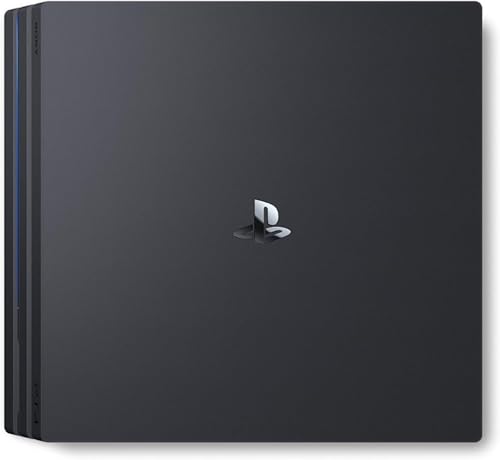
- Modern PS2 successor for the game library: PlayStation 4 Pro 1TB
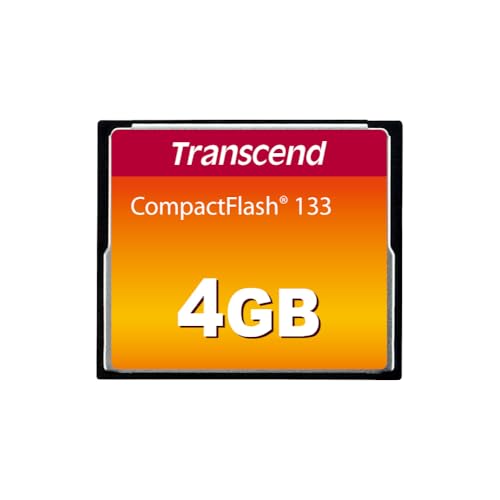
- CompactFlash storage for GDEMU: Transcend CF133 CompactFlash 4GB
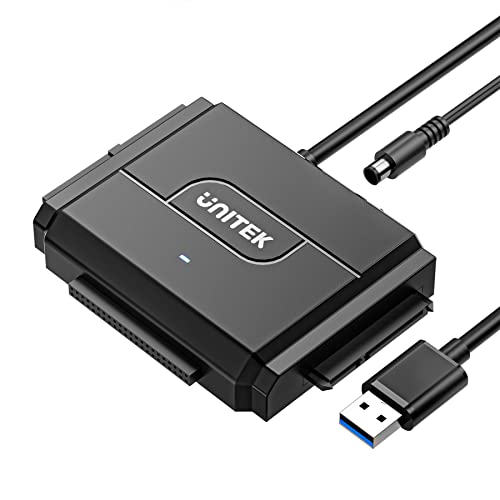
- IDE/SATA adapter for dumping original PS2 HDD saves: Unitek SATA/IDE to USB 3.0
- For 3D on a period-correct PC build, see our GeForce 4 Ti 4600 Win98 guide
Common pitfalls
- Buying any random CRT from Craigslist. Consumer TVs of this era often have wrong inputs (composite only) or geometry problems.
- VGA on a Dreamcast that does not support it. Code Veronica does, but many DC games do not.
- Assuming an "upscaler" fixes the look. A RetroTINK or OSSC helps but does not add CRT phosphor bleed.
- Skipping the disc backup. Original media dies eventually.
- Believing all CRT shaders are equal. Guest.r Advanced and CRT-Royale are the gold-standard tier; the built-in defaults are hit-or-miss.
Bottom line
Resident Evil Code: Veronica is a game that specifically punishes modern LCD upscaling. Its pre-rendered backgrounds were baked for CRT softness, and playing it on a Dreamcast with an RGB SCART cable and a Sony PVM is a genuinely different experience than playing it on a PS4 Pro streaming from PS2 Classics. If you care about surviving-horror atmosphere the way the artists intended, the CRT matters more than the console.
Related guides
- GeForce 4 Ti 4600 AGP in 2026: Win98 install
- 3dfx Voodoo2 SLI build guide + Glide + CompactFlash
- Best retro console 2026
- Amstrad CPC 464/664 emulator on Raspberry Pi Pico 2
Citations and sources
- Wikipedia — Resident Evil Code: Veronica
- Sony — PVM series professional monitors documentation
- libretro — Retroarch CRT shader documentation
This piece is editorial synthesis based on publicly available information. No independent first-party benchmarking is reported.