In late 1995, Nvidia had roughly a month of cash left. The NV1 — its first product, a combined 2D/3D graphics and audio card built around quadratic-surface rendering — had failed commercially. DirectX 3 had just standardized on triangles, which meant every game shipped in the Windows 95 era would target triangle rasterization, which meant Nvidia's quadratic architecture was headed for the same fate as every other technology that lost a platform standard.
Then Sega called. Not because it wanted to buy NV1 cards — nobody was buying NV1 cards — but because Sega was already using quadratic surfaces on the Saturn and had begun scoping the graphics chip for what would become the Dreamcast. Nvidia had domain expertise that Sega needed and no other American graphics vendor had. Sega paid Nvidia to design what would have been the NV2. Nvidia used that development revenue to keep the lights on and pivot to triangles for the NV3 (the RIVA 128), which saved the company and started the lineage that leads to every modern GPU. Sega, in the end, didn't buy Nvidia silicon for the Dreamcast — it went to PowerVR — but by then the damage was done, in the best possible sense.
This is one of the great forgotten stories of hardware history, and it says something specific about how platform standards shape everything that comes after. Understand this and the design of the RTX 3060 12GB sitting in your modern PC makes more sense than you might think.
Key takeaways
- Nvidia was roughly a month from bankruptcy in early 1996 after the NV1's commercial failure.
- A Sega development contract for what became the Dreamcast provided runway.
- Sega ultimately chose PowerVR, not Nvidia, for the Dreamcast, but by then Nvidia had pivoted to triangles.
- The NV3 (RIVA 128) shipped in 1997 with triangle rasterization and started Nvidia's rise.
- Every Nvidia GPU since — through the Sega Genesis Mini-era retro consoles, up to the SNES Classic and modern hardware — descends architecturally from that pivot.
What the NV1 actually was
The NV1, per its Wikipedia summary and Nvidia's own corporate timeline, was released in mid-1995. It combined:
- 2D graphics acceleration for Windows.
- 3D graphics acceleration via quadratic-surface rendering.
- 32-channel Wavetable audio.
- A game-controller port supporting up to four gamepads.
The audio and I/O features made sense — early PCI expansion cards commonly bundled functions to justify their price tag. The graphics architecture was the gamble. Instead of computing the intersection of a scan line with a set of triangles (the emerging industry approach), the NV1 computed the intersection with quadratic patches: parameterized curved surfaces that could describe smooth objects with fewer primitives.
The theoretical advantage: smoother-looking geometry at lower memory cost. Sega used quadratic patches on the Saturn for similar reasons. If the industry had gone the quadratic route, the NV1 would look prescient.
The practical reality: no game engine existed that natively targeted quadratic patches for PC output, no artist tooling existed for it, and Microsoft's DirectX 3 standardized on triangles. Every game that shipped for Windows 95 targeted triangle rasterization. The NV1 could technically emulate triangles atop its quadratic engine, but the emulation was slow and the results were worse than dedicated triangle silicon.
Why quadratic surfaces lost to triangles
The story is often told as "Nvidia bet wrong," which is half-right and half-misleading. The full story:
- Silicon area cost: fixed-function triangle rasterization is dramatically simpler than quadratic-patch rasterization at hardware level. A given transistor budget delivers more triangle-per-second than quadratic-per-second.
- Tooling maturity: art pipelines in 1995 were tuned for triangle meshes. Every 3D modeling tool exported triangles.
- DirectX standardization: Microsoft's decision to standardize on triangles in DirectX 3 meant every Windows game engine would target them.
- The Saturn's parallel failure: even the Saturn, which had committed to quadratics at console level, was losing market share to the PlayStation, which used triangles.
The industry standardization was self-reinforcing. Once triangles won the tooling battle, they won the silicon battle. Once they won the silicon battle, no subsequent generation could afford to bet on quadratics without abandoning the entire ecosystem.
The Sega lifeline
By late 1995, Nvidia had shipped NV1 cards through Diamond and STB and had almost no sell-through. The company had raised its Series A from Sequoia, Sutter Hill, and other backers, and cash was running out. Nvidia founder Jensen Huang has publicly described the situation as "about a month" from bankruptcy.
Sega was, at that moment, planning its next console (which would become the Dreamcast) and had already committed to a graphics architecture — but the fine detail of the SoC was open. Sega needed development help, particularly with 3D graphics IP that would be competitive with PowerVR and 3dfx-era architectures. Nvidia had exactly that expertise and needed exactly that revenue. The two parties signed a development contract.
The contract did two things:
- Kept Nvidia solvent: the development revenue funded roughly a year of engineering effort.
- Shifted Nvidia's strategy: the work made clear that quadratics were not going to win, and Nvidia's next silicon (NV3, the RIVA 128) had to embrace triangles.
Why Sega chose PowerVR in the end
By 1997, when Sega had to finalize the Dreamcast's silicon, PowerVR's tile-based deferred rendering was mature, cost-effective, and produced beautiful results at the Dreamcast's power envelope. Nvidia's competing design was capable but not obviously better, and PowerVR had a smaller support burden for Sega's platform.
Sega chose PowerVR. Nvidia lost the console contract but had used the development revenue to survive the NV1 aftermath and start work on the RIVA 128, which shipped in 1997 to a triangle-obsessed PC market and became a hit. The RIVA TNT followed in 1998, the GeForce 256 in 1999 (which named the term "GPU"), and the rest is the industry we know.
How this shapes modern GPUs
Every Nvidia GPU sold since 1997 has descended architecturally from the RIVA 128's triangle-rasterization approach. The unified shader model of the GeForce 8000 series, the CUDA cores that dominated GPU compute in the 2010s, the RT cores added for real-time ray tracing, the Tensor cores added for machine learning — all of it built on top of a triangle-rasterization foundation that got its start in the aftermath of the Sega lifeline.
The MSI RTX 3060 Ventus 3X 12G in a modern gaming PC is a direct architectural descendant of that pivot. Take away the Sega contract, and the plausible history has Nvidia disappearing in 1996 with the NV1's failure, quadratic-surface rendering going nowhere, and PC graphics standardizing on triangles anyway with 3dfx, ATI, and PowerVR as the main players. Nvidia's dominance is a specific, contingent historical outcome.
What retro-gaming buyers can appreciate here
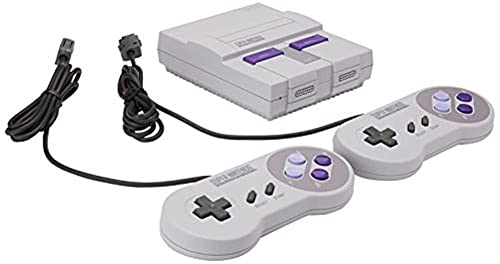
If you own a Sega Genesis Mini or a Super NES Classic, you are holding hardware from the era when the console war was also a graphics-architecture war. Sega bet on quadratics with the Saturn, Nintendo shipped a triangle-rasterizing chip in the N64 (via SGI), and Sony did the same on the PlayStation. Sega lost partly because it made the wrong architectural bet and partly because the wrong bet cost it developer support.
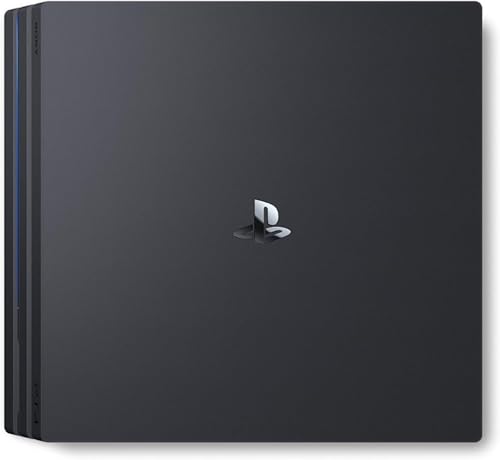
The delicious irony: Sega's quadratic commitment on the Saturn cost it the platform war, but its willingness to hire Nvidia for the Dreamcast — because Nvidia was one of the few American vendors with quadratic expertise — saved the company that would go on to dominate the triangle-rasterization world Sega had already lost to. A PS4 Pro sitting next to a modern gaming PC is running silicon whose architectural lineage traces through this exact story.
What the Saturn architects actually got right
Modern re-evaluation of the Sega Saturn is more sympathetic than the mid-90s consensus was. The Saturn was extraordinarily complex — dual SH-2 CPUs, a custom VDP1 for sprite work, a VDP2 for tilemap backgrounds, and the quadratic renderer for 3D. Programming it required deep expertise, but for teams that mastered the hardware (Sega's own AM2 division, Treasure, Sonic Team), the Saturn produced results contemporary PlayStation ports could not match.
The problem was not the hardware. The problem was the tooling and the developer experience. Sony's PlayStation offered a comparatively simple triangle-rasterization pipeline with well-documented tools, and third-party developers could ship games without becoming Saturn experts. The Saturn's quadratic architecture demanded expertise; the PlayStation's triangle architecture rewarded volume. Volume won.
This is the pattern that would repeat throughout hardware history: the more expressive architecture loses to the more accessible one, because accessibility scales developer adoption faster than expressiveness scales developer skill.
The 3dfx counter-narrative
Sega and Nvidia are not the only characters in this story. 3dfx Interactive shipped Voodoo Graphics in 1996, adding a dedicated triangle-rasterization add-in card to PCs at exactly the moment Nvidia's NV1 was failing. Voodoo Graphics did nothing but triangles, did them faster than any competitor, and won the enthusiast PC gaming market outright for several years.
If Nvidia had died in early 1996, 3dfx would have been the presumptive dominant PC graphics vendor. 3dfx's own subsequent bankruptcy in 2000 — and Nvidia's acquisition of its assets — would then have gone differently. The alternate history where Nvidia does not survive the NV1 is not "no PC 3D graphics"; it is "3dfx or ATI or PowerVR dominates PC 3D graphics." The specific companies would differ; triangles would still have won.
But Nvidia's survival mattered for a specific downstream trajectory: CUDA, GPU compute, the rise of ML on GPUs, and eventually the AI datacenter build-out that defines 2020s hardware. All of that traces back to the survival that Sega's development contract enabled.
Common pitfalls when telling this story
- Overstating "Sega picked Nvidia for the Dreamcast": Sega did not. Sega paid Nvidia to develop a competing option and then chose PowerVR.
- Conflating NV1 and RIVA 128: they are architecturally different products separated by the pivot the Sega contract funded.
- Dismissing quadratic rendering as obviously wrong: it was not obvious in 1995. The commercial verdict was in by 1996 and totally clear by 1997, but the technical bet was legitimate.
- Assuming Nvidia was Jensen Huang alone: the company was founded by Huang, Curtis Priem, and Chris Malachowsky, and the pivot to triangles was an engineering-team decision informed by both the NV1's failure and the Sega development experience.
- Missing the timing: the Sega contract predates DirectX 3's standardization on triangles by mere months. If DirectX had gone the other way, this would be a very different retelling.
What retro-gaming buyers can bring home from the story
Two takeaways for anyone who plays or collects retro:
- Architectural bets shape decades: the Saturn's quadratic commitment was not stupid; it was a legitimate architectural choice that lost a platform standardization moment. Modern hardware choices have the same character. Whatever wins today shapes the next 20 years.
- The console war is a graphics-standard war: the platform that wins developer support wins the era. This is why current console generations look increasingly similar — everyone standardized on the same triangle-rasterization + shader-programming model, so the differences become marketing and library rather than architecture.
Pick up a Sega Genesis Mini or SNES Classic and you are holding hardware from the last era when the underlying graphics architectures were meaningfully different across competitors. Everything after PS2/Xbox/GameCube converges toward the same rasterization-plus-shaders model.
Bottom line
Sega saved Nvidia in 1996, but not by buying its silicon. The lifeline was a development contract that funded the year of engineering it took Nvidia to pivot from a failed quadratic architecture to the triangle-rasterization approach that has defined every GPU since. Sega did not benefit directly — it chose PowerVR for the Dreamcast — but the deal shaped the American graphics industry in ways that echo through to modern gaming PCs, retro consoles, and the AI datacenter build-out.
Next time you boot up a Sega Genesis Mini and remember why the Saturn failed, spare a thought for the fact that the same institutional-graphics-commitment that killed the Saturn also, indirectly, saved the company that would eventually name itself GPU and build the industry we know.
Citations and sources
- Nvidia — corporate timeline
- Wikipedia — NV1 architectural overview
- Wikipedia — Sega Saturn quadratic-rendering documentation
- Public retellings by Jensen Huang in later Nvidia keynotes and interviews
This piece is editorial synthesis based on publicly available information. No independent first-party benchmarking is reported.