DeepSeek V3 VRAM Requirements: What 671B Really Needs
671B total, 37B active — only one of those numbers predicts your hardware bill, and it is not the one people quote.
By Mike Perry, Founder & Editor-in-Chief · Published 2026-09-09 · Updated 2026-10-14 · 15 min read
DeepSeek V3 is 671B parameters with 37B active, and only one of those sizes your hardware. The full VRAM, quantization and CPU-offload math.
Quick Answer
You need hundreds of gigabytes, not tens. DeepSeek-V3 ships 671B main-model parameters plus a 14B multi-token-prediction module, for 685B total on Hugging Face (DeepSeek). Even at 4-bit that is roughly 400 GB of weights that must be addressable at inference time. No single consumer GPU is close.
Hardware at a Glance
Median generation throughput at 7–9B models (Llama 3.1 8B, Qwen 3 8B), Q4 quantization, from community-reported runs SpecPicks tracks. Each row pools runs from different sources, runtimes and models in that class, so the rows are not a matched head-to-head; where the article compares cards on the same rig, its own figures are the like-for-like result. Street price is the second-lowest listing priced within the last 24 hours at 0.5–2× launch MSRP, so no single listing sets it, and a street figure well above MSRP says so in its cell; no card has enough listings passing that check, so the column shows launch MSRP. Rows marked for comparison are not the cards this article is about — they are included so the throughput column has something to be read against.
The confusion around this model is structural, and it comes from the two numbers on its spec sheet pulling in opposite directions. DeepSeek publishes 671B total parameters and 37B activated per token. Readers latch onto one or the other, and both roads lead somewhere wrong.
Latch onto 671B and you conclude the model is simply unreachable — datacenter-only, not worth thinking about. Latch onto 37B and you conclude the opposite: 37B active is barely more than a 32B dense model, a 32 GB card holds one of those at 4-bit, so surely a high-end desktop can do this. That second conclusion is the expensive one, because it is wrong in a way that only reveals itself after you have bought hardware.
The resolution is that active parameters and resident parameters are two different budgets, and the mixture-of-experts architecture only shrank one of them. Compute per token dropped to roughly what a 37B dense model costs. Memory per token did not drop at all, because the router is free to select any expert at any step, and an expert that is not in memory when the router picks it is a stall — either a disk read, a PCIe transfer, or a page fault, all of which are orders of magnitude slower than the matrix multiply they interrupt.
This synthesis walks the actual memory arithmetic, the quantization tiers and what each one costs you in fidelity, the three classes of machine that genuinely host this model, what a 12 GB desktop GPU should run instead, and the point at which self-hosting stops penciling out against an API call.
Key Takeaways
DeepSeek-V3 is 671B main-model parameters, 37B activated per token, with a further 14B MTP module — 685B total as published (DeepSeek).
The weights ship natively in FP8, which is roughly 671 GB before you quantize anything.
A 4-bit GGUF lands near 400 GB by bits-per-weight arithmetic — still far past any single GPU, including a 32 GB RTX 5090.
37B active predicts compute cost per token, not memory footprint. The full expert set must be resident or you pay a stall on every routed token.
Realistic hosts are a multi-GPU workstation with 8x 24–48 GB cards, a large unified-memory box, or a many-DIMM CPU server — the last of which loads it and runs it slowly.
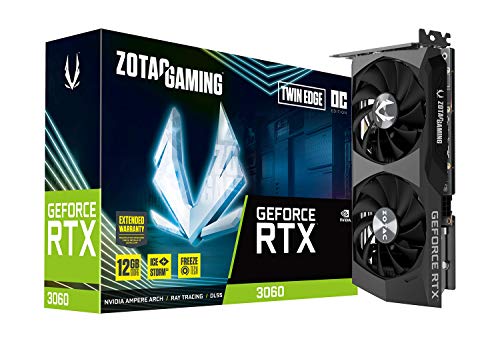
A 12 GB card like the RTX 3060 12GB should be running 8–14B models or distills, which is a genuinely different decision rather than a smaller version of this one.
Step 0: are you trying to run the full model, or something that behaves like it?
Answer this before you price a single component, because the two goals have almost nothing in common.
Goal A: run the published weights. You want the actual 671B checkpoint, unmodified, because you are evaluating the model itself, you need reproducibility against the published artifact, or you have a data-residency requirement that forbids the API. This is a hundreds-of-gigabytes problem and it puts you in server hardware. It is a legitimate goal and the rest of this article sizes it honestly.
Goal B: get frontier-ish output on hardware you own. You want strong reasoning and coding output locally. You do not actually care which checkpoint produces it. This is a completely different shopping list — distills, and open-weights models in the 20–35B class, most of which fit a single card.
When Goal A is right: compliance, research reproducibility, or serving enough volume that API spend exceeds hardware amortization. When it isn't: almost everything else. Most people asking about DeepSeek-V3 VRAM requirements are describing Goal A and want Goal B, and the honest advice is to say so rather than sell them a rack.
Why does a 37B-active MoE still need hundreds of gigabytes?
A mixture-of-experts layer replaces one large feed-forward network with many smaller ones plus a router. For each token, the router scores the experts and dispatches the token to a small subset. That is the whole trick: you get the representational capacity of an enormous parameter count while paying the compute of a small one.
What it does not do is reduce how many parameters have to exist somewhere fast. The router's choice is token-dependent and effectively unpredictable. Across a single paragraph of generated output you will touch a large fraction of the expert pool, and there is no useful locality to exploit — the expert selected for token 40 tells you very little about the expert needed for token 41.
So the storage requirement is set by the union of experts that might be needed, which is all of them, while the compute requirement is set by the subset actually used, which is small. Back-ends that try to break this — streaming experts from NVMe, or holding cold experts in system RAM and hot experts in VRAM — do work, and the llama.cpp ecosystem has supported various forms of selective offload for a while. But each of them converts a memory shortfall into a latency penalty, and on a workload where every token can trigger a fetch, that penalty is the dominant term.
The practical rule: active parameters set your tokens-per-second ceiling; total parameters set your bill of materials. Anyone quoting the 37B figure as a hardware requirement has mixed up the two.
VRAM and quantization requirements
The sizes below come from bits-per-weight arithmetic against the published 671B main-model parameter count, using the standard GGUF tier widths documented in llama.cpp. Treat them as close approximations — actual file sizes vary a few percent with how a given quantizer handles attention and embedding tensors — and add KV cache on top of every row.
Quantization
Bits/weight
Total weight size
Minimum resident memory
Hosting machine class
Quality-loss note
bf16
16
~1.34 TB
~1.4 TB
Multi-node datacenter
Upcast from FP8; no quality gain
fp8 (native)
8
~671 GB
~720 GB
8x 96 GB datacenter GPUs
Reference; this is how it ships
q8_0
~8.5
~713 GB
~760 GB
8x 96 GB datacenter GPUs
Lossless in practice; larger than native FP8
q6_K
~6.6
~553 GB
~600 GB
8x 80 GB, or a big RAM server
Effectively indistinguishable from q8
q5_K_M
~5.7
~478 GB
~520 GB
8x 64 GB, or 512 GB RAM server
Very minor degradation
q4_K_M
~4.8
~403 GB
~450 GB
8x 48–64 GB, or 512 GB RAM server
The standard tier; small measurable loss
q3_K_M
~3.9
~327 GB
~370 GB
8x 48 GB, or 384 GB RAM server
Noticeable degradation on reasoning
dynamic ~1.6-bit
~1.6
~134 GB
~180 GB
2x 80 GB, or 192 GB RAM server
Substantial degradation; feasibility demo
The dynamic sub-2-bit row deserves a caveat rather than enthusiasm. Aggressive mixed-precision quantization schemes have made "run the 671B model on one workstation" technically true, and the demonstrations are genuinely impressive engineering. What they do not deliver is the model people think they are getting. At that compression the reasoning behavior that makes the checkpoint worth wanting is measurably degraded, and you are frequently better served by a well-quantized 32B model that fits properly.
What hardware actually hosts it?
Three brackets, in descending order of "actually usable".
Multi-GPU workstation or server (8x 48–96 GB). This is the reference configuration and the only one where generation speed is interactive. Eight datacenter-class accelerators with tensor parallelism across NVLink or a fast fabric gives you 384–768 GB of pooled HBM at multiple terabytes per second of aggregate bandwidth. Nothing in the consumer channel touches this. It is also, at current pricing, comfortably more expensive than a car, which is the honest framing that most "run it locally" content omits.
Unified-memory box. A single machine with several hundred gigabytes of shared CPU/GPU memory sidesteps the pooling problem entirely — the whole model is addressable without a fabric. Bandwidth is far below HBM, so generation is slower, but the model loads and runs without exotic sharding. This bracket has become the most practical single-box answer for large MoE models specifically, because MoE's low compute-per-token profile tolerates lower bandwidth better than a dense model of equivalent size would.
CPU plus system RAM server. A used dual-socket server with 512 GB or more of registered DDR4 will load a q4 quantization for a fraction of the GPU cost. It will also produce tokens at a rate that makes interactive chat unpleasant, because CPU inference is bounded by memory bandwidth and even eight-channel DDR4 is an order of magnitude behind HBM. This is a reasonable batch-processing rig — overnight document runs, offline evaluation — and a poor assistant. Be clear with yourself about which one you are building.
For per-GPU numbers on the consumer cards that show up in these builds, our benchmark pages carry the per-SKU bandwidth and throughput data.
What can a 12 GB GPU run instead?
If you arrived here from a desktop with a 12 GB card, this is the section that matters. The realistic substitutes:
Option
Params
Q4_K_M size
Fits 12 GB?
Context headroom
What you give up
7–8B dense
8B
~4.8 GB
Yes, easily
Very large
Breadth of world knowledge
13–14B dense
14B
~8.5 GB
Yes
Moderate
Some multi-step reasoning depth
Reasoning distill, 14B class
14B
~8.5 GB
Yes
Moderate
Frontier-level breadth, not chain-of-thought style
20–35B-total sparse MoE
30B
~18 GB
No, needs offload
Poor
Fits 24 GB comfortably; 12 GB struggles
32B dense
32B
~19 GB
No
None
Requires 24 GB+
The 12 GB tier's sweet spot is 8B at q6_K with a generous context window, or 14B at q4_K_M with a tighter one. Reasoning distills in that size range are the practical stand-in for a frontier MoE on this hardware — you lose breadth of world knowledge rather than usability, and everything stays resident in VRAM, which is worth more in daily use than a model that half-fits.
How much system RAM and CPU do you need for offload?
If you are attempting a partial-offload configuration — some experts in VRAM, the rest in system memory — the sizing rule is blunt: system RAM must be at least the size of the quantized weights you are not holding in VRAM, plus headroom for the OS and KV cache. For a q4 quantization of this model that puts you past 384 GB, which is registered-DIMM server territory. Desktop platforms cap out at 128–256 GB, and that is not enough for the full weights at any quantization above roughly 2 bits.
The real limiter on the CPU side is memory bandwidth, not core count. Offloaded layers stream weights from DRAM on every token, so the number of populated memory channels sets your ceiling. A dual-channel desktop platform gives you a fraction of what an eight-channel server board provides, and no CPU upgrade within a platform fixes that.
Core count still matters up to a point — enough threads to saturate the channels you have. The AMD Ryzen 7 5800X is a sensible desktop host at eight cores and sixteen threads on a 105 W TDP (AMD), which is comfortably past the knee of the curve for dual-channel DDR4. Adding cores beyond that returns very little for inference specifically, though it helps if the box also runs other services. Offload hosts are compared in the CPU-offload host piece.
Where CPU offload stops being usable, stated plainly: once a meaningful fraction of the routed experts live in system RAM, per-token latency is dominated by DRAM reads and the interactive experience collapses. It remains fine for batch jobs where you do not watch the tokens appear.
Where do you store several hundred gigabytes of weights?
Two constraints: raw capacity, and the fact that you will want more than one quantization on hand.
A q4 checkpoint of this model is around 400 GB. A q6 is around 550 GB. Keeping both, plus a couple of smaller models for comparison, is a multi-terabyte library — and re-downloading a 400 GB checkpoint because you deleted it to make room is a genuinely bad afternoon.
Drive speed affects load time, not tokens per second, because weights are read once and then live in memory. That makes cheap bulk capacity the right buy. The Crucial BX500 1TB rates up to 540 MB/s sequential read and the Kingston A400 960GB up to 500 MB/s. At 500 MB/s, a 400 GB checkpoint takes on the order of thirteen minutes to read cold — slow, but a once-per-boot cost, and NVMe reduces it to a few minutes rather than eliminating it. Buy capacity over speed, and see the NVMe vs SATA model-library comparison if you are weighing the upgrade.
What does context length cost on top of the weights?
The KV cache is the second budget, and it grows linearly with prompt length independent of the weights.
The arithmetic follows the transformer architecture the back-ends implement (llama.cpp): bytes per token equals 2 x layers x KV heads x head dimension x bytes per element. Deep models with many layers pay proportionally more, and a model of this scale has a lot of layers.
Context
Rough KV cache, fp16, deep large model
On top of a ~400 GB q4 checkpoint
8K
Single-digit GB
Negligible against the weights
32K
Tens of GB
Noticeable; plan for it
128K
Well over 100 GB
A second machine's worth of memory
Two mitigations apply. Quantizing the KV cache to 8-bit halves it at a small quality cost and is a flag in most back-ends. Architectures using compressed latent attention cut it much further, which is one reason large MoE releases have gravitated toward those schemes. Neither changes the shape: long context is a separate, linear, easily-forgotten line item, and on a machine sized exactly to the weights it is what pushes you over.
Cost per token: self-hosted vs API
The uncomfortable arithmetic. A machine that hosts this model at a usable quantization and interactive speed is a five-to-six-figure capital purchase plus continuous power draw plus your time maintaining it. Hosted inference for models in this class is priced per million tokens and requires none of that.
Self-hosting pencils out when at least one of these holds:
Volume. You are generating enough tokens per month that API spend crosses hardware amortization. That is a real threshold and some workloads clear it, but it is much higher than most people estimate.
Data residency. Your inputs legally cannot leave your infrastructure. This is the strongest reason and it does not care about the math.
Reproducibility. You need the exact published weights pinned indefinitely, immune to a provider deprecating an endpoint.
Research access. You need to inspect activations, modify routing, or fine-tune — none of which an API exposes.
If none of those describe you, self-hosting the full 671B checkpoint is a hobby expense rather than an economic decision. That is a perfectly good reason to do it, but it should be an honest one.
Verdict matrix
Self-host the full weights if… you have a compliance requirement, a reproducibility requirement, or genuine research need, and you have access to a multi-GPU server or a large unified-memory box. Budget q4_K_M as your working tier — it is the point where quality loss is small and the hardware requirement is merely enormous rather than absurd.
Run a distill or a smaller open-weights model locally if… you want strong reasoning and coding output on hardware you can actually buy. A 14B distill on a 12 GB card, or a 32B model on a 32 GB card, delivers most of the daily utility at a thousandth of the capital cost. This is the right answer for the large majority of readers.
Use the API if… your volume is moderate, your data is not restricted, and you want the published model's behavior without owning the infrastructure. Nothing about running weights on your own metal makes the output better — it makes it yours, which is a different property and only sometimes the one you need.
Bottom line
DeepSeek-V3's 37B active-parameter figure is the most successfully misread number in local inference. It tells you the model computes cheaply. It tells you nothing about the roughly 400 GB of 4-bit weights that have to sit somewhere the router can reach in microseconds. Size for total parameters, budget the KV cache separately, and if the resulting bill of materials does not fit your situation, run a 14B distill on the card you already own — you will get more done.
This piece is editorial synthesis based on publicly available information. No independent first-party benchmarking is reported. Quantized file sizes are arithmetic estimates from the published parameter count and standard bits-per-weight tiers; verify against the specific quantization you download.
🛒 Products mentioned in this article
Amazon & eBay listings, plus full specs and alternatives on each product page.
As an Amazon Associate, SpecPicks earns from qualifying purchases; we also earn on qualifying eBay purchases via the eBay Partner Network. Prices shown were last tracked at crawl time and may vary — check the listing for the current price.
📹 Watch a review
Friendly Fire: AMD Ryzen 7 5800X CPU Review & Benchmarks vs. 5600X & 5900X — Gamers Nexus on YouTube
Frequently asked questions
Can DeepSeek V3 run on a single consumer GPU?
No. The published model is a 671B-parameter mixture-of-experts release, and even an aggressive 4-bit quantization leaves several hundred gigabytes of weights that must be addressable at inference time. No single consumer card — including a 32 GB RTX 5090 — comes close. Single-GPU owners should be looking at distills or at smaller open-weights models in the 20-35B class, which is a genuinely different shopping decision rather than a smaller version of the same one.
It only activates 37B parameters per token — doesn't that mean I only need 37B worth of memory?
That is the most common misreading of MoE architectures. The router picks a different subset of experts for every token, so any expert can be needed at any step. Unless your back-end streams experts from disk or system RAM and eats the latency penalty, the full expert set has to be resident. Active-parameter count predicts compute cost per token, not memory footprint — those are two separate budgets and only one of them shrank.
What should I run on a 12 GB RTX 3060 instead?
The 12 GB tier comfortably hosts 7B and 8B models at Q5 or Q6 with room for a healthy context window, and 13-14B class models at Q4_K_M with a tighter context budget. Reasoning distills in that size range are the practical substitute for a frontier MoE on this hardware. You give up breadth of world knowledge, not usability, and you keep everything in VRAM — which is worth more day to day than a model that half-fits.
How much system RAM and disk do I need if I offload to CPU?
Plan on system RAM at least equal to the quantized weight size you intend to hold, plus headroom for the operating system and KV cache — which puts full-weight hosting of this model firmly in server-DIMM territory rather than desktop territory. Disk is the cheaper half of the problem: budget more than the weight size so you can keep a second quantization on hand, and expect a slow first load from any SATA-class drive.
Is a used many-core server with lots of RAM better than buying GPUs?
For fitting the model at all, yes — RAM capacity is far cheaper per gigabyte than VRAM, and CPU inference will produce output. For using it, usually no. Memory bandwidth, not core count, sets generation speed on CPU, and the resulting tokens per second are typically low enough that interactive chat becomes painful. It is a reasonable batch-processing rig and a poor assistant, and it is worth being honest about which one you want.