Search interest around "GitHub Copilot vs Pi vs Claude Code vs OpenCode" is really asking one question: if you hold the model constant, how much does the coding agent wrapped around it actually matter? It's a fair question, and a genuinely useful one to reason through carefully — but it's also a question that a lot of circulating benchmark posts answer with numbers that don't trace back to any public dataset or reproducible test. This piece works through what a same-model harness comparison can legitimately tell you, what's actually different about GitHub Copilot, Claude Code, and OpenCode as harnesses, and what it really takes in hardware terms to run a ~27B-class open-weight model like a recent Qwen release locally if you want to run your own comparison.
Why "same model, different harness" is the right control
When people compare AI coding tools, two variables usually change at once: the underlying model and the software wrapped around it (system prompt, tool definitions, retry/repair logic, context window management, diff application strategy). Locking the model and swapping only the harness is the correct way to isolate how much of the perceived quality gap between tools is really about the wrapper.
That's exactly why public benchmark projects exist as ongoing, methodology-disclosed leaderboards rather than one-off blog claims. The SWE-bench Verified leaderboard scores agents against a fixed set of real GitHub issues with human-verified acceptance criteria, and Aider's polyglot leaderboard does something similar across multiple languages with a published task set. Both let you check, months later, whether a given model-plus-harness combination's rank changed — something a single Reddit-style comparison post can't offer, because it isn't reproducible by a third party.
If you're evaluating GitHub Copilot, Claude Code, OpenCode, or a lighter-weight agent sometimes referred to as "Pi" against each other, the most defensible approach is the same one these leaderboards use: fixed task set, fixed model where possible, and a scoring rubric you disclose. Independent, citable performance data comparing all four of those specific tools head-to-head on identical tasks is not something this synthesis found evidence for as a settled, reproducible public result — which is why specific accuracy or latency percentages for that four-way matchup aren't repeated here.
What actually differs between the three well-documented harnesses
Setting aside unverifiable specific scores, the architectural differences between these tools are well documented by their own vendors and are worth understanding on their own terms.
| Tool | Distribution | Model flexibility | Runs fully local? |
|---|---|---|---|
| GitHub Copilot | IDE extension + web (GitHub-hosted) | Selectable models inside Copilot Chat/agent features, GitHub-hosted | No — hosted service |
| Claude Code | Terminal-native CLI agent (Anthropic) | Built around Anthropic's Claude model family | No — calls the Claude API |
| OpenCode | Open-source terminal UI agent | Pluggable provider layer; commonly pointed at Ollama or other local runtimes | Yes, when paired with a local model server |
The practical takeaway: OpenCode is the one of the three built explicitly for "bring your own model," including fully local open-weight models. GitHub Copilot and Claude Code are each anchored to their vendor's hosted model options, so pointing either one at an arbitrary local Qwen checkpoint isn't a supported configuration — if the goal is genuinely local inference with a specific open-weight model, OpenCode (or a similarly model-agnostic agent) is the realistic path, not a Copilot or Claude Code workaround.
For background on why more builders are looking at local fallbacks in the first place, see Claude Limits Cut: Why a Local Fallback Rig Just Got Cheaper and Anthropic Tightens Claude Fable 5 Limits — both track the same underlying trend: rate-limit pressure on hosted coding assistants pushing people toward self-hosted alternatives.
Hardware reality check: what a ~27B model actually needs
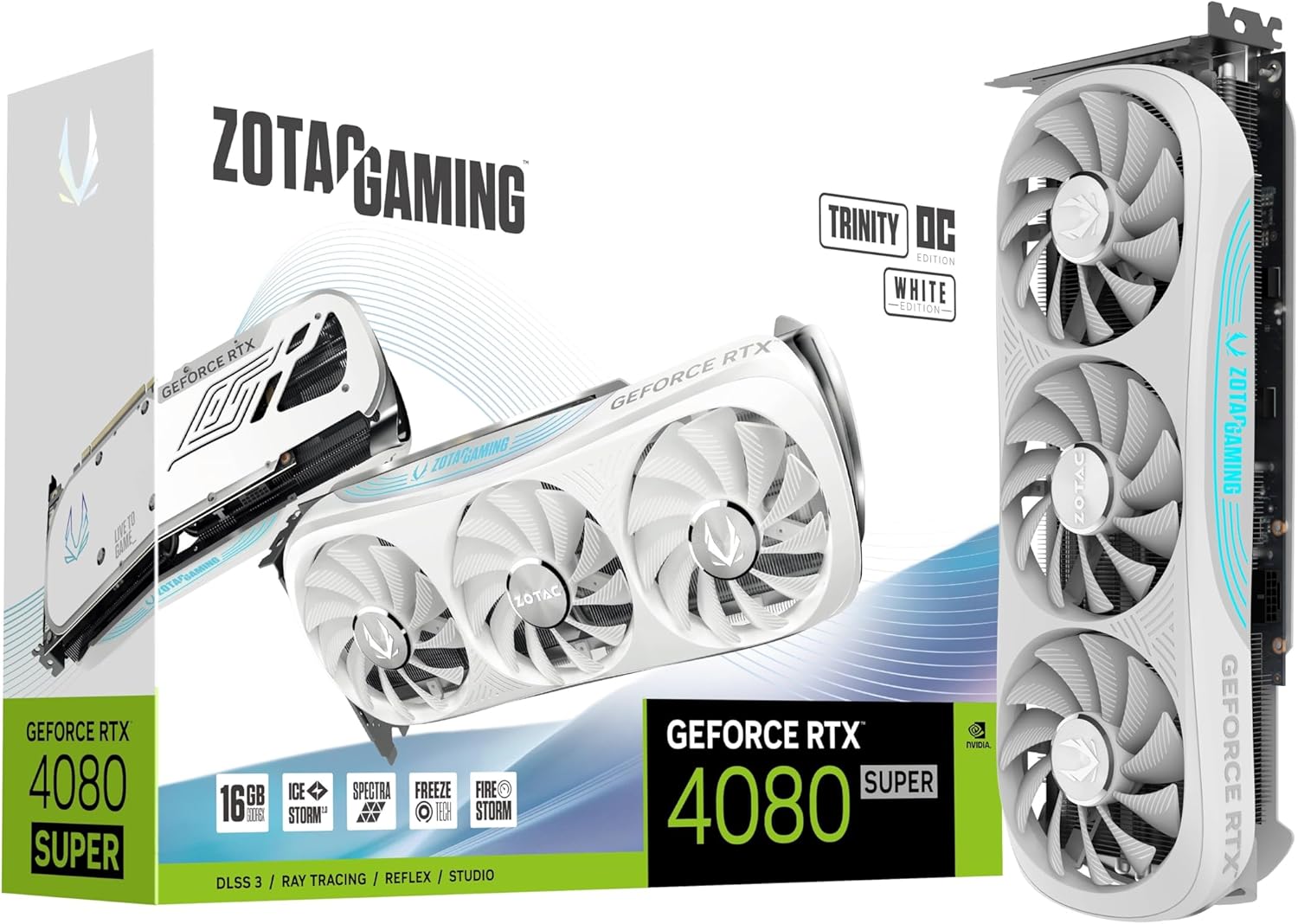
One claim worth correcting directly: running a ~27B-parameter model does not require a datacenter accelerator. The math is straightforward and doesn't depend on which specific 27B checkpoint you use.
| Precision | Approx. bytes/parameter | VRAM for ~27B params | Realistic hardware |
|---|---|---|---|
| FP16 (full precision) | ~2.0 | ~54 GB | Dual 24GB+ GPUs or a single 48-80GB workstation/datacenter card |
| Q8 (8-bit quantized) | ~1.0 | ~27 GB | Single 32GB+ card |
| Q5_K_M (5-bit quantized) | ~0.65 | ~17-18 GB | Single 24GB consumer GPU |
| Q4_K_M (4-bit quantized) | ~0.5 | ~13-15 GB | Single 16-24GB consumer GPU |
Add a few extra gigabytes on top of the weight size for KV cache once you're working with the longer context windows a coding agent actually uses (large diffs, multi-file context, tool outputs). In practice, a single 24GB consumer card at Q4-Q5 is the realistic entry point for running a 27B-class coding model with headroom, not a multi-hundred-gigabyte datacenter part. Cards in the AMD Instinct or Nvidia H100-class tier exist to serve many concurrent users at large batch sizes in a datacenter, not because a single developer's 27B coding session needs that much memory.
If you're assembling a local rig for exactly this use case, Local LLM in VSCode: The 2026 Setup Guide and Set Up a Local LLM Coding Assistant in VS Code on an RTX 3060 12GB both work through the smaller end of this range, and Local LLM vs Claude in 2026: What an RTX 3060 12GB Rig Actually Replaces is the most direct comparison of what a modest local card can and can't stand in for versus a hosted model.
How to run a defensible comparison yourself
If the goal is to actually decide between GitHub Copilot, Claude Code, and OpenCode for your own workflow, a same-model test is worth doing — but a few practices make the result mean something:
- Fix the task set in advance. Fifteen to twenty real tasks pulled from your own recent commit history give you a result that generalizes to your actual work, unlike a handful of generic "write a sorting function" prompts.
- Score outcomes, not vibes. Did the change compile, pass existing tests, and not touch unrelated files? That's checkable; "felt smarter" isn't.
- Run each tool multiple times per task. Agentic tool-calling loops have run-to-run variance; a single pass through fifteen tasks is a sample of one, not a benchmark.
- Publish your task set and scoring script alongside any percentage you report. Without that, a number is a claim, not a benchmark — which is the exact gap between the standing leaderboards above and most one-off comparison posts.
That same discipline — fixed task set, checkable pass/fail criteria, disclosed methodology — is what separates SWE-bench and the Aider leaderboard from an unverifiable "X scored 92%, Y scored 85%" claim with no linked dataset. If you want a number you can actually trust for a specific model-and-harness pairing, those two projects are the place to check current standings rather than any single comparison post, including this one.
The bigger picture: harness churn is faster than model churn
Coding agents ship system-prompt and tool-loop changes far more often than model providers ship new base models, which is why any specific ranking between GitHub Copilot, Claude Code, and OpenCode is a snapshot rather than a durable verdict. A tool that trails on a given week's informal comparison can close the gap with a harness update alone, with zero change to the underlying model. That's also the throughline connecting this topic to the broader local-vs-hosted debate covered in Local LLM vs Claude in 2026: the practical decision usually comes down to workflow fit and rate-limit exposure rather than a fixed accuracy gap between tools.
Citations and sources
- Claude Code — Anthropic
- GitHub Copilot — GitHub
- OpenCode — opencode.ai
- SWE-bench Verified leaderboard
- Aider polyglot leaderboard
- Ollama model library
This piece is editorial synthesis based on publicly available information. No independent first-party benchmarking is reported.