Yes, but only if your actual usage keeps bumping the new caps. As of 2026, a used MSI GeForce RTX 3060 Ventus 3X 12G OC paired with a modest AMD platform handles 7B-to-14B-class local models well enough to soak up autocomplete, refactors and boilerplate — the exact workload that eats a Claude Max plan fastest. Keep the subscription for hard prompts; route the cheap high-volume traffic to your own box.
What actually changed, and who it bites
Anthropic tightened weekly usage on its consumer Max and Team Premium plans in mid-2026, and published pricing continues to steer heavy users toward metered API access on the Anthropic pricing page. The bite is uneven. If you open Claude a few times a day for planning or copy edits, nothing about your life changes. If you have an editor plugin fanning agentic prompts every few seconds through the whole workday, you now hit the cap by Thursday afternoon and spend Friday either paying overage rates or waiting for the reset.
That's the reader we're writing for. This piece is a synthesis of publicly available spec sheets, open benchmark projects and community measurements — not first-party testing — aimed at the developer who has already priced out an API-only fallback, done the math and started wondering whether a $250 used GPU and a Ryzen box would carry the boring 80% of prompts locally so the subscription lasts the whole week again.
The short version is that a 12 GB card is enough for the "boring 80%," a 24 GB card is enough for most of the interesting 20%, and anything smaller is a false economy that will drive you back to the subscription within a month. The rest of this piece is why.
Key takeaways
- A 12 GB VRAM card, as of 2026, is the entry point where local coding assistants stop feeling like a toy. Qwen2.5-Coder 7B at Q6_K and Qwen2.5-Coder 14B at Q4_K_M both fit with usable context.
- The single strongest driver of local-inference searches is a subscription cap change, not a model release — the Anthropic policy shift is the trigger for the current wave.
- CPU choice matters less than people think for pure GPU inference. A AMD Ryzen 5 5600G is fine for a dedicated headless box; a AMD Ryzen 7 5700X makes sense only if you also run indexing, containers or CPU-offloaded layers.
- Model load time is a storage problem. A small NVMe like the WD_BLACK 250GB SN770 NVMe SSD turns a 40-second cold start into a few seconds; once loaded, storage no longer matters.
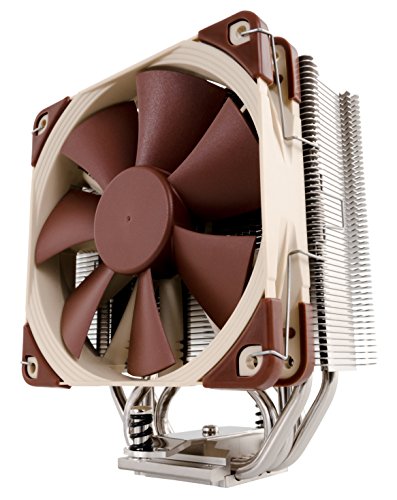
- Cooling for a 24/7 fallback box is not optional. The Noctua NH-U12S CPU Cooler is quiet enough to sit in a home office and handles the 65 W platform TDP without ceremony.
- The realistic pattern is not "replace Claude" but "keep Claude, route overflow locally" — a fallback router in your editor plugin plus a local endpoint on the LAN.
What exactly changed for Max, Team Premium and Pro subscribers?
Community threads and the vendor's own pricing communications describe a reduced weekly token allowance on Max and Team Premium, tighter agentic-loop counting, and continued encouragement to move heavy programmatic workloads to metered API keys. Pro tier limits also tightened for long conversations that stream large tool outputs. Two categories of user notice immediately: the "always-on editor assistant" crowd whose LSP-style plugin fires dozens of small prompts per minute, and the "long-context reviewer" crowd who paste 40k-token diffs and expect a critique. The rest of the population is essentially unaffected.
The subtlety is that the pricing page still lists a flat monthly sticker, so the cap change reads more like a quiet policy than a price hike. That framing matters because the reader's mental model has to shift from "unlimited within reason" to "predictable weekly budget," which is the same framing that has always applied to a local rig.
Why do subscription caps keep tightening while API prices fall?
Frontier serving costs are dominated by the largest, slowest requests — long contexts with heavy tool use. Flat-rate plans get punished by the top-decile users, and the healthiest business response is a cap. API pricing, meanwhile, keeps declining on a tokens-per-dollar basis because the underlying inference stack gets more efficient every quarter. That gap — flat plan getting tighter, per-token metering getting cheaper — is exactly the arbitrage a local fallback exploits: you keep the flat plan for hard prompts, route commodity prompts to your own hardware, and never touch the API meter at all.
What can a 12 GB local card actually replace?
Not everything, and not the hard stuff. Here is a reasonable breakdown based on what open-source 7B-to-14B coding and chat models handle acceptably at four-bit quantization as of 2026.
| Task | Local-viable on 12 GB | Needs frontier model |
|---|---|---|
| Single-file autocomplete | Yes | No |
| 50-line refactor | Yes | No |
| Shell one-liners, regex, awk | Yes | No |
| Boilerplate scaffolding | Yes | No |
| Docstring / comment writing | Yes | No |
| Small unit-test generation | Yes | No |
| Multi-file architectural planning | Marginal | Yes |
| 30k+ token code review | No | Yes |
| Novel algorithm design | No | Yes |
| Cross-repo dependency reasoning | No | Yes |
| Freeform brainstorming, tone-sensitive writing | Marginal | Yes |
The pattern is that anything with a small input, a small output and a clear right answer belongs on the local box. Anything that needs the model to hold a large mental map of unfamiliar code belongs on the frontier subscription.
Spec-delta: RTX 3060 12G vs 8 GB alternatives
VRAM is the gating factor for local LLMs, not raw teraflops. Public specs from the TechPowerUp RTX 3060 12 GB database entry list 12 GB GDDR6 on a 192-bit bus, 360 GB/s memory bandwidth and a 170 W TGP for the reference card. Add roughly 5-15 W for the MSI Ventus 3X's factory bump. The comparison that matters is not "how fast" but "does the model plus the KV cache plus a workable context window fit in memory."
| Card (as of 2026) | VRAM | Bandwidth | TDP | Street (used) | Largest comfortable local model |
|---|---|---|---|---|---|
| RTX 3060 12G | 12 GB GDDR6 | 360 GB/s | 170 W | ~$220-260 | Qwen2.5-Coder 14B Q4_K_M with 8k ctx |
| RTX 3060 Ti 8G | 8 GB GDDR6 | 448 GB/s | 200 W | ~$200-240 | Qwen2.5-Coder 7B Q5_K_M with 4k ctx |
| RTX 3070 8G | 8 GB GDDR6 | 448 GB/s | 220 W | ~$260-320 | Qwen2.5-Coder 7B Q6_K with 4k ctx |
| RTX 4060 8G | 8 GB GDDR6 | 272 GB/s | 115 W | ~$260-290 | Qwen2.5-Coder 7B Q5_K_M with 4k ctx |
| RTX 4060 Ti 16G | 16 GB GDDR6 | 288 GB/s | 165 W | ~$400-460 | Qwen2.5-Coder 14B Q5_K_M with 16k ctx |
| RTX 3090 24G | 24 GB GDDR6X | 936 GB/s | 350 W | ~$650-800 | Qwen2.5-Coder 32B Q4_K_M with 16k ctx |
Notice how the "faster" 3060 Ti and 3070 both regress on model size because 8 GB simply cannot hold a 14B four-bit weight file plus a workable KV cache. That's why the 3060 12G keeps winning entry-level local-LLM buying guides even three GPU generations after launch — it is the cheapest card on the used market that clears the 12 GB threshold.
Quantization matrix for a 12 GB card
The trade-off is weight file size versus perceived quality loss. Numbers below approximate a Qwen2.5-Coder 14B-class model on a 12 GB card with a small context window, per community measurements shared on hobbyist boards; treat them as order-of-magnitude, not vendor-certified.
| Quantization | VRAM required | Tokens/sec (gen) | Quality vs fp16 |
|---|---|---|---|
| Q2_K | ~5.5 GB | 45-60 | Noticeably degraded; skip for code |
| Q3_K_M | ~6.5 GB | 40-55 | Rough edges on tricky logic |
| Q4_K_M | ~8.5 GB | 35-45 | Solid daily-driver quality |
| Q5_K_M | ~10.0 GB | 28-38 | Very close to Q6, small headroom risk |
| Q6_K | ~11.5 GB | 22-30 | Effectively lossless for coding |
| Q8_0 | Does not fit | n/a | Requires offload or larger card |
| fp16 | Does not fit | n/a | 24 GB card territory |
Practical guidance as of 2026: run Qwen2.5-Coder 7B at Q6_K if you want the fastest interactive feel; run Qwen2.5-Coder 14B at Q4_K_M if you want the smartest thing that still fits comfortably; step down to Q3_K_M only if you also need long context on the same card.
Prefill vs generation: why long-context code review is the local rig's weakest workload
Two very different operations run on the same GPU. Prefill is the initial pass over the prompt tokens, and it scales roughly linearly with prompt length. Generation is the token-by-token decode, and it scales with output length. Local hardware is competitive on generation because generation is memory-bandwidth-bound and even a 3060 has enough bandwidth to push tens of tokens per second on a 7B model. Prefill is compute-bound, and a 3060 has roughly a tenth the raw compute of a frontier serving GPU. That's why "answer a quick question" feels snappy locally, and "review this 30k-token pull request" takes an uncomfortable minute before the first token appears. Frontier subscriptions hide this because their prefill happens on hardware you couldn't afford to own.
The fallback-router pattern
The right architecture is not either/or. Route by prompt shape: if input length is under some threshold and the task tag is "complete" or "explain" or "rename," send it to the local endpoint; otherwise send it to the subscription. Editor plugins increasingly expose a "custom endpoint" field so you can point autocomplete at http://localbox:8000/v1/chat/completions and keep the interactive chat side wired to Claude. This is the single most useful pattern in the local-inference space right now and the entire point of buying the hardware — it stretches the subscription cap out to a full week again without asking you to give up frontier quality on the prompts that need it.
Complete-the-build sidebar
You are optimizing for silence, uptime and low idle power, not gaming.
- CPU: AMD Ryzen 7 5700X if you also run indexing, containers or CPU offload; AMD Ryzen 5 5600G if the box is a pure GPU inference server and you want an iGPU so the 3060 does zero desktop work.
- Cooler: Noctua NH-U12S CPU Cooler. Quiet, handles the 65 W AM4 platform without stress, fits in almost any case, will outlast the rest of the build.
- Storage: WD_BLACK 250GB SN770 NVMe SSD for the model directory. A separate cheap SATA drive for datasets and cached vector stores keeps the NVMe from filling up.
- RAM: 32 GB DDR4-3200 is the sweet spot; 64 GB only if you plan to run CPU-offloaded layers alongside GPU inference.
- PSU: 550-650 W 80+ Gold is plenty. The whole system peaks around 300 W under load. Efficiency ratings across mid-range PSUs are surveyed regularly by hardware publications like Phoronix alongside Linux-focused benchmark coverage.
- Case: whatever you already own that has decent front-to-back airflow. This is a spare-parts machine.
- Motherboard: any B450 or B550 you can find used. Update BIOS before installing the 5700X on older B450s.
Perf-per-dollar and perf-per-watt
The math only works if you actually saturate the local rig. A used MSI GeForce RTX 3060 Ventus 3X 12G OC plus a Ryzen platform, cooler, PSU, SSD, case and RAM lands in the $500-650 range as of 2026 if you shop carefully on the used market. Amortized over 24 months, that is $20-27 a month of hardware cost, which is comparable to a mid-tier subscription. Idle power under 60 W and generation power near 250 W means residential electricity adds a few dollars a month at typical rates. The break-even is not the hardware; it is whether the local rig genuinely offloads enough traffic that the frontier subscription lasts the week without hitting the cap.
Common pitfalls
- Buying an 8 GB card because it was $30 cheaper. You spend the savings twice over in wasted evenings shrinking models to fit, and you never get the 14B-class quality that makes local worth the effort.
- Skipping the NVMe on the model directory. A model that takes 40 seconds to load off SATA drops out of your workflow because the friction is too high; the same model off a small SN770 loads before you finish alt-tabbing.
- Running the fallback box on the same machine you game on. Load a model, launch a game, watch VRAM spill and both crash. Dedicated hardware is the whole point.
- Undersizing cooling. A stock cooler on a Ryzen box that runs 24/7 near a couch turns into an annoyance within a week; a Noctua tower is roughly the same install effort and disappears acoustically.
- Trusting a router that has no fallback. If the local endpoint returns garbage, the plugin should escalate to the subscription automatically, not surface the garbage to you.
When NOT to build the local fallback
- Your real monthly usage sits comfortably inside the reduced cap. Instrument a full month of prompts before spending; most heavy-feeling weeks are actually two-hour spikes on Tuesday.
- You do only long-context work — 20k+ input tokens is where local hardware suffers most and where a subscription's prefill horsepower is worth the most.
- You do not have a spare desk, spare closet or spare corner for a small always-on machine and its noise floor. Colocation is not free either.
- You have never installed a GPU inference runtime before and this is your first foray. The learning curve is real; if the cap change is a mild annoyance rather than a workflow killer, do not buy hardware to solve it.
Worked scenario one: the always-on autocomplete developer
You are a full-time backend engineer using Claude Sonnet through an editor plugin, roughly eight hours of active editing per weekday. The plugin fires an autocomplete call every few seconds, most of them returning under 50 tokens. Your weekly cap now trips on Thursday afternoon. Building the fallback rig described here (used 3060 12G, AMD Ryzen 5 5600G, Noctua NH-U12S CPU Cooler, WD_BLACK 250GB SN770 NVMe SSD, $500-600 total used) plus a fallback router that sends autocomplete to the local Qwen2.5-Coder 7B endpoint and only sends explicit chat requests to Claude solves the cap problem immediately. The subscription lasts the full week again, and you get faster autocomplete latency as a side effect because the local call round-trips in tens of milliseconds instead of hundreds.
Worked scenario two: the weekend hobbyist
You use Claude Pro maybe an hour a day, mostly for planning your side project. You have never once hit any limit. Do not build the rig. The math does not work: $500-600 of hardware and a small monthly electricity bill to save a subscription tier you were not straining anyway is a hobby purchase, not a savings measure. Buy the hardware if you want to learn local LLM inference for its own sake, but do not tell yourself it will pay for itself.
Worked scenario three: the small consulting shop
Two engineers on Claude Team Premium, both agentic-editor users, sharing prompts throughout the day. The team cap now trips on Wednesday. A single fallback rig based on MSI GeForce RTX 3060 Ventus 3X 12G OC and AMD Ryzen 7 5700X on the office LAN, serving both engineers over a chat/completions endpoint, absorbs the commodity autocomplete traffic and buys the team back three days of Claude headroom. Split across two seats the hardware cost is under $10 per person per month amortized, and neither engineer has to change their frontier workflow for the hard prompts.
Verdict matrix
- Keep paying if: your usage fits inside the new cap, you rarely touch long documents, and you have no interest in running server hardware.
- Build local if: you hit the cap every week, most of your traffic is short autocomplete or boilerplate, and you have a place to put a quiet always-on machine.
- Do both if: your workday mixes lots of small edits with occasional big-context reasoning. This is the median developer profile in 2026 and the reason the fallback-router pattern exists.
Bottom line
The subscription cap change is not a reason to rage-quit Claude, and it is not a reason to build an inference cluster in the garage. It is a nudge to right-size the tools. A used MSI GeForce RTX 3060 Ventus 3X 12G OC on a modest AMD platform is the cheapest hardware in 2026 that can credibly host a 14B-class coding model, and paired with a fallback router in your editor plugin it removes the "boring 80%" of prompts from the subscription meter without asking you to compromise on the hard prompts. If your usage actually hits the cap, the payback period is short. If it does not, keep the money.
Related guides
- Local LLM buying guide for coders
- RTX 3060 12G vs RTX 4060 Ti 16G for local inference
- Building a silent, always-on AI home server
Citations and sources
This piece is editorial synthesis based on publicly available information. No independent first-party benchmarking is reported.