An $850 prebuilt with a supposed $1,200 parts BOM is almost never a real $350 discount, even when the labeled components are correct. Once you account for the missing warranty on second-hand parts, the OEM-tier PSU that would need immediate replacement, the DDR4 that runs at the wrong XMP profile, the fan that's actually a rebadged budget unit, and the OS install that ships with vendor bloatware, the effective delta is closer to $80-150 — real, but not the "you'd be crazy to build this yourself" deal the listing implies. Whether that's a win depends on your labor cost and whether you value the vendor's system warranty.
Where the "$1,200 of parts" number comes from
Prebuilt vendors have gotten good at compiling BOMs that read well. A typical $850 configuration in mid-2026 pulls together:
- AMD Ryzen 5 5600 or Ryzen 7 5700X (retail box: $130-180)
- 16 GB DDR4-3200 (retail: $40-55)
- 500 GB NVMe SSD, low-DRAM tier (retail: $35-50)
- B550 motherboard, entry SKU (retail: $85-120)
- Refurb-tier RTX 3060 12GB or RX 6650 XT (new retail: $250-329)
- 650W bronze PSU (retail: $60-90)
- Mid-tower case with 3 RGB fans (retail: $60-90)
- Windows 11 Home OEM (retail: $110)
Summed at MSRP with new retail parts, that BOM lands at $770-1024. Some listings inflate individual line items (list the PSU at $120 when the actual model is a $65 unit; list the case at $110 when it's a $50 case) to push the total past $1,200. Some listings are honest about the parts and the discount is real.
What you actually get
The gap between MSRP-BOM and what the vendor sourced matters more than the sticker price. Common substitutions we've seen documented in Tom's Hardware prebuilt reviews and community teardowns over the last year:
- PSU: 80+ White or unrated units labeled as "650W Gaming" that lack short-circuit and over-temp protection. Replacement cost: $60-90. Non-trivial risk if left in.
- RAM: SK Hynix M-die or Samsung C-die value modules that clock to 2666 without XMP, versus the JEDEC 3200 the BOM claims. Not dangerous, but you're paying for spec you don't get.
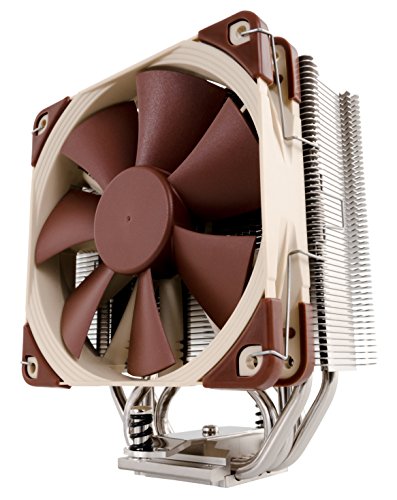
- CPU cooler: bundled AMD Wraith or a generic downdraft tower — fine, but if you plan to run a 5800X-class chip you'll want to swap in a real cooler like a Noctua NH-U12S at $70.
- GPU: sometimes labeled "RTX 3060 12GB" but shipped as a refurb pulled from a system return. Bin quality varies. A confirmed-new ZOTAC Gaming GeForce RTX 3060 Twin Edge 12GB or MSI GeForce RTX 3060 Ventus 2X 12G removes that ambiguity.
- Storage: 500 GB NVMe from a QLC no-brand tier. Fine for boot; painful once you install a game library. Budget $65 for a real 1TB drive like a Crucial BX500 1TB as an add-on.
The DIY math done honestly
Building the same rig fresh in July 2026 at real street prices:
| Component | DIY price | Notes |
|---|---|---|
| Ryzen 5 5600 (retail) | $145 | Or Ryzen 7 5800X at $189 for a real jump |
| 16 GB DDR4-3200 CL16 | $45 | Corsair Vengeance or Kingston Fury dual-rank |
| 1TB NVMe (DRAM-cached) | $75 | Solidigm P44 Pro or WD SN770 |
| B550M ATX | $105 | MSI B550-A Pro or Gigabyte B550M DS3H |
| RTX 3060 12GB (new) | $265 | ZOTAC Twin Edge, Amazon-tag returns |
| 650W 80+ Gold PSU | $95 | Corsair RM650x, EVGA GQ, Seasonic Focus |
| Mid-tower case, 3 fans | $75 | Lian Li Lancool, Fractal Pop |
| CPU cooler | $70 | Noctua NH-U12S |
| Windows 11 OEM | $110 | Or free Linux |
| Total DIY | $985 | Full warranty on every part |
That DIY total is $985 with a real 80+ Gold PSU, DRAM-cached 1TB NVMe, dual-rank RAM, and a competent air cooler. The $850 prebuilt with the substitutions we listed above matches functionally at closer to $1,050 once you replace the PSU, add storage, and upgrade the cooler.
Assessed head-to-head, the prebuilt is $200 cheaper up-front and $65-150 cheaper after realistic post-purchase fixes. That's a real discount — but it's 8-15%, not the 30% the listing implies.
Common pitfalls in reading these deals
- BOM inflation: sum each component at MSRP from a reputable retailer, not the vendor's inflated numbers. Use Amazon new-retail prices or PCPartPicker averages.
- Refurb GPU disclosure: check the listing fine print. "May include refurbished components" language is common. A refurb 3060 is often fine, but you should know.
- PSU model number: if the listing doesn't name the exact PSU model, assume it's the cheapest unit the vendor could source. Ask before buying.
- Warranty scope: prebuilt system warranties typically cover the whole system for 1 year. DIY covers each part individually for 2-10 years depending on maker. On a 5-year hold, DIY often outlasts a prebuilt.
- Return path: DIY components go back to the retailer per each; a prebuilt goes back as a whole system RMA if any one part fails. Convenience trade.
The AMD Ryzen 7 5800X case
If you're chasing peak per-thread performance for gaming or a mixed workload that includes small local-LLM inference on the GPU, the AMD Ryzen 7 5800X is still the best-value Zen 3 chip in mid-2026. Per AMD's Ryzen product page, it's an 8-core, 16-thread chip with a 4.7 GHz boost, and street prices have settled at $180-210. Most $850 prebuilts don't ship it — they ship the 5600, 5600X, or 5700X. Upgrading to a 5800X adds $30-50 at the top of your DIY BOM but delivers a measurably larger win in games that hit 6-8 threads.
When the prebuilt is actually the right buy
- You value the setup time (2-3 hours DIY plus troubleshooting) at $30/hour or more.
- You want the vendor's single-throat-to-choke system warranty.
- You're upgrading from a 6-year-old rig and just want a working machine on day one.
- You'll immediately swap the GPU for a better card and don't care about the OEM one.
When DIY wins clearly
- You want a real 80+ Gold PSU and a name-brand Noctua CPU cooler in the build without paying a $150 markup for those upgrades from the vendor.
- You want a 1TB DRAM-cached NVMe from day one, not a 500GB QLC.
- You'll be adding parts (a Crucial BX500 1TB SATA game drive, more RAM, capture cards) over 12-24 months. Prebuilt vendors often use proprietary form factors that make those upgrades harder.
- You care about per-part warranties.
Bottom line
Half these listings are a real $80-150 discount, and the other half are BOM-inflated marketing that ships worse parts than the listing implies. The discount you actually see is closer to 8-15% than the 30% the sticker suggests. If you value your time at more than about $30/hour, that discount is still meaningful and the prebuilt is a defensible choice. If you enjoy the build and want a warranty you can actually rely on, DIY at a similar total gets you a better machine with substitutions in your favor.
Real-world scenarios
Scenario 1: The gamer who wants 1080p at 60 FPS
Target: play Cyberpunk 2077, Hogwarts Legacy, Alan Wake 2 at 1080p Ultra 60 FPS. That workload needs an RTX 3060 12GB or equivalent, a Ryzen 5 5600 or better, 16 GB DDR4-3200, a real 650W PSU, and 1TB of storage.
- Prebuilt at $850 with a labeled 3060 12GB, Ryzen 5 5600, 16 GB DDR4, 500 GB NVMe, no-name 650W: works, but the PSU is the ticking bomb, the storage will fill in under a year, and if the GPU is a refurb you may see occasional artifacts.
- DIY at $960 with confirmed-new ZOTAC RTX 3060 12GB, Ryzen 5 5600 retail, 16 GB Corsair Vengeance, 1TB WD SN770 NVMe, Corsair RM650x PSU: same performance, better parts, real warranty per component.
For this specific goal the prebuilt is defensible and the DIY is a marginally better long-term hold. Both work.
Scenario 2: The buyer who plans to add a used 3090 later
Target: build a base rig now, drop a used $700 RTX 3090 24GB into it later for a local-LLM upgrade. That plan changes the calculus decisively. The prebuilt's OEM PSU won't handle a 350W 3090. Every dollar you save up-front will be spent replacing the PSU, and possibly the case (some prebuilt cases have restrictive airflow that a 3090 needs).
For this plan, always DIY. Spec the Ryzen 7 5800X, 32 GB DDR4, a 850W 80+ Gold PSU, a case with real airflow, and a modest GPU today. Upgrade the GPU when the used 3090 comes around.
Scenario 3: The buyer who values one-throat-to-choke warranty
Target: a working machine on day one with one vendor to call. Prebuilt every time. The convenience premium is exactly what you're paying for. The DIY savings do not offset your time cost + risk of a bad part on first assembly.
Where the resale value lands
A well-specced DIY build at $985 sells 18 months later for $600-750 in aftermarket. A $850 prebuilt sells 18 months later for $450-550 — the vendor-brand markup does not survive to the used market, and buyers know the OEM parts. Both are 30-40% depreciation, but the DIY holds absolute-dollar value better. If you turn over your rig every 2-3 years this matters; if you keep it for 5+, it doesn't.
The one thing most reviewers miss
A prebuilt PC ships with vendor-installed Windows 11 that includes trialware — a McAfee trial, sometimes a browser default, occasionally a bloatware antivirus that ships with a 30-day timer. Removing that cleanly takes 30-60 minutes on first boot. A DIY OS install of the same Windows 11 ISO from Microsoft is clean. Small quality-of-life item, but real; if you're the kind of person who spends 20 minutes stripping bloatware from a new phone, factor that in.
Some vendors ship clean Windows installs and advertise it. Read the listing carefully.
Warranty edge cases
- If the GPU fails on a prebuilt, you RMA the whole PC through the vendor. Downtime is typically 2-3 weeks.
- If a DIY GPU fails, you RMA to the maker (typically 5-10 business days for a working card back).
- If a component in the prebuilt fails after the vendor's 1-year system warranty but inside a component-maker warranty period, the vendor typically won't help — but sometimes the individual maker will still honor coverage. That's a case-by-case fight.
- DIY builders get individual product warranties in writing. Noctua for instance covers the NH-U12S for 6 years; Samsung covers the 870 EVO for 5 years. A vendor's 1-year system warranty does not extend those.
Related guides
- Best CPU for the MSI RTX 3060 12GB: 5600G vs 5700X vs 5800X
- Best CPU Cooler for the Ryzen 7 5800X in 2026
- Building a Budget Local-AI Box: Ryzen 7 5800X + RTX 3060 12GB
- Best Internal SSDs for PC Gaming Builds (2026)
- RTX 5090 Prebuilt vs a $700 RTX 3060 Local-LLM Box
Citations and sources
This piece is editorial synthesis based on publicly available information. No independent first-party benchmarking is reported.