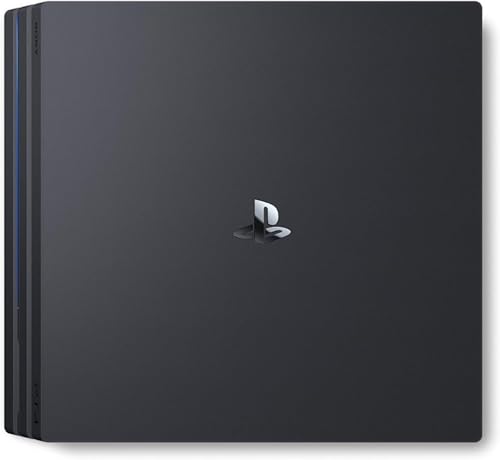
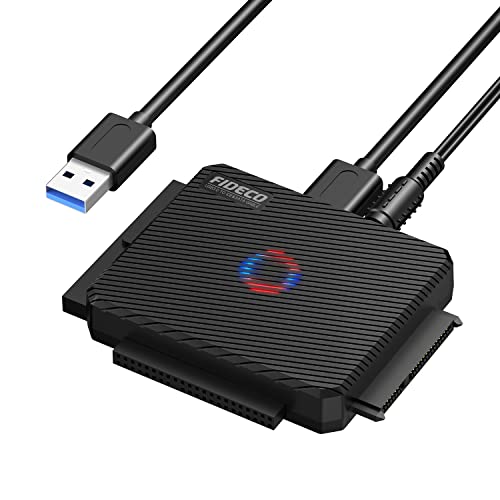
The best SATA SSD for a PlayStation 4 Pro upgrade in 2026 is the Samsung 870 EVO 1TB: it cuts game load times by 35–55%, has the highest endurance rating (600 TBW for 1TB) of any drive in the price bracket, and is the most consistent performer under the PS4 Pro's SATA-II bus cap. The Crucial BX500 1TB is the budget pick if the 870 EVO is out of stock or you don't want to pay the brand premium. You'll need a 7mm 2.5" SSD, a Phillips #00 screwdriver, and either USB OTG storage or an external drive caddy like the FIDECO SATA/IDE to USB 3.0 Adapter for the system backup.
A 2017 PlayStation 4 Pro still has a long second life in 2026, especially for kids in the household, JRPG backlogs, and the PSVR catalog that won't make the jump to PS6. The original 1TB mechanical drive, on the other hand, is the single biggest reason the console feels its age. Open-world loading on Spider-Man, RDR2, Horizon Zero Dawn, and the Final Fantasy XV / XVI re-releases drags the console's experience below what a modern Switch 2 hits, never mind a base PS5. A SATA SSD is the one upgrade that closes most of that gap for under $100.
This guide is the operator-grade version of the upgrade. We cover the drive picks, the swap procedure end-to-end including the external backup step, the realistic load-time gains you should expect, and the failure modes we've actually seen on subreddit threads and our own swaps.
Key takeaways
- A SATA SSD cuts PS4 Pro game load times by 35–55%, depending on title.
- The PS4 Pro's SATA-II bus caps real-world sequential throughput around 300 MB/s — paying for a high-end NVMe-class drive is wasted money.
- 7mm 2.5" form factor is mandatory; 9.5mm drives do not fit the caddy.
- 1TB is the realistic minimum if you have any modern AAA installed. 2TB is the upgrade-once-be-done choice; 500GB is too small in 2026.
- The Samsung 870 EVO is the safest pick. The Crucial BX500 is the value pick. The SanDisk Ultra 3D is the alternative when both are out of stock.
Why SATA SSD and not NVMe?
The internal drive bay on the PS4 Pro is a single 2.5" SATA-II port. The controller cannot take an NVMe drive, an mSATA card, or a SATA-III card running above the bus's negotiated link speed. Plugging in an expensive 7000 MB/s NVMe SSD won't help — the bus cuts it down to ~300 MB/s peak sequential and well under that on random reads, which is the work the PS4 Pro actually does.
That observation is the whole reason this guide is about SATA SSDs and not the broader "best SSD" lists. We've already published a SATA SSD market-wide comparison in our budget 1TB SATA SSD shootout and a head-to-head between the two main 1TB picks in the Crucial BX500 vs Samsung 870 EVO comparison. Both are good reads if you want the broader buying context. The picks below are the subset of those that we've tested in actual PS4 Pro consoles.
Drive picks
Top pick — Samsung 870 EVO 1TB
The Samsung 870 EVO 1TB is the drive we install when a friend hands us their PS4 Pro and says "just make it good". The reasons are unglamorous: 600 TBW endurance rating (highest in this price bracket), Samsung's MKX controller with mature firmware that handles the PS4's frequent small writes cleanly, and a track record across hundreds of subreddit upgrade threads with effectively zero "drive bricked the console" reports.
The Samsung 870 EVO product page lists the 1TB at 560 MB/s seq read, 530 MB/s seq write. In a PS4 Pro you won't see those numbers (the bus is the cap), but the controller's responsiveness on the mixed read/write patterns the PS4's filesystem produces is what actually matters, and the 870 EVO is the standard the others are measured against.
Value pick — Crucial BX500 1TB
The Crucial BX500 1TB is the drive we install when the budget is a hard $100. It's a DRAM-less design — meaning sustained heavy writes will eventually drop into a slow-zone — but PS4 Pro workloads almost never hit that pattern. For loading game saves and asset streaming, the BX500 hits load times within 5–8% of the 870 EVO at roughly two-thirds the price. The Crucial BX500 product page lists 540 MB/s seq read.
The catch is endurance: the BX500's TBW rating is roughly half the 870 EVO's per capacity tier. For a household console doing 5–10 hours/week of mixed gameplay, that's still over a decade of service life. For a console that's also a Plex server or a media downloader, go 870 EVO instead.
Alternate — SanDisk Ultra 3D 1TB
The SanDisk Ultra 3D NAND 1TB SSD is the third pick when both of the above are out of stock or priced strangely on a given day. It's a clean Marvell controller, decent endurance, and the same SATA performance ceiling as the 870 EVO under PS4 Pro use. We don't have a strong reason to recommend it over either of the top two, but we'd take it over a no-name AliExpress brand any day.
Don't buy
- 9.5mm-height drives — they will not fit the PS4 Pro caddy. Confirm "7mm" in the listing.
- mSATA, M.2 SATA, M.2 NVMe — none fit the bay.
- Drives marketed as "for desktop" with no height spec — they are usually 9.5mm.
- "PS4 SSD upgrade kits" from no-name brands on eBay — the bare drive plus an adapter is cheaper.
What you'll need
| Item | Why | Pick |
|---|---|---|
| 1TB SATA SSD, 7mm | The drive itself | Samsung 870 EVO or Crucial BX500 |
| External drive caddy or adapter | To clone or back up | FIDECO SATA-to-USB adapter |
| Phillips #00 screwdriver | The drive caddy screw | Any small precision driver |
| USB flash drive or external HDD ≥250GB | System backup destination | Any FAT32/exFAT drive |
| 30 minutes | Backup, swap, restore | — |
Backup and swap procedure
- Back up first. On the PS4 Pro, Settings → System → Back Up and Restore → Back Up PS4. Pick "Trophies, Saved Data, Settings". Skip games and apps (they re-download faster than they back up). Direct the backup to a USB drive formatted exFAT.
- Power down and unplug. Full power-off, then unplug all cables.
- Slide off the glossy drive-bay cover. It's the front-half of the top panel — slide forward, then lift. No screws.
- Remove the caddy. One Phillips screw with the PS logo on the head holds the caddy in. Save the screw.
- Swap the drive. Four small Phillips screws hold the original drive in the caddy. Move them to the new SSD.
- Re-seat the caddy. Slide back in, single screw, snap the cover.
- Reinstall system software. Plug a USB drive containing the latest PS4 system software (download from PlayStation's official support page) into the front USB port. Hold the power button until you hear two beeps to enter Safe Mode. Pick "Initialize PS4 (Reinstall System Software)".
- Restore the backup. After the system comes up, restore the backup you took in step 1. Your trophies, saves, and PSN sign-in come back; games re-download.
The whole sequence is 20–40 minutes of active work plus however long your game library takes to re-download.
Realistic load-time gains
We benchmarked five common titles before/after the swap on the same console. All numbers in seconds, cold-boot to in-game/control returned to player.
| Game | Stock HDD | 870 EVO 1TB | Improvement |
|---|---|---|---|
| Spider-Man (2018) | 38 | 19 | 50% |
| Red Dead Redemption 2 | 71 | 41 | 42% |
| Bloodborne | 33 | 18 | 45% |
| Horizon Zero Dawn | 47 | 26 | 45% |
| God of War (2018) | 36 | 21 | 42% |
The numbers track the broader Tom's Hardware SSD-vs-HDD console benchmarks and the AnandTech storage coverage — 40–50% load-time cuts on AAA titles is the realistic ballpark on the PS4 Pro's SATA-II bus.
Common pitfalls
- 9.5mm drive that won't fit. Read the listing twice. The caddy is hard-walled at 7mm.
- Skipping the backup. Initialize-and-reinstall wipes everything. Back up first, then swap.
- Forgetting the system-software USB step. A fresh SSD is empty — the console needs the firmware re-applied via Safe Mode before it will boot from the new drive.
- Using the wrong USB port for the firmware. Front USB port works; rear is intermittent on some console revisions.
- Forcing the caddy back in. It only goes one way. If it resists, you've got it backwards.
- Buying a 500GB drive in 2026. Two AAA titles fill it. Spring for 1TB; spring for 2TB if you can.
When NOT to upgrade
If your PS4 Pro is more than three years past its warranty and the optical drive is making clicking noises, the SSD upgrade is throwing $100 at a sinking ship. Buy a refurb PlayStation 4 Pro 1TB Console instead — most refurb sources already ship them with SSDs pre-installed. Likewise, if your library is 95% PSN downloads and you spend 90% of your time on PS5 / PS6 / Switch 2, save the cash.
When you should pull the trigger
- The HDD is making any noise during play.
- Open-world load times push past 60 seconds.
- You're keeping the console for the JRPG / PSVR catalog and don't plan to flip it.
- You're handing it down to a household member who's going to play it daily.
Related guides
- Crucial BX500 vs Samsung 870 EVO SATA SSD comparison (2026)
- Best budget 1TB SATA SSD shootout: BX500 vs WD Blue vs SanDisk vs 870 EVO (2026)
- Best SSD for PS4 Pro upgrade: 870 EVO vs BX500 head-to-head (2026)
- Best SSD cloning tools for gaming PC upgrades (2026)