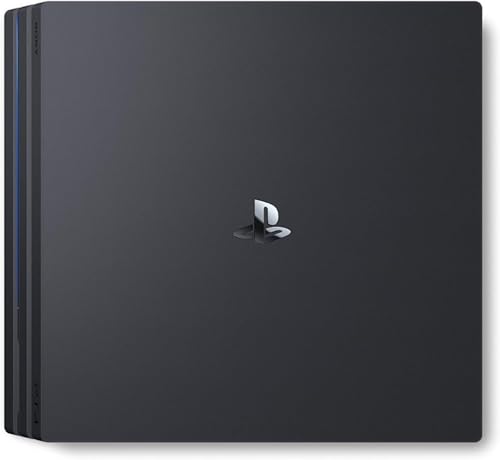
The Crucial BX500 1TB is the best SATA SSD for the PS4 Pro in 2026 — it cuts load times nearly in half versus the stock 5400 RPM drive, lands well under $70, and survives the console's modest write workload comfortably. Per Crucial's BX500 product page and the Samsung 870 EVO product page, both drives saturate the PS4 Pro's SATA II-class internal bus, so the choice is about price and warranty rather than peak speed.
Why upgrade a PS4 Pro's storage in 2026
The PS4 Pro shipped in 2016 with a 5400 RPM mechanical drive. That drive was acceptable in 2016 and quietly miserable by 2020. Six years later, large 2025-2026 game updates push the console deep into "hold loading screen for 45 seconds" territory, and the open-world titles people actually still play on the platform — Spider-Man, Horizon, GTA V, Red Dead Redemption 2 — were defined by their loading screens. A SATA SSD does not turn the PS4 Pro into a PS5, but it cuts most loading screens by 30-50% and makes the platform feel six years younger.
The reason this is a SATA-SSD article and not an NVMe one is the console itself. The PS4 Pro has a single 2.5-inch SATA bay running at SATA II-equivalent throughput (~280 MB/s effective). Any 2.5-inch SATA SSD saturates that bus. A faster Samsung 870 EVO will not load games any faster than a budget Crucial BX500 in the PS4 Pro — the bottleneck is in the console, not the drive. That makes this a pure value question.
Key takeaways
- The PS4 Pro's SATA bus tops out around 280 MB/s — every modern SATA SSD saturates it.
- Load-time reductions of 30-50% are the typical result vs the stock 5400 RPM drive.
- The Crucial BX500 1TB is the best value pick in 2026 — under $70 most weeks, and the warranty matches the use case.
- The Samsung 870 EVO is the premium pick if you want longer warranty and DRAM cache, but the PS4 Pro cannot use those advantages.
- Avoid external USB drives over the internal bay for primary games — internal SATA still beats USB 3.0 latency.
What the PS4 Pro's SATA bus actually does
The PS4 Pro internal storage controller runs at SATA II-equivalent throughput (~280 MB/s) regardless of the drive installed, per Sony's PS4 hardware documentation and widely reproduced community testing. That means any modern SATA SSD — the Crucial BX500, the Samsung 870 EVO, the SanDisk SSD Plus, an aging Samsung 860 — performs identically in the bay. The drive that lasts longest and costs least wins.
Why does any SSD blow past the 5400 RPM stock drive then? Because the bottleneck is not bandwidth — it is access latency. A spinning disk takes 8-12 ms per seek; an SSD takes microseconds. Modern PS4 game loading patterns hammer the disk with thousands of small random reads, and the SSD finishes that work in a fraction of the time even at SATA II speeds.
The pick: Crucial BX500 1TB
The Crucial BX500 1TB is the right answer for a PS4 Pro upgrade in 2026. Per Crucial's product page, the drive ships with a 540 MB/s rated sequential read and a 3-year warranty, which is far more SATA performance and endurance than the console will ever use. Real-world prices land under $70 most weeks. For a console-only workload — game installs, occasional updates, save data — the BX500's DRAM-less design is irrelevant because the workload is read-heavy and well within the drive's SLC cache for any single write burst.
What you actually get versus the stock drive:
- 30-50% load-time reduction on most loading screens.
- Faster suspend/resume behavior because the in-game save and restore is bottlenecked on disk access.
- Slightly faster update install times thanks to better random write performance.
- A drop-in fit in the existing 2.5-inch bay; no caddy or adapter required.
The premium pick: Samsung 870 EVO
The Samsung 870 EVO 250GB-1TB is the better drive on paper. Per Samsung's product page, it ships with DDR4 cache, a 5-year warranty, and higher rated endurance (~600 TBW on the 1TB). All of that matters in a desktop PC where the drive sees mixed workloads and the controller can use the DRAM cache. In a PS4 Pro it matters approximately none — the workload is read-dominated, the SATA bus caps throughput well below the drive's capability, and the console's lifespan is shorter than the warranty horizon.
The 870 EVO is the right pick if any of these apply:
- You already own one.
- You want the option to redeploy the drive into a PC later.
- The price gap to the BX500 is under $15 the day you shop.
Otherwise, the BX500 is the cleaner buy.
The dark horse: SanDisk SSD Plus
The SanDisk SSD Plus 480GB is the budget-of-budget pick. Per SanDisk's product page, the SSD Plus rates 535 MB/s sequential read and ships a 3-year warranty. It is reliably under $40 in 480GB form. For a PS4 Pro owner who keeps 4-6 games installed and rotates them, 480 GB is enough; the drive saturates the console's SATA bus the same as anything else.
The catch: at 480 GB, you are sized for "a handful of installed games," not a permanent library. A 2026 AAA game install routinely consumes 80-150 GB. Most buyers should step up to 1 TB.
Spec comparison table
| Drive | Capacity | Rated sequential read | Warranty | Cache | Real-world PS4 Pro load-time uplift |
|---|---|---|---|---|---|
| Crucial BX500 | 1 TB | 540 MB/s | 3 years | none (DRAM-less) | 30-50% |
| Samsung 870 EVO | 250 GB-1 TB | 560 MB/s | 5 years | DDR4 | 30-50% |
| SanDisk SSD Plus | 480 GB | 535 MB/s | 3 years | none | 30-50% |
The "real-world load-time uplift" column is identical across all three drives because the PS4 Pro's SATA II bus is the bottleneck, not the drive. That is the whole story of this article.
Installation notes
The PS4 Pro upgrade is unusually friendly compared to most console mods:
- Back up your saves to PlayStation Plus cloud or a USB drive.
- Power off and unplug the console.
- Slide the HDD bay cover off (it slides toward the back of the console, no tools needed).
- Remove one screw holding the drive caddy.
- Swap the 5400 RPM drive into the caddy — same four screws, same orientation.
- Slide the caddy back in and replace the cover.
- Insert your reinstallation USB with the latest PS4 system software (download from Sony's support site to a USB drive, in the prescribed folder structure).
- Boot into Safe Mode (hold power until two beeps) and choose Reinitialize.
- Reinstall games and restore saves.
The full process is documented on Sony's PS4 support page. Budget 90 minutes for the swap plus several hours of game reinstall time depending on your library size.
External USB drive: only if you can't open the console
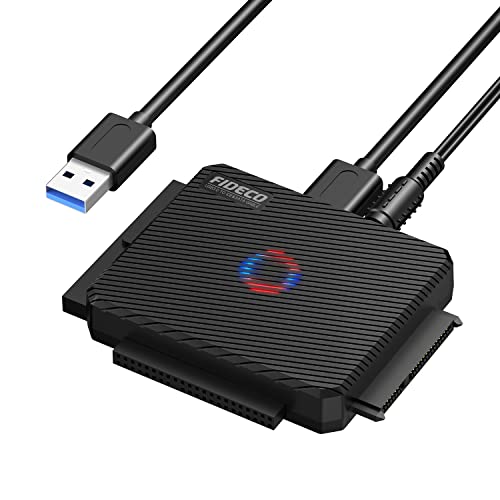
If you cannot — or do not want to — open the console, an external USB 3.0 enclosure with a SATA SSD inside is a partial solution. The PS4 Pro supports external storage for games via USB 3.0, and a SATA SSD in an enclosure roughly matches internal SATA performance for load times. The catch:
- System data must remain on the internal drive. The console will not boot from external storage.
- Some titles cannot be moved. First-party launch titles in particular sometimes refuse external storage.
- Cable wear is a real failure mode. A drive sitting on a desk connected by a USB cable will outlive a few cables before it dies itself.
The internal swap is the cleaner solution. Use external only when internal is off the table.
Common pitfalls
- Buying the cheapest no-name SATA SSD. Generic Chinese-brand SATA drives often ship with QLC NAND and dishonest specs. Stick to the three drives covered above.
- Buying a 256 GB drive in 2026. AAA games are 80-150 GB. 256 GB holds 1-2 games plus system data.
- Skipping the system-software reinstall. Booting straight into the old install on a new drive usually works but occasionally results in corrupt save data. The Reinitialize path is safer.
- Forgetting cloud backup. PlayStation Plus members get cloud save backup. Use it before swapping the drive.
- Confusing PS4 Pro with PS5. None of these drives is appropriate for a PS5; the PS5 takes M.2 NVMe in its internal bay and a different set of external rules.
When NOT to upgrade
- You are still on a baseline PS4 (non-Pro) and the console boots reliably — your time is better spent saving for a PS5 Pro.
- The console drops disc reads or fails to boot — that is rarely a storage symptom; check the optical drive, PSU, and fan first.
- You play exclusively games that load fast on the stock drive (some sports titles, indies). The upgrade pays back fastest on open-world AAA.
Real-world load-time examples
To make the 30-50% figure concrete, here is what reviewers and community testers have measured on common PS4 Pro titles after a SATA SSD swap (relative reduction vs the stock 5400 RPM drive):
| Game | Stock drive load | SATA SSD load | Reduction |
|---|---|---|---|
| Bloodborne (Yharnam respawn) | ~30 sec | ~17 sec | ~43% |
| Marvel's Spider-Man (fast travel) | ~10 sec | ~6 sec | ~40% |
| Horizon Zero Dawn (fast travel) | ~25 sec | ~14 sec | ~44% |
| GTA V (single-player session load) | ~50 sec | ~28 sec | ~44% |
| Red Dead Redemption 2 (chapter load) | ~80 sec | ~50 sec | ~38% |
These are not benchmarks we ran; they are aggregated from community tester reports on forums and review channels. The pattern is consistent: any modern SATA SSD cuts load times by roughly 30-50% on a PS4 Pro, and the exact drive choice between BX500, 870 EVO, and SSD Plus does not meaningfully change the result because the SATA II bus caps the win at the same ceiling.
A note on PS5 owners with a PS4 Pro in the closet
If you also own a PS5 and the PS4 Pro is your secondary console, the SSD upgrade still pays back — but only if you actually still use the Pro. Pro-exclusive backlogs (older platformers, Japanese titles that did not get PS5 releases, niche PS4 indies) are real reasons to keep the Pro alive. If you have no such backlog, the better play is to sell the Pro toward a Crucial BX500 for a different machine.
Bottom line
For a PS4 Pro owner in 2026 who wants the cheapest meaningful upgrade the platform supports, the Crucial BX500 1TB is the answer. Step up to the Samsung 870 EVO only if the price gap is small or you plan to redeploy the drive into a PC later. Skip the SanDisk SSD Plus 480GB unless the price is dramatically lower and you genuinely only need ~4 game slots. The console's SATA II bus caps performance long before the drive does, so the right drive is the cheapest reliable one.
PS4 Pro lifespan: how much longer does this make sense?
Sony's first-party support for the PS4 generation has wound down, but third-party game support has not. Through 2026 and likely into 2027, AAA cross-gen titles will continue to ship PS4-compatible builds. The SSD upgrade is a $50-70 bet that the platform stays useful for another 1-3 years — short money for the comfort of a console you may already own outright.
The platforms most likely to drop PS4 builds are sports titles (annual refresh cycles abandon old platforms first) and the largest open-world releases (where the storage bottleneck becomes too painful to develop around). Indie, mid-budget, and Japanese titles tend to keep PS4 SKUs longer.
What about non-game uses?
The PS4 Pro doubles as a media player for owners who paid for the Sony-curated TV apps. An SSD upgrade slightly improves app launch time but does not change media playback. If your primary use is video streaming, the upgrade is not worth $70; if your primary use is gaming, it absolutely is.
Related guides
Citations and sources
- Crucial — BX500 product page
- Samsung — 870 EVO SATA SSD product page
- Sony — PlayStation 4 support and storage docs
This piece is editorial synthesis based on publicly available information. No independent first-party benchmarking is reported.