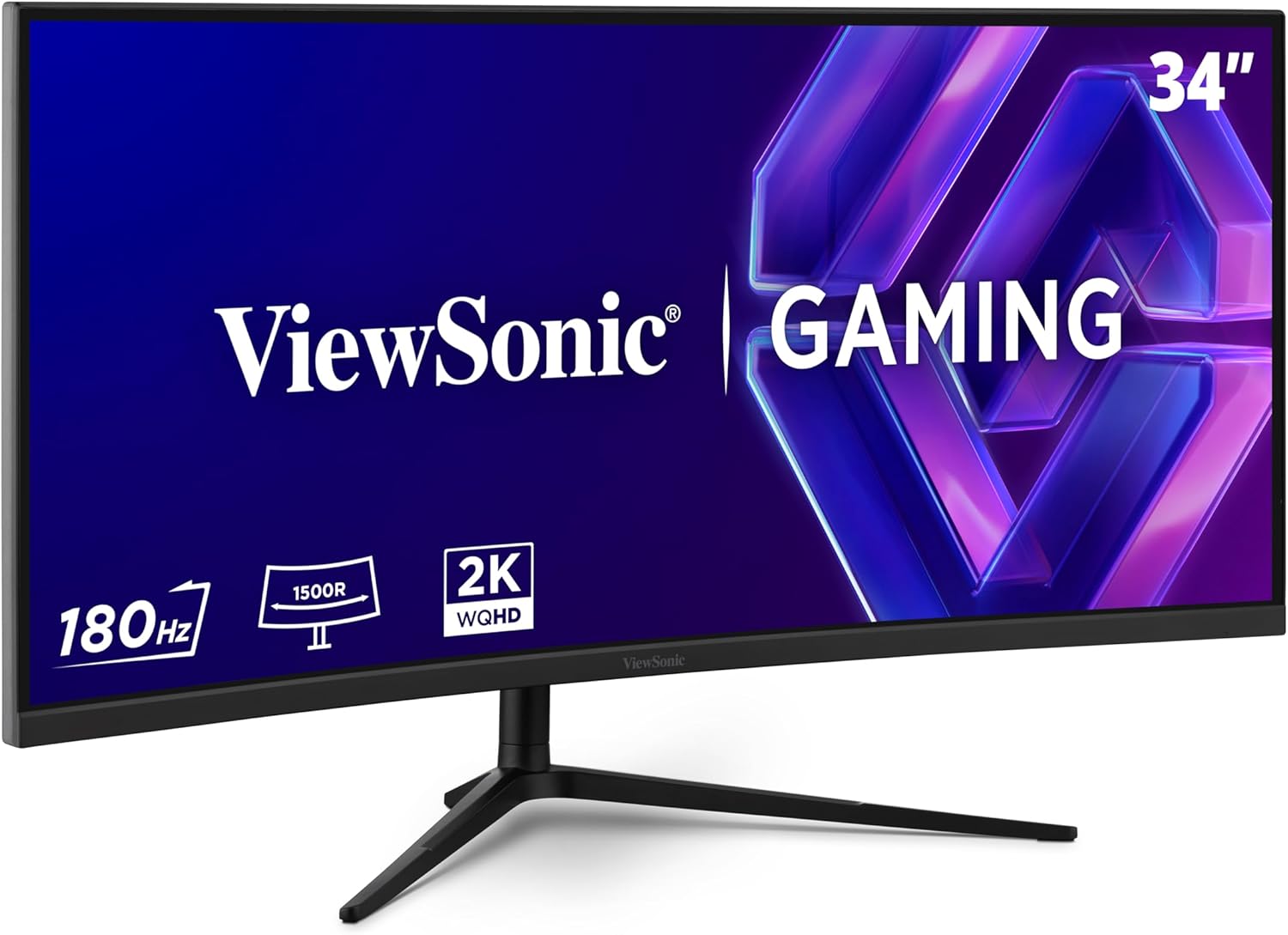
The KOORUI, for almost everyone. It gives you a 4K 160Hz mode and a 1080p 320Hz mode from one panel, ships with HDMI 2.1 and DisplayPort 1.4 explicitly named on the spec sheet, and undercuts the Samsung Odyssey by $140 at our catalog snapshot. Take the Samsung only if you want Samsung's panel tuning and support, and you have confirmed the port revision on the exact model you are buying.
Step 0 — diagnose your real bottleneck before you spend $350
The most expensive mistake in this category is buying a 4K panel for a GPU that will spend its life rendering at 1440p and upscaling.
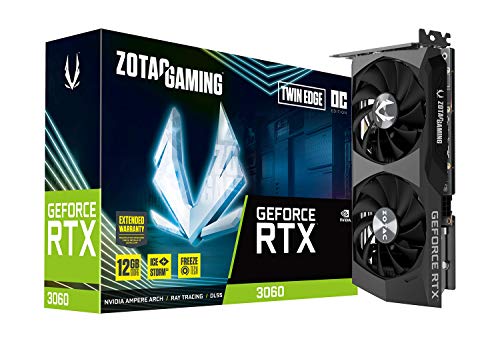
Ask what card is driving this display. If the answer is an RTX 3060 12GB or anything in that class, you are buying a 4K desktop and a 1440p-upscaled game. That can be exactly the right purchase — the desktop clarity is real, the console side genuinely uses the resolution, and DLSS quality mode from 1440p to 4K looks better than native 1440p on a 1440p panel. But you should buy it knowing that, not discover it after.
If the answer is "I am buying a GPU too," buy the GPU to your target resolution first. An underpowered card behind a 4K panel is the more common and more expensive version of this mistake, because the panel is the part you keep for six years and the card is the part you replace in three.
And if the answer is "I mainly play competitive shooters," stop reading this comparison and buy a 1440p high-refresh panel instead. We say so again at the end, and we mean it — a 27-inch 1440p 240Hz display costs less than either of these and is strictly better for that use case.
Three different buyers, three different answers. Work out which one you are before the section below starts making both panels sound appealing.
Who this is for
You run one desk with two sources on it. A gaming PC in the mid-range — call it an RTX 3060 12GB or an equivalent 12GB card — and a console that lives on the same display, sharing the same 27 inches because the room does not have space for two screens or the budget for two panels.
That is a genuinely awkward brief, and it is why the usual monitor advice fails here. The PC-only answer is "buy 1440p high refresh, your card cannot drive 4K." The console-only answer is "buy 4K, your console outputs it natively and cannot use high refresh anyway." Both are correct in isolation and they point in opposite directions. A dual-source desk has to resolve that tension in one purchase.
The resolution is that 4K wins on the shared axis. The console uses it natively. The desktop uses it for text and window real estate every working hour. And the PC games — the only workload where 1440p would have won — can be upscaled into it with a quality loss that is far smaller than the loss you would take running the console and the desktop at 1440p all day.
This piece works through the two 27-inch 4K panels we currently track that fit that brief, at $349.99 and $489.99. It also names, honestly, the case where neither is right.
What we are not doing is pretending to a first-party testbench. We do not measure panels. Every figure below is either a manufacturer specification, a geometric calculation you can verify yourself, or an explicitly-labelled synthesis of published testing. Where the specification is ambiguous — and on one of these panels it is — we say so rather than guessing.
Key takeaways
- The KOORUI 27" 4K is the value pick at $349.99: dual-mode 4K/160Hz or FHD/320Hz, Fast IPS, HDMI 2.1 and DP 1.4 named on the spec sheet, HDR400, height and pivot adjustment.
- The Samsung 27" Odyssey 4K is $489.99 for 4K/144Hz Fast IPS with the same HDR400 tier and Samsung's tuning and warranty behind it.
- $140 buys the KOORUI's extra 16Hz at 4K, a 320Hz 1080p mode the Samsung does not have, and an explicitly-stated HDMI 2.1 port. That is a lot of specification per dollar.
- At 27 inches, 4K is about 163 pixels per inch against 1440p's 109. The desktop and text difference is obvious; the in-game difference at upscaled resolutions is much smaller.
- An RTX 3060 12GB drives these panels at 4K in older and esports titles, and at DLSS-upscaled 1440p in current AAA. That is a workable pairing, not a compromised one.
- If you play competitive shooters as your primary use, a 1440p high-refresh panel beats both of these and costs less.
Spec-delta table
| Spec | KOORUI 27" 4K | Samsung 27" Odyssey 4K UHD |
|---|---|---|
| Panel type and refresh | Fast IPS, 4K 160Hz (dual-mode: FHD 320Hz) | Fast IPS, 4K 144Hz |
| HDMI 2.1 support | Stated on spec sheet (HDMI 2.1 / DP 1.4) | Not named in the listing — verify per model |
| Adaptive sync | FreeSync Premium, G-SYNC Compatible | FreeSync Premium, G-Sync Compatible |
| Stated response time | 1ms | 1ms |
| HDR tier | HDR400 | HDR400 |
| Ergonomics | Height and pivot adjustable | Adjustable stand |
| Catalog price | $349.99 | $489.99 |
Prices are our catalog snapshot at the time of writing and move constantly — check the live listing before acting on either figure. Samsung's gaming monitor line-up is the authoritative source for the current Odyssey model's full port and panel specification.
Two rows in that table do the work.
The HDMI 2.1 row is the one to take seriously. KOORUI names the port revision in the product specification. Samsung's listing headlines 144Hz without naming it. That is not a claim that the Samsung lacks HDMI 2.1 — 4K at 144Hz requires either HDMI 2.1 or DisplayPort 1.4 with Display Stream Compression, so the panel clearly has a path to it somewhere. It is a warning that "144Hz" on the box tells you nothing about which port delivers it, and that matters enormously for the console half of this desk. Verify the specific model before you buy.
The dual-mode row is the differentiator. A dual-mode panel is not a marketing gimmick; it is a genuinely different product. Running 3840×2160 at 160Hz for single-player and desktop work, then switching the panel to 1920×1080 at 320Hz for competitive titles, gets you two monitors' worth of behaviour from one purchase. The trade-off is that 1080p on a 27-inch panel is a coarse 82 pixels per inch and looks it. Whether that is acceptable depends entirely on whether you are looking at a scoreboard or a landscape.
What does dual-mode actually change day to day?
It changes what you stop compromising on.
The standard single-panel compromise is picking a refresh rate and a resolution once and then living with both choices in every workload. Buy 4K/144 and your competitive shooter runs at frame rates your panel could show more of. Buy 1440p/240 and your desktop is grainier than it needs to be and your console downscales.
Dual-mode splits that decision by workload. In practice you set it once per session — usually via an on-screen-display hotkey or the monitor's own menu — and the panel reconfigures its timing controller for the other mode. The switch takes a couple of seconds and your desktop rearranges itself, which is mildly disruptive and the reason nobody does it mid-session.
The honest limitation: the FHD 320Hz mode is 1080p on a 27-inch panel, which is 82 PPI. Text is soft. UI elements are chunky. It is a mode for a game with a crosshair in the middle of it, not a mode you leave the monitor in. If you would be running 1080p most of the time, buy a 1440p panel instead and stop paying for pixels you are not using.
The other thing to check on any dual-mode panel is whether adaptive sync stays enabled in both modes and across both inputs. Budget panels sometimes expose variable refresh only on DisplayPort, which is fine for the PC and useless for the console sitting on HDMI.
Frame rates on an RTX 3060 12GB class card
Treat this as sourced synthesis rather than measurement — we do not run a first-party panel or GPU testbench. The pattern below is consistent across published aggregate testing such as the Tom's Hardware 4K gaming monitor coverage and NVIDIA's own RTX 30-series specifications.
| Workload class | Native 4K on RTX 3060 12GB | DLSS Quality (1440p → 4K) | Verdict |
|---|---|---|---|
| Esports titles (CS-class, MOBAs) | Comfortable | Not needed | Native 4K is fine |
| Pre-2021 AAA at high settings | Playable, settings-dependent | Comfortable | Either works |
| Current AAA, raster only | Below target | Playable | Upscale |
| Current AAA with ray tracing | Not viable | Marginal | Drop RT or drop resolution |
| Desktop, browsers, video | Irrelevant — GPU is idle | n/a | 4K is the whole point |
| Console (PS4 Pro class) at 4K60 | n/a | n/a | Panel-bound, not GPU-bound |
The shape of that table is the argument. The RTX 3060 12GB is not a 4K gaming card and nobody should claim otherwise — but a 4K panel is not the same product as 4K gaming. Two-thirds of the rows above either do not care about the GPU or are comfortably handled by upscaling.
The card's 12GB frame buffer is worth a note because it gets misread in both directions. It is not the limiting factor at 4K on this class of card; raster throughput is. 12GB is comfortably above what most engines request at these settings. The card runs out of shader performance long before it runs out of memory, which is why upscaling — a compute-side fix — works so well here.
We went deeper on exactly this pairing in can an RTX 3060 12GB drive a 27-inch 4K monitor, and on the card's broader value case against its closest rival in ZOTAC RTX 3060 12GB vs Arc B580 for 1440p.
Can an RTX 3060 12GB drive a 4K panel in 2026? Where DLSS and native diverge
Yes, with one qualification that is worth stating precisely.
Where native rendering still works: anything CPU-bound or lightly threaded on the GPU. Esports titles, strategy games, older AAA, emulation, and every non-game workload on the desktop. In these, native 4K on a 3060 is not a stretch — the card was always faster than the workload.
Where DLSS takes over: current AAA raster. Quality mode renders at 2560×1440 and reconstructs to 3840×2160. The reconstruction is good enough in 2026 that the honest comparison is not "4K native vs upscaled" but "upscaled 4K vs native 1440p on a 1440p panel" — and upscaled 4K generally wins that, because you keep the full-resolution UI, the sharper text overlay, and the panel's native pixel grid for everything that is not the 3D render.
Where it stops working: ray tracing at 4K. The 3060 has RT cores and they are entry-tier. Enabling ray tracing at 4K on this card means dropping to performance-mode upscaling and accepting the image quality that comes with a 1080p internal render. That is a bad trade. Turn ray tracing off at this tier and spend the frames on resolution and settings instead.
The divergence point, then, is roughly: modern engine plus ray tracing equals no. Everything else on a 4K panel is a solved problem for this card, either natively or through DLSS.
The console side: what a PS4 Pro needs versus what current consoles need
This is where the HDMI question stops being academic.
A PS4 Pro outputs 4K at 30 or 60 frames per second via checkerboard rendering in supported titles, over HDMI 2.0. It cannot use HDMI 2.1 and it cannot use 144Hz. Any 4K60-capable input on either of these panels serves it perfectly. If your console is a PS4 Pro, the HDMI revision debate does not apply to you at all — buy on price and panel quality.
A current-generation console is a different matter. If you want 4K at 120Hz, you need HDMI 2.1's bandwidth. HDMI 2.0 carries 4K60 and stops there. This is where the KOORUI's explicitly-stated HDMI 2.1 support is worth real money and where the Samsung listing's silence on the point becomes a thing you must resolve before ordering.
The failure mode to avoid: buying a panel labelled "HDMI 2.1" and discovering that only one of its ports carries full bandwidth, or that the port supporting 4K120 is the one your PC is already using. Count the ports, confirm the spec per port, and plan which source goes where. Put the PC on DisplayPort — it is the higher-bandwidth path on both panels and it frees the good HDMI port for the console.
Colour, HDR and text clarity at 27 inches
Pixel density. A 3840×2160 panel at 27 inches is 163 pixels per inch. A 2560×1440 panel at the same size is 109. That is a 50% increase in linear density, and it is the single most visible difference between these panels and the 1440p alternative — not in games, where you are often upscaling anyway, but in text, UI chrome, and any static high-contrast edge.
Desk distance. At a typical 60 to 80 centimetres, 163 PPI is comfortably past the point where individual pixels stop being resolvable for most people, and 109 PPI is not. That is why 4K at 27 inches feels like a different class of display for desktop work while feeling marginal for gaming. The geometry favours the workloads where you are reading, not the ones where you are reacting.
Scaling. 4K at 27 inches usually wants display scaling — typically 125% or 150% on Windows — which means you are trading some of that density back for legible UI. That is fine and expected; the remaining density still goes into text rendering quality. It does mean you get less usable desktop area than the raw resolution suggests, so do not buy 4K purely for window real estate.
HDR400. Both panels carry the same HDR400 tier, and the honest assessment is that HDR400 is a label rather than a feature. It certifies a peak brightness floor without requiring local dimming, so HDR content is tone-mapped onto a display that cannot deliver the contrast the format assumes. Neither panel is an HDR display in the sense a mini-LED or OLED panel is. Treat HDR400 as a tie between these two and as a reason to look at 4K mini-LED versus QD-OLED if HDR is actually a priority.
Response time. Both list 1ms. Manufacturer response figures are measured under best-case grey-to-grey transitions with overdrive at maximum, which is not how anyone runs a monitor day to day. Treat any single-digit millisecond claim on either panel as a marketing ceiling. The practical questions are whether overdrive introduces visible overshoot and whether adaptive sync holds across the full refresh range without low-frame-rate flicker — neither of which appears on a spec sheet.
Perf-per-dollar: cost per frame, and the cheaper alternative
At catalog prices, the arithmetic is straightforward.
| Panel | Price | 4K refresh ceiling | Cost per 4K Hz | Second mode |
|---|---|---|---|---|
| KOORUI 27" 4K | $349.99 | 160Hz | $2.19 | FHD 320Hz |
| Samsung Odyssey 27" 4K | $489.99 | 144Hz | $3.40 | None |
Cost-per-Hz is a crude metric and it flatters the KOORUI, so treat it as a directional signal rather than a verdict. The $140 gap buys you, on the KOORUI side: 16 extra Hz at 4K, a 320Hz 1080p mode, and a spec sheet that names its port revisions. On the Samsung side it buys panel tuning, factory calibration consistency, warranty handling, and a brand with a service network — none of which show up in a table and all of which are worth something.
The cheaper alternative deserves stating plainly. A 27-inch 1440p panel at 165Hz or 240Hz costs meaningfully less than either of these, drives an RTX 3060 12GB natively without upscaling in almost everything, and is the better gaming display of the three. What it loses is the console's native resolution and the desktop clarity. If the console is the reason you are here, 4K is correct. If the console is an afterthought, price a 1440p panel before you commit — you may find the money is better spent on the GPU. We rounded up the high-refresh end of that market in 1440p 500Hz QD-OLED monitors and covered the resolution-versus-panel-tech decision in RX 9060 XT vs RX 9070 XT: OLED 1440p or 4K IPS.
Complete the desk
A shared PC-and-console desk needs three things beyond the panel, and none of them are expensive.
A controller that works on both. The PlayStation DualSense at $74.00 pairs to a PC over USB-C or Bluetooth and is natively supported by Steam's input layer, which means it works in the console-style games you would use a pad for anyway. One controller, two sources, no adapter. We compared it against a PC-first alternative in GameSir G7 SE vs DualSense for PC gaming.
A headset, because a shared desk means shared audio. The BENGOO G9000 at $29.99 is a budget over-ear with a boom mic and a 3.5mm connection, which is the relevant detail — a 3.5mm headset plugs into the DualSense and into the PC without a second purchase or a USB dongle to keep track of. It is not a good headset in absolute terms and we would not pretend otherwise; it is the right cheap headset for a two-source desk. For better, see best gaming headsets in 2026.
Desk surface. The SteelSeries QcK XXL at $29.99 is a full-desk cloth pad. On a dual-source desk this earns its place for an unglamorous reason: it gives the keyboard and mouse a consistent surface when you slide them aside for a controller session and back again, and it stops a monitor stand's feet from scratching the desk. Broader peripheral picks are in best budget gaming peripherals under $100.
When each panel is right — and when neither is
The KOORUI is right when you want the most specification per dollar, when the dual-mode 1080p/320Hz option is genuinely useful to you, and when you want HDMI 2.1 named explicitly rather than inferred. At $140 less it is the default recommendation.
The Samsung is right when you want a known brand's panel tuning and support path, when you have verified the port specification on the exact model in front of you, and when the $140 premium buys you confidence rather than specification. That is a legitimate purchase; it is just a different one.
Neither is right when competitive shooters are your primary use. At that point you want frame rate above pixel density, a 27-inch 1440p high-refresh panel costs less than both, and your GPU renders it natively. Buying 4K and then running the panel in its 1080p mode most of the time means you paid for a resolution you are not using.
Neither is right when the GPU is the weak link and you have not bought it yet. Card first, panel second. That ordering is not negotiable and it is the mistake we see most often.
Neither is right when the console is current-generation, you want 4K120, and you cannot confirm full-bandwidth HDMI 2.1 on the specific unit. Resolve that before ordering, not after.
Verdict matrix
| Get the KOORUI if… | Get the Samsung Odyssey if… | Stay at 1440p if… |
|---|---|---|
| You want the most spec per dollar | You want brand tuning and support | Competitive shooters are your main use |
| The 320Hz 1080p mode is useful to you | You have verified the port spec | Your GPU is the weak link |
| You want HDMI 2.1 stated, not inferred | The $140 buys you confidence | You want native rendering, no upscaling |
| Console 4K120 is on your roadmap | You prefer a known service network | The console is an afterthought |
Bottom line
Buy the KOORUI 27" 4K at $349.99. It matches the Samsung on panel type, adaptive sync and HDR tier, beats it by 16Hz at 4K, adds a 320Hz 1080p mode the Samsung does not have, states its HDMI 2.1 support explicitly, and costs $140 less. On a spec-for-spec basis it is not close.
Take the Samsung Odyssey if the $140 is buying you something the table cannot show — a support relationship you trust, a panel tuning you have seen in person, a warranty path that matters to you. Those are real reasons and we are not going to argue against them. Just confirm the port specification on the exact model first, because the listing does not.
And if you read the Step 0 section and recognised yourself in the competitive-shooter case: buy neither, buy 1440p, and put the difference toward the graphics card.
Related guides
- Can an RTX 3060 12GB drive a 27-inch 4K monitor? — the GPU-side version of this question
- ZOTAC RTX 3060 12GB vs Arc B580 for 1440p value — if the card is still undecided
- 4K mini-LED vs 240Hz QD-OLED — when HDR is actually a priority
- 1440p 500Hz QD-OLED monitors — the high-refresh alternative
- Best PC couch-gaming setup in 2026 — if the display is moving to the living room
Citations and sources
- Samsung — gaming monitors — authoritative Odyssey model specifications, including per-port revision.
- NVIDIA — GeForce RTX 30 series — RTX 3060 12GB specifications and DLSS support.
- Tom's Hardware — best 4K gaming monitors — published aggregate panel testing and current market context.
- TechPowerUp — GeForce RTX 3060 database entry — shader counts, bus width, memory bandwidth and board power.
- HDMI — interface bandwidth reference — HDMI 2.0 versus 2.1 bandwidth and supported resolution/refresh combinations.
Prices and availability were accurate to our catalog at the time of writing and change frequently. — Mike Perry, 2026