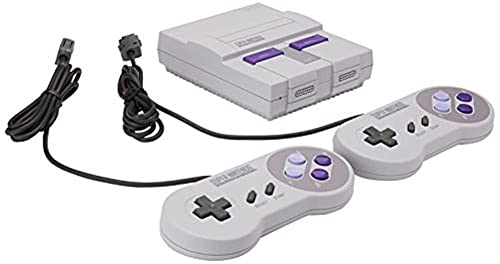
In brief — July 2026: MicroPython — a stripped-down Python interpreter designed for microcontrollers — now runs on the Super Nintendo's 65816 CPU. The port is a homebrew effort covered by Adafruit's blog and it is a genuine technical curiosity: Python running on the same 3.58 MHz processor that shipped Super Mario World and Chrono Trigger. The performance is what you would expect from a 16-bit CPU with 128KB of RAM, but the tooling opens a real path for retro homebrew developers who prefer Python over 65816 assembly.
What happened: the port and how MicroPython reaches the SNES CPU
MicroPython is a well-established compact Python interpreter maintained by Damien George's team at micropython.org, originally targeting the ARM Cortex-M microcontrollers on boards like the pyboard and RP2040-based Raspberry Pi Pico. Its interpreter footprint is small enough — under 256KB of firmware — to fit on cartridge-and-console-class hardware.
The SNES port, per the Adafruit writeup, cross-compiles the interpreter to 65816 machine code and loads it via a SNES flash cartridge or emulator ROM. The interpreter boots into a REPL that the homebrew developer accesses through a modified serial link or through debugger channels on modern flash cartridges. Standard MicroPython idioms — variable assignment, list comprehensions, basic classes — all work. The bytecode interpreter loop runs, roughly, on par with a very early ARM Cortex-M0 clocked much lower.
That said, the SNES's 3.58 MHz 65816 with 128KB RAM is an intense constraint compared to the microcontrollers MicroPython usually targets. Complex programs will hit RAM ceilings quickly; the port is not going to run Django. What it opens is a specific homebrew and educational niche.
Why it matters: what it opens for retro homebrew and coders
Two audiences care about this port:
Retro homebrew developers. Modern SNES homebrew work is done almost entirely in 65816 assembly or in C via CC65 / GCC-based toolchains. Both have real learning curves. MicroPython is a language that thousands of hobbyists already know — putting it on the SNES lowers the barrier to shipping a homebrew ROM for developers who have never written assembly. Expect to see beginner-friendly SNES homebrew tools built on this port over the next year.
Learning coders looking for a constrained target. Modern Python development on a laptop hides resource costs. Writing MicroPython for the SNES makes memory allocation, execution time, and bytecode overhead visible. That is an underrated way to learn what modern languages abstract away. Educational programs targeting retro hardware — of the "Learn programming on a Game Boy" flavor — now have a serious Python-track option.
For readers who want to actually run the port, the natural hardware paths are: an authentic SNES with a flash cart, an Nintendo Super NES Classic Edition modded to accept new ROMs (the Classic is easier to acquire), or an emulator on any modern PC or Raspberry Pi.
The source
The initial coverage comes from Adafruit's blog, with the core project documented at micropython.org. The official Nintendo SNES platform documentation provides the hardware baseline.
Get hands-on: where a plug-and-play SNES fits for readers who want the hardware
If you want to experience the SNES itself before diving into the MicroPython port, the Nintendo Super NES Classic Edition is the plug-and-play option — HDMI output, pre-loaded catalog of 21 classic games, and enough hardware similarity to the original that it is a fine way to learn what the constraint of "128KB RAM, 3.58 MHz CPU" actually means when you play games written for it.
For a more flexible learning setup, a Raspberry Pi 4 Model B 8GB runs SNES emulators (bsnes, Snes9x) at full speed and is the natural workstation for both playing the games and developing the ROMs. The Pi's own MicroPython roots (its Pico line runs MicroPython natively) make it a coherent single-vendor development environment.
Readers who want the lowest possible barrier to entry can start with a Vilros Raspberry Pi Zero W Starter Kit for $30 and an emulator — enough to get comfortable with MicroPython idioms and small ROM building before investing in real SNES hardware.
Related guides
- Amstrad CPC 464/664 Emulator on Raspberry Pi Pico 2
- Best Free Retro Game Emulators for 2026
- Solar-Powered Bird Identifier on Raspberry Pi Zero 2W
Citations and sources
- Adafruit blog — coverage of the SNES MicroPython port: https://blog.adafruit.com/
- MicroPython project home: https://micropython.org/
- Nintendo — SNES platform documentation: https://www.nintendo.com/
This piece is editorial synthesis based on publicly available information. No independent first-party benchmarking is reported.