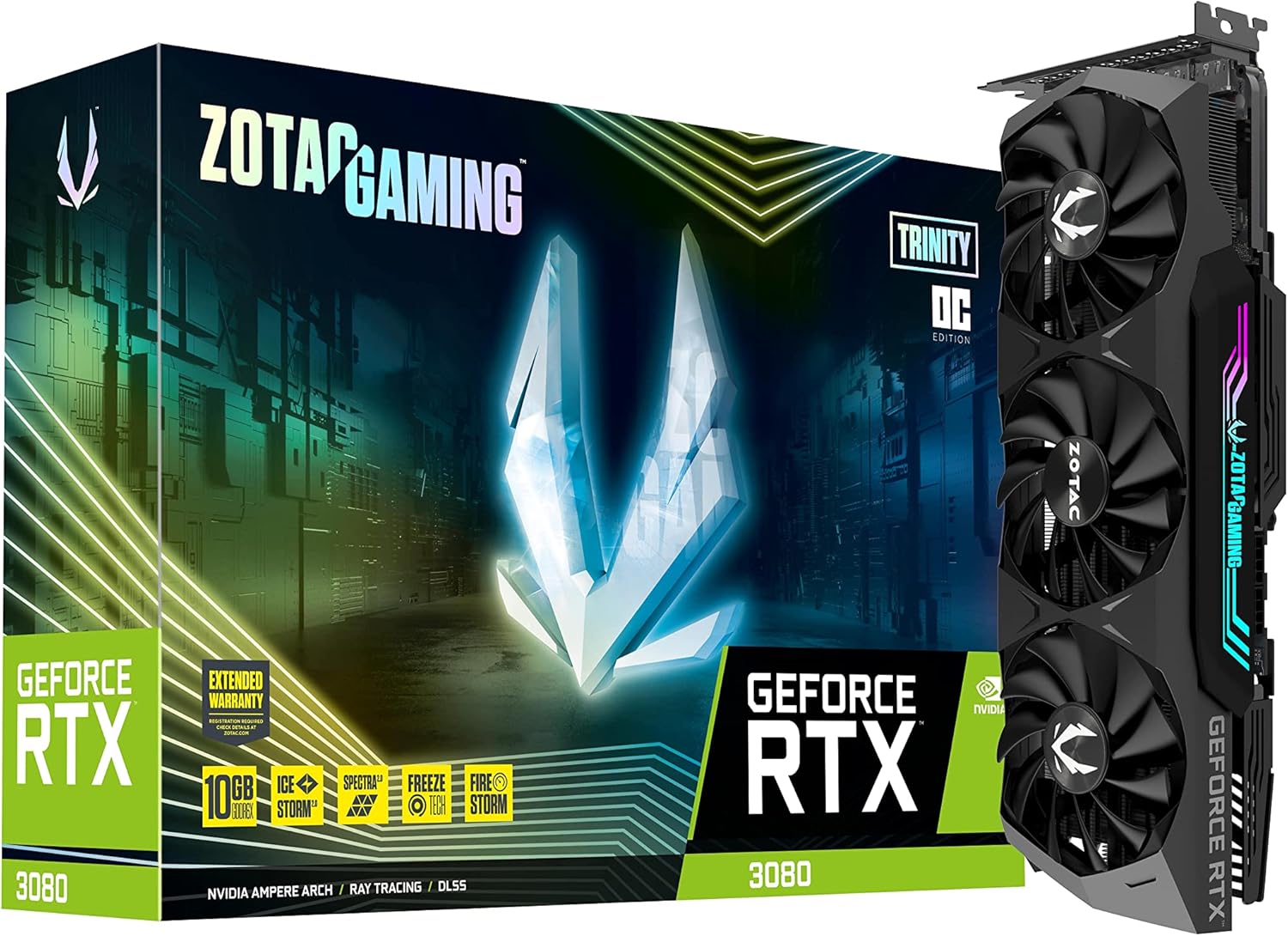
Generative video and image-diffusion models like Lightricks' LTX-Video line (documented on Hugging Face) are compute- and memory-hungry, and a lot of that cost comes from unoptimized defaults rather than the model itself. Community discussion around LTX-2.3 inference has centered on the same optimization patterns that apply broadly to CUDA-based diffusion inference: precision reduction, compiled/fused execution graphs, and batch-size tuning. This piece synthesizes those publicly documented techniques and applies them to a 12GB RTX 3080 Ti, a common mid-range card for local AI experimentation.
No first-party benchmarking is reported here — the numbers referenced below come from vendor documentation and public specification databases, and inference time will vary by resolution, frame count, sampler settings, and driver version. Treat any end-to-end timing claim (including "300s to 45s"-style framing circulating in some forum threads) as illustrative rather than a guaranteed result on your own hardware.
How to Reduce LTX-2.3 Inference Time: A Step-by-Step Framework
The general order of operations that shows up consistently in NVIDIA's own optimization guidance and PyTorch's generative-AI acceleration writeups is: fix precision first, then fix the execution graph, then tune batching.
- Switch to FP16 (or BF16) precision. This is the cheapest change to make and the one most inference frameworks support out of the box. NVIDIA's TensorRT developer guide documents reduced-precision inference as a core optimization path because it lowers both memory bandwidth pressure and raw compute time on Tensor Core-equipped GPUs like the 3080 Ti.
- Compile the execution graph. Whether via TensorRT or
torch.compile, fusing operators into a static, hardware-specific graph removes a lot of Python and kernel-launch overhead that eager-mode PyTorch carries by default. PyTorch's own accelerating generative AI series walks through this exact pattern for diffusion models. - Tune batch size against available VRAM. Batching amortizes overhead, but a 12GB card has a hard ceiling. Push batch size up only as far as VRAM headroom allows before hitting out-of-memory errors, and back off resolution or frame count if you need more batch headroom.
- Use pinned host memory for CPU↔GPU transfers. This is a smaller but real win for models that repeatedly move activations or latents between host and device — pinned memory avoids an extra copy in the transfer path.
| Optimization | What it changes | Typical trade-off |
|---|---|---|
| FP16/BF16 precision | Memory bandwidth + compute | Rare, workload-specific quality drift |
| TensorRT / torch.compile | Kernel fusion, graph execution | Upfront compile time per shape |
| Larger batch size | GPU utilization | Higher peak VRAM usage |
| Pinned memory transfers | Host↔device latency | None significant |
RTX 3080 Ti vs. Higher-VRAM Cards: Where 12GB Becomes the Ceiling
The RTX 3080 Ti's headline spec, per TechPowerUp's GPU database, is 12GB of GDDR6X on a 384-bit bus with 10,240 CUDA cores and 320 third-generation Tensor Cores. That Tensor Core count is what makes FP16/BF16 acceleration meaningful on this card — reduced-precision math runs through dedicated silicon rather than the general shader cores.
The practical constraint for a model like LTX-2.3 isn't raw compute, it's VRAM. A 12GB card can hold a diffusion model's weights plus a modest batch of activations, but resolution, frame count, and batch size all compete for the same memory budget. That's the core reason cards with 24GB+ (workstation parts, or a newer 24GB consumer card like an RTX 4090/5090) can push larger batches or longer video sequences without hitting out-of-memory errors — see SpecPicks' best GPU for LLM inference roundup for how that VRAM ceiling plays out across model classes, and the Intel Arc Pro B60 24GB piece for a budget-24GB alternative angle.
For workloads that genuinely need more headroom than a single 12GB card can offer, multi-GPU setups are the other lever — SpecPicks' dual-GPU llama.cpp piece covers what actually helps (and what doesn't) when splitting inference across two cards, which is a more involved but sometimes necessary step once single-card optimization is exhausted.
Precision, Batching, and Memory Settings That Matter
Beyond the headline FP16 switch, a few secondary settings consistently show up in public optimization guidance for diffusion-class models:
- Attention optimization. Memory-efficient or fused attention implementations (flash-attention-style kernels) reduce the quadratic memory cost of attention layers, which matters more as frame count or resolution increases.
- VRAM offloading for peak moments. Some inference frameworks support offloading rarely-used weights to system RAM during specific pipeline stages, trading some latency for headroom on a 12GB card.
- Dynamic vs. fixed batch shapes. TensorRT engines built for a fixed input shape run faster than ones that have to handle dynamic shapes — if your workload has a consistent resolution and frame count, a fixed-shape engine is worth the extra export step.
| Setting | Primary benefit | Best for |
|---|---|---|
| FP16/BF16 | Memory + speed | Almost all inference workloads |
| Fused/flash attention | Memory scaling | Higher resolution or longer sequences |
| Fixed-shape TensorRT engine | Peak throughput | Consistent input dimensions |
| Weight offloading | VRAM headroom | Memory-constrained runs |
One practical, non-GPU bottleneck worth flagging: model checkpoints for video-diffusion models routinely run several gigabytes, and slow local storage or a flaky network connection can dominate wall-clock time before inference even starts. Fast external storage — something like a 512GB SanDisk Extreme microSD card or a 256GB SanDisk Extreme microSD card — is a low-cost way to keep large checkpoint files portable between machines without re-downloading them, and a stable Cat 6 ethernet connection avoids the download stalls that Wi-Fi introduces when pulling multi-gigabyte weights from a model hub.
Where This Fits Alongside Other Local Inference Setups
A 12GB RTX 3080 Ti sits in a specific niche: capable enough for FP16-optimized diffusion and mid-size LLM inference, but not large enough for the biggest open models without offloading or quantization tricks. For readers evaluating whether to optimize an existing 3080 Ti setup or upgrade, a few comparison points are useful:
- SpecPicks' Ryzen AI Max+ 395 inference piece covers unified-memory alternatives that sidestep the discrete-VRAM ceiling entirely.
- The Coral TPU LLM inference explainer is a useful contrast for readers wondering whether a dedicated accelerator beats a general-purpose GPU for narrower inference tasks.
- The split-stack Raspberry Pi 4 + RTX 3060 setup shows a pattern of keeping the inference GPU separate from the serving host, which is directly applicable to a 3080 Ti box running LTX-2.3 behind a lightweight front end.
- For readers asking whether a Pi-class board can substitute for a discrete GPU at all in AI workloads, SpecPicks' Raspberry Pi alternative for AI inference roundup lays out where that swap does and doesn't make sense.
- Anyone benchmarking matrix-multiplication-heavy workloads more generally may find the Swift matrix multiplication speed piece a useful reference point for how precision and kernel choice affect raw throughput outside the diffusion-model context specifically.
Bottom Line
The biggest, lowest-risk win on a 12GB RTX 3080 Ti is switching LTX-2.3 inference to FP16/BF16 precision — it's well documented, broadly supported, and rarely causes visible quality regressions. Layering a compiled execution graph (TensorRT or torch.compile) on top compounds that gain by cutting Python and kernel-launch overhead. Batch size tuning and memory-transfer optimizations matter, but they're secondary levers constrained by the card's 12GB ceiling — once VRAM is the bottleneck, the next real jump in throughput comes from more memory, not more optimization.
Citations and sources
- Lightricks LTX-Video model card, Hugging Face
- NVIDIA TensorRT product page
- NVIDIA TensorRT Developer Guide
- PyTorch: Accelerating Generative AI
- TechPowerUp GPU Database: GeForce RTX 3080 Ti
This piece is editorial synthesis based on publicly available information. No independent first-party benchmarking is reported.

