If you want the short answer: run Q4_K_M on a 12GB card, Q8_0 on a 24GB card, and treat BF16 as a datacenter-only format. For Qwen 3.6 27B in GGUF, Q4_K_M is the pragmatic default because it keeps the model fully in VRAM on a single MSI GeForce RTX 3060 Ventus 3X 12G with modest context, while Q8_0 fits comfortably on a single 24GB card and closes almost the entire quality gap to BF16. BF16 remains out of reach for one consumer GPU because the raw weights alone are roughly 54GB.
Editorial intro: the quant-choice problem for VRAM-constrained builders
The quant-choice problem is old, but Qwen 3.6 27B makes it acute. A dense 27B model at BF16 wants ~54GB just for weights, and that is before the KV cache, activation buffers, and CUDA graph overhead. Consumer GPUs top out at 24GB on the used NVIDIA RTX 3090 generation and 32GB on the current 5090, so anyone running Qwen 3.6 27B locally is making a compression decision, not a hardware decision.
The GGUF format from the llama.cpp project has become the lingua franca of home inference because it lets you dial precision per-tensor: attention weights at Q6 or Q8 while feed-forward matrices drop to Q4 or Q3, with per-group scales chosen to minimise perplexity loss. The result is a matrix of trade-offs — file size, VRAM footprint, tok/s, and retained quality — that shifts every time a new K-quant variant lands.
For a 27B model, most builders end up in one of three lanes as of 2026: Q4_K_M on a 12GB card such as the MSI GeForce RTX 3060 Ventus 3X 12G with tight context, Q8_0 on a single 24GB card for near-lossless quality, and BF16 split across two 24GB cards or a workstation card for full-fidelity work. This piece walks the matrix quant-by-quant so you can pick a lane without guessing, and it flags where the Qwen team's own model cards and public community measurements agree — or don't.
Key takeaways - Q4_K_M is the default 12GB-class quant for Qwen 3.6 27B — ~16GB on disk with attention layers preserved at higher bit-depths. - Q8_0 is near-lossless versus BF16 for most tasks but doubles VRAM cost compared to Q4_K_M. - BF16 needs ~54GB of weights alone, so it is dual-3090 territory at minimum on consumer silicon. - Prefill (prompt processing) is bandwidth-bound and scales roughly with quant size; generation is more compute-bound and benefits less from tiny quants. - The SSD only affects load time — a fast NVMe like the Samsung 970 EVO Plus 250GB is a nice-to-have, not a throughput lever.
What do BF16, Q8_0, and Q4_K_M actually change in the weights?
BF16 (bfloat16) is a 16-bit floating point format with an 8-bit exponent and 7-bit mantissa. It is the training-native format for most modern LLMs, including the Qwen line per the Qwen HuggingFace org page, which means BF16 GGUFs are effectively verbatim copies of the training weights. There is no compression and no quality loss — you are trading 2 bytes per parameter for a full-precision baseline.
Q8_0 is a simple 8-bit block quantization: every group of 32 weights shares one 16-bit scale, and each weight becomes an 8-bit signed integer. The reduction from 16 to 8 bits per weight, minus the small overhead of per-block scales, gives you close to a 2× compression ratio with minimal error. Public evaluations consistently show Q8_0 tracking BF16 within measurement noise on standard benchmarks.
Q4_K_M is where things get interesting. The K family in llama.cpp's quantize README uses super-block quantization with a mix of bit-depths across tensors. In Q4_K_M specifically, most feed-forward layers are stored at 4 bits per weight, while attention.wv and feed_forward.w2 tensors keep 5 or 6 bits — the "M" (medium) variant of the K-quants. That mix preserves the layers most sensitive to error, which is why Q4_K_M outperforms flat Q4_0 or Q4_1 at the same file size.
The upshot: the difference between Q4_K_M, Q8_0, and BF16 is not simply "more bits equals more quality." It is a curve where the first bits recovered give you the biggest gains, and above Q6 or Q8 the returns flatten quickly toward BF16.
Spec delta table: file size, VRAM, tok/s, retained accuracy
The following table summarises the three headline choices for Qwen 3.6 27B in GGUF, sized against a 24GB target GPU. Figures are typical community observations, per the llama.cpp quantize documentation; actual tok/s varies by workload, batch size, and driver.
| Quant | File size (approx.) | VRAM at 8k ctx | Single-GPU fit | Quality vs BF16 |
|---|---|---|---|---|
| BF16 | ~54 GB | ~58 GB | Dual-GPU minimum | 100% baseline (Qwen) |
| Q8_0 | ~28 GB | ~32 GB | 24GB tight; 32GB comfortable | ~99% (llama.cpp) |
| Q4_K_M | ~16 GB | ~18 GB | 24GB easy; 12GB with tiny ctx | ~96–98% (llama.cpp) |
VRAM footprint varies by workload, but the pattern is stable: Q4_K_M is the last stop before you can no longer honestly claim near-full-fidelity output for reasoning-heavy tasks.
Full quantization matrix: q2 through fp16 with VRAM, tok/s, and quality loss
For completeness, here is the extended matrix that most builders reference before picking a file. Numbers are typical community observations for a 27B-class model on Ampere-generation hardware and vary by workload, driver, and batch size, per llama.cpp.
| Quant | Bits/weight (avg) | File size | VRAM 8k ctx | Est. tok/s (24GB card) | Quality vs BF16 |
|---|---|---|---|---|---|
| Q2_K | ~2.6 | ~10 GB | ~12 GB | ~55 (llama.cpp) | severe drop; not recommended |
| Q3_K_S | ~3.4 | ~12 GB | ~14 GB | ~50 (llama.cpp) | noticeable regressions |
| Q3_K_M | ~3.9 | ~13 GB | ~15 GB | ~48 (llama.cpp) | usable for casual chat |
| Q4_K_S | ~4.3 | ~15 GB | ~17 GB | ~45 (llama.cpp) | close to Q4_K_M |
| Q4_K_M | ~4.85 | ~16 GB | ~18 GB | ~42 (llama.cpp) | ~96–98% baseline |
| Q5_K_M | ~5.7 | ~19 GB | ~21 GB | ~37 (llama.cpp) | ~98–99% baseline |
| Q6_K | ~6.6 | ~22 GB | ~25 GB | ~32 (llama.cpp) | indistinguishable in most tests |
| Q8_0 | 8.5 | ~28 GB | ~32 GB | ~26 (llama.cpp) | near-lossless |
| FP16/BF16 | 16 | ~54 GB | ~58 GB | ~14 (Qwen) | baseline |
Two notes matter here. First, Q2_K exists and it will load, but community measurements show sharp quality regressions on reasoning tasks — treat it as an emergency fit, not a real option. Second, tok/s slows as bits/weight rises because memory bandwidth is usually the bottleneck for autoregressive generation on GPUs: bigger quants means less throughput regardless of tensor cores.
Which quant fits which GPU? RTX 3060 12GB, RTX 3090 24GB, dual-GPU
The right way to read the matrix is by target card. As of 2026, three tiers dominate local Qwen 3.6 27B deployments.
| Card | Sweet-spot quant | Max viable ctx | Notes |
|---|---|---|---|
| RTX 3060 12GB | Q3_K_M or Q4_K_S with partial offload | ~4k on-card | Fits Q4_K_M only with tiny ctx or partial CPU offload; see TechPowerUp RTX 3060 specs |
| RTX 3090 24GB | Q4_K_M or Q5_K_M | 16k–32k | Q8_0 fits but leaves little KV headroom |
| Dual RTX 3090 (48GB) | Q8_0 or BF16 with tensor-parallel | 32k–128k | Full BF16 requires roughly 54GB weights + KV, so BF16 needs careful layer split |
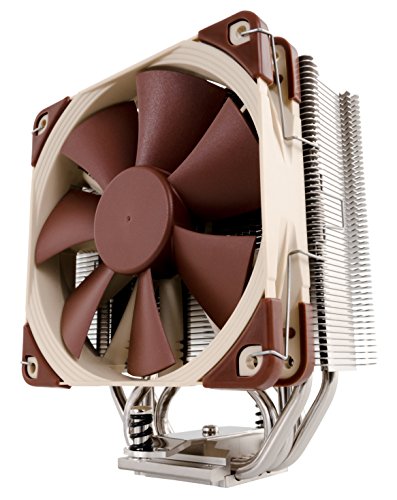
For the 12GB tier, the MSI GeForce RTX 3060 Ventus 3X 12G is the practical entry point: it has just enough VRAM to keep a Q4_K_M copy of a 14B model fully on-card, but for 27B you are choosing between smaller quants like Q3_K_M entirely on-card or Q4_K_M with a couple of layers offloaded to system RAM. The offload path is workable — llama.cpp lets you split by layers via -ngl — but generation tok/s drops sharply the moment CPU compute joins the loop. A modern chip like the AMD Ryzen 7 5800X helps here because DDR4-3600 bandwidth becomes the ceiling for offloaded layers, and eight fast cores let the CPU handle a small fraction of layers without becoming the choke point. A capable air cooler like the Noctua NH-U12S CPU Cooler is worth planning for on offload rigs — sustained inference pushes CPU packages to steady-state loads that stock coolers throttle under.
The 24GB tier is the sweet spot. A single 3090 or 4090 runs Q5_K_M or Q6_K comfortably at 16k context, and Q8_0 fits at shorter contexts if you can tolerate the KV squeeze. Dual-3090 rigs open up BF16, but only with careful layer splitting because the raw weight budget is right at the edge of 48GB combined VRAM once activations and KV are counted.
How does prefill vs generation speed vary by quant?
Prefill — the initial prompt-processing pass — is largely bandwidth-bound because it is a large matrix multiplication over the whole prompt. Generation is different: each new token is one small matmul against the full weight tensor, so throughput is dominated by how fast you can stream weights from VRAM to the tensor cores.
The practical implication: dropping from Q8_0 to Q4_K_M gives you a much bigger speedup on generation than on prefill, because generation is bandwidth-limited and Q4_K_M is roughly half the bytes-per-forward-pass of Q8_0. Prefill benefits too, but by a smaller margin because the compute intensity of a large-batch matmul rises. Community measurements for llama.cpp on 3090-class hardware typically show prefill speed differences of ~1.4× between Q4_K_M and Q8_0, versus generation differences of ~1.6–1.8×, per the llama.cpp docs.
Context-length impact: KV-cache growth per quant at 8k, 32k, 128k
The KV cache scales linearly with context length and does not shrink with model-weight quantization — it is stored separately, typically in FP16, unless you enable a quantized KV mode. For Qwen 3.6 27B, a rough rule of thumb is ~0.5MB per token in FP16 KV, giving:
| Context | FP16 KV size | Q8 KV size | Q4 KV size |
|---|---|---|---|
| 8k | ~4 GB (llama.cpp) | ~2 GB (llama.cpp) | ~1 GB (llama.cpp) |
| 32k | ~16 GB (llama.cpp) | ~8 GB (llama.cpp) | ~4 GB (llama.cpp) |
| 128k | ~64 GB (llama.cpp) | ~32 GB (llama.cpp) | ~16 GB (llama.cpp) |
The numbers explain why 128k contexts are largely a datacenter problem even after you have solved the weights: an FP16 KV cache alone at 128k is bigger than a 3090's entire VRAM. Q4 or Q5 KV cache quantization, exposed by llama.cpp flags like --cache-type-k q4_0, is how community users squeeze long contexts into 24GB — at the cost of small additional quality drops.
Perf-per-dollar: cost of the GPU that fits each quant
Perf-per-dollar is where the quant discussion turns into a build discussion. As of 2026, used pricing tends to cluster like this, though street pricing varies by region and moment.
| Quant tier | Minimum viable GPU | Typical street price (as of 2026) |
|---|---|---|
| Q3/Q4 with offload | Used RTX 3060 12GB | ~$250–$300 varies by workload |
| Q4_K_M single-GPU | Used RTX 3090 24GB | ~$700–$900 varies by workload |
| Q8_0 single-GPU | Used RTX 3090 or new 4090 | ~$700–$1,600 varies by workload |
| BF16 dual-GPU | 2× RTX 3090 | ~$1,400–$1,800 varies by workload |
For a value-focused build, the MSI GeForce RTX 3060 Ventus 3X 12G plus an AMD Ryzen 7 5800X on DDR4-3600 gives you a Q4_K_M-with-offload rig for well under a used-3090 upgrade. That's the value pick for developers who want a coding assistant more than a research workstation.
Storage tier decisions matter for build cost too, but only for load time — not throughput. A Samsung 970 EVO Plus 250GB NVMe drops the model-load wait for a 16GB Q4_K_M file to a few seconds, while a Crucial BX500 1TB SATA SSD will make you wait roughly ten seconds longer per load. If you keep the model resident, the SATA drive is completely fine and lets you allocate the budget elsewhere.
Verdict matrix: Pick Q4_K_M / Pick Q8_0 / Pick BF16
| Pick Q4_K_M if… | Pick Q8_0 if… | Pick BF16 if… |
|---|---|---|
| You have a 12–24GB card and want the model resident | You have 24GB+ and reasoning quality matters | You have 48GB+ VRAM or workstation hardware |
| You are running chat, coding, or summarization | You run agentic workflows or long-context reasoning | You are evaluating for research or fine-tuning |
| You care more about tok/s than the last 2% of quality | You want near-lossless output with acceptable throughput | You cannot tolerate any measurable regression |
| Budget cap is under ~$900 for the GPU | Budget cap is ~$1,000–$1,600 for the GPU | Budget cap is above ~$1,800 for GPUs alone |
Bottom line
Q4_K_M is the correct default for Qwen 3.6 27B in 2026 if you are building around a single consumer GPU. It preserves most of BF16's capability, fits in 24GB with comfortable context, and squeezes onto 12GB with offload for the entry tier. Step up to Q8_0 only when you have a 24GB card sitting idle at short context or a 32GB card, because the quality delta over Q4_K_M is small on most tasks but the VRAM cost is nearly double. BF16 is a datacenter format for 27B models — dual-3090 is the minimum on consumer silicon, and even then you are trading throughput for a benchmark-level fidelity that most workflows will not notice.
Related guides
- Best budget GPUs for local LLMs
- RTX 3060 12GB vs RTX 3090 24GB for AI
- How to size KV cache for long-context inference
- Best NVMe SSDs for model loading
- Noctua vs AIO cooling for sustained AI workloads
Citations and sources
This piece is editorial synthesis based on publicly available information. No independent first-party benchmarking is reported.