To build a low-power Pi home server with NVMe in 2026, pair a Raspberry Pi 5 8GB with a PCIe-to-M.2 HAT, a Samsung 970 EVO Plus 250GB NVMe boot drive, and a Crucial BX500 1TB SATA SSD in a USB 3.0 enclosure for bulk storage. Boot from NVMe, run Debian or Raspberry Pi OS Bookworm, and expect ~5-8W idle draw with real 300+ MB/s storage performance.
Editorial intro: the Pi finally makes sense as a real server
For the first decade of its life the Raspberry Pi was a great educational board and a lousy server. SD cards died from write wear, USB storage was slow and unreliable, and the 100 Mbps Ethernet on early models was a bottleneck. The Pi 5 changes all three. The exposed PCIe 2.0 x1 slot supports NVMe via an M.2 HAT, the SD card slot is used only for optional boot, and the built-in Gigabit Ethernet is fast enough for any home LAN workload.
At 5-8W of idle power, a Pi 5 8GB with proper storage is a legitimate homelab-grade always-on server that costs under $200 in parts and pays back its purchase price in electricity savings within a year versus running a full x86 mini PC 24/7.
Key takeaways
- The Raspberry Pi 4 Computer Model B 8GB also makes a solid home server if you already own one; the Pi 5 is meaningfully faster if buying new.
- NVMe via a PCIe HAT delivers ~350 MB/s sequential reads on the Pi 5 (PCIe 2.0 x1 is the bottleneck).
- A Samsung 970 EVO Plus 250GB NVMe is the sweet spot for a boot / OS drive on a Pi.
- Add a Crucial BX500 1TB SATA SSD in a USB 3.0 enclosure for bulk storage (~200 MB/s over USB 3.0).
- Total idle power: 5-8W without external drives, 8-12W with a USB SSD attached.
Recommended parts list
| Component | Pick | Approx price |
|---|---|---|
| SBC | Raspberry Pi 5 8GB | $95 |
| Fallback SBC | Raspberry Pi 4 8GB | $75 |
| M.2 HAT | Waveshare PCIe to M.2 or Pimoroni NVMe Base | $18-30 |
| Boot NVMe | Samsung 970 EVO Plus 250GB NVMe | $45 |
| Bulk storage | Crucial BX500 1TB SATA SSD | $60 |
| USB 3.0 enclosure | Any UASP-capable 2.5-inch enclosure | $12-20 |
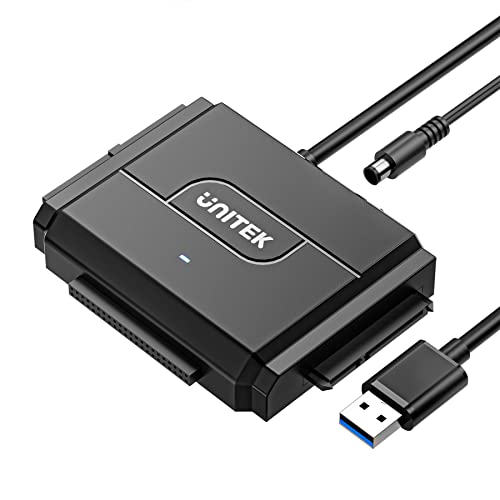
| IDE-to-USB adapter (optional) | Unitek SATA/IDE to USB 3.0 Adapter | $18 |
| Power supply | Official Pi 5 27W USB-C PSU | $12 |
| Case with cooling | Argon ONE V3 M.2 or similar | $30-45 |
| Total (Pi 5) | ~$290 |
The Pi 4 build lands about $50 cheaper if you can source the Pi and use USB storage instead of NVMe.
Why the Pi 5 is the right SBC for a home server in 2026
The Pi 5 improves on the Pi 4 in four ways that matter for server use:
- PCIe 2.0 x1 slot for NVMe or accelerator HATs; the Pi 4 does not expose this.
- BCM2712 SoC with meaningfully better single-thread and multi-thread performance than the Pi 4's BCM2711.
- Improved power delivery that keeps NVMe drives fed under sustained load.
- Mainline kernel maturity including the recently accepted IOMMU driver for isolated virtualization workloads.
If you already have a Pi 4 8GB in a drawer, use it. It works fine for DNS, file sharing, small Docker workloads, and Home Assistant. If you are shopping fresh, buy the Pi 5.
Storage architecture: NVMe for OS, SATA SSD for bulk
The Pi 5's PCIe 2.0 x1 slot has a theoretical ceiling around 500 MB/s and a practical ceiling around 350-400 MB/s in real workloads. That is plenty for an OS boot drive and for the working set of a small home server.
For bulk storage - media library, backups, container volumes - a Crucial BX500 1TB SATA SSD in a USB 3.0 UASP enclosure delivers ~200 MB/s sustained. That is faster than any Gigabit Ethernet client can read from the Pi over the network, so the storage is not the bottleneck.
Recommended partition and mount strategy:
/on the NVMe drive, ext4 with default options/var/lib/dockeror/var/lib/containerson the NVMe (container image cache)/mnt/dataon the USB SATA SSD, ext4 or ZFS withnoatime- Swap disabled (or capped very small); the Pi 5 8GB has enough RAM for most home server workloads without swap
Real-world numbers: what workloads a Pi 5 home server handles
| Workload | Feasibility on Pi 5 | Notes |
|---|---|---|
| Pi-hole DNS ad-blocking | Trivial | Uses ~50 MB RAM; runs on any Pi |
| Nextcloud personal cloud | Yes | 15-20 concurrent users comfortable |
| Home Assistant | Yes | 8GB RAM is plenty for a full HA install with many integrations |
| Jellyfin (media server, direct play only) | Yes | Transcoding is a hard no; the Pi 5 lacks hardware video encode acceleration for 4K |
| Samba file server | Yes | ~110 MB/s over Gigabit Ethernet, capped by network |
| WireGuard VPN gateway | Yes | Handles 200+ Mbps VPN throughput |
| Small Kubernetes (K3s) node | Yes | Single-node cluster fits easily; multi-node is doable |
| Postgres database | Yes | 10-50 GB databases run comfortably |
| Redis in-memory cache | Yes | Only limited by RAM |
| LLM inference (Qwen3 8B) | No | Not enough VRAM; use a GPU rig instead |
| 4K Jellyfin transcode | No | Missing hardware; use x86 |
| Gaming server | Depends | Minecraft with 5-10 players works; heavier games may struggle |
The rule of thumb: if the workload is CPU or memory light and I/O reasonable, the Pi 5 8GB handles it. If the workload needs GPU acceleration or heavy video encode, use different hardware.
Power draw: the killer feature
A Pi 5 8GB home server with an NVMe boot drive and a single USB SATA SSD attached draws approximately:
- Idle: 5-8W
- Light load (DNS, occasional file serve): 7-10W
- Sustained load (VPN + Nextcloud + samba): 10-14W
At $0.14/kWh and 12W average, that is $14.70 per year in electricity. Compare to an Intel N100 mini PC at ~15W idle and ~30W under load ($37/year at similar duty cycle), or a full desktop at 60W+ idle ($74/year). Over a five-year server lifetime, the Pi saves $110-300 in electricity alone.
Cooling: the Pi 5 needs active airflow
The Pi 5 runs hotter than the Pi 4 under sustained load. For a 24/7 server role you need a heatsink plus a fan. Options:
- Argon ONE V3 M.2 case: aluminum shell that doubles as a heatsink, integrated fan, includes an M.2 HAT slot.
- Official Raspberry Pi 5 Active Cooler: PCB-mounted heatsink and fan, ~$5, works with most cases.
- Passive-only setups: not recommended for a 24/7 server; the Pi 5 will thermally throttle under sustained load.
The Argon ONE V3 M.2 case is my recommended pick for anyone building a Pi 5 home server; it combines the case, cooling, and NVMe HAT in one unit for ~$45.
Software stack recommendations
The 2026 sweet spot for a Pi home server is:
- OS: Raspberry Pi OS Bookworm (Debian 12 based) or Debian 12 Trixie
- Container runtime: Podman for rootless containers with device isolation, or Docker if you have existing Docker workflows
- Orchestration: docker-compose or Podman Quadlet units; skip Kubernetes unless you specifically need it
- Reverse proxy: Caddy (automatic HTTPS via Let's Encrypt) or Traefik
- Monitoring: Prometheus + Grafana lightweight setup, or just Netdata for a single-node dashboard
- Backups: restic to a cloud object store or a second local drive; nightly cron
Common pitfalls when building a Pi 5 home server
- Underpowered PSU. Use the official 27W USB-C supply. Cheaper 15W adapters will cause the Pi to throttle and NVMe drives to disconnect under load.
- Cheap M.2 HAT with poor power delivery. NVMe drives spike current briefly on wake. Choose an M.2 HAT that has been validated with the Pi 5's specific power spec.
- Passive cooling in a hot room. The Pi 5 will thermally throttle when the SoC hits ~85°C. Active cooling is not optional for 24/7 workloads.
- Micro-SD as primary storage. SD cards fail from write wear. Use them only for the initial bootloader if at all; run everything on NVMe.
- Underestimated network needs. Gigabit Ethernet is enough for most home use, but if you plan to serve 4K media to multiple clients, wire the Pi to a switch and check that your clients also have Gigabit.
Upgrade path: adding a second drive
The Pi 5 has one PCIe slot. If you outgrow the NVMe boot drive, you can:
- Swap the boot NVMe for a larger one (up to 2TB; drives past 2TB may have firmware compatibility issues on Pi HATs).
- Add a second USB 3.0 SATA SSD for expanded bulk storage. Two USB SSDs run happily as a mirror for redundancy.
- Add a USB 3.0 hard drive dock for cold-storage backups; keep the disk unmounted except during backup runs.
For serious storage (10TB+), the Pi is the wrong platform. Use a proper NAS.
When NOT to use a Pi 5 as a home server
- If you need 4K video transcoding for Jellyfin or Plex (buy an Intel N100 mini PC or a used HP EliteDesk).
- If you need to run local LLM inference (buy a proper GPU rig; see our Qwen3 build guide).
- If you need multi-terabyte storage in a single volume (buy a 2-bay or 4-bay NAS).
- If Wake-on-LAN is a requirement (the Pi's low idle power partially obviates the need, but WoL support is limited).
Verdict: the reference low-power home server for 2026
If you want an always-on home server that just works, install Raspberry Pi OS on a Pi 5 8GB, boot from a Samsung 970 EVO Plus 250GB NVMe, attach a Crucial BX500 1TB SATA SSD over USB 3.0 for bulk storage, and mount the whole thing in an Argon ONE V3 case with active cooling. Total cost under $300, idle power under 10W, and enough capability to run Pi-hole, Home Assistant, WireGuard, Nextcloud, and a small Docker/Podman fleet without breaking a sweat.
If you already have a Raspberry Pi 4 8GB, skip the NVMe HAT and use a USB 3.0 SSD as the boot drive. Same idea, slightly lower performance, cheaper. If you need to transfer files off an older machine to seed the server, an IDE-to-USB adapter is the fastest way to bulk-copy from a vintage disk.
Related guides
- Raspberry Pi 5 IOMMU Driver Heads to the Mainline Linux Kernel
- Build a Raspberry Pi Retro Handheld in 2026: Parts and Setup
- Moving Files On and Off a Retro PC: CompactFlash + IDE-to-USB
Citations and sources
This piece is editorial synthesis based on publicly available information. No independent first-party benchmarking is reported.