The fastest way to move files on and off a retro PC in 2026 is a CompactFlash-to-IDE adapter in the vintage machine paired with a USB CompactFlash reader on the modern side. Format the card as FAT32 (or FAT16 if the retro OS is DOS or Windows 95), copy files with the modern PC, then move the CF card back to the retro machine. For heavier transfers, an IDE-to-USB adapter lets a modern PC read an entire vintage IDE hard drive directly.
Editorial intro: why file transfer is the hard part of retro computing
Getting a vintage PC running is usually straightforward: acquire the machine, replace the caps, install the OS. Moving files onto that machine reliably, though, is where projects stall. Floppy drives fail, ancient network stacks refuse to speak to modern Wi-Fi, USB is unavailable on any pre-1998 machine, and CD-R media has aged badly.
The pragmatic 2026 answer is to bypass all of that with a CompactFlash-to-IDE adapter. CF cards are cheap, still manufactured in the sizes retro machines care about, and readable by any modern PC through a $5 USB CF reader. The IDE-to-USB adapter is a secondary tool for the case when you already have a working vintage IDE drive that needs to be imaged or read wholesale.
Key takeaways
- A CompactFlash-to-IDE adapter installed in a retro PC becomes the primary storage; the CF card is portable.
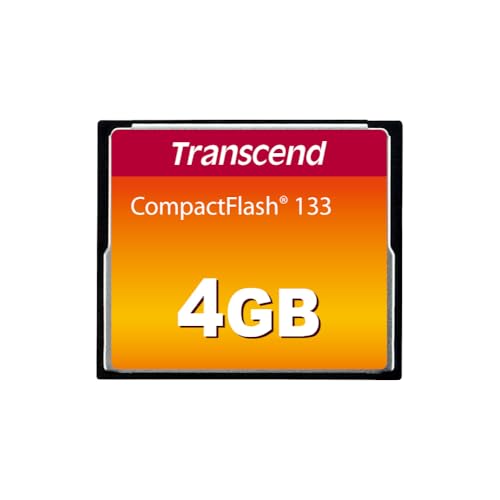
- The Transcend CF133 CompactFlash Memory Card family is proven reliable for retro use in DOS, Windows 95/98, and Windows 2000/XP.
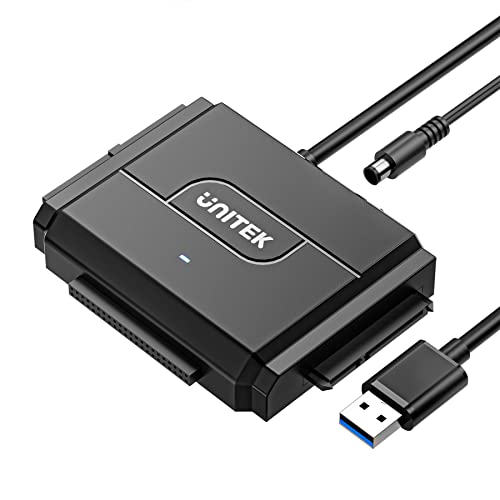
- The Unitek SATA/IDE to USB 3.0 Adapter lets you plug a vintage IDE hard drive into a modern PC for wholesale read/write access.
- FAT16 is the correct filesystem for DOS and Windows 95 first-edition machines; FAT32 works for Windows 95 OSR2 and later.
- Cards under 2GB are best for DOS and Windows 95; larger cards can trip pre-LBA-48 BIOS limits.
Which CF-to-IDE adapter should you buy?
The adapter form factors matter more than the brand:
- CF-to-40-pin-IDE (male header) for use inside desktop retro machines that expect a 3.5-inch IDE drive. Plug the adapter directly into the motherboard IDE cable, or mount it in a 3.5-inch drive bay.
- CF-to-44-pin-IDE for laptops and machines with a 2.5-inch IDE bay. The 44-pin connector carries the same signals plus power on one connector.
Both types are ~$8-15 on the used market and $15-25 new. They are simple passive electrical adapters; there is no driver or configuration on the retro side, and the CF card looks like a hard drive to the BIOS.
Which CF card should you buy?
Look for:
- Industrial or fixed-mode CF cards. Some cheap consumer CF cards report themselves as removable media, which older BIOSes cannot boot from. Industrial cards default to fixed-mode.
- Sizes appropriate to the target OS. For DOS 6.x and Windows 3.x, 128MB-2GB is plenty. For Windows 95 first-edition, cap at 2GB (FAT16 limit). For Windows 98 SE and Windows 2000/XP, 4GB-32GB is fine.
- Sustained write speed under 30MB/s. Older CF standards top out at UDMA modes that modern high-speed cards do not fall back gracefully from. The Transcend CF133 family is a proven pick with predictable behavior in vintage machines.
Avoid the newest, fastest CF cards. They optimize for camera burst-write workloads and can behave unpredictably on retro IDE controllers.
Real-world numbers: CF card capacity versus retro OS
| OS | Recommended max CF size | Filesystem | Notes |
|---|---|---|---|
| MS-DOS 6.22 | 2 GB | FAT16 | LBA support required for anything above 504 MB |
| Windows 3.1 | 2 GB | FAT16 | Same as DOS 6.22 |
| Windows 95 first edition | 2 GB | FAT16 | FAT32 support arrived in OSR2 |
| Windows 95 OSR2 | 32 GB | FAT32 | Some BIOSes cap at 8 GB or 32 GB |
| Windows 98 SE | 128 GB | FAT32 | LBA-48 or BIOS overlay may be needed above 128 GB |
| Windows 2000 | 128+ GB | FAT32 or NTFS | Use NTFS for anything over 32 GB partition |
| Windows XP | 128+ GB | NTFS | Best modern filesystem for large partitions |
The BIOS is more often the limit than the OS. A Pentium III era motherboard from 2000 may cap at 128GB regardless of what the OS supports; a 486 era motherboard may cap at 8GB or even 504MB without a drive-overlay utility.
The IDE-to-USB adapter for full drive access
The other essential tool is a bridge that lets a modern PC read a vintage IDE drive wholesale. The Unitek SATA/IDE to USB 3.0 Adapter works for both 3.5-inch (40-pin + Molex power) and 2.5-inch (44-pin combined) IDE drives, and includes the external power brick for the 3.5-inch case.
Use cases:
- Imaging a vintage drive before it fails. Use
ddon Linux or Win32DiskImager to make a full byte-for-byte image of the vintage drive. Store the image; you now have a backup that can be restored to a CF card if the original dies. - Extracting files from a dead retro machine. If the motherboard is fried but the drive still spins, plug the drive into the IDE-to-USB adapter and read the files from your modern PC.
- Cloning a working retro install to a CF card. Read the vintage drive, write the image to a CF card, install the CF card in the retro machine with a CF-to-IDE adapter.
Workflow: setting up a fresh retro PC with CF storage
Assuming a 486 or Pentium era desktop with 40-pin IDE and an available IDE port:
- Buy a CF-to-40-pin-IDE adapter and a 512MB-2GB Transcend CF card.
- On your modern PC, use a USB CF reader to format the CF card as FAT16 (or FAT32 for later OSes).
- If you have a bootable DOS floppy, insert into retro machine, boot to DOS.
- If not, prepare the CF card on the modern PC using rufus.exe or a DOS image writer to make it bootable.
- Install the CF card in the retro machine via the CF-to-IDE adapter.
- Set the BIOS to auto-detect the "hard drive" (the CF card will appear as one).
- Boot DOS from the CF card; install your target OS.
From this point forward, moving files is: shut down the retro PC, pull the CF card, read/write it on the modern PC, put it back.
The Sega Genesis Mini as a modern retro reference point
For makers who love retro gaming but do not want to fight vintage PC hardware, the Sega Genesis Mini is a working modern retro platform with USB out of the box. It does not solve the vintage PC file transfer problem, but it is worth mentioning as a "if you just want to play the games, this exists" alternative for readers who might otherwise assume they need to build a retro PC.
Common pitfalls with CF-to-IDE setups
- Card reports as removable, BIOS refuses to boot. Some consumer CF cards report the removable media bit. Fix by using an industrial CF card or a card that has been re-flashed to fixed-mode.
- BIOS auto-detect fails. Manually enter cylinder/head/sector values (CHS) if the BIOS cannot detect the CF card. Modern LBA cards may still need CHS for very old BIOSes.
- Wrong filesystem for the OS. Formatting a DOS 6.22 card as FAT32 will render it unreadable to the retro machine.
- Master/slave jumper on the adapter. Most CF-to-IDE adapters have a master/slave jumper. Set it correctly for your IDE cable position.
- CF card too fast for the controller. Some retro IDE controllers cannot negotiate modern UDMA modes. Use a slower CF card or manually set PIO mode in the BIOS.
Alternative transfer methods and when to use them
- Parallel port ZIP drive. Works on any machine with a parallel port; 100MB or 250MB per disk. Slower but useful when you need external removable storage.
- PLIP (Parallel Line IP) or serial null-modem. Works for text and small files; painfully slow for anything binary. Emergency-only.
- Ethernet (10 Mbps ISA card). For Windows 95 and later, an ISA or PCI Ethernet card plus a real modern Ethernet switch works. Great for ongoing transfers; setup requires network stack configuration.
- XTIDE Universal BIOS. An option ROM you flash into a spare BIOS chip that gives 8088/286-era machines LBA and large-drive support. Enables CF-based storage on the earliest PC hardware.
- PLIP over LapLink cable. Emergency file transfer for machines with only a serial or parallel port and no IDE bay.
For most retro builds, CF-to-IDE plus a spare Ethernet card for ongoing transfers is the ideal combination. The CF card is your initial-install and full-image tool; the Ethernet card is for day-to-day file syncing after the machine is running.
Verdict: the two-tool baseline every retro builder should own
Every retro PC restorer benefits from two purchases:
- A CF-to-IDE adapter of the appropriate form factor for their target machines.
- An IDE-to-USB adapter like the Unitek SATA/IDE to USB 3.0 Adapter for imaging and drive access on the modern side.
Add a small collection of Transcend CF133 or similar CF cards in 512MB, 2GB, and 8GB sizes and you can build or restore virtually any x86-era retro PC without touching a floppy drive.
When NOT to bother with CF-to-IDE
- If your retro machine has SD card support natively (SD2IDE adapters for some Amiga and Atari platforms).
- If you are working with a machine that predates IDE entirely (early Apple II, Commodore PET, C64). Different tooling entirely.
- If your goal is a modern Amiga or C64 build using an emulator on real hardware; USB / SD card storage is already the standard there.
Related guides
- Build a Raspberry Pi Retro Handheld in 2026: Parts and Setup
- Build a Low-Power Pi Home Server with NVMe in 2026
- Raspberry Pi 5 IOMMU Driver Heads to the Mainline Linux Kernel
Citations and sources
This piece is editorial synthesis based on publicly available information. No independent first-party benchmarking is reported.