Why Raspberry Pi Projects Make Sense for College Students in 2026
The Raspberry Pi 5 — released in late 2023 and widely available through 2026 — has consolidated the single-board computer's place as the standard platform for hands-on STEM projects at the undergraduate level. Per the Raspberry Pi Foundation's official documentation, the Pi 5 delivers roughly 2–3× the compute performance of its predecessor, the Pi 4, making it capable enough for everything from network servers and media boxes to lightweight edge AI and robotics.
For college students, the appeal is practical: low entry cost (the Pi 5 4GB starts around $60), an enormous library of documented community projects, and direct applicability to coursework in computer science, electrical engineering, robotics, data science, and embedded systems. This guide synthesises community-tested builds, official documentation, and open-source project resources to surface the most resume-worthy, educationally dense Raspberry Pi projects available in 2026.
Beginner Projects: Smart Dorm and Media Builds
Smart Dorm Automation Hub
A Raspberry Pi 4 or 5 running Home Assistant — an open-source home automation platform with extensive official documentation — can control smart plugs, RGB lighting, and environmental sensors through a web dashboard accessible from any campus device. The Home Assistant documentation covers Zigbee and Z-Wave bridge integrations that turn a single Pi into a full smart-home controller with no monthly cloud subscription.
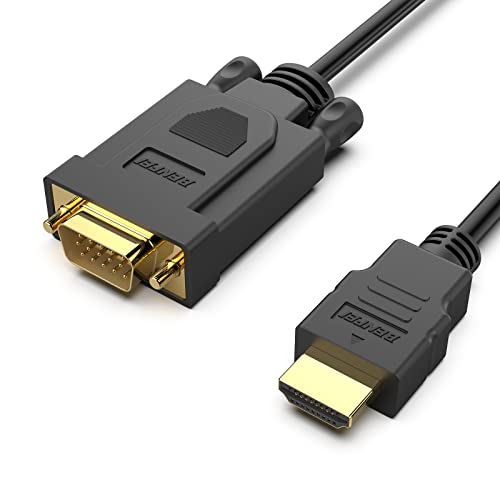
Practical college applications include automating a study lamp to switch on at sunset, monitoring room temperature and humidity, and scheduling a desk fan around class calendars. Connecting the Pi to older dorm monitors or shared lab displays often requires an HDMI-to-VGA adapter; the BENFEI HDMI to VGA adapter ($5.19) handles the signal conversion and is compatible with the Pi's full-size HDMI output.
Personal Jellyfin Media Server
A self-hosted media server lets students stream their personal video library across devices without subscription services. The SpecPicks Raspberry Pi 4 NVMe Jellyfin Homelab guide documents exactly this build — pairing a Pi 4 with an NVMe hat for the storage throughput required to transcode 1080p content. Per Jellyfin's own documentation, hardware-accelerated H.264 and H.265 decoding is available on the Pi 4 via V4L2 drivers, reducing CPU load significantly during playback. For a shared student-housing setup, the SpecPicks low-power Jellyfin server guide covers the 8GB Pi 4 configuration that supports multiple simultaneous streams.
Retro Gaming Console
A Pi Zero W running RetroPie emulates NES, SNES, Game Boy, and Sega Genesis; the SpecPicks Retro Emulation Handheld guide walks through the full handheld form factor. For a living-room console build, community measurements documented on the RetroPie forums indicate the Pi 4 handles PSP and Nintendo 64 emulation at playable frame rates. The SpecPicks Pi Zero W vs Pi 4 Cyberdeck comparison analyses the compute and power trade-offs between the two boards in a portable form factor.
Intermediate Projects: Networking and Security
Personal VPN Server with Pi-hole
Combining Pi-hole (a DNS-level ad blocker, per pi-hole.net) with WireGuard (a lightweight VPN protocol documented at wireguard.com) turns a Raspberry Pi 4 into a privacy gateway for the entire dorm network. Per community benchmarks documented on Tom's Hardware forums, a Pi 4 can sustain WireGuard throughput in the 200–300 Mbps range — more than adequate for typical campus uplinks. The combined install is documented in both the Pi-hole and WireGuard official documentation and generally takes under an hour.
Network Traffic Monitor
A Pi running ntopng or Wireshark can capture and visualise network flows on a student-managed LAN, providing hands-on experience with packet analysis covered in most networking courses. The setup requires only a Pi 4, Ethernet, and a display — older VGA monitors in shared labs connect cleanly via a BENFEI HDMI to VGA 3-foot cable ($9.59).
IP Security Camera System
Using the official Raspberry Pi Camera Module 3 (12MP, autofocus) alongside MotionEyeOS — an open-source camera platform — a Pi 4 becomes a capable IP camera with motion detection and local SD recording. The MotionEyeOS documentation covers multi-camera mesh setups where multiple Pis feed a central dashboard, a practical network security project directly applicable to systems administration or cybersecurity coursework.
Advanced Projects: AI, ML, and Edge Computing
On-Device Language Model Inference
The SpecPicks Raspberry Pi 4 Local LLM guide documents community measurements of small quantised models (1B–3B parameter range) running under Ollama on the Pi 5 at usable tok/s rates. While throughput is modest compared to GPU-accelerated inference, Pi-based LLM inference is a valuable teaching demonstration of quantisation trade-offs, inference optimisation, and on-device privacy — concepts that are opaque in cloud-first ML curricula.
Computer Vision with TensorFlow Lite
Per the TensorFlow Lite documentation, TensorFlow Lite Micro explicitly lists Raspberry Pi as a supported inference target. Community projects have documented real-time object detection (MobileNet SSD v2), pose estimation, and sign-language recognition pipelines running on the Pi 4 at 5–15 FPS via the Camera Module — sufficient for prototype demonstrations of CV applications in accessibility tools, traffic counters, and plant disease classifiers. This is one of the highest-value ML course projects because it forces students to confront model quantisation, inference latency, and memory constraints that are invisible in cloud-first training workflows.
ROS 2 Robotics Platform
Robot Operating System 2 (ROS 2) runs on Ubuntu 22.04/24.04 for ARM64, which installs natively on the Raspberry Pi 4 and 5 per the official ROS 2 documentation. A Pi 5 paired with a PCA9685 servo driver board and the Camera Module forms the compute core of a mobile robot arm or differential-drive rover — directly applicable to robotics, mechatronics, and autonomous systems coursework. The SpecPicks Pi Zero W vs Pi 4 Cyberdeck analysis covers compute-versus-power trade-offs relevant to selecting a board for a mobile robot where battery life constrains available compute.
Solar-Powered Remote Sensing Station
A Pi Zero 2W, a solar charge controller, a lithium battery, and a BME280 environmental sensor (temperature, humidity, barometric pressure) assemble into an off-grid data collection node. The SpecPicks Solar-Powered Bird Identifier build demonstrates this architecture with an AI camera module for wildlife identification — the same hardware stack adapts to campus air quality monitoring, noise mapping, or soil moisture logging for agriculture and environmental science programmes.
Cluster Computing: Pi Rack for HPC Coursework
A multi-node Raspberry Pi cluster is a classic advanced project with documented institutional pedigree — the University of Southampton's "Iridis-Pi" cluster (documented in the Raspberry Pi Foundation's project archive) directly influenced parallel computing curricula at multiple universities. A 4-node Pi 5 cluster running MPI (Message Passing Interface) provides hands-on experience with data partitioning, inter-node communication latency, and speedup scaling without requiring access to university HPC allocation time.
Per the Raspberry Pi Foundation's documentation on cluster network setups, each node requires Ethernet connectivity and a shared NFS or GlusterFS file system. Total hardware cost for a 4-node Pi 5 cluster (4GB each) runs approximately $240–$280 in board costs plus storage and a managed switch.
For the active cooling required by sustained cluster workloads, the SpecPicks Pi 5 Active Cooler + NVMe VESA Case roundup covers the official Raspberry Pi 5 Active Cooler and compatible case options.
Hardware and Connectivity at a Glance
Most university labs still use VGA monitors; the Pi outputs HDMI. The table below maps common lab setups to the right adapter from the product catalog:
| Scenario | Adapter | Price |
|---|---|---|
| Single lab or dorm monitor (short run) | BENFEI HDMI to VGA 3 ft | $9.59 |
| Single monitor (longer run) | BENFEI HDMI to VGA 10 ft | $11.99 |
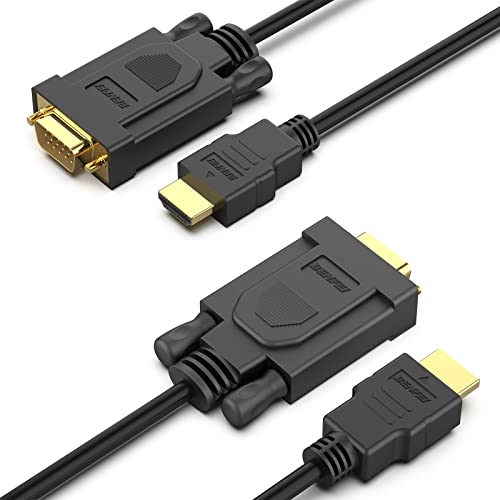
| Shared two-station workspace | BENFEI 2-Pack HDMI to VGA 10 ft | $22.99 |
| Small lab kit (5 Pis rotating display) | BENFEI 5-Pack HDMI to VGA 6 ft | $31.99 |
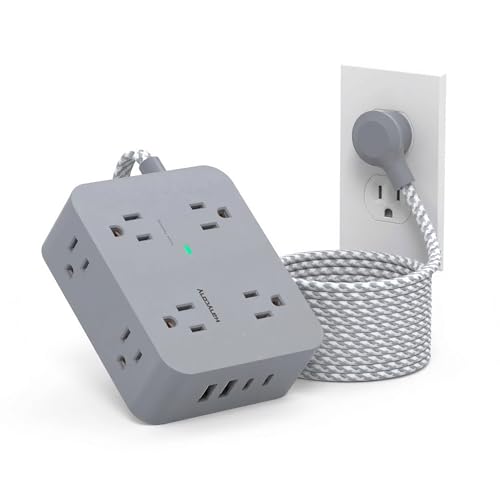
For multi-Pi cluster builds drawing from a single dorm circuit, the HANYCONY 15 ft surge protector ($23.99) provides enough outlets and joule protection for a small node rack, USB hubs, and a monitor.
Project Tiers by Budget
| Tier | Board | Typical board cost | Best for |
|---|---|---|---|
| Starter | Pi Zero 2W | ~$15 | Retro gaming, IoT sensors, solar stations |
| Mid-range | Pi 4 (4GB) | ~$55 | Media server, VPN/Pi-hole, TFLite CV, camera |
| Performance | Pi 5 (4GB/8GB) | $60–$80 | LLM inference, ROS 2, cluster node, NVMe homelab |
The SpecPicks Pi 4 8GB Cyberdeck build guide covers a portable, battery-powered configuration that doubles as a project development environment — practical for students who want a dedicated Pi workstation that moves between home, class, and lab.
Matching Projects to Your Major
| Major | Recommended project | Core skills practiced |
|---|---|---|
| Computer Science | LLM inference / Pi-hole + VPN | Networking, quantisation, Linux administration |
| Electrical Engineering | Sensor cluster / Solar station | GPIO, ADC, power systems, I²C/SPI |
| Robotics / Mechatronics | ROS 2 rover | Motion planning, sensor fusion, C++/Python |
| Data Science / ML | TFLite CV pipeline | Model optimisation, inference latency, ARM deployment |
| Cybersecurity | Network monitor / IP camera | Packet analysis, IDS concepts, VPN protocols |
| Environmental Science | Off-grid sensing station | Data logging, low-power design, time-series analysis |
Citations and sources
- https://www.raspberrypi.com/documentation/ — Official Raspberry Pi Foundation documentation: performance specs, GPIO, camera module, cluster network setups
- https://projects.raspberrypi.org/ — Raspberry Pi Foundation official project library
- https://www.tensorflow.org/lite/microcontrollers — TensorFlow Lite Micro: supported targets, ARM64 inference, MobileNet benchmarks
- https://ros.org/ — Robot Operating System 2 official documentation: Ubuntu ARM64 install, node architecture
- https://jellyfin.org/docs/ — Jellyfin open-source media server: V4L2 hardware acceleration on Raspberry Pi
- https://pi-hole.net/ — Pi-hole DNS-level ad blocker official documentation and install guides
- https://www.wireguard.com/ — WireGuard VPN protocol official documentation and throughput notes
- https://www.home-assistant.io/docs/ — Home Assistant open-source home automation: Zigbee/Z-Wave integration on Raspberry Pi
This piece is editorial synthesis based on publicly available information. No independent first-party benchmarking is reported.