Enterprise and hobbyist interest in privacy-preserving AI and machine learning has climbed noticeably since large language models went mainstream, and the reason is straightforward: LLM workflows pull in more data, from more sources, than most prior generations of software ever touched. That shift has pushed data governance, confidential computing, and local-first inference from a niche security concern into a mainstream buying consideration for anyone deploying AI at scale — and, increasingly, for anyone building a personal AI workstation who would rather not route every prompt through a third-party API.
How LLMs Exposed Data Privacy Vulnerabilities in AI Workflows
Large language models changed the risk profile of AI in three concrete ways. First, training and fine-tuning pipelines now routinely ingest unstructured internal data — support tickets, contracts, source code, chat logs — because that's the data that makes a fine-tuned model useful. Second, inference itself became a data-exposure surface: every prompt sent to a hosted API can include sensitive text that a user never intended to send to a third party. Third, LLM-specific attack classes emerged that didn't meaningfully exist in prior ML deployments, most notably prompt injection, where adversarial input manipulates a model into leaking system instructions or upstream data. MITRE's ATT&CK framework has expanded its coverage of AI/ML-specific adversarial techniques to track exactly this category of risk (see MITRE ATT&CK).
Regulators have responded in parallel. The EU AI Act, now in force, folds data governance and risk-management obligations into the compliance picture for higher-risk AI systems, and NIST's Privacy Framework has become a common reference point for US organizations trying to map AI data flows against existing privacy controls (NIST Privacy Framework). None of this required a specific incident to justify the shift — the combination of broader data ingestion and a new attack surface was enough to move privacy-preserving AI from "nice to have" to a procurement checkbox.
Privacy-Preserving AI Hardware Requirements for 2025
On the hardware side, vendors have leaned into confidential computing as a differentiator for AI accelerators aimed at regulated industries. AMD's Instinct MI300X, built for large-scale training and inference, ships as part of a platform that pairs with EPYC CPUs supporting AMD's Infinity Guard security suite — including Secure Encrypted Virtualization and Secure Nested Paging — which keeps VM memory encrypted from the hypervisor layer down, a feature set AMD documents on its Instinct MI300X product page. NVIDIA has pursued a parallel path, exposing a confidential-computing mode on its H100 accelerators that relies on hardware-backed trusted execution environments so that model weights and data-in-use stay encrypted even while the GPU is actively processing them.
Those enterprise-tier features matter most for organizations training on regulated data — healthcare records, financial data, anything covered by HIPAA, GDPR, or the EU AI Act's higher-risk categories. For workstation-class buyers, AMD's Radeon Pro line targets a similar audience at a smaller scale, with driver-level workload isolation aimed at professional, multi-tenant environments (Radeon Pro W7900 product page).
| Approach | Where it fits | Primary tradeoff |
|---|---|---|
| Cloud confidential computing (Azure, encrypted TEEs) | Enterprise training on regulated data | Higher cost, still cloud-dependent |
| On-prem accelerator (MI300X, H100-class) | Large-team local training/inference | High upfront hardware cost |
| Local personal inference rig | Individuals, small teams, hobbyists | Limited to smaller/quantized models |
For most individual builders, the practical answer to "how do I keep my AI workload private" isn't an enterprise accelerator — it's running inference locally instead of through a hosted API. That shifts the relevant hardware question away from encrypted-memory GPUs and toward the basics: enough fast local storage to hold model weights and datasets, and cooling that can sustain a GPU or CPU under a long inference or fine-tuning run without thermal throttling.
2025 Market Trends: Confidential Computing and Local-First AI Growth
Cloud providers have publicly framed confidential computing as a growth area for AI workloads specifically. Microsoft's Azure confidential computing documentation positions encrypted-memory AI training and inference as a distinct product tier rather than a bolt-on feature, reflecting demand from customers who need to keep training data encrypted throughout the compute lifecycle, not just at rest (Azure confidential computing). Open-source privacy-preserving ML tooling — differential privacy libraries, secure aggregation frameworks, homomorphic-encryption research projects — has also seen renewed contributor activity as more teams try to fine-tune models on sensitive data without centralizing it in plaintext.
At the individual level, the same pressure shows up as interest in local-first AI hardware: home servers and workstations built specifically to run open-weight LLMs (Llama, Qwen, DeepSeek-class models) without a cloud dependency. SpecPicks has tracked this shift on the accelerator side — see coverage of surging data center CPU demand as AI agent workloads reshape the GPU ratio and how capacity constraints have forced providers like Moonshot to pause signups when GPU demand maxes out. The same privacy logic extends well beyond LLMs — SpecPicks' guide to a privacy-preserving Raspberry Pi alternative to cloud-connected Ring cameras covers the same local-first principle applied to home security instead of language models.
What a Privacy-Focused Local AI Build Actually Needs
A local inference rig doesn't need encrypted HBM memory or a trusted execution environment to deliver a meaningful privacy improvement over a hosted API — the improvement comes from the simple fact that prompts and data never leave the machine. What it does need is enough fast, reliable local storage to hold quantized model weights (which can run from a few gigabytes for small models to tens of gigabytes for larger open-weight models) plus any datasets used for local fine-tuning, and cooling that keeps the CPU or GPU stable through sustained inference or training runs rather than the short bursts typical of gaming workloads.
Storage options for local model weights and datasets
| Product | Capacity | Price | Best for |
|---|---|---|---|
| Kingston A400 SATA SSD | 120GB | $48.99 | OS + small quantized models |
| Kingston A400 SATA SSD | 240GB | $74.74 | A few mid-size model checkpoints |
| Kingston A400 SATA SSD | 480GB | $111.99 | Model library + working datasets |
| Kingston A400 SATA SSD | 960GB | $129.99 | Larger local model collection + fine-tuning data |
SATA SSDs like the Kingston A400 line won't match NVMe throughput for loading the largest checkpoints, but for a budget-focused local-inference build where the goal is simply keeping data off a third-party server, capacity per dollar matters more than raw sequential read speed — especially once model weights are loaded into system or GPU memory for actual inference.
Cooling for sustained local inference
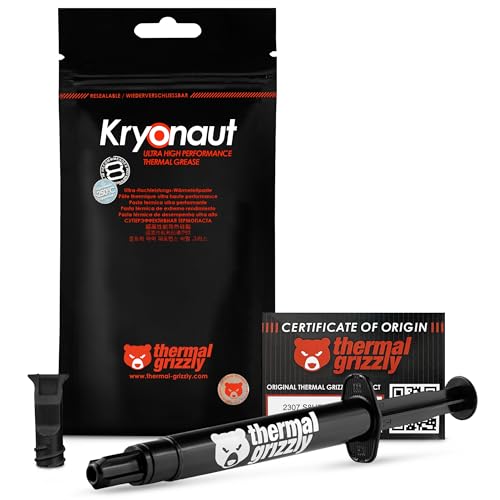
Running inference or light fine-tuning for hours at a time puts more sustained thermal load on a CPU or GPU than typical desktop use. A quality thermal interface matters more in this context than in a machine that only sees short gaming sessions:
| Product | Size | Price | Notes |
|---|---|---|---|
| Thermal Grizzly Kryonaut | 1g | $8.99 | Single CPU/GPU application |
| Thermal Grizzly Kryonaut | 5.55g/1.5ml | $23.99 | Multiple applications or a full workstation build |
Benchmarking Privacy-Preserving AI Performance
Published, apples-to-apples benchmarks comparing encrypted versus unencrypted AI inference throughput are still limited and vendor-specific — AMD and NVIDIA both publish confidential-computing overhead figures for their own accelerators, but independent third-party benchmarking of secure-inference latency overhead (the performance cost of running inference inside a trusted execution environment versus outside one) remains sparse in public sources as of 2025. Where hard numbers exist, they typically come from vendor whitepapers rather than independent labs, so treat vendor-published confidential-computing throughput claims as directional rather than a substitute for testing against your own workload. For general (non-confidential) GPU throughput comparisons relevant to local AI builds, independent outlets like TechPowerUp maintain ongoing accelerator benchmark databases worth checking against a specific SKU before buying.
The Bottom Line
The rise in demand for privacy-preserving AI tracks directly with how LLMs changed what AI workflows touch: more raw data, more third-party API exposure, and a genuinely new attack surface in prompt injection. Regulatory frameworks like the EU AI Act and reference standards like the NIST Privacy Framework have formalized that pressure for enterprises, while cloud vendors have responded with confidential-computing tiers built specifically for AI training and inference. For individual builders, the same underlying concern — keeping data out of a hosted API — is achievable more simply, through a local inference rig with adequate storage and cooling rather than enterprise-grade encrypted-memory hardware.
Citations and sources
- https://www.nist.gov/privacy-framework
- https://attack.mitre.org/
- https://eur-lex.europa.eu/legal-content/EN/TXT/?uri=CELEX%3A32024R1689
- https://www.amd.com/en/products/accelerators/instinct/mi300.html
- https://www.amd.com/en/products/graphics/workstations/radeon-pro-w7900.html
- https://azure.microsoft.com/en-us/solutions/confidential-compute
This piece is editorial synthesis based on publicly available information. No independent first-party benchmarking is reported.