As an Amazon Associate, SpecPicks earns from qualifying purchases. See our review methodology.
It depends entirely on which Qwen3 you mean. The family spans 0.6B to 235B parameters per the Qwen3 release notes, so the hardware answer ranges from a $123 Raspberry Pi to a multi-GPU workstation. For the models most people actually run — 4B through 14B at four-bit quantization — a 12 GB graphics card is the floor and the ceiling, with the 14B build landing near 9.3 GB per the Ollama library.
Why "what hardware do I need for Qwen3" has no single answer
Most hardware guides start with products. This one cannot, because the question hides a much more important one underneath it.
Qwen3 is not a model. It is a family of nine, spanning three orders of magnitude in parameter count, and the hardware that runs one end of it is nothing like the hardware that runs the other. The 0.6B model is small enough to sit on a single-board computer drawing less power than a desk lamp. The 235B-A22B mixture-of-experts model needs more memory than most people have in their entire house. Both are Qwen3. Both are what someone means when they ask this question.
The family also introduced hybrid thinking modes, where the same weights can be prompted to produce extended reasoning traces or terse direct answers, per the Qwen3 release notes. This matters for hardware because thinking mode generates far more tokens for the same user-visible answer — often several times as many — which turns token generation rate from a comfort issue into a usability issue. A rig that feels acceptable at 8 tok/s in direct-answer mode feels slow when the model spends 600 tokens reasoning before it responds.
So this guide does the diagnostic first and the products second. Below you will find a decision framework that maps Qwen3 size classes to hardware tiers, then five picks that cover those tiers, then the lookup table that ties them together. The overall winner is the pick that covers the widest band of the family for the least money — and it is not the most expensive card here.
Step 0: which Qwen3 size do you actually need?
Pick the smallest model that does your job. This is the single highest-leverage decision in the entire build, and it is free.
- 0.6B and 1.7B — classification, routing, always-on. Extracting structure from text, deciding which of five actions an incoming message maps to, summarizing a short paragraph, driving home-automation intents. These do not need to be clever. They need to be resident and instant.
- 4B and 8B — general chat and assistance. Drafting, rewriting, summarizing documents, answering questions about pasted text, light coding help. For most people this band is the sweet spot, and 8B in particular is where quality becomes genuinely useful rather than merely impressive for its size. The Qwen3-8B model card is the reference point for this tier.
- 14B — reasoning and harder tasks. Multi-step problems, code that has to be correct rather than plausible, work where thinking mode earns its extra tokens. This is the largest dense model that fits a mainstream 12 GB card.
- 30B-A3B and up — agentic work. The mixture-of-experts models activate only a fraction of their parameters per token, so they compute like small models. They do not store like small models — you need memory for every expert regardless. This is the awkward tier, and it is where hardware budgets break.
The mistake to avoid: buying for 30B when your work is 8B work. A resident 8B model running at 40 tok/s is more useful than a partially-offloaded 30B model running at 4 tok/s, and it is several hundred dollars cheaper.
Top picks at a glance
| Pick | Best For | Key Spec | Price Range | Verdict |
|---|---|---|---|---|
| MSI RTX 3060 12GB | Best overall | 12 GB, 360 GB/s | ~$480 | Covers 0.6B-14B; the family's widest band per dollar |
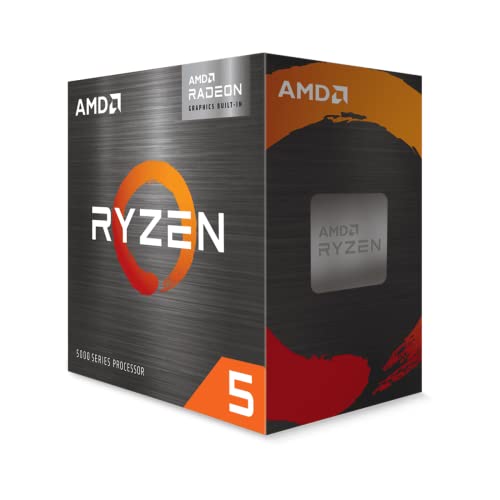
| AMD Ryzen 5 5600G | Best value / no GPU | 6c/12t, dual-channel DDR4 | ~$200 | Runs up to 8B on CPU; honest single-digit tok/s above that |
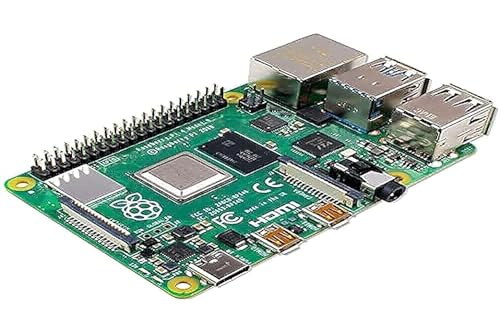
| Raspberry Pi 4 8GB | Best always-on | 8 GB, ~5 W | ~$123 | 0.6B-1.7B only, at nightlight power draw |
| ASUS Dual RTX 4070 12GB | Best performance | 12 GB, 504 GB/s | ~$750 | Same ceiling as the 3060, ~1.4x the speed |
| EVGA GTX 1050 Ti 4GB | Budget / salvage | 4 GB, 112 GB/s | Check listings | Reaches 4B and stops; only if you own one |
Top picks
🏆 Best Overall: MSI Gaming GeForce RTX 3060 12GB
12 GB GDDR6 · 360 GB/s · 170 W · ~$480
Why it wins: it is the cheapest card that holds Qwen3 14B fully resident, and it does so with room for a working context window.
Per TechPowerUp the RTX 3060 12GB pairs 12 GB of GDDR6 to a 192-bit bus for 360 GB/s of memory bandwidth at a 170 W total graphics power. Against the 9.3 GB q4_K_M build of Qwen3 14B listed in the Ollama library, that bandwidth implies a roofline of roughly 39 tok/s, with real runtimes typically landing at 60-80% of roofline — call it 23-31 tok/s. On the 8B model at ~5.2 GB the same arithmetic gives a roofline near 69 tok/s and a realistic band around 41-55 tok/s.
Pros
- Holds every Qwen3 model from 0.6B through 14B at four-bit quantization with context headroom
- 170 W means a quality 550 W supply is sufficient — no PSU upgrade for most builds
- Ampere has years of settled driver, CUDA and container support; nothing needs a bleeding-edge toolkit
- Roughly the same tokens-per-dollar as cards costing 50% more
Cons
- 12 GB stops hard at 14B — the 30B-A3B model will not fit and will offload
- GDDR6 rather than GDDR6X leaves ~40% of bandwidth on the table versus the 4070
- Three generations old as of 2026; resale value is declining
Check current price on Amazon → · See full details → · Benchmark data →
Price shown is a 2026-09-22 catalog snapshot and may vary.
💰 Best Value: AMD Ryzen 5 5600G
6 cores / 12 threads · Radeon Vega 7 iGPU · 65 W · ~$200
Why it's here: it is the no-GPU tier. The 5600G boots, displays and installs an operating system with no graphics card in the slot, which makes it the foundation of a quiet always-on box built from parts you already own. Per TechPowerUp it is a 6-core, 12-thread Zen 3 APU with 16 MB of L3 at 65 W.
The honest part: CPU inference is bound by system-memory bandwidth, and dual-channel DDR4-3200 provides 51.2 GB/s — roughly a seventh of what the RTX 3060 offers. Against Qwen3 8B at ~5.2 GB that implies a roofline near 9.8 tok/s and a realistic band of 6-8 tok/s. Against the 14B build at 9.3 GB the roofline drops to ~5.5 tok/s and reality to 3-4 tok/s. Below 4B it is genuinely pleasant; above 8B it is a background-jobs machine, not a chat rig.
Pros
- No graphics card required at all — the whole point
- 65 W and near-silent; idle power low enough to leave running permanently
- Drops into most existing AM4 boards after a BIOS update
- Comfortable on Qwen3 0.6B through 8B with a 32 GB dual-channel kit
Cons
- Single-digit tokens per second on 14B and above
- The Vega 7 iGPU shares the same memory bandwidth the CPU is already saturating, so offloading to it adds little
- 16 MB of L3 versus 32 MB on the non-APU 5600X
Check current price on Amazon → · See full details → · Benchmark data →
Price shown is a 2026-09-22 catalog snapshot and may vary.
🎯 Best for Always-On: Raspberry Pi 4 Model B 8GB
8 GB LPDDR4 · quad-core Cortex-A72 · ~5 W · ~$123
Why it's here: duty cycle. Per the Raspberry Pi 4 product page this is a quad-core Cortex-A72 board with up to 8 GB of LPDDR4, drawing single-digit watts. It can run permanently for roughly the electricity cost of a nightlight, which no desktop GPU can approach.
What it realistically runs is the small end of the family: Qwen3 0.6B at roughly 0.5 GB and 1.7B at roughly 1.4 GB per the Ollama library. The Pi 4's memory bandwidth is a small fraction of a desktop's, so even these produce modest token rates and slow prompt processing. That is acceptable for the jobs this tier is for — intent classification, routing, short summaries, home-automation glue — where the model is reacting to short inputs rather than holding a conversation.
Pros
- Roughly 5 W typical draw; genuinely viable as a 24/7 appliance
- 8 GB of RAM comfortably holds 0.6B and 1.7B with context to spare
- Cheapest entry into local inference by a wide margin
- Enormous community and software ecosystem
Cons
- Will not run 4B usefully and cannot run 8B at all in practice
- Slow prompt processing makes long inputs impractical
- Needs decent cooling and a quality power supply for sustained load
Check current price on Amazon → · See full details →
Price shown is a 2026-09-22 catalog snapshot and may vary.
⚡ Best Performance: ASUS Dual GeForce RTX 4070 OC 12GB
12 GB GDDR6X · 504 GB/s · 200 W · ~$750
Why it's here: it is the fastest way to run the 8B-to-14B band, and the difference is real on long prompts. Per TechPowerUp the RTX 4070 delivers 504 GB/s of memory bandwidth and 29.15 TFLOPS of FP32 compute at 200 W.
Against the RTX 3060's 360 GB/s that is roughly 1.4x on token generation, which puts Qwen3 14B at q4_K_M near a 54 tok/s roofline and a realistic 32-43 tok/s. The larger gap is on prompt processing: 29.15 TFLOPS against the RTX 3060's 12.74 TFLOPS is a 2.3x compute advantage, and prefill is compute-bound. If you feed the model long documents or run agentic traces with large tool outputs, that is where the money goes.
The critical caveat: it has the same 12 GB as the RTX 3060. It does not run a single model the cheaper card cannot. You are buying speed, not capability.
Pros
- ~1.4x generation and ~2.3x prefill compute versus the RTX 3060
- Best tokens-per-watt of any pick here despite the higher draw, because it finishes sooner
- Ada-generation feature support for adjacent workloads like image generation
Cons
- Same 12 GB ceiling as a card costing $270 less — no new models unlocked
- Roughly 1.6x the price for roughly 1.4x the generation speed
- Needs a recent enough driver and CUDA version to expose Ada's full instruction set
Check current price on Amazon → · See full details → · Benchmark data →
Price shown is a 2026-09-22 catalog snapshot and may vary.
🧪 Budget Pick: EVGA GeForce GTX 1050 Ti FTW 4GB
4 GB GDDR5 · 112 GB/s · 75 W · check listings
Why it's here, with a caveat: 4 GB reaches Qwen3 4B and stops. The 4B build occupies roughly 2.6 GB per the Ollama library, which leaves a workable if modest context budget on a 4 GB card. The 8B model at ~5.2 GB does not fit, and no quantization rescues it at usable quality.
A pricing warning readers should not skip: the catalog listing for this Pascal-era card currently sits near $369, which is far above what a GTX 1050 Ti is worth on the open market. Treat that as a listing artifact rather than a price signal, and check current listings before buying. At its realistic market value this is a sensible salvage-tier pick; at the listed price it is not competitive with anything else in this guide. The genuine case for this card is that you already own one.
Pros
- 75 W and no auxiliary power connector on most variants — drops into almost any desktop
- Runs Qwen3 0.6B through 4B substantially faster than any CPU-only setup
- Useful way to test whether local inference suits you before committing real money
Cons
- 4 GB is a hard wall at 4B; 8B and above are out of reach
- Pascal generation lacks the tensor cores modern runtimes assume
- Listed price is not representative of market value
Check current price on Amazon → · See full details →
Price shown is a 2026-09-22 catalog snapshot and may vary.
Qwen3 size class to hardware: the lookup table
Model sizes are the four-bit (q4_K_M) builds listed in the Ollama library. Minimum memory adds headroom for a working context window and the runtime's buffers.
| Qwen3 model | q4_K_M weights | Minimum VRAM or RAM | Recommended pick |
|---|---|---|---|
| Qwen3 0.6B | ~0.5 GB | 2 GB | Raspberry Pi 4 8GB |
| Qwen3 1.7B | ~1.4 GB | 4 GB | Raspberry Pi 4 8GB |
| Qwen3 4B | ~2.6 GB | 6 GB | EVGA GTX 1050 Ti 4GB |
| Qwen3 8B | ~5.2 GB | 8 GB | MSI RTX 3060 12GB |
| Qwen3 14B | ~9.3 GB | 12 GB | MSI RTX 3060 12GB |
| Qwen3 30B-A3B (MoE) | ~19 GB | 24 GB | None here — needs a 24 GB card |
| Qwen3 32B | ~20 GB | 24 GB | None here — needs a 24 GB card |
| Qwen3 235B-A22B (MoE) | ~142 GB | 160 GB+ | Multi-GPU or server hardware |
The two bottom-but-one rows are the honest limit of this guide. Nothing recommended here runs Qwen3 30B-A3B or 32B resident. The mixture-of-experts model is especially misleading: it activates roughly 3B parameters per token, so it computes like a small model, but every expert must be in memory to be selectable. You get small-model speed only if you can afford large-model capacity.
What to look for in local-LLM hardware
VRAM ceiling before anything else
Capacity decides what runs; everything else decides how fast. A slower card with more memory beats a faster card with less, every time, because the moment a model does not fit, layers spill to system RAM across a PCIe link roughly an order of magnitude slower than onboard memory — and throughput collapses. Choose your target model first, then buy the cheapest card that holds it resident.
Memory bandwidth over core count
Once the model fits, token generation is bandwidth-bound: every weight is read once per token generated. Divide bandwidth by model size and you have your theoretical ceiling; real runtimes land at roughly 60-80% of it. This is why a six-core CPU and a sixteen-core CPU on the same dual-channel memory run a given model at nearly the same speed, and why GDDR6X cards outrun GDDR6 cards of similar compute.
Quantization headroom and the KV cache
Four-bit quantization is the standard operating point — roughly a quarter of full-precision size for a quality cost most readers will not notice at these model sizes. Budget beyond the weights for the KV cache, which grows linearly with context length and can claim several gigabytes at long contexts. Most runtimes can quantize the cache to 8-bit, roughly halving that cost with far less quality impact than an equivalent reduction in weight precision.
Power, noise and duty cycle
A 200 W card under sustained load is audible and warm. If the machine lives in an office or a bedroom and runs constantly, the 65 W CPU-only build or the 5 W single-board computer may be the correct answer even though they lose every throughput comparison. Efficiency metrics favour the GPU — it finishes sooner — but they do not capture noise or idle draw.
Upgrade path and resale
The pattern that holds across GPU generations is that memory capacity at a given price tier moves slowly while compute moves quickly. If your target models fit in 12 GB today, a 12 GB card is sound. If you expect to want 24 GB within a year, buying 12 GB now and 24 GB later costs more than buying 24 GB once — including used prior-generation cards, which are often the cheapest route to high capacity.
What you'll need besides the hardware
A runtime. Ollama is the shortest path from nothing to a running model and handles quantization selection for you. llama.cpp gives you finer control over layer offload, KV-cache quantization and thread counts, and is what Ollama is built on. LM Studio offers a graphical interface if you prefer one.
A dual-channel RAM kit. On any CPU-only or partially-offloaded configuration, running a single DIMM roughly halves your memory bandwidth and therefore your token rate. Two matched sticks, always. 32 GB is the sensible target for anything above 4B.
Storage for the model library. Quantized models run from roughly 0.5 GB to 20 GB each, and you will collect more than you expect while figuring out which size class fits your work. Budget 500 GB of reasonably fast storage; loading a 9 GB model from a slow drive is a noticeable wait every time.
Frequently asked questions
How much VRAM do I need for each Qwen3 size? As a working rule for four-bit quantization, the 0.6B and 1.7B models run in system RAM on almost anything including a Raspberry Pi 4 with 8 GB, the 4B and 8B models want roughly six to eight gigabytes of VRAM, and 14B sits near the limit of a 12 GB card once you allow for the KV cache. The 30B-A3B mixture-of-experts model is the awkward one: its total parameter count is far larger than its active count, so it needs storage for all the weights even though it computes like a much smaller model.
Is 12 GB of VRAM still enough in 2026? For the 4B-to-14B band, yes, and that band covers most single-user chat, coding assistance and summarization work. Twelve gigabytes stops being enough the moment you want 27B-to-32B-class models resident, long contexts beyond roughly 32K tokens, or concurrent requests. If your plan includes any of those within the next year, buying 16 GB or 24 GB once is cheaper than buying 12 GB twice. If it does not, 12 GB remains the value sweet spot.
Can I run Qwen3 with no graphics card at all? Yes, and for small models it is genuinely pleasant. Anything up to about 4B parameters at four-bit quantization runs at usable interactive speed on a modern six-core desktop CPU with a dual-channel DDR4 kit. Above 8B the experience degrades quickly because token generation is bound by system-memory bandwidth, which is roughly an order of magnitude below what a discrete card offers. CPU-only is the right call for always-on background tasks and the wrong call for interactive chat with larger models.
Does a Raspberry Pi 4 actually run useful language models? It runs the small end of the Qwen3 family usefully, not the middle. With 8 GB of RAM a Pi 4 hosts the sub-2B models for classification, routing, summarizing short text and home-automation intents, at a power draw measured in single-digit watts. It is not a chat rig — expect low token rates and long prompt-processing times. Its argument is duty cycle: it can stay on permanently for the cost of a nightlight, which no desktop GPU can match.
Should I wait for the next GPU generation before buying? Waiting has a real cost, which is that you learn nothing in the meantime. The pattern that holds across generations is that VRAM capacity, not raw compute, gates what you can run, and capacity at a given price tier moves slowly. If your target models fit in 12 GB today, buying now and reselling later loses you less than a year of not running anything. If your target needs 24 GB, the used market for prior-generation high-VRAM cards usually beats waiting for a new mid-range launch.
Related guides
- Best 12GB GPU for Local LLMs in 2026
- Best GPU for Qwen3 30B-A3B in 2026
- Best Budget GPU for Local LLMs in 2026
- Raspberry Pi 4 8GB for Local LLMs
— Mike Perry · Last verified 2026-09-22
Citations and sources
- Qwen — Qwen3 release notes and model family overview — accessed 2026-09-22
- Hugging Face — Qwen3-8B model card — accessed 2026-09-22
- Ollama library — Qwen3 quantization builds and file sizes — accessed 2026-09-22
- TechPowerUp — GeForce RTX 3060 12 GB specifications — accessed 2026-09-22
- TechPowerUp — GeForce RTX 4070 specifications — accessed 2026-09-22
- TechPowerUp — Ryzen 5 5600G specifications — accessed 2026-09-22
- Raspberry Pi — Raspberry Pi 4 Model B product page — accessed 2026-09-22
This piece is editorial synthesis based on publicly available information. No independent first-party benchmarking is reported. Throughput figures are derived from published bandwidth and model-size specifications using the roofline method described in the text, and are presented as ranges rather than measurements.