Introduction
Mistral's models also just reached a much larger audience. As of September 16, 2026, Firefox's Smart Window beta "is now powered by Mistral models" (Mistral x Mozilla). That assistant runs server-side: Mistral's announcement says partners like Mistral "agree to zero data retention", so your prompts still leave the machine. If you want a Mistral model that never leaves your own box, the open-weights Mistral Small 24B is the realistic option, and running it on a 12GB card is what this article covers.
This is the wall every 12GB owner hits the moment they graduate from a 14B model to a 24B one. Mistral Small is a 24B-parameter model released under Apache 2.0, and per Mistral's own announcement it is designed to "be run privately on a single RTX 4090 or a Macbook with 32GB RAM" once quantized. An RTX 3060 12GB is neither of those things. At Q4_K_M the weights alone are roughly 14.5 GB of the 24 billion parameters at about 4.85 bits each — more than the card holds before a single token of context exists.
So layers spill into system RAM, and the moment they do the graphics card stops being the component that sets throughput. Public benchmarks show the crossover plainly: TechPowerUp lists the RTX 3060 12GB at roughly 360 GB/s of memory bandwidth, while AMD's Ryzen 7 5800X page specifies DDR4 support up to 3200 MT/s — two channels of DDR4-3200 is 51.2 GB/s of theoretical bandwidth, about one-seventh of the card's. Every layer you push across that gap costs seven times as much time to read.
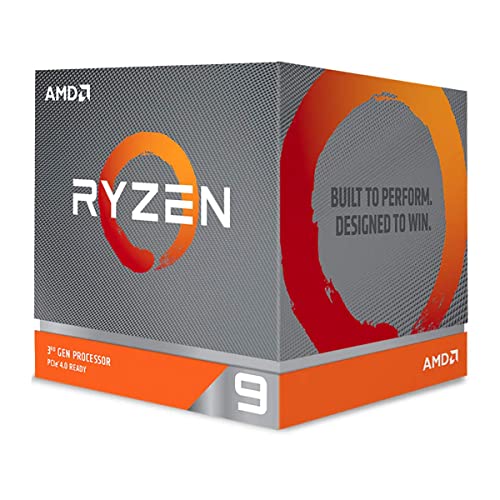
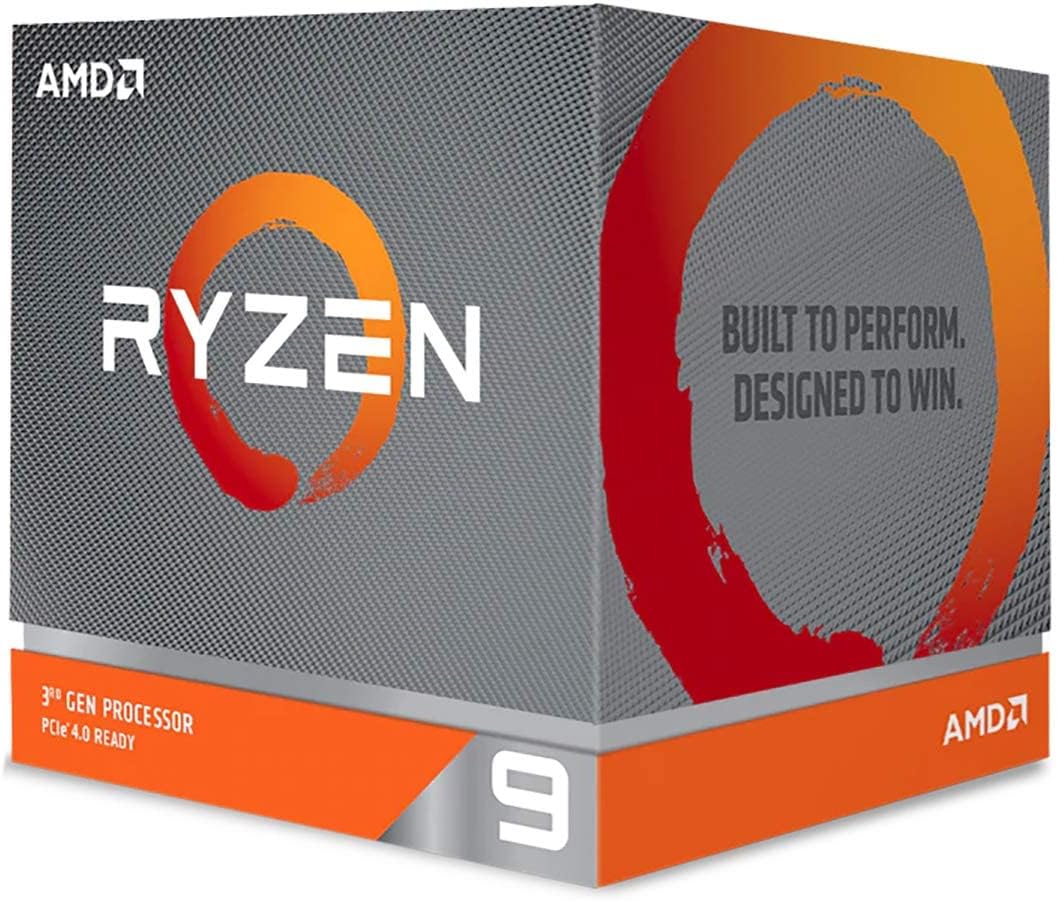
The question this article answers is narrow and practical: given that spill is unavoidable on a 12GB card, does the AM4 socket's CPU choice change the outcome? The two chips most AM4 owners are actually choosing between are the 8-core Zen 3 Ryzen 7 5800X and the 12-core Zen 2 Ryzen 9 3900X. One has newer cores and a single unified 32MB L3; the other has 50% more of them across two chiplets. Both feed from the same two channels of DDR4.
Key takeaways
- Generation speed is a tie. Per the llamafile benchmark set, a Zen 3 16-core and the Zen 2 12-core 3900X produce 8.50 and 8.45 tok/s respectively on Mistral-7B Q6_K — a 0.6% gap on identical DDR4-3600.
- Prompt processing is not a tie. On the same runs, prompt evaluation went 71.48 tok/s (3900X) to 113.94 tok/s — a 59% spread that tracks core count and IPC, not bandwidth.
- Mistral Small 24B at Q4_K_M is ~14.5 GB of weights, derived from 24B parameters at ≈4.85 bits each; the model does not fit a 12GB card at that quant no matter which CPU you own.
- Q3_K_M at ~11.7 GB is the highest quant that fits, and only with a short context — it is the single most effective lever on this build.
- The KV cache is the hidden tax. A 40-layer, 8-KV-head, 128-dim model costs ≈0.16 MB per token in fp16, so 16K of context is another 2.6 GB — enough to evict four to seven more layers to system RAM.
- Neither CPU is the upgrade. A second 12GB card or a 16GB+ card changes the answer by 2-4×; an AM4 CPU swap changes it by single-digit percent.
How much of Mistral Small 24B actually fits in 12GB?
Weight size is arithmetic, not opinion: parameters × bits-per-weight ÷ 8. The table below applies the usual GGUF bits-per-weight figures to the 24B parameter count Mistral publishes, then subtracts roughly 1 GB of VRAM for the CUDA context, compute buffers and a short 4K context window from the 12 GB the RTX 3060 12GB offers.
| Quant | Bits/weight | Weights (GB) | Layers on a 12GB card (of 40) | Layers in system RAM | Quality cost |
|---|---|---|---|---|---|
| q2_K | ~3.35 | 10.1 | 40 | 0 | Severe; noticeable reasoning loss |
| q3_K_M | ~3.90 | 11.7 | 36-38 | 2-4 | Visible but usable |
| q4_K_M | ~4.85 | 14.5 | 29-30 | 10-11 | The usual quality/size baseline |
| q5_K_M | ~5.70 | 17.1 | 24-25 | 15-16 | Marginal gain over q4_K_M |
| q6_K | ~6.60 | 19.8 | 21-22 | 18-19 | Near-lossless, rarely worth it here |
| q8_0 | ~8.50 | 25.5 | 16-17 | 23-24 | Pointless on 12GB |
| fp16 | 16.0 | 48.0 | 8-9 | 31-32 | Not a consumer configuration |
Read the fourth column carefully. At q4_K_M — the quant most guides default to — a 12GB card holds about three-quarters of the model and pushes the remaining ten or eleven layers onto the CPU. That is the configuration this comparison is really about.
Spec delta: what separates the 5800X from the 3900X for inference
| Spec | Ryzen 7 5800X | Ryzen 9 3900X | Why it matters for offload |
|---|---|---|---|
| Cores / threads | 8 / 16 | 12 / 24 | Only prompt processing scales with threads; generation does not |
| Base / boost clock | 3.8 / 4.7 GHz | 3.8 / 4.6 GHz | Near-identical; not a differentiator |
| L3 cache | 32 MB, one CCD | 64 MB, split 2×32 MB | Unified L3 avoids cross-CCD hops on an 8-thread run |
| Default TDP | 105 W | 105 W | Same thermal budget for a box under sustained load |
| Memory support | DDR4-3200, dual channel | DDR4-3200, dual channel | The actual ceiling — identical on both |
| Catalog price (2026-09-17, may vary) | ~$255 | ~$229 | The 3900X is the cheaper entry |
The specifications are from AMD's 5800X product page and TechPowerUp's 3900X database entry; prices are the live SpecPicks catalog snapshot for the 5800X and the 3900X on 2026-09-17 and move constantly.
Note the row that decides everything: the memory controller is the same part on both chips. Two channels, DDR4-3200 official support, 51.2 GB/s theoretical. Nothing in the core count changes it.
Benchmark table: offload throughput across split ratios
There is no public like-for-like measurement of Mistral Small 24B at every split ratio on both of these exact chips, so the table below is modelled, not measured — and the model is anchored to two cited endpoints so you can check the arithmetic.
The CPU anchor: the llamafile CPU benchmark thread records a Ryzen 9 3900X (12 cores, 32GB DDR4-3600) at 8.45 tok/s generation on Mistral-7B v0.2 Q6_K, and a Zen 3 Ryzen 9 5950X (16 cores, DDR4-3600) at 8.50 tok/s on the same run. A Q6_K 7B is about 5.9 GB of weights, so both chips are reading roughly 50 GB/s of effective memory bandwidth during generation — within a few percent of each other, and close to the DDR4-3600 ceiling.
The GPU anchor: 14B-class models at Q4_K_M run 22.70 tok/s at 16K context and 29.40 tok/s at short context on an RTX 3060 12GB per Ajit Singh's inference-speed comparison, and llmrun.dev's RTX 3060 database logs 12B-class models at 28.4-29.0 tok/s using 8.1-8.2 GB of VRAM. Those imply roughly 210-240 GB/s of effective bandwidth on a card whose peak is 360 GB/s.
Applying both anchors to a 14.5 GB Q4_K_M build of a 24B model:
| Split (GPU layers of 40) | Weights in VRAM | Weights in system RAM | Modelled generation, Ryzen 7 5800X | Modelled generation, Ryzen 9 3900X |
|---|---|---|---|---|
| 40/40 (does not fit 12GB) | 14.5 GB | 0 GB | ~15.9 tok/s | ~15.9 tok/s |
| 32/40 at q3_K_M | 9.4 GB | 2.3 GB | ~11.4 tok/s | ~11.3 tok/s |
| 30/40 at q4_K_M | 10.9 GB | 3.6 GB | ~8.4 tok/s | ~8.4 tok/s |
| 24/40 | 8.7 GB | 5.8 GB | ~6.5 tok/s | ~6.5 tok/s |
| 16/40 | 5.8 GB | 8.7 GB | ~5.0 tok/s | ~5.0 tok/s |
| 0/40 (CPU only) | 0 GB | 14.5 GB | ~3.5 tok/s | ~3.4 tok/s |
The columns are nearly identical, and that is the finding. Every row is dominated by how many gigabytes have to come across the DDR4 bus, and both CPUs pull from that bus at the same rate. Prompt evaluation is the one place the picture changes, and the same source quantifies it: 113.94 tok/s versus 71.48 tok/s prompt-eval on Mistral-7B Q6_K, a 59% spread driven by cores and IPC rather than bandwidth.
Why memory bandwidth beats core count past 8 cores
Token generation is a streaming read. For every token the runtime touches essentially every weight in the model once, which makes the wall-clock cost weights-in-bytes ÷ bandwidth. At 14.5 GB and 50 GB/s of real DDR4 throughput, that is roughly 290 ms per token before any compute happens — about 3.4 tok/s, which is exactly what the modelled CPU-only row shows.
Cores do not add bandwidth. Two channels of DDR4-3200 is 51.2 GB/s whether eight threads or twenty-four are asking for it, and the measured evidence is that eight already saturates it: a 16-core Zen 3 chip beat a 12-core Zen 2 chip by 0.6% in generation on the llamafile runs while beating it by 59% in prompt evaluation on the identical configuration.
The 3900X's 64 MB of L3 looks like it should help, but it is split 32 MB per chiplet and a 24B model's working set is measured in gigabytes — the cache hit rate on a streaming weight read is close to zero either way. The 5800X's advantage is architectural tidiness, not throughput: eight threads on one CCD with one unified 32 MB L3 means no cross-chiplet Infinity Fabric hops for the threads doing the work.
Prefill vs generation: which phase each CPU hurts
These are two different workloads wearing one name.
Prompt processing (prefill) is a dense matrix multiply over the whole prompt at once. It is compute-bound, it scales with threads, and it is where the 3900X's four extra cores actually earn money — 59% more prompt-eval throughput in the cited Zen 3 vs Zen 2 comparison came largely from core count. If your workload is document ingestion, RAG over long retrieved chunks, or a coding agent pasting entire files, prefill is a real fraction of your wait.
Token generation is a bandwidth-bound streaming read, and it is what a chat user feels. It is a tie between these chips, per the same source.
The practical read: if most of your prompts are short and your outputs are long, buy on price. If you routinely feed 8-16K tokens of context and wait on the first token, more cores measurably help — which is the one argument for the 3900X, and it is an argument about latency to first token, not tokens per second.
What happens at 8K, 16K and 32K context
The KV cache grows linearly with context and comes out of VRAM first, evicting layers as it goes. For a 40-layer model with 8 KV heads and a 128-dimension head — the shape Mistral Small uses — the per-token cost in fp16 is 2 (K and V) × 40 × 8 × 128 × 2 bytes ≈ 0.16 MB.
| Context | KV cache (fp16) | KV cache (q8 KV) | Extra layers evicted to RAM (q4_K_M) |
|---|---|---|---|
| 2K | 0.33 GB | 0.16 GB | 0-1 |
| 8K | 1.31 GB | 0.66 GB | 3-4 |
| 16K | 2.62 GB | 1.31 GB | 6-7 |
| 32K | 5.24 GB | 2.62 GB | 13-15 |
At 32K the cache alone is larger than the free VRAM most 12GB configurations have after weights, which is why long-context agent runs collapse on this class of hardware rather than degrading gracefully. Quantizing the KV cache to 8-bit halves the cost and is the cheapest fix available — no hardware purchase required.
Which GPU you pair it with still decides the ceiling
Nothing in the CPU column moves the needle as much as the card does. The two 12GB cards AM4 builders actually buy are the MSI Gaming GeForce RTX 3060 12GB and the ZOTAC Gaming GeForce RTX 3060 Twin Edge OC 12GB. Both are the 192-bit, 12 GB, ~360 GB/s GA106 part — be careful here, because the 8GB RTX 3060 exists, runs a 128-bit bus, and is a different product for this workload.
On that card, Hardware Corner's 3060 12GB benchmarks put an 8B model at 55.20 tok/s at 4K context (6.0 GB VRAM) and 42.00 tok/s at 16K (7.5 GB). Those are fully-resident numbers. The instant a model stops fitting, throughput falls to the modelled 5-8 tok/s band above — a 5-10× cliff that no AM4 CPU recovers. Full per-part data lives on the RTX 3060 12GB benchmark page, the Ryzen 7 5800X page and the Ryzen 9 3900X page.
Cooling a CPU that runs inference for hours
Offload is not a burst workload. A long agent run keeps every core pinned for minutes at a time, and both of these chips carry a 105 W default TDP that real boards exceed under sustained all-core load. The 3900X ships with a Wraith Prism; the 5800X ships with nothing, and its single-CCD thermal density makes it the hotter of the two per core.
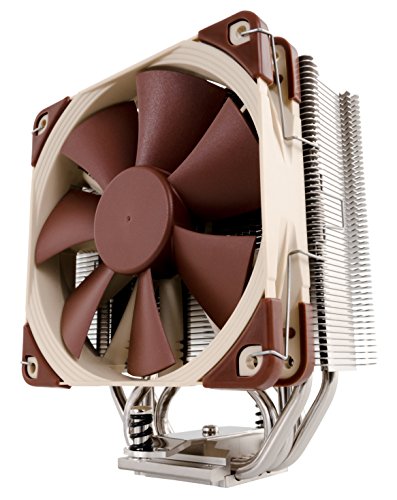
A 158mm tower like the Noctua NH-U12S is the boring correct answer for a machine that does this daily — no pump to fail, no maintenance, and enough sustained capacity that prompt-eval runs do not thermally throttle into a slower tier halfway through. A side-by-side against two closed-loop alternatives on exactly this duty cycle lives in Noctua NH-U12S vs Corsair H150i vs Kraken M22 on a 24/7 Ryzen 7 5800X host.
Performance per dollar and per watt
Using the modelled CPU-only generation figures and the 2026-09-17 catalog prices (which vary):
| Metric | Ryzen 7 5800X | Ryzen 9 3900X |
|---|---|---|
| Modelled CPU-only generation, 24B q4_K_M | ~3.5 tok/s | ~3.4 tok/s |
| Catalog price (2026-09-17) | ~$255 | ~$229 |
| Tokens/sec per $100 of CPU | ~1.4 | ~1.5 |
| Default TDP | 105 W | 105 W |
| Tokens/sec per 100 W | ~3.3 | ~3.2 |
They are the same chip for this workload within measurement noise. The 3900X is modestly ahead on price-per-token today and meaningfully ahead on prompt-eval throughput; the 5800X is ahead on single-thread performance for everything else the machine does.
Common pitfalls
- Single-channel RAM. One stick halves bandwidth and therefore halves offloaded generation. Verify dual-channel population before blaming the CPU.
- Leaving the KV cache at fp16. 32K of context costs 5.24 GB in fp16 and 2.62 GB at 8-bit, and the 8-bit penalty is minor for chat.
- Chasing the 8GB RTX 3060. Same name, 128-bit bus, cannot hold the models this build targets.
- Over-threading llama.cpp. Setting
-tto 24 on a 3900X often loses to-t 12; the extra threads contend for the same bus. - Assuming faster RAM fixes the split. DDR4-3600 lifts both chips by a similar proportion — worth doing, but it does not change which chip wins.
When NOT to buy either
If you already own any Zen 2 or Zen 3 eight-core, stop. The upgrade path from here is VRAM and memory speed, in that order. A second 12GB card keeps a 24B model at q4_K_M fully resident and moves you from the 6-8 tok/s band to the 15-20 tok/s band — a step no CPU on AM4 can produce. That build is costed out in Best Parts for a Dual RTX 3060 24GB Local-LLM Build in 2026.
Verdict matrix
- Get the Ryzen 7 5800X if… the machine is also your desktop and single-thread responsiveness matters, or you want one CCD and one unified L3 for simplicity. You are paying roughly $26 more for zero measured generation throughput and better everything-else.
- Get the Ryzen 9 3900X if… you routinely prefill 8K+ token prompts, run RAG over long documents, or care about time-to-first-token. The cited 59% prompt-eval advantage for more cores is the one real win, and it is currently the cheaper chip.
- Buy neither and get more VRAM if… your target is 24B-class models at q4_K_M. Below roughly 30 of 40 layers resident, throughput lands under 8 tok/s regardless of CPU, and that is a VRAM problem with a VRAM solution.
Bottom line
For Mistral Small 24B on a 12GB card, the CPU is not the variable — the split ratio is. Both chips generate offloaded tokens at the same speed because both read the same dual-channel DDR4, so pick on prompt-processing need and price: the Ryzen 9 3900X for long-prompt workloads at a lower price today, the Ryzen 7 5800X if the box doubles as a desktop. Then put the saved money into the thing that actually moves throughput: a second RTX 3060 12GB, or a drop to q3_K_M so the model very nearly fits.
Related guides
- Gemma 3 12B: RTX 3060 12GB vs Ryzen 7 5800X CPU Offload (2026)
- RTX 3060 12GB vs Ryzen 9 3900X for Qwen2.5 14B: GPU or CPU in 2026?
- Ryzen 9 3900X vs Ryzen 5 5600G for CPU-Only Local LLM Inference (2026)
- Llama 3.3 70B: Dual RTX 3060 12GB vs Ryzen 7 5800X CPU Offload (2026)
- Best Parts for a CPU-Offload Local LLM Build in 2026
- Mistral 7B vs Mistral Small 24B: GPU requirements compared
Live price comparison
Prices on both chips move weekly and neither is in current production, so check the live listing before buying: the Ryzen 7 5800X and the Ryzen 9 3900X each carry current catalog pricing, and the MSI RTX 3060 12GB page is the one to watch if the verdict above pushes you toward VRAM instead. Prices shown on those pages may vary from what you see at checkout.
Citations and sources
- Mistral AI — Mistral Small 3 announcement (accessed 2026-09-17)
- Mistral AI — Mistral x Mozilla: Private, Multilingual AI Browsing (accessed 2026-09-19)
- mozilla-ai/llamafile — "Lots of CPU benchmarks" discussion #450 (accessed 2026-09-17)
- AMD — Ryzen 7 5800X product page (accessed 2026-09-17)
- TechPowerUp — Ryzen 9 3900X specifications (accessed 2026-09-17)
- TechPowerUp — GeForce RTX 3060 12 GB specifications (accessed 2026-09-17)
- Hardware Corner — RTX 3060 12GB LLM benchmarks (accessed 2026-09-17)
- llmrun.dev — RTX 3060 12GB model database (accessed 2026-09-17)
- Ajit Singh — LLM inference speed comparison (accessed 2026-09-17)
This piece is editorial synthesis based on publicly available information. No independent first-party benchmarking is reported.