Introduction
This comparison is for a specific reader: you own an AM4 desktop with a Ryzen 7 5800X and 32 GB of DDR4. You want a 14B-class assistant running locally for code review, summarization, or chat over your own documents. The question is whether the eight-core CPU you already paid for is good enough, or whether a 12 GB RTX 3060 is worth the outlay.
"Which is faster" has an obvious answer, and it isn't the useful question. The useful one is which part of the workload you actually wait on. Local inference has two phases with very different bottlenecks.
Prefill (prompt processing) chews through every token of your prompt before the first output token appears. It is compute-bound, so it scales with matrix-multiply throughput. Long system prompts, pasted source files, and RAG context all land here.
Generation streams output one token at a time. For a dense model, each token requires reading essentially every weight from memory once. It is memory-bandwidth-bound, so it scales with how many GB/s the memory holding the weights can deliver.
The 5800X loses both phases, but by very different margins, and the margin is what decides whether "good enough" is true for you. Qwen3 14B is 14.8B parameters per Qwen's model card, and its Q4_K_M GGUF is 9.0 GB per unsloth's quant repository. That is small enough to live entirely inside 12 GB of VRAM, and large enough that dual-channel DDR4 feels it on every token.
The rest of this piece works through the numbers: what fits, what each side measures, where context length breaks the card, and when the CPU path is genuinely the right call.
Key Takeaways
- Fit: Qwen3 14B Q4_K_M is a 9.0 GB file (unsloth) and runs fully resident on a 12 GB RTX 3060 up to 16K context (Hardware Corner).
- Generation: 31.2 tok/s on the RTX 3060 at 4K context, against 3.5–4.3 tok/s on the Ryzen 7 5800X for a 14B Q4_K_M model. The card is roughly 7–9x faster.
- Prefill: 972.6 tok/s on the card against 24–37 tok/s on the CPU. That is roughly 26–40x, and it is the gap you feel on long prompts.
- Time to first token: 1.92 s on the RTX 3060 against 38–56 s on the 5800X for the same LocalScore prompt suite.
- Bandwidth: the RTX 3060 has 360 GB/s (Wikipedia); dual-channel DDR4-3200 has 51.2 GB/s theoretical, about 7x less.
Does Qwen3 14B actually fit in 12GB of VRAM?
At Q4_K_M, yes, with room for about 16K of context. At Q6_K and above, no.
The table below uses file sizes from unsloth's Qwen3-14B-GGUF repository. KV-cache size is computed from Qwen3-14B's config.json: 40 layers × 8 KV heads × 128 head dimension × 2 (K and V) × 2 bytes gives 160 KiB per token at fp16. A 4K context therefore adds 0.67 GB. The RTX 3060 reports 12,287 MiB (12.9 GB) of usable VRAM in the llama.cpp CUDA scoreboard. Budget roughly another half-gigabyte to a gigabyte for compute buffers and the CUDA context; that overhead varies by runtime and batch size.
| Quant | Weights (GB) | Weights + 4K KV (GB) | Fits fully in 12 GB? | Measured RTX 3060 generation | Quality notes |
|---|---|---|---|---|---|
| Q2_K | 5.75 | 6.42 | Yes, lots of headroom | Not published | Largest quality loss; only for experimentation |
| Q3_K_M | 7.32 | 7.99 | Yes | Not published | Noticeable degradation on reasoning and code |
| Q4_K_M | 9.00 | 9.67 | Yes, up to ~16K context | 31.2 tok/s at 4K, 22.7 at 16K (Hardware Corner); 33.4 tok/s at 4K (tyolab) | The default choice for 12 GB cards |
| Q5_K_M | 10.51 | 11.18 | Tight; short context only | Not published | Small quality step up over Q4_K_M |
| Q6_K | 12.12 | 12.79 | No, spills to system RAM | Not published | Near-lossless, but too big for this card |
| Q8_0 | 15.70 | 16.37 | No | Not published | Effectively lossless; CPU or 16 GB+ cards |
| BF16 | 29.54 | 30.21 | No | Not published | Reference weights; 32 GB RAM is not enough with context |
Two independent sources measured Qwen3 14B itself on this card. Hardware Corner's table gives 31.2 tok/s generation at 4K and 22.7 tok/s at 16K. It states the card is "capable of running Qwen3 14B (Q4_K) up to 16k context fully in VRAM." Tyolab's 13-model RTX 3060 roundup measured 33.4 tok/s at a 4,096 context. It also reports that at --ctx-size 8192, 14B Q4_K_M models failed to load. That server ran two models in router mode, so the two sources may not have had the same free VRAM. Treat 8K as the comfortable default and 16K as the ceiling on a card that isn't also driving a desktop.
Spec delta: what separates a 12GB RTX 3060 from an 8-core Ryzen 7 5800X?
| Part | Memory ceiling | Memory bandwidth | Rated power | Street price (SpecPicks catalog, 2026-09-18) |
|---|---|---|---|---|
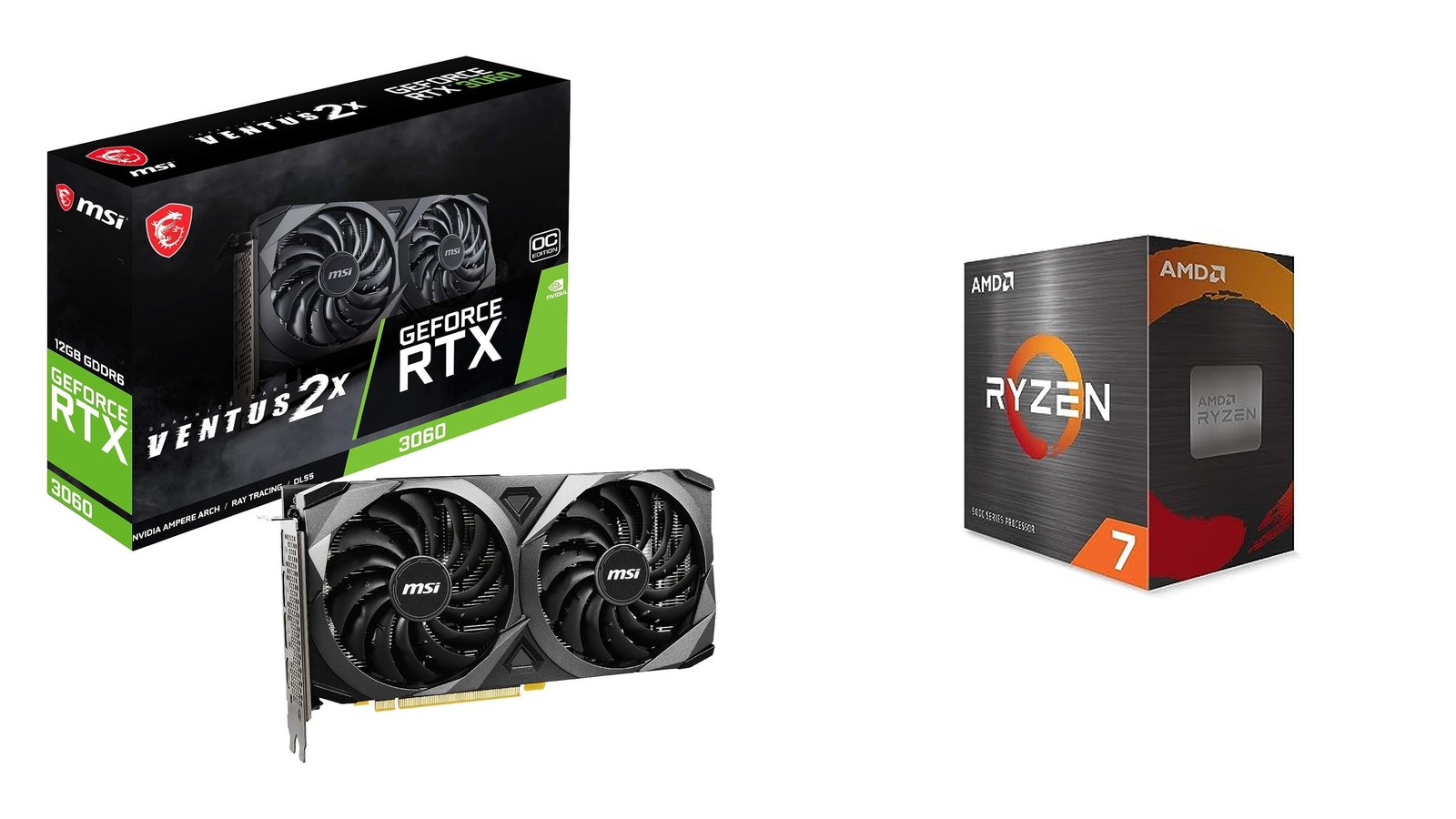
| MSI Gaming GeForce RTX 3060 12GB | 12 GB GDDR6, 192-bit | 360 GB/s | 170 W board power | $479.99 |
| ZOTAC Gaming RTX 3060 Twin Edge OC 12GB | 12 GB GDDR6, 192-bit | 360 GB/s | 170 W board power | $499.99 |
| AMD Ryzen 7 5800X | System RAM (32 GB DDR4 here) | Set by the DIMMs | 105 W default TDP | $254.90 |
| Dual-channel DDR4-3200 | Your installed kit (32 GB here) | 51.2 GB/s theoretical | A few watts per DIMM | Varies by kit |
Sources: RTX 3060 memory size, 192-bit bus, and 170 W "Graphics Card Power" are from NVIDIA's RTX 3060 family page. NVIDIA also lists a 550 W required system power. The 360 GB/s bandwidth figure and the $329 launch MSRP are from Wikipedia's GeForce RTX 30 series table. The 5800X's 8 cores, 16 threads, 32 MB L3, 105 W default TDP, PCIe 4.0, and "Up to 3200 MT/s" DDR4 support are from AMD's product page. Its $449 launch price is from Wikipedia's list of AMD Ryzen processors. The DDR4 figure is arithmetic: 3,200 MT/s × 8 bytes × 2 channels = 51.2 GB/s.
That bandwidth row explains almost everything that follows. Divide 360 GB/s by a 9.0 GB model and the card's generation ceiling is about 40 tok/s. Divide 51.2 GB/s by the same 9.0 GB and the CPU's ceiling is about 5.7 tok/s. Measured results land at 60–80% of each ceiling, which is typical for llama.cpp-family runtimes.
Card prices move often. Both RTX 3060 listings above sit well over the card's $329 launch MSRP, so check the live listing before you decide. Prices may vary.
How many tokens per second does each side deliver on Qwen3 14B?
| Hardware | Model / quant | Prefill (tok/s) | Generation (tok/s) | Source |
|---|---|---|---|---|
| RTX 3060 12GB | Qwen3 14B Q4_K, 4K ctx | 972.6 | 31.2 | Hardware Corner |
| RTX 3060 12GB | Qwen3 14B Q4_K, 16K ctx | 678.2 | 22.7 | Hardware Corner |
| RTX 3060 12GB | Qwen3 14B Q4_K_M, 4K ctx | not reported | 33.4 | tyolab |
| RTX 3060 12GB (Vulkan) | Qwen2-arch 14B Q4_K_M (DeepSeek-R1-Distill-Qwen-14B) | 783.57 (pp4096) | 29.77 | Geerling ai-benchmarks #40 |
| RTX 3060 12GB | Qwen2.5 14B Q4_K_M | 759 | 26.6 | LocalScore |
| Ryzen 7 5800X, 31.9 GB RAM | Qwen2.5 14B Q4_K_M | 24 | 3.5 | LocalScore |
| Ryzen 7 5800X, 63.9 GB RAM | Qwen2.5 14B Q4_K_M | 25 | 4.0 | LocalScore |
| Ryzen 7 5800X, 92.2 GB RAM | Qwen2.5 14B Q4_K_M | 37 | 4.3 | LocalScore |
No public source has published a CPU-only Qwen3 14B run on a 5800X. The rows above use Qwen2.5 14B, which has the same 14.8B parameter class and a near-identical Q4_K_M file size. Dense-model generation depends on bytes read per token, so the stand-in is a close proxy. Q5_K_M and Q8_0 rows have not been published for either side. By the bandwidth arithmetic above, you can expect generation to fall roughly in proportion to file size: about 15% slower at Q5_K_M and about 40% slower at Q8_0. That is an estimate, not a measurement.
For hardware-level detail, the SpecPicks pages at /benchmarks/nvidia-geforce-rtx-3060-12-gb and /benchmarks/amd-ryzen-7-5800x aggregate the other sourced results for each part.
Why is prompt prefill the number that decides this comparison?
Generation speed is what people quote, but prefill is what you wait on. The 5800X's generation deficit is 7–9x. Its prefill deficit is 26–40x.
LocalScore records time to first token on the same prompt suite for both platforms. The RTX 3060 shows 1.92 seconds on Qwen2.5 14B (LocalScore). The three 5800X submissions show 56.18, 55.77 and 38.42 seconds (1070, 762, 846). That is the difference between a tool you use and a tool you avoid.
Work it through for a RAG query. Suppose retrieval stuffs 4,000 tokens of document chunks into the prompt. At the card's 972.6 tok/s, prefill takes about 4 seconds. At the CPU's 24–37 tok/s, it takes roughly 2 to 3 minutes before a single word appears. The same arithmetic applies to a long system prompt for an agent, a pasted 300-line source file, or a multi-turn chat whose history gets re-processed after a cache eviction.
Prefill is matrix multiplication across the whole prompt at once, and an 8-core CPU's vector units cannot compete with 3,584 CUDA cores (NVIDIA). That is why the prefill gap is so much larger than the bandwidth ratio.
What happens at 8K, 16K and 32K context?
The KV cache grows linearly with context: 160 KiB per token for Qwen3 14B, computed from its config.json. Qwen's model card lists a native context of 32,768 tokens, extendable to 131,072 with YaRN. The card warns that enabling YaRN when you don't need it may degrade performance.
| Context | fp16 KV cache (GB) | Q4_K_M weights + KV (GB) | RTX 3060 12GB | Ryzen 7 5800X + 32 GB DDR4 |
|---|---|---|---|---|
| 4K | 0.67 | 9.67 | Fits; 31.2 tok/s gen | Fits easily |
| 8K | 1.34 | 10.34 | Fits | Fits easily |
| 16K | 2.68 | 11.68 | Ceiling; 22.7 tok/s gen (Hardware Corner) | Fits easily |
| 32K | 5.37 | 14.37 | Does not fit fully; offload or quantize KV | Fits (about 14.4 GB of 32 GB) |
| 128K (YaRN) | 21.47 | 30.47 | No | Borderline on 32 GB; needs 64 GB |
This is the one axis where the CPU path has a real structural advantage: RAM is cheap and plentiful. A 32K-context Qwen3 14B session needs about 14.4 GB, which sits comfortably inside 32 GB of system memory. On the card, 32K means either quantizing the KV cache to q8_0 (llama.cpp's --cache-type-k/--cache-type-v, roughly halving the table figures) or spilling layers to the host. The CPU's advantage is capacity, not speed, though. Prefill on a 32K prompt at 24–37 tok/s runs for roughly 15–23 minutes.
Does partial CPU offload beat either part alone?
No. It lands between them, weighted toward whichever side holds more layers. No public source has swept -ngl values for a 14B model on an RTX 3060, so there is no measured curve to quote. The two endpoints are measured, though: 26.6–33.4 tok/s fully on the card, and 3.5–4.3 tok/s fully on the 5800X.
The mechanism is simple. Every generated token passes through every layer in order. Layers in system RAM run at DDR4 speed, and those slow layers dominate total time quickly. Moving even a quarter of the layers to the CPU typically costs far more than a quarter of the speed. Offload is a rescue path for models that cannot fit, such as Q6_K, Q8_0, or 32K+ contexts. A model that already fits should stay fully resident. SpecPicks' CPU-offload host comparison covers the host side of that trade in more depth.
Host choice barely matters while the model is fully resident. In Jeff Geerling's ai-benchmarks issue #40, the same RTX 3060 on a Core Ultra 265K desktop generated 29.77 tok/s on a 14B Q4_K_M model. On a Raspberry Pi CM5 host it generated 29.40 tok/s. PCIe width matters little too. One comparison on a Xeon host measured an RTX 3060 at 55.02 tok/s on an x1 riser against 57.02 tok/s at x16 on Llama 8B Q4_K_M.
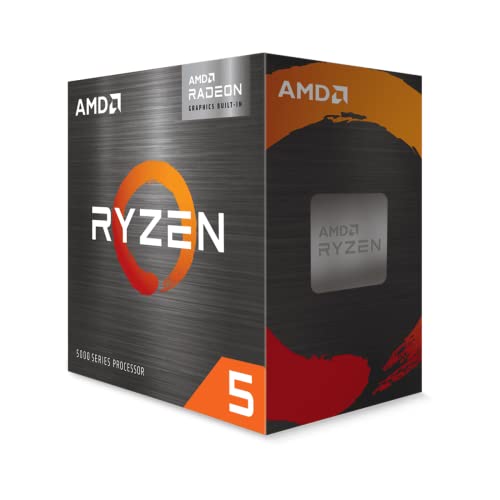
So a Ryzen 5 5600G host works fine for a fully resident model, despite its PCIe 3.0 lanes and 16 MB L3 (AMD). Where it hurts is offload. With fewer, slower cores and the same dual-channel DDR4-3200, the CPU-side layers run slower than on a 5800X, and PCIe 3.0 halves transfer bandwidth for any weights that move at load time.
Which is better per dollar and per watt?
| Path | Generation (tok/s) | Price basis | tok/s per $100 | Rated power | tok/s per rated watt |
|---|---|---|---|---|---|
| RTX 3060 12GB (MSI), Qwen3 14B Q4_K | 31.2 | $479.99 catalog | 6.5 | 170 W board | 0.18 |
| RTX 3060 12GB at $329 launch MSRP | 31.2 | $329 | 9.5 | 170 W board | 0.18 |
| Ryzen 7 5800X, 14B Q4_K_M (best run) | 4.3 | $254.90 catalog | 1.7 | 105 W TDP | 0.041 |
| Ryzen 9 3900X, 14B Q4_K_M | 4.2 | $228.69 catalog | 1.8 | 105 W TDP | 0.040 |
Throughput sources are Hardware Corner, LocalScore 5800X, and LocalScore 3900X. The 3900X's 12 cores, 24 threads, and 105 W default TDP are from AMD's spec listing. Prices are SpecPicks catalog listings on 2026-09-18 and may vary. Per-watt figures use rated power, not measured wall draw. For a wall-power reference, Geerling's whole-system measurement with the RTX 3060 was 224 W at 29.77 tok/s (issue #40), or 0.13 tok/s per wall watt.
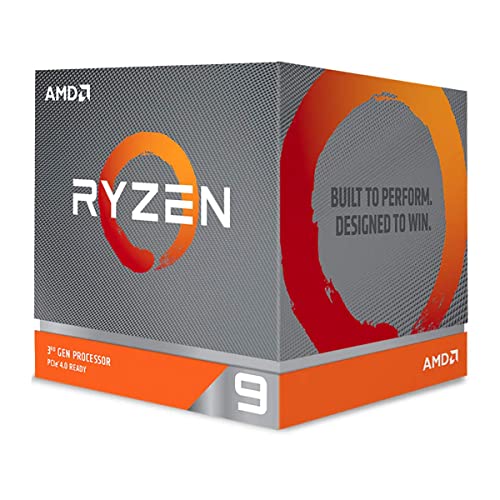
The Ryzen 9 3900X is the useful counterexample. It has 50% more cores than the 5800X and generates at 4.2 tok/s, essentially the same. Its prefill is lower at 23 tok/s. Adding cores does not move a bandwidth-bound workload. On AM4, the whole CPU family sits within about a tok/s of the same dual-channel wall: LocalScore shows a 5900X at 4.8 and a 5950X at 4.9 (608, 274).
Note that the GPU numbers don't include the CPU you already own. A 5800X owner spends only the card price to get the 31.2 tok/s. The upgrade math is roughly $480 for a 7x generation speed-up and a 26x prefill speed-up.
When should you skip the GPU entirely?
The CPU-only path is the right call when:
- The work is batch, not interactive. Overnight summarization of a document folder, bulk classification, or generating embeddings-adjacent metadata can run at 4 tok/s without anyone waiting. A 500-token summary takes about two minutes, so roughly 200 of them fit in an eight-hour night.
- You need very long context occasionally. A 32K session fits in 32 GB of RAM without quantizing the KV cache. Expect a long wait on prefill.
- The box is a headless home server that also runs containers and media. Adding a 170 W card and a 550 W PSU requirement (NVIDIA) may not suit it.
- You are evaluating before buying. Run the model on the CPU for a week, and let the waits tell you whether it's worth the card.
It is the wrong call when latency matters: chat, coding assistants, agent loops, or RAG with multi-thousand-token retrieved context. For these, the 38–56 second time to first token on the CPU is disqualifying.
Common pitfalls
- Running Q5_K_M at 16K "because it fits." The file is 10.51 GB. Add 2.68 GB of KV and it doesn't fit, and llama.cpp-based runners will silently offload layers. Watch
nvidia-smiand the runtime's layer count at load. - Leaving a desktop session on the card. A compositor and browser can take several hundred MB of VRAM, which is enough to push a 16K Q4_K_M session over the edge.
- Mismatched RAM on the CPU path. AMD rates the 5800X for DDR4-3200 (AMD). Wikipedia's Ryzen list notes support drops to DDR4-2933 with four single-rank DIMMs and DDR4-2667 with four dual-rank. Two matched sticks at the rated XMP/EXPO speed beat four mismatched ones.
- Oversubscribing threads. On a bandwidth-bound workload, 16 threads rarely beat 8. Benchmark
-t 6,-t 8and-t 16on your own box.
Verdict matrix
Get the RTX 3060 12GB if… you want interactive Qwen3 14B at 8K–16K context. That covers chat, code help, and RAG. You get 22.7–31.2 tok/s generation and a time to first token near 2 seconds.
Keep the Ryzen 7 5800X alone if… your use is overnight batch work, you need 32K context occasionally without KV quantization, or you're still deciding whether local models are worth any spend.
Use both if… you already own the 5800X. The card handles everything that fits in 12 GB, and the CPU plus 32 GB of RAM absorbs Q6_K/Q8_0 experiments and 32K+ sessions through partial offload.
Recommended pick
For the default reader, a 5800X owner who wants an everyday Qwen3 14B assistant, buy the MSI Gaming GeForce RTX 3060 12GB or whichever 12 GB RTX 3060 is cheapest that week. The ZOTAC Twin Edge OC is the same 12 GB, 192-bit, 360 GB/s silicon in a shorter two-fan board. The condition that flips it: if your workload is almost entirely unattended batch jobs, keep the money. The 5800X already does that at 3.5–4.3 tok/s.
Bottom line
Qwen3 14B is the largest Qwen3 dense model that lives comfortably on a 12 GB card. On an RTX 3060 it runs at 31.2 tok/s with sub-2-second first tokens. On a Ryzen 7 5800X it runs at about 4 tok/s with first tokens measured in tens of seconds. The CPU is capable of running the model; the card is what makes it pleasant to use.
Live price comparison
Live pricing for each side is on the product pages: MSI RTX 3060 12GB, ZOTAC RTX 3060 Twin Edge OC 12GB, and AMD Ryzen 7 5800X. The full benchmark rollups are at /benchmarks/nvidia-geforce-rtx-3060-12-gb and /benchmarks/amd-ryzen-7-5800x. Prices may vary; check the listing for the current figure.
Related guides
- RTX 3060 12GB Local LLM Guide: Which Models Actually Fit
- Quantization on a 12GB GPU: q4 vs q5 vs q8 on the RTX 3060
- Ollama vs llama.cpp on an RTX 3060
- RTX 3060 12GB vs Ryzen 9 3900X for Qwen2.5 14B
- Budget Ollama Build Under $500
- Ryzen 7 5800X vs Ryzen 9 3900X: Mistral Small 24B offload on an RTX 3060 12GB
Citations and sources
- Qwen3-14B model card — Hugging Face (accessed 2026-09-18)
- Qwen3-14B config.json — Hugging Face (accessed 2026-09-18)
- unsloth/Qwen3-14B-GGUF — Hugging Face (accessed 2026-09-18)
- RTX 3060 12GB Local LLM Benchmarks — Hardware Corner (accessed 2026-09-18)
- 13 Local LLMs, One RTX 3060 — tyolab (accessed 2026-09-18)
- geerlingguy/ai-benchmarks issue #40 — GitHub (accessed 2026-09-18)
- RTX 3060 12GB results — LocalScore (accessed 2026-09-18)
- Ryzen 7 5800X results (31.9 GB) — LocalScore (accessed 2026-09-18)
- Ryzen 7 5800X results (63.9 GB) — LocalScore (accessed 2026-09-18)
- Ryzen 7 5800X results (92.2 GB) — LocalScore (accessed 2026-09-18)
- Ryzen 9 3900X results — LocalScore (accessed 2026-09-18)
- Ryzen 9 5900X results — LocalScore (accessed 2026-09-18)
- Ryzen 9 5950X results — LocalScore (accessed 2026-09-18)
- Performance of llama.cpp on NVIDIA CUDA, discussion #15013 — GitHub (accessed 2026-09-18)
- RTX 3060 x1 vs x16 results — GitHub gist (accessed 2026-09-18)
- GeForce RTX 3060 family specs — NVIDIA (accessed 2026-09-18)
- GeForce RTX 30 series — Wikipedia (accessed 2026-09-18)
- AMD Ryzen 7 5800X — AMD (accessed 2026-09-18)
- AMD Ryzen 5 5600G specifications — AMD (accessed 2026-09-18)
- AMD Ryzen 9 3900X specifications — AMD (accessed 2026-09-18)
- List of AMD Ryzen processors — Wikipedia (accessed 2026-09-18)
This piece is editorial synthesis based on publicly available information. No independent first-party benchmarking is reported.