Who this comparison is for
You're building or upgrading a box for local inference with Ollama, llama.cpp, LM Studio or vLLM, and you've narrowed it to two very different cards. On one side is the MSI Gaming GeForce RTX 3060 12GB, listed on Amazon at $479.99 as of September 24, 2026. On the other is the MSI Gaming GeForce RTX 4090 24GB (Suprim Liquid X), listed at $2,949.99. That is a 6.1x price gap for a 2x VRAM gap.
The main thing to understand is that VRAM capacity decides which models you can run, and memory bandwidth decides how fast they run. Compute (CUDA and tensor cores) matters mostly for prompt processing. So you are really buying two things with a 4090: a higher model ceiling (24 GB) and roughly 2.8x the bandwidth. Whether either is worth $2,470 extra depends entirely on the model size you use every day.
Key takeaways
- Model ceiling: 12 GB fits 8B models at Q8 and 14B models at Q4_K_M with a 16K context. 24 GB fits dense 27–32B models at Q4_K_M with a 16K context.
- Generation speed: on models that fit both cards, the 4090 generates 2.6–2.7x faster, which is close to the bandwidth ratio and nowhere near 6x.
- Prompt processing: the 4090's lead grows to about 5.4x because prefill is compute-bound. That matters for RAG and coding agents with long prompts.
- Perf per dollar: the 3060 delivers about 2.3x more tokens/sec per $100 at current listing prices.
- Power: 170 W TGP against 450 W. Tokens per watt come out almost identical, so the 4090 is not the efficiency play people sometimes assume.
Step 0: which model size do you actually run?
Answer this before you spend anything:
- 7–8B daily chat (Llama 3.1 8B, Qwen3 8B): both cards are overkill for capacity. The 3060 already generates at 55 tok/s, and you read at roughly 5–8 tokens per second. The 4090's 141 tok/s is nice to have but doesn't change the experience.
- 14B coding and assistant models (Qwen3 14B, Phi-4, Qwen2.5-Coder 14B): the 3060 handles these at Q4_K_M with a 16K context at 22–31 tok/s. The 4090 runs them at 70–84 tok/s and can use Q8 instead of Q4.
- 27–32B reasoning models (Qwen3 32B, Gemma 3 27B, DeepSeek-R1-Distill 32B): this is where the choice is made for you. They need about 17–20 GB at Q4_K_M, so the 3060 is out unless you accept heavy CPU offload.
- 70B dense models: neither card holds them. A 4090 plus 64 GB of system RAM can offload a 70B Q4 at a few tokens per second. See our Llama 70B GPU guide before you plan around that.
If you're firmly in groups 1–2, stop here and buy the 3060. The rest of this article is for group 3, and for readers who want to see the numbers.
Spec-delta table: RTX 3060 12GB vs RTX 4090
| Spec | RTX 3060 12GB | RTX 4090 | Delta | Why it matters for LLMs |
|---|---|---|---|---|
| VRAM | 12 GB GDDR6 | 24 GB GDDR6X | 2x | Sets the largest model + context you can hold |
| Memory bus | 192-bit | 384-bit | 2x | Feeds the bandwidth figure below |
| Memory bandwidth | 360 GB/s | 1,008 GB/s | 2.8x | Token generation is bandwidth-bound |
| CUDA cores | 3,584 | 16,384 | 4.6x | Drives prefill and batched throughput |
| Tensor cores | 112 (3rd gen, no FP8) | 512 (4th gen, FP8) | 4.6x | FP8 paths in vLLM / TensorRT-LLM |
| TGP | 170 W | 450 W | 2.6x | PSU sizing, heat, 24/7 power cost |
| Launch MSRP | $329 | $1,599 | 4.9x | Reference point only |
| Amazon listing (Sept 24, 2026) | $479.99 (MSI) | $2,949.99 (MSI Suprim Liquid X) | 6.1x | What you actually pay today |
Specs are from TechPowerUp's GPU database. Listing prices change daily, so treat them as a snapshot.
How many tokens per second does each card generate on 8B, 14B and 32B models?
The table below uses one source for every row: Hardware Corner's RTX 3060 12GB benchmarks and its RTX 3090 / 4090 / 5090 context-scaling runs. Both use llama.cpp on CUDA with Q4_K GGUF weights at a 4K context. Keeping to one methodology matters more than chasing the highest number you can find. Scattered forum posts mix runtimes, quants and driver versions, and the ratios drift by 30% or more.
| Model (Q4_K, 4K ctx) | RTX 3060 12GB gen | RTX 4090 gen | 4090 lead | RTX 3060 prefill | RTX 4090 prefill | 4090 lead |
|---|---|---|---|---|---|---|
| Qwen3 8B | 55.2 tok/s | 141.3 tok/s | 2.56x | 1,697 tok/s | 9,251 tok/s | 5.45x |
| Qwen3 14B | 31.2 tok/s | 84.4 tok/s | 2.71x | 973 tok/s | 5,265 tok/s | 5.41x |
| Qwen3 32B | does not fit | 39.6 tok/s | n/a | does not fit | 2,448 tok/s | n/a |
| Qwen3 30B-A3B (MoE) | does not fit | 207.3 tok/s | n/a | does not fit | 6,159 tok/s | n/a |
As a cross-check, llama.cpp's own CUDA performance thread shows the RTX 4090 at about 189 tok/s generation and 14,771 tok/s prefill on the standard Llama 2 7B Q4_0 test. That is the same shape as above: generation a little under 3x a 3060-class card, and prefill far ahead.
The generation leads of 2.56x and 2.71x sit just under the 2.8x bandwidth ratio, as you'd expect. You pay 6x the price and get about 2.7x the generation speed on the models both cards can run.
Quantization matrix: what fits where
Approximate GGUF weight sizes, excluding KV cache, for a 14B and a 32B dense model. "Fits" means the weights plus a practical 8K context stay inside VRAM.
| Quant | 14B size | Fits 3060 (12 GB)? | Fits 4090 (24 GB)? | 32B size | Fits 3060? | Fits 4090? | Quality loss vs FP16 |
|---|---|---|---|---|---|---|---|
| Q2_K | ~5.8 GB | Yes | Yes | ~12.3 GB | No | Yes | Large, obvious in reasoning |
| Q3_K_M | ~7.3 GB | Yes | Yes | ~16.0 GB | No | Yes | Noticeable |
| Q4_K_M | ~9.0 GB | Yes (16K ctx max) | Yes | ~19.8 GB | No | Yes (16K ctx) | Small, the usual sweet spot |
| Q5_K_M | ~10.5 GB | Tight (4K ctx) | Yes | ~23.2 GB | No | No (spills) | Very small |
| Q6_K | ~12.1 GB | No | Yes | ~26.9 GB | No | No | Near-lossless |
| Q8_0 | ~15.7 GB | No | Yes | ~34.8 GB | No | No | Effectively lossless |
| FP16 | ~29.5 GB | No | No | ~65.5 GB | No | No | Reference |
The pattern is straightforward. The 4090 buys you one extra model class (32B at Q4) or one extra quality tier on the class below (14B at Q8 instead of Q4). For an 8B model it buys neither, because the 3060 already holds 8B at Q8 (~8.7 GB).
Prefill vs generation: why the 4090's lead is bigger on prompts
Every request has two phases. Prefill processes your whole prompt in parallel. It's a large matrix multiply, so it scales with tensor-core throughput. Generation produces one token at a time, and each token requires reading every active weight from VRAM once, so it scales with memory bandwidth.
That is why the 4090's lead is 5.4x on prefill and only 2.7x on generation. In practice:
- Chat with short prompts: you mostly feel generation speed. The 4090 is 2.7x faster.
- RAG with a 12K-token retrieved context: on Qwen3 14B, the 3060 needs roughly 15–18 seconds before the first token appears (prefill speed falls to 678 tok/s at 16K context). The 4090 needs about 3–4 seconds. This is the one workload where the 4090 feels like a different class of product.
- Coding agents (Aider, OpenHands, Continue) re-send large file contexts on every turn, so they behave like RAG. If you run agents all day, count prefill as your main metric.
What happens to context length at 32K on 12 GB vs 24 GB?
The KV cache grows linearly with context. For Qwen3 14B (40 layers, 8 KV heads, head dimension 128), an FP16 KV cache costs about 0.16 MB per token:
| Context | KV cache (FP16) | KV cache (q8_0) | 14B Q4_K_M total (FP16 KV) |
|---|---|---|---|
| 4K | 0.6 GB | 0.3 GB | ~10.1 GB |
| 16K | 2.5 GB | 1.3 GB | ~12.0 GB |
| 32K | 5.0 GB | 2.5 GB | ~14.5 GB |
That matches what Hardware Corner found: the 3060 tops out at 16K for Qwen3 14B, and generation there falls from 31.2 to 22.7 tok/s. To reach 32K on 12 GB you have two options. You can quantize the KV cache (-ctk q8_0 -ctv q8_0 in llama.cpp, or OLLAMA_KV_CACHE_TYPE=q8_0 with flash attention on), or you can drop to Q3_K_M weights. The 4090 runs Qwen3 14B at 32K with FP16 KV and 55.4 tok/s to spare, and Qwen3 32B at 16K at 34.4 tok/s.
Can two RTX 3060s (24 GB total) match one RTX 4090?
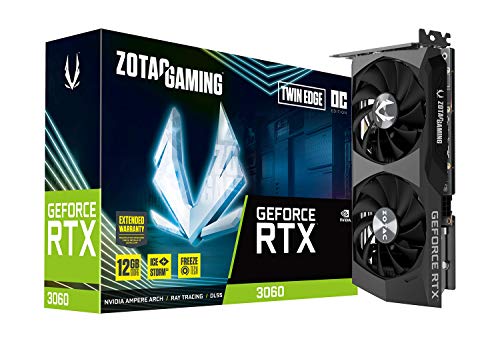
On capacity, mostly yes. Two 3060s give you 24 GB, so a 32B model at Q4_K_M loads with llama.cpp's default layer split (--split-mode layer). A pair of ZOTAC RTX 3060 Twin Edge OC 12GB cards costs about $1,000 at current listings, roughly a third of the 4090.
On speed, no. With layer splitting, each token passes through card A and then card B, so generation runs at single-3060 bandwidth, not double. Expect a 32B Q4 model to generate somewhere around 11–14 tok/s on a 3060 pair. That is our estimate from the 360 GB/s bandwidth ceiling, not a measured result. The 4090 does 39.6 tok/s. Tensor-parallel mode (--split-mode row, or vLLM with tensor_parallel_size=2) can recover some of that, but on consumer boards the second slot is often PCIe 4.0 x4 through the chipset, and that eats most of the gain.
The better middle ground is often a single 24 GB RTX 3090. The ASUS TUF Gaming RTX 3090 OC 24GB has 936 GB/s of bandwidth and ran Qwen3 32B at 35.1 tok/s in Hardware Corner's tests, 89% of the 4090's speed. New stock is listed at $1,999.99, which is poor value. Used 3090s are where this card makes sense, and our RTX 3090 vs RTX 4090 LLM comparison covers the trade-offs.
Perf-per-dollar and perf-per-watt math
Using the Qwen3 14B Q4_K generation numbers (the largest model both cards run) and the listing prices above:
| Card | Gen tok/s (14B) | Price | tok/s per $100 | TGP | tok/s per 100 W |
|---|---|---|---|---|---|
| RTX 3060 12GB (MSI) | 31.2 | $479.99 | 6.5 | 170 W | 18.4 |
| RTX 4090 24GB (MSI Suprim Liquid X) | 84.4 | $2,949.99 | 2.9 | 450 W | 18.8 |
| RTX 3090 24GB (ASUS TUF, new) | 70.0 | $1,999.99 | 3.5 | 350 W | 20.0 |
For 8B models the 3060 still leads on price: 11.5 tok/s per $100 against 4.8 for the 4090.
Two things stand out. The 3060 is about 2.3x better per dollar. Per watt, the two cards are effectively tied, because both are bandwidth-bound and the 4090 simply moves more bytes for more watts. If you run a 24/7 inference box, you can power-limit the 4090 to 300–350 W (nvidia-smi -pl 320) and keep most of its generation speed. That changes the efficiency picture in its favour, but not the purchase price.
Real-world examples
Solo developer with a local coding assistant. Qwen2.5-Coder 14B at Q4_K_M in Continue, with about 8K of file context per request. On the 3060 that works out to roughly 9 seconds of prefill plus about 30 tok/s generation. That is usable. On the 4090 it's under 2 seconds plus 84 tok/s. If this is your job for eight hours a day, the 4090 saves real minutes. If it's a side project, the 3060 is fine.
Home-lab chat server for a family. Llama 3.1 8B or Qwen3 8B in Open WebUI, short prompts and one or two users at a time. The 3060 at 55 tok/s is already faster than anyone reads. The 4090 is wasted here.
Research on 32B reasoning models. Qwen3 32B or DeepSeek-R1-Distill 32B with long chain-of-thought outputs. The 3060 can't hold these, and offloading half the layers to DDR4/DDR5 drops you to single digits. This is the use case the 4090 (or a used 3090) exists for.
Common pitfalls
- Buying the 8 GB RTX 3060 by mistake. Several 3060 SKUs ship with 8 GB on a 128-bit bus. Check for "12GB" in the listing title and on the box.
- Assuming Ollama uses the whole card. Ollama reserves overhead and falls back to partial CPU offload without warning when a model plus context doesn't fit. Run
ollama psand check that the PROCESSOR column says 100% GPU. - Undersized PSU on the 4090. NVIDIA's guidance is an 850 W system PSU. Transient spikes go well above 450 W, so use an ATX 3.x unit with a native 12V-2x6 cable.
- Chasing FP8 on a 3060. Ampere has no FP8 tensor support. FP8 checkpoints in vLLM either fail or fall back to slower paths. Stick to GGUF, AWQ or GPTQ INT4.
- Comparing numbers across runtimes. An Ollama figure and a llama.cpp
llama-benchfigure for the same card can differ by 20%. Only compare results from the same harness.
When is the RTX 5090 32GB the better upgrade?
If you've outgrown 12 GB and you're already considering $2,900 for a 4090, look at the 32 GB tier. The ASUS TUF Gaming RTX 5090 32GB has 1,792 GB/s of bandwidth. It ran Qwen3 32B at 61.4 tok/s against the 4090's 39.6, and its 32 GB holds 32B models at Q6 or a 27B model with a long context. Amazon currently lists it at $6,699.99, which is a scarcity price and not a sensible one. At or near its $1,999 MSRP it is the better buy than a 4090 for 27–32B work.
Verdict matrix
Get the RTX 3060 12GB if…
- Your daily models are 14B or smaller.
- You care about tokens per dollar more than seconds per request.
- You want a quiet, 170 W card that fits a small case and a 550 W PSU.
- You're learning local inference and don't yet know your workload.
Get the RTX 4090 if…
- You need 27–32B dense models fully in VRAM.
- You run RAG or coding agents where prefill dominates.
- You want FP8 support for vLLM or TensorRT-LLM serving.
- You also game at 4K on the same machine.
Get neither if…
- You need 70B-class models at interactive speed. Look at 48 GB+ multi-GPU setups or Apple unified-memory machines instead.
- You only run 3–4B models. Any recent 8 GB card will do.
- You want the 24 GB tier at the lowest cost. A used RTX 3090 gives you about 89% of the 4090's 32B generation speed.
Recommended pick
For most readers, the right card is the MSI Gaming RTX 3060 12GB or the shorter ZOTAC RTX 3060 Twin Edge OC for small-form-factor builds. It runs every 7–14B model at interactive speed, and our which LLMs fit an RTX 3060 12GB guide lists them model by model. Buy the MSI Gaming RTX 4090 24GB only when you know you need 32B-class models or heavy long-prompt workloads. In that case, check used RTX 3090 prices first.
Live price comparison
Prices move weekly. See current listings side by side on our RTX 3060 12GB vs RTX 4090 live comparison.
Related guides
- Which LLMs fit an RTX 3060 12GB in 2026
- RTX 3090 vs RTX 4090 for LLM inference
- Best 24GB GPU for local LLMs in 2026
- Best 12GB GPU for local LLMs in 2026
Citations and sources
- TechPowerUp — NVIDIA GeForce RTX 3060 12 GB specs (accessed September 24, 2026)
- TechPowerUp — NVIDIA GeForce RTX 4090 specs (accessed September 24, 2026)
- llama.cpp — Performance on NVIDIA CUDA, Discussion #15013 (accessed September 24, 2026)
- Hardware Corner — RTX 3060 12GB local LLM benchmarks (accessed September 24, 2026)
- Hardware Corner — RTX 3090 / 4090 / 5090 context-scaling benchmarks (accessed September 24, 2026)
Benchmark figures come from the sources above. Price-performance ratios, KV-cache sizes and dual-GPU estimates are SpecPicks' own calculations from those figures and published specifications.