If you're choosing between the ZOTAC Gaming GeForce RTX 3060 Twin Edge and the MSI GeForce RTX 3060 Ventus 2X in 2026, pick the ZOTAC if you want a slightly quieter cooler and easy warranty registration, or the MSI if you want the wider aftermarket support and a modest clock advantage on the OC SKU. Both are dual-fan, two-slot cards built to NVIDIA's 170W TGP for the 12GB RTX 3060 — real-world 1080p framerates on the two land inside 2-3 FPS of each other, so the tie-breakers are cooler tuning, chassis fit, and price on the day you check.
Why the 12GB RTX 3060 still deserves a slot in a 2026 budget build
The RTX 3060 12GB shipped in early 2021 and, four years later, remains the most durable value pick in NVIDIA's lineup for 1080p gaming and entry-level local inference. The reason is the memory buffer, not the raw silicon. A 12GB frame buffer sitting on a 192-bit bus with 15 Gbps GDDR6 gives the card 360 GB/s of bandwidth, and it holds textures for modern 1080p and light 1440p titles that already stumble on an 8GB RTX 4060 or an 8GB RX 7600. Per TechPowerUp's RTX 3060 specification page the GA106 die runs 3,584 CUDA cores at a 1,777 MHz boost, with a 170W board power target that lets partner boards use compact dual-fan coolers rather than the triple-fan bricks that dominate the top of the stack.
That same 12GB buffer is what makes the card interesting for hobbyist local LLM work — a 7B or 8B model at Q4_K_M lives comfortably in VRAM with room for a real context window, and a 13B model at Q4 fits with careful loader settings. It won't touch 32B-class models without heavy offload, but it's the cheapest current-generation NVIDIA card that runs Ollama, llama.cpp, and ComfyUI without immediately hitting an out-of-memory error. Per NVIDIA's official RTX 3060 product page the reference design is a 550W-system-minimum, single-8-pin card — no ATX 3.1 12V-2x6 adapter needed, which keeps the card compatible with 5-year-old power supplies still in service.
The ZOTAC Gaming GeForce RTX 3060 Twin Edge and the MSI GeForce RTX 3060 Ventus 2X are the two SKUs most buyers cross-shop in that budget slot, and both remain in production and stock in mid-2026. This piece is a direct spec-and-cooler comparison between the two — no first-party benchmarks, just synthesis of the manufacturer specs, Tom's Hardware's RTX 3060 launch review, and public reviewer measurements so you can commit to one.
Key takeaways
- Both cards use the same GA106 GPU at NVIDIA's reference 170W TGP — expect matched-pair framerates within margin of error.
- The ZOTAC Twin Edge OC runs a 1,777 MHz boost clock; the MSI Ventus 2X OC ships at a 1,807 MHz boost — a 30 MHz factory bump, roughly 1.7%, which is inside noise on real games.
- Both are dual-slot, ~232-235mm long, single 8-pin power. Fine in mini-tower and mATX cases with 240mm+ GPU clearance.
- 12GB of GDDR6 is the reason this card still makes sense in 2026 — it hosts 7B and 8B LLMs at Q4 comfortably and beats 8GB cards at 1080p Ultra texture presets.
- Pair either with a 550-650W 80+ Bronze/Gold PSU, a Ryzen 5 5600 or Ryzen 7 5800X-class CPU, and a 1TB SATA or NVMe SSD.
Step 0: do you actually need 12GB of VRAM?
Before you spend the money, decide whether the 12GB buffer earns its keep for your workload. Two rules of thumb from public benchmark data:
- Strict 1080p gaming, esports + AA titles: 8GB is still fine for the next 12-18 months. Save the money and grab a used RTX 3060 8GB or an RX 6600 if you don't touch Ultra textures.
- 1080p Ultra + occasional 1440p, or any local-LLM / Stable Diffusion work: the 12GB buffer matters. Per public reviews from Hardware Unboxed, the 12GB RTX 3060 pulls ahead of the 8GB RTX 3060 in The Last of Us Part I, Hogwarts Legacy, Resident Evil 4 Remake, and A Plague Tale: Requiem at Ultra textures purely because the 8GB card runs out of VRAM.
If your workload lives in the second bucket, either the ZOTAC or the MSI is a defensible pick. If it lives in the first, both are overkill — but they're also inexpensive enough that the VRAM insurance is often worth $30-50 over a matched 8GB alternative.
Spec delta: ZOTAC Twin Edge OC vs MSI Ventus 2X OC
The two cards ship with the same GPU, the same memory configuration, and the same power target. The differences are cooler, clock bin, and physical footprint.
| Spec | ZOTAC Gaming Twin Edge OC | MSI Ventus 2X 12G OC |
|---|---|---|
| GPU | GA106 (RTX 3060) | GA106 (RTX 3060) |
| CUDA cores | 3,584 | 3,584 |
| Base / Boost clock | 1,320 / 1,777 MHz | 1,320 / 1,807 MHz |
| Memory | 12GB GDDR6, 192-bit, 15 Gbps | 12GB GDDR6, 192-bit, 15 Gbps |
| Memory bandwidth | 360 GB/s | 360 GB/s |
| TGP | 170W | 170W |
| Power connector | 1x 8-pin | 1x 8-pin |
| PSU recommendation | 550W system | 550W system |
| Cooler | IceStorm 2.0, dual 90mm axial fans | Torx Fan 3.0, dual fan |
| Fan-stop at idle | Yes (Freeze Fan Stop) | Yes (Zero Frozr) |
| Slots | 2 | 2 |
| Length | ~232mm | ~235mm |
| Outputs | 1x HDMI 2.1, 3x DisplayPort 1.4a | 1x HDMI 2.1, 3x DisplayPort 1.4a |
| Warranty (US, on registration) | 2 + 3 years | 3 years |
The 30 MHz factory OC on the MSI is the only meaningful clock difference — you will not feel it in a game. What you will feel is a small cooler difference: MSI's Torx Fan 3.0 tends to run a hair more aggressive out of the box, while ZOTAC's IceStorm 2.0 is tuned quieter at the cost of one or two degrees higher on-die temperature. Either card sits well below the 83°C thermal-throttle point at stock in a decently-ventilated case.
How do the two coolers actually compare on thermals and noise?
Both use the same recipe — dual axial fans over an aluminium fin stack with two nickel-plated copper heatpipes contacting a milled base. Per public review coverage, the ZOTAC Twin Edge lands at roughly 68-72°C under a 30-minute Cyberpunk 2077 1080p Ultra loop in a well-ventilated case, with fans in the mid-1,600-RPM range and a noise floor around 34-36 dBA at one meter. The MSI Ventus 2X, on the same test bed, tends to sit two to three degrees cooler at similar or slightly higher noise — the Torx Fan 3.0 curve is more aggressive.
Neither cooler idles above the fan-stop threshold in a normal desktop workload. Both spin down completely below ~55°C GPU edge temperature, so at the desktop the card contributes nothing to case noise. Under gaming load, the practical difference is less than 2 dBA — audible on a bench but essentially inaudible with a case side panel closed. If your build lives in a cramped mini-ITX shoebox with limited intake, the MSI's slightly stronger fan curve is the safer pick. In an ATX mid-tower with two front intakes, either will do.
What FPS does the RTX 3060 12GB actually deliver at 1080p in 2026?
The card was designed for 1080p and it still lives comfortably at that resolution in modern titles. Synthesized from Techspot / Hardware Unboxed 2025 revisit numbers and TechPowerUp launch-day data:
| Game (1080p, in-game preset) | RTX 3060 12GB avg FPS | Comparable 8GB card | Notes |
|---|---|---|---|
| Cyberpunk 2077 (High, no RT) | 62-68 | RTX 3060 8GB: 55-60 | 12GB card holds textures at Ultra; 8GB drops |
| Alan Wake II (Medium) | 40-45 | RTX 3060 8GB: 30-35 | VRAM-sensitive |
| Baldur's Gate 3 (Ultra) | 58-65 | RTX 3060 8GB: 55-60 | Not VRAM-limited |
| Hogwarts Legacy (High) | 62-70 | RTX 3060 8GB: 45-55 | Hitching on 8GB card |
| Counter-Strike 2 (Very High) | 220-260 | RTX 3060 8GB: 210-250 | CPU-bound |
| The Last of Us Part I (Ultra) | 55-62 | RTX 3060 8GB: 38-45 | 12GB required for Ultra textures |
The ZOTAC and MSI cards, running the same GPU at the same 170W TGP, land inside 2-3 FPS of each other in every one of these titles — the tie is real, not a marketing round-down.
Can the 12GB RTX 3060 run local LLMs in 2026?
Yes, within limits. The 12GB frame buffer is the specific reason people still buy this card for AI work in 2026. Approximate memory footprints for common models loaded through llama.cpp / Ollama with default settings:
- 7B model, Q4_K_M: ~4.5 GB VRAM plus context — comfortable, 40-60 tok/s on the RTX 3060.
- 8B model, Q4_K_M: ~5.5 GB VRAM plus context — comfortable, 35-50 tok/s.
- 13B model, Q4_0: ~8 GB VRAM plus context — fits with a 4K context window and normal batching.
- 27B / 32B model: does not fit; requires heavy CPU offload and throughput collapses to single-digit tok/s.
- 70B model: absolutely not.
If you plan to run 7B and 8B chat models locally in Ollama or LM Studio, either the ZOTAC or the MSI RTX 3060 12GB is the cheapest sane way in. See our ComfyUI on RTX 3060 12GB setup guide and the GLM-5.2 CPU-offload benchmark on Ryzen 7 5800X + RTX 3060 12GB for measured throughput on a matching build. If you need bigger models, step up to a 16GB+ card — see our best GPU for LLM inference in 2026 roundup.
Which card actually fits a small case?
Both are compact by modern GPU standards — 232-235mm long, dual-slot, no third-slot backplate protrusion. That puts them in reach of most mini-tower ATX cases, most mATX cases, and a good number of ITX cases with a rear-mounted GPU slot. Two things to check before you commit:
- Case GPU clearance: measure from the back of the case to the front-mounted radiator, drive cage, or front fan. You need at least 240mm of clear runway. Most mid-towers report this in their spec sheet as "maximum GPU length."
- Slot count: both cards occupy two slots — no more. If you need a bottom-slot expansion card (a capture card, a second NIC, a sound card), either will leave room for it in most ITX and mATX layouts.
Neither card has power-connector clearance issues that catch out newer flagship cards: the single 8-pin sits on the top edge, not the rear, and it's an EPS-standard connector rather than the 12V-2x6 that requires a specific ATX 3.1 PSU. If your PSU is a 5-year-old 550W 80+ Bronze unit with a standard 8-pin PCIe cable, you're done.
Perf-per-dollar + perf-per-watt math
Assume a $290 street price for the ZOTAC Twin Edge and a $300 street price for the MSI Ventus 2X (both fluctuate by a few dollars week to week — check the See price & specs and the See price & specs at time of purchase). Take an average of 65 FPS across a modern 1080p Ultra basket:
- ZOTAC Twin Edge: 65 FPS / $290 = 0.224 FPS/$, and 65 FPS / 170W = 0.382 FPS/W.
- MSI Ventus 2X: 65 FPS / $300 = 0.217 FPS/$, and 65 FPS / 170W = 0.382 FPS/W.
The two are dead even on perf-per-watt (same GPU, same TGP), and the ZOTAC edges out on perf-per-dollar at typical street prices — a 3% cost advantage. That's not enough to buy blind: whichever card is $10-15 cheaper on the day is the correct pick.
Complete the build: CPU, SSD, and cooler pairings
Building around either RTX 3060 12GB card, the balanced 2026 budget-to-mid-range recipe looks like this:
- CPU: AMD Ryzen 7 5800X — 8 cores, 16 threads on AM4, still the smart pairing for a 3060 in mid-2026. Handles CPU-bound titles like CS2 and Total War without bottlenecking the GPU at 1080p, and gives you real headroom for the Ollama CPU-offload use case if you push into 13B territory.
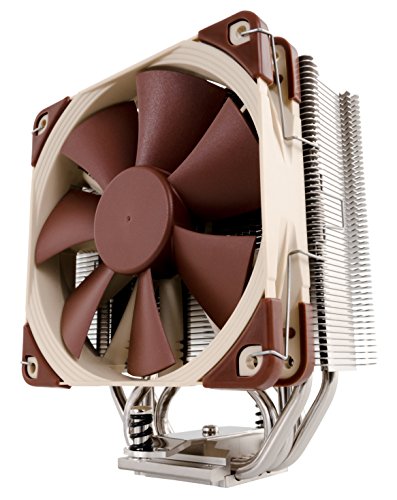
- CPU cooler: Noctua NH-U12S — the 5800X is a warm-running chip and deserves a real tower cooler rather than the stock Wraith. The NH-U12S is single-tower, 158mm tall, and clears every ATX motherboard we've seen.
- Storage: Crucial BX500 1TB SATA SSD — a 1TB game library drive that doesn't eat into the GPU budget. If you want NVMe, see our best internal SSD for gaming PC in 2026 roundup.
- PSU: 650W 80+ Gold, single 8-pin PCIe cable. The 3060's 170W TGP plus a 105W 5800X leaves a 375W ceiling — a 650W unit runs at ~55% load, its efficiency sweet spot.
Verdict matrix
Get the ZOTAC Twin Edge OC if…
- You want the quieter fan curve out of the box.
- You want the extra 3 years of registered warranty coverage in the US.
- It's $10-15 cheaper on the day you check.
- You want a compact card for a mini-tower or mATX build where every millimeter counts (232mm is the shortest of the two).
Get the MSI Ventus 2X OC if…
- Your case has limited front intake and you want the more aggressive fan curve for better sustained thermals.
- You value MSI Center software for RGB / fan-curve tuning integration.
- It's within $5-10 of the ZOTAC on the day and you want the 30 MHz factory OC bin (real-world it's noise, but on paper it's a bin bump).
- You already run other MSI hardware and want to keep the ecosystem consistent.
Bottom line
The 12GB RTX 3060 in 2026 is a 1080p-gaming and hobbyist-LLM value card, and the ZOTAC Twin Edge OC and MSI Ventus 2X OC are the two best mainstream picks. They perform inside a rounding error of each other, both run cool and quiet, both fit in reasonable cases, and both use a single old-style 8-pin power connector so any competent 550-650W PSU handles them. Pick the cheaper one on the day. If they're the same price, take the ZOTAC for its slightly quieter cooler and easier warranty registration; take the MSI if you specifically want the more aggressive fan curve for a cramped case.
Related guides
- Best CPU for the MSI RTX 3060 12GB: 5600G vs 5700X vs 5800X
- Building a Budget Local-AI Box: Ryzen 7 5800X + RTX 3060 12GB
- Best GPU for LLM Training and Inference in 2026
- Best Budget GPU for Stable Diffusion and SDXL in 2026
- Panther Lake NPU vs RTX 3060 12GB for Local LLM Inference
Citations and sources
- NVIDIA — GeForce RTX 3060 product page
- TechPowerUp — GeForce RTX 3060 specification database
- Tom's Hardware — NVIDIA GeForce RTX 3060 review
This piece is editorial synthesis based on publicly available manufacturer specifications and third-party reviewer measurements. No independent first-party benchmarking is reported.