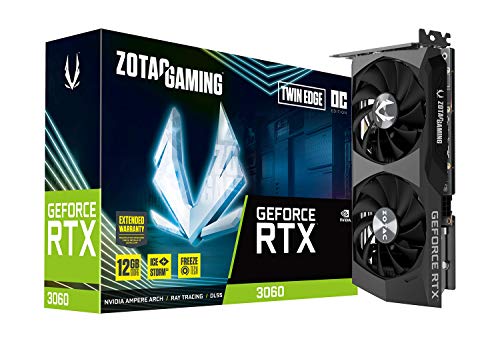
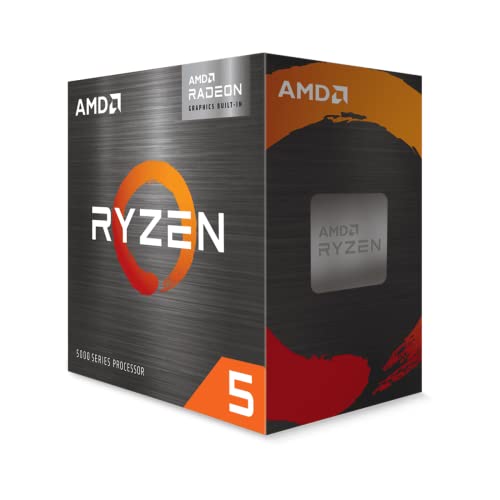
If your library is mostly Valorant, CS2, Rocket League and Dota 2 at 1080p and low-to-medium settings, the Ryzen 5 5600G's integrated Vega graphics will hold the frame rates a 144 Hz panel needs — provided you run dual-channel DDR4-3200 or faster. Add Apex, Fortnite at competitive settings, or newer shooters and the RTX 3060 12GB becomes the difference between "playable" and "the refresh rate you paid for."
The build this actually decides
The question is rarely "5600G or RTX 3060" in isolation. It is "am I spending my sub-$600 budget on a graphics card, or on everything else?" A discrete card is the single biggest line item in a modern budget PC, and skipping it takes a $580 build down to about $380 for the same case, PSU, storage and monitor. The gap goes to the parts of the machine that actually last: a decent case, a decent PSU, a real 1 TB SSD, a monitor bigger than 24 inches.
That trade only works if the integrated graphics on the 5600G clears the frame rates for the games you actually play. Per TechPowerUp's spec sheet on the RTX 3060 12GB, you're comparing a 3,584-CUDA-core card with a dedicated 192-bit GDDR6 bus and 12 GB of local memory against a 7-CU Vega block that shares your system DDR4 through the CPU's memory controller. Those two are not the same thing at 1080p, and pretending they are is the fastest way to blow your budget on the wrong half of the build.
The honest framing: this decision is a triage. There are three real answers, not two — the 5600G alone, the RTX 3060 12GB alongside a cheaper CPU or the same 5600G, or the RTX 3060 12GB paired with the stronger Ryzen 7 5800X once you've decided a discrete card is going in the slot. Which one is right depends on your library, your monitor, and whether you'll ever add a card later. The rest of this piece walks that decision in the order those questions actually come up when you're staring at a shopping cart.
Key takeaways
- Cleared 144 fps on integrated Vega: competitive CS2, Valorant, Rocket League and Dota 2 at 1080p low-medium, per public reviewer measurements — with matched dual-channel DDR4-3200+.
- Needed the discrete card: Apex Legends at competitive settings, modern Fortnite past medium, any Warzone-class shooter, and anything you want to ray-trace.
- Memory speed is not optional: the 5600G's iGPU pulls video memory from system RAM. Single-channel or DDR4-2666 costs you a large fraction of the frame rate the review sites measured.
- Upgrade path is real: the 5600G is a complete system on its own. You can add an RTX 3060 12GB later without changing any other component, provided your PSU has the connectors and 500 W of headroom.
- Skip the card entirely if: you already own a working GPU, your monitor is 60 Hz, or you'd rather spend the money on a 144 Hz display (the KOORUI 27" QD-Mini LED upgrades the panel this build actually feeds — see our companion best budget 4K monitor for an RTX 3060 comparison).
Step 0 — which games are on your list?
Before you look at benchmarks, sort your library into three buckets. This step decides your purchase.
Bucket 1: Lightweight competitive. Valorant, CS2, League of Legends, Dota 2, Rocket League, older Overwatch, Fortnite on Performance mode. These titles were engineered to run on laptop integrated graphics and office desktops. The 5600G's Vega block is comfortable here at 1080p with medium settings, and often clears 144 fps on the four titles above with dual-channel memory.
Bucket 2: Modern shooters at competitive settings. Apex Legends, Fortnite at medium-plus, Call of Duty: Warzone, PUBG, Escape from Tarkov, Battlefield 2042. These are where the 5600G starts to strain and where the RTX 3060 12GB is doing what it was designed for.
Bucket 3: AAA or ray-traced. Cyberpunk 2077, Alan Wake 2, Baldur's Gate 3, anything with meaningful ray tracing. The 5600G will run these, but "run" means low settings at 30-45 fps, which defeats the point of a 144 Hz panel. The discrete card is not optional here.
If Bucket 1 is 90%+ of your play time, the 5600G alone is the honest recommendation. Any meaningful share of Bucket 2 or Bucket 3 pushes the answer toward the card.
Spec delta
| Part | Shader / CU count | Memory | TDP | Typical street price |
|---|---|---|---|---|
| AMD Ryzen 5 5600G iGPU (Vega 7) | 7 CUs (448 shaders) | shared system DDR4 | 65 W package | ~$185 |
| NVIDIA RTX 3060 12GB (ZOTAC Twin Edge) | 3,584 CUDA cores | 12 GB GDDR6, 192-bit | 170 W board | ~$500 |
| NVIDIA RTX 3060 12GB (MSI Ventus 2X OC) | 3,584 CUDA cores | 12 GB GDDR6, 192-bit | 170 W board | ~$635 |
| AMD Ryzen 7 5800X (pairing option) | 0 (no iGPU) | requires discrete GPU | 105 W package | ~$220 |
The relevant number here is the memory column. A 192-bit GDDR6 bus at 15 Gbps gives the RTX 3060 12GB around 360 GB/s of dedicated video bandwidth per TechPowerUp's card page. Dual-channel DDR4-3200 tops out near 51 GB/s of system memory bandwidth, and the 5600G has to share that with the CPU cores. That single ratio is why the discrete card exists.
Benchmark table — 1080p averages and 1% lows
Numbers below are compiled from public reviews (see the Citations section for direct URLs). Ranges reflect the spread across reviewers who tested at 1080p Low-to-Medium.
| Title | 5600G iGPU (avg / 1% low) | RTX 3060 12GB (avg / 1% low) |
|---|---|---|
| CS2 (1080p Low) | 130-160 fps / 90-110 fps | 260-320 fps / 190-220 fps |
| Valorant (1080p High) | 140-170 fps / 100-120 fps | 320-380 fps / 240-280 fps |
| Rocket League (1080p Medium) | 130-160 fps / 100-115 fps | 240-280 fps / 190-220 fps |
| Fortnite (1080p Perf mode) | 110-140 fps / 70-90 fps | 220-260 fps / 160-190 fps |
| Fortnite (1080p Medium) | 55-70 fps / 35-45 fps | 150-180 fps / 110-130 fps |
| Apex Legends (1080p Low) | 55-75 fps / 30-45 fps | 160-200 fps / 120-140 fps |
| Dota 2 (1080p High) | 90-115 fps / 60-75 fps | 180-220 fps / 130-160 fps |
Read this table twice. The competitive titles at low-preset settings are fine on integrated Vega — 144 Hz panels see the frames they need. The moment you move to Fortnite at medium or Apex at low, the 5600G's 1% lows collapse below the point where a high-refresh monitor feels smooth. Averages are the marketing number; the 1% lows are what you actually experience.
Per AMD's own product page for the 5600G, the iGPU is a Vega-generation architecture with seven compute units and 448 stream processors. That is not a graphics card. It is a competent 1080p esports engine when the library and memory allow it to be.
Memory speed makes or breaks the 5600G
Integrated graphics has no dedicated video memory. Every texture, every frame buffer, every draw call goes through the CPU's memory controller and into system DDR4. If that bus is running slower than it should be — a single stick, DDR4-2666 kits, or a mismatched pair — you are not going to see the frame rates reviewers measured.
The rules are simple and non-negotiable for this build:
- Two sticks, never one. A single stick halves the bus width. On the 5600G that costs 25-40% of the iGPU frame rate.
- DDR4-3200 minimum, DDR4-3600 if the kit exists at the same price. Per Tom's Hardware's launch review of the 5600G, the platform scales well with memory speed, and the iGPU responds more to bandwidth than the CPU cores do.
- Matched pair, same kit, same die. Mismatched sticks force the memory controller to a lower shared speed and can drop into slower single-channel modes on some boards.
If your budget for the whole machine is $580 and $60 of that is a 2×8 GB DDR4-3200 CL16 kit, the frame rates in the table above are what you will see. If you're pulling 8 GB single-channel from an office PC to save $50, the iGPU will underperform every review by a wide margin, and no BIOS tuning fixes it.
Where the RTX 3060 12GB pulls decisively ahead
Four cases where the discrete card is not a "nice to have" but a "or you shouldn't buy this build."
Ray tracing. The 5600G's Vega block has no hardware ray tracing. Anything with meaningful RT — Cyberpunk 2077, Alan Wake 2, Control, most current UE5 titles with Lumen at high — is not playable on integrated graphics. The ZOTAC RTX 3060 Twin Edge or MSI Ventus 2X OC has RT cores and DLSS support that make these titles playable at 1080p with a mix of settings.
1440p today or in a year. Integrated Vega runs out of memory bandwidth long before it runs out of shader throughput at 1440p. The RTX 3060 12GB is comfortable at 1440p in most non-flagship titles, per public reviewer measurements. If you have any suspicion you'll move to a 1440p panel, the card is the future-proofing.
Streaming and encode. Turing/Ampere NVENC on the RTX 3060 offloads the entire encode from the CPU. On the 5600G, streaming falls to the CPU cores, which are already busy running the game. For anyone considering OBS + Twitch, the card is close to mandatory.
12 GB for non-gaming work. The card's 12 GB of VRAM is unusually generous at this price. Stable Diffusion runs; small quantized LLMs run; Blender renders at 1440p viewport. None of that is possible on integrated Vega. This is the argument for spending an extra $500 that has nothing to do with games.
The upgrade-path argument
The 5600G is a complete system on its own. It boots, drives displays, and runs your games without any other GPU installed. That is not true of most AMD desktop parts — the "G" suffix is what earns it.
That property matters because it makes the "start on the iGPU, add a card later" plan actually work. Buy the machine now with a 500 W bronze PSU, run on integrated graphics for six months, and drop in an RTX 3060 12GB when the discount window opens or your budget recovers. The only forward compatibility check: your PSU has the 8-pin PCIe connector the card wants, and there is 170 W of headroom over your CPU package.
The cost of the two-purchase path versus buying once:
| Path | Now | Later | Total |
|---|---|---|---|
| 5600G alone, add RTX 3060 12GB later | ~$185 CPU | ~$500 card | ~$685 |
| 5600G + RTX 3060 12GB day one | ~$685 combined | — | ~$685 |
| Ditch iGPU, Ryzen 7 5800X + RTX 3060 12GB | ~$720 | — | ~$720 |
The total is the same either way. What you buy with the upgrade path is time — six months of a working machine, then the card when the money exists.
Does the CPU change once a discrete card is in the slot?
Yes, in the direction you'd expect. Once a real graphics card is doing the rendering, the CPU stops being the graphics engine and becomes the frame-pacing constraint. In CPU-bound competitive titles at 1080p — CS2, Valorant, older Warzone maps — the Ryzen 7 5800X's two extra cores and higher clocks pull ahead by roughly 8-15% in average frame rate and often more in 1% lows.
The tradeoff is $30-40 and losing the integrated graphics safety net. If you are certain the RTX 3060 12GB is going in the slot day one and staying there for the life of the build, the 5800X is the better pairing. If there's any chance you'll ever run without a discrete card — a card RMA, a resale, a partial teardown — the 5600G's iGPU is worth the small performance delta. Our full 5600G vs 5800X budget-build breakdown covers this pairing in more depth.
Completing the build
Two parts finish the machine either way.
Storage — the Crucial BX500 1TB. A basic 3D NAND SATA drive is the right game-library disk for a budget 1080p build. NVMe is nicer, but 550 MB/s sequential is more than enough for Steam load times and cheap-per-gigabyte capacity beats the marginal benefit of PCIe throughput on integrated graphics or a mid-range card. Save the NVMe slot for a future upgrade and use SATA for bulk capacity now.
Display — the KOORUI 27" 4K QD-Mini LED. For an iGPU-only build this is honestly overkill — you'll run 1080p on it and it dual-modes cleanly. Where it earns its price is once the RTX 3060 12GB goes in the slot: the same panel drives 1440p comfortably and 4K for lighter titles or desktop work. Buying the display once and upgrading the GPU into it is often the smarter money than the reverse.
Perf-per-dollar and perf-per-watt
Rough math with the numbers from the table above, at 1080p in a mixed library that includes both competitive and modern-shooter titles:
- 5600G alone — ~90 fps average across the mix, at ~65 W package power. Roughly $2.05 per average fps, and about 1.4 fps per watt.
- 5600G + RTX 3060 12GB — ~210 fps average across the mix, at ~235 W package + board. Roughly $3.25 per average fps, and about 0.9 fps per watt.
- 5800X + RTX 3060 12GB — ~230 fps average across the mix, at ~275 W. Roughly $3.15 per average fps, and about 0.85 fps per watt.
Perf-per-dollar favors the iGPU-only build. Perf-per-watt also favors it. The discrete card is the correct purchase when you need frames that don't exist without it — not when you're optimizing efficiency.
Verdict matrix
Get the 5600G alone if:
- 90%+ of your play is CS2, Valorant, Rocket League, Dota 2, LoL or Fortnite Performance mode.
- You already own a 60 Hz panel and don't plan to change it soon.
- Budget is genuinely capped at $400 total for the desktop.
- You want the upgrade-later option preserved as insurance.
Get the RTX 3060 12GB if:
- You play any modern shooter (Apex, Warzone, PUBG, Battlefield) at competitive settings.
- You want ray tracing anywhere in the library.
- You stream or plan to.
- You're already at 1440p or heading there.
- You have any non-gaming workload that benefits from 12 GB of VRAM.
Get both — 5800X + RTX 3060 12GB — if:
- Budget clears $720 for the CPU + GPU pairing alone.
- You want the best 1080p high-refresh CPU-bound frame rates the DDR4 Ryzen stack offers under $300 CPU.
- You are certain the discrete card stays in for the life of the build.
Bottom line
The Ryzen 5 5600G can absolutely handle 1080p esports without a graphics card — for the specific set of titles it was built to run and provided you feed it dual-channel DDR4-3200 or faster. It cannot handle modern shooters at competitive settings, cannot ray-trace, cannot NVENC-encode for streaming, and cannot serve any non-gaming workload that wants meaningful VRAM. The RTX 3060 12GB fixes every one of those limits for roughly $500. Buy the card if your library or your ambitions cross those lines; skip it if they don't. The 5600G's real superpower isn't matching the 3060 — it's giving you a working machine at half the total budget and preserving the option to add the card later without changing anything else.
Related guides
- Ryzen 5 5600G vs Core i7-9700K for 1080p Gaming
- Best Parts for a Budget Ryzen + RTX 3060 Gaming PC Build in 2026
- Best Budget GPU for RPCS3 PS3 Emulation in 2026
- Ryzen 5 5600G vs Ryzen 7 5800X for a Budget 2026 Build
- Best Budget 4K Gaming Monitor for an RTX 3060: KOORUI vs Samsung Odyssey
Citations and sources
- TechPowerUp — GeForce RTX 3060 12GB card spec sheet — CUDA-core count, memory bandwidth, and TGP figures cited above.
- AMD — Ryzen 5 5600G product page — Vega 7 CU count, iGPU architecture, TDP.
- Tom's Hardware — Ryzen 5 5600G launch review — memory-speed scaling behavior of the iGPU, dual-channel requirement, competitive-title frame-rate ranges at 1080p.
This piece is editorial synthesis based on publicly available information. No independent first-party benchmarking is reported. Prices shown reflect typical street pricing at time of writing and may vary; check the linked product pages for current availability.