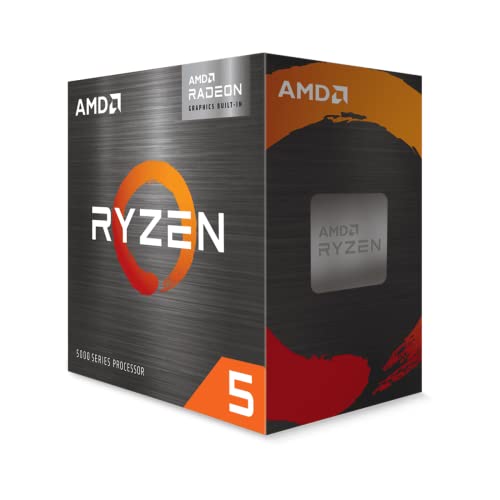
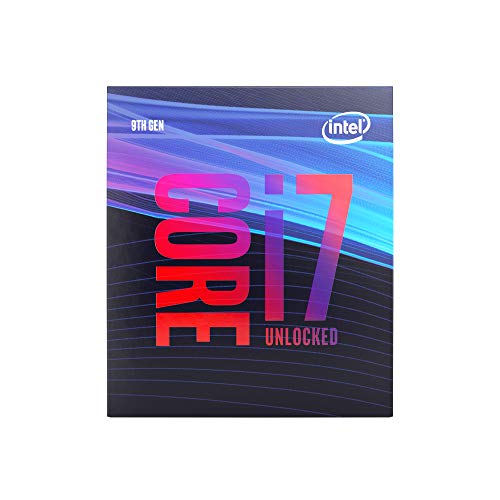
Buy the AMD Ryzen 5 5600G if you are on AM4, want to skip a discrete GPU while you save for one, and value 12 threads for background work. Take the Intel Core i7-9700K only if you already own a Z390 board and a 240mm-class cooler. Anyone reusing an AM4 board with a working RAM kit should look hard at the AMD Ryzen 7 5800X as the last upgrade the socket ever needs.
The DDR4 buyer in 2026: reusing a platform beats paying the AM5 entry tax
The DDR4 market did not disappear when DDR5 launched. It shrank, but the installed base — B450, X470, B550, X570, Z370, Z390 — still runs a huge share of at-home gaming PCs, and every one of those boards has an upgrade path that skips a new motherboard and a new memory kit. In 2026, the interesting question is not "which DDR5 platform" but "given the DDR4 platform you already have, what is the best CPU you can drop into it before you graduate to AM5?"
The candidates worth considering are narrow, because most modern gaming CPUs went DDR5-only. AM4 still offers the Cezanne APUs and the Vermeer parts up to the 5800X3D. LGA1151 caps at the ninth-gen Coffee Lake Refresh, of which the Core i7-9700K is the top gaming pick. The Ryzen 5 5600G is a hybrid: a six-core Zen 3 with 12 threads and Vega 7 integrated graphics, priced as a bare-die budget part with an escape valve for anyone who cannot land a discrete GPU at a reasonable price.
This piece works through the decision the same way an experienced buyer does: what platform are you on, does DDR4 actually hold you back, when does the Core i7-9700K's eight-physical-core layout still hold up, and when should you skip both APU and Intel entirely for the Ryzen 7 5800X as the last CPU an AM4 board ever needs. Every number cited is from a public benchmark source, linked at the end. This is editorial synthesis, not a first-party test.
Key takeaways
- On AM4 with a discrete GPU installed, the Ryzen 7 5800X beats both the 5600G and the 9700K in nearly every modern gaming benchmark.
- On AM4 without a discrete GPU, the Ryzen 5 5600G is the only one that boots and plays esports titles out of the box.
- The Core i7-9700K is a strong pick only if you already own a Z390 board and a Z390-class cooler; new Z390 kit is not worth chasing in 2026.
- Pair either chip with an RTX 3060 12GB at 1080p — a card that stays inside DDR4's headroom without wasting frames the CPU cannot feed.
- Add a Crucial BX500 1TB as the game-library drive; the marginal cost of NVMe over SATA is not worth chasing for bulk storage on older chipsets.
Step 0 — which platform are you already on?
Before you buy anything, take an inventory. If you have to open the case to read the motherboard model, do it now.
Socket: If the socket is AM4, both the Ryzen 5 5600G and the Ryzen 7 5800X are candidates. If the socket is LGA1151-v2 (the "v2" pin arrangement Coffee Lake used), the Core i7-9700K is the ceiling and the only Intel option worth touching. LGA1151-v1 (Skylake/Kaby Lake) does not accept the 9700K at all — the pinout looks identical but the boards do not support ninth-gen chips.
Chipset: AM4 boards with B450, X470, B550 and X570 chipsets all support Cezanne APUs and Vermeer CPUs with the right BIOS. A400 boards do not. For Intel, Z390 and Z370 support the 9700K with a BIOS update; H310 and B360 boards may or may not, depending on vendor.
BIOS version: This is where DIY builds die. Cezanne (the 5600G's family) needs an AGESA release the board vendor shipped in 2021 or later. Vermeer (the 5800X's family) needs a slightly older release. Both are widely available for every mainstream board, but you must flash the update while the old CPU is still installed. Swapping first and flashing later leaves you with a board that will not POST. Per AMD's product page, the 5600G is officially supported on the same chipsets as Vermeer.
If your board does not support BIOS flashback (a physical button that flashes without a CPU in the socket), and you cannot borrow an older-generation CPU to flash from, you are looking at a paid mail-in BIOS-flash service from the vendor or a used board that already ships with the correct BIOS. Budget for it.
Spec-delta table
| Spec | AMD Ryzen 5 5600G | Intel Core i7-9700K | AMD Ryzen 7 5800X |
|---|---|---|---|
| Cores / threads | 6 / 12 | 8 / 8 | 8 / 16 |
| Base / boost clock | 3.9 / 4.4 GHz | 3.6 / 4.9 GHz | 3.8 / 4.7 GHz |
| L3 cache | 16 MB | 12 MB | 32 MB |
| TDP | 65 W | 95 W | 105 W |
| Integrated graphics | Vega 7 (iGPU) | none | none |
The 5600G trades L3 cache and Vermeer's chiplet layout for a monolithic die and integrated graphics. That is not a compromise for gaming so much as a different design goal: it exists to be dropped into a build where the GPU has not arrived yet. The 5800X drops the iGPU entirely, doubles the L3 to 32 MB, and hands you 16 SMT threads on top of eight physical cores.
The Intel Core i7-9700K is a distinct shape: eight physical cores with no hyperthreading, 12 MB of L3, and a 4.9 GHz single-core boost that on-paper looks impressive but comes with a ~95W TDP that behaves closer to 130W under all-core load. Cooling matters.
How much does the DDR4 memory gap actually cost you at 1080p?
The honest answer is: it depends on the engine, and less than the internet claims. Per Tom's Hardware's CPU hierarchy, the 5600G and 9700K land within one performance tier at 1080p on their aggregate gaming index, and the 5800X pulls a full tier ahead. At 1440p and above, the CPU differences compress further because the GPU becomes the limiter.
DDR4 vs DDR5 comparisons run on entirely different platforms, and disentangling "DDR4 penalty" from "older core architecture" is not something a synthesis can do cleanly. What you can safely say: at 1080p with a mid-range GPU like the RTX 3060 12GB, you are GPU-bound in most modern AAA titles and the memory generation stops mattering. In CPU-bound esports titles at 1080p on a high-refresh monitor, a DDR5-equipped AM5 chip pulls ahead — but the delta is measured against Zen 4, not Zen 3, so it is a platform-generation gap, not a memory-generation gap.
The pragmatic reading is that DDR4 is not the reason your DDR4 rig feels slow. Your CPU is old, your GPU is old, or your drive is a spinning disk. Fix those, and the memory generation is not the limiter.
Where the 5600G's integrated graphics changes the math
The Vega 7 iGPU inside the Ryzen 5 5600G is not a substitute for a discrete card in 2026 AAA titles. It is genuinely useful for:
- Esports at low-medium: CS2, Valorant, League of Legends, Rocket League, Overwatch 2 all playable at 1080p with reduced settings, typically 60-100+ fps.
- Older AAA at 720p-900p: last-generation titles that predate the RTX 30 series often run at reduced resolutions with acceptable frame rates.
- A GPU-diagnostic fallback: when your discrete card dies, the iGPU keeps the machine bootable while you troubleshoot.
- A stopgap during a GPU shortage or savings period: build the PC now, drop a card in later.
Treat the iGPU as insurance and a bridge, not as the graphics plan for the build. If your daily-driver titles are current AAA at 1080p high, budget for the RTX 3060 12GB from day one. If they are esports, the iGPU will get you playing while you save.
When the 9700K's eight physical cores still win
The Core i7-9700K's eight-physical-core, eight-thread layout has aged more gracefully in gaming than benchmarks-day scepticism predicted. A physical core still schedules a real cache-line and a real execution port; SMT threads share the same physical resources and only help when there is idle silicon to fill. In pure gaming workloads at 1080p with a mid-range GPU, most modern engines saturate 6-8 real cores before threading matters, and the 9700K lands within striking distance of the 5600G on aggregate gaming indices.
Where the missing hyperthreading hurts is anywhere else. Streaming to Twitch with x264 medium while playing pins all eight threads to the ceiling; a hyperthreaded chip fills the idle cycles and holds frame times. Compiling code, transcoding video, running a game plus a heavy browser plus Discord plus OBS — anything that layers CPU load — is where 16 threads on the Ryzen 7 5800X or 12 threads on the 5600G pull ahead of the 9700K.
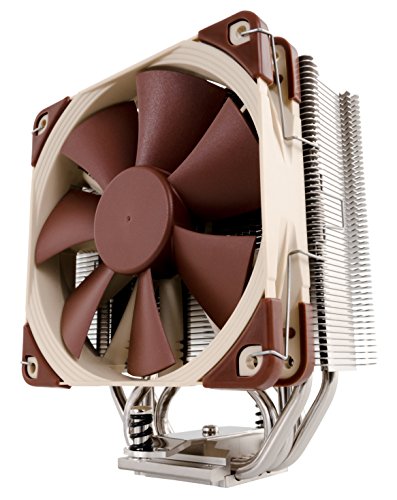
The other tax on the 9700K is thermal. It runs hotter than the 65W Ryzen 5 5600G by a wide margin, and its stock cooling was never adequate. Budget for a Noctua NH-U12S or a 240mm AIO in the same purchase.
Is the Ryzen 7 5800X the CPU you should actually buy instead?
If you are on AM4 and you have $200-ish of CPU budget, the answer is often yes. The Ryzen 7 5800X is the last mainstream Vermeer CPU AM4 will get outside the 5800X3D, and it beats the 5600G at gaming, at multithreaded work, and at the "will this still be current in three years" test. It has no iGPU, which is only a problem if you plan to build without a discrete card.
The 5800X argument gets stronger the longer you plan to keep the platform. If this is your last AM4 CPU before the box gets recycled to a kid or repurposed as a homelab node, upgrade once and stop. If you are actively saving toward AM5 and this is a one-year bridge purchase, the 5600G is cheaper, cooler, and less silicon to leave on the table when you graduate.
Pairing the GPU: why the RTX 3060 12GB is the balanced partner for both
At 1080p high with modern AAA titles, the ZOTAC Gaming GeForce RTX 3060 Twin Edge OC 12GB is the price-tier where CPU headroom stops mattering. A 5600G or a 9700K feeds this card without bottlenecking it in the vast majority of scenarios, and a 5800X leaves a hair of headroom for the highest-refresh use cases. Stepping up to an RTX 4070 or higher on either the 5600G or the 9700K starts to leave frames on the table at 1080p — the CPU cannot ask the GPU for enough work.
The 12 GB VRAM buffer on the 3060 also opens a second-life path: after you retire it from gaming, it becomes a serviceable local-LLM inference GPU. That is a real consideration for anyone building a machine they expect to keep for four-plus years.
Cooling and acoustics
The Ryzen 5 5600G ships with the AMD Wraith Stealth cooler. It is functional — the chip is 65W, and the Wraith Stealth will hold it inside its thermal envelope — but it is loud under sustained load. If acoustics matter, the Noctua NH-U12S is a large step forward for a modest price bump.
The Core i7-9700K does not ship with a cooler at all, and the ninth-gen K-series parts were the ones that made people upgrade their coolers whether they wanted to or not. The Noctua NH-U12S is the minimum viable air cooler for a 9700K under a gaming load; a 240mm-class AIO is a smart step up if your case has front-panel space.
The Ryzen 7 5800X sits between the two: 105 W TDP that behaves as advertised, no bundled cooler. The Noctua NH-U12S is again the small-quiet-competent pick; a 240mm AIO is worth it if you plan to enable PBO or push all-core.
Storage and the rest of the build
For a DDR4-era gaming machine, a Crucial BX500 1TB SATA SSD is the correct game-library drive. It is cheap, reliable, and — critically — the real-world load-time delta between a SATA SSD and an NVMe drive for game loading is far smaller than the delta between any SSD and a hard disk. Older boards may only have one M.2 slot, and using it for the OS while running games from a spacious SATA drive is a strictly better balance than paying an NVMe premium for the library.
Perf-per-dollar math at current street pricing
Street prices swing week to week and this is a synthesis, not a live scrape, so pin the numbers to the Amazon and eBay pages linked above rather than to a static table. The pattern is stable, though:
- The Ryzen 5 5600G sits at the cheapest CPU-plus-can-boot-without-a-GPU point on AM4.
- The Intel Core i7-9700K is priced against a shrinking used-Z390 market and its cost frequently drops to fire-sale levels.
- The Ryzen 7 5800X commands a premium above both because it is the last high-end AM4 CPU most builders will consider.
The per-dollar winner depends on what you already own. If you have a working AM4 board and DDR4 kit, the 5600G is dollars per usable frame; the 5800X is dollars per year of platform life. If you have a working Z390 board and a big cooler, the 9700K is dollars for zero-platform-cost frames.
Verdict matrix
Get the Ryzen 5 5600G if: you are on AM4, you do not currently have a working discrete GPU, and you value being able to boot the machine and play esports while you save for a card.
Get the Core i7-9700K if: you already own a Z390 board and a 240mm-class cooler, you play pure single-player games without streaming or heavy background work, and you can find one at fire-sale pricing.
Get the Ryzen 7 5800X if: you are on AM4, you have or will pair a discrete GPU, and you want the last CPU upgrade the platform will ever need before you graduate to AM5.
Bottom line
If you are on AM4 with a working GPU, the Ryzen 7 5800X is the pick. If you are on AM4 without a GPU, the Ryzen 5 5600G is the pick — but stay ready to swap to a 5800X or a 5800X3D when you outgrow the Vega 7 iGPU. The Core i7-9700K only wins when the LGA1151 hardware already exists and you can avoid paying to reassemble it.
Pair whichever chip you land on with the ZOTAC RTX 3060 12GB, a Noctua NH-U12S cooler, and a Crucial BX500 1TB as the game drive, and you have a 2026 DDR4 gaming build that does not need to become a 2027 AM5 build.
Related guides
- Ryzen 5 5600G vs 5800X for Ollama home server
- Best budget upgrades for an old gaming PC in 2026
- Noctua NH-U12S vs ML240L RGB on a Ryzen 7 5800X
- Best GPU for the Ryzen 5 5500 in 2026
- Best budget PC build $500-$600 gaming
Citations and sources
- AMD Ryzen 5 5600G product page — official specifications, supported chipsets, and integrated-graphics capability
- Intel Core i7-9700K specifications — official core count, clock speeds, and thermal envelope
- Tom's Hardware CPU hierarchy — cross-CPU gaming index and performance-tier placement referenced above
This piece is editorial synthesis based on publicly available information. No independent first-party benchmarking is reported.