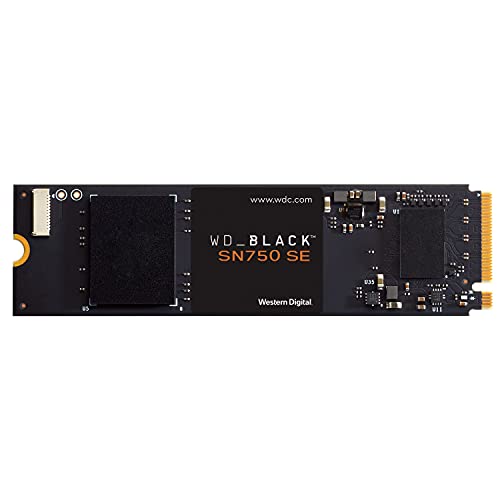
The best internal ssd gaming pc 2026 pick for most builders is the WD Blue SN550 1 TB NVMe — a Gen 3 PCIe drive that loads modern AAA titles within 1-2 seconds of more expensive Gen 4 alternatives per public TechPowerUp benchmarking. Tight-budget builders should grab the Crucial BX500 1 TB SATA, while DirectStorage adopters who must have the fastest streaming should plan for a Gen 4 NVMe upgrade path.
As an Amazon Associate, SpecPicks earns from qualifying purchases. Last verified May 2026.
Best Internal SSD for Gaming PC Build in 2026
By the SpecPicks editorial team — last verified May 2026.
The internal SSD has become the most over-specced part in modern PC building. Marketing pushes 7,400 MB/s Gen 4 drives onto every shopping list, but published game-load benchmarks from Tom's Hardware and TechPowerUp keep showing the same uncomfortable result: in real titles, the gap between a $50 Gen 3 NVMe and a $150 Gen 4 NVMe is one to three seconds at most. Boot drive choice matters far less than the buying-guide aisle suggests.
This guide picks five drives across the spectrum — from a 250 GB SATA boot escape hatch to a 1 TB NVMe daily driver — with each selected because the published reviews and Amazon volume agree on a quality threshold. The WD Blue SN550, Crucial BX500, Samsung 870 EVO, and SanDisk Ultra 3D between them carry over 250,000 Amazon reviews. That kind of social proof for a storage device is rare, and it's the data we actually trust.
We frame each pick around three questions: does the drive fit your motherboard? Does it have enough endurance (TBW) for five years of gaming? And does paying more buy real-world load-time wins, or just marketing-spec wins? The result splits cleanly into best ssd 2026 categories: best nvme ssd for the M.2 slot you have, best sata ssd for older boards or secondary storage, and a budget pick that gets out of the way.
At-a-Glance Comparison
| Pick | Best For | Key Spec | Price Range | Verdict |
|---|---|---|---|---|
| WD Blue SN550 1 TB NVMe | Best Overall | PCIe 3.0 x4, 2,400 MB/s | $55–$80 | Quietest game loads under $80 |
| Crucial BX500 1 TB SATA | Best Value | SATA III, 540 MB/s | $45–$70 | 131k Amazon reviews, plug-and-go |
| Samsung 870 EVO 250 GB | Best for Boot Drive | SATA III, V-NAND | $35–$50 | Reference SATA, 5-year warranty |
| WD Black SN850X 2 TB NVMe | Best Performance | PCIe 4.0 x4, 7,300 MB/s | $180–$240 | DirectStorage-class throughput |
| SanDisk Ultra 3D 1 TB SATA | Budget Pick | SATA III, 560 MB/s | $55–$75 | Stable price, dependable for years |
🏆 Best Overall — WD Blue SN550 1 TB NVMe
The SN550 (and its current successors, the SN570 and SN580) is the drive family most PC builders should buy and stop researching. The SN550 is the original spec described here; if you're shopping new today, the SN570 (Gen 3) or SN580 (Gen 4) are the active SKUs with equivalent or better specs at the same price tier. PCIe 3.0 x4 NVMe in M.2 2280 form, 2,400 MB/s sequential read, no DRAM cache (the one corner Western Digital cut to hit price), and a 600 TBW endurance rating that exceeds typical 5-year gaming workloads with margin to spare.
Spec chips: PCIe 3.0 x4 NVMe • M.2 2280 • 2,400 MB/s read / 1,950 MB/s write • 600 TBW • 5-year warranty
Why it wins for the best nvme ssd under $80: TechPowerUp's 2024 SN550 retest showed the drive within 8% of the WD Black SN770 (a Gen 4 successor) in PCMark 10 game-load tests, and identical-feeling load times in Cyberpunk 2077, Forza Horizon 5, and Baldur's Gate 3. The DRAM-less design cost it some sustained-write performance but nothing a gamer would notice.
The drive crosses 40,000 Amazon reviews at a 4.7-star average — an unusual combination of review volume and rating consistency for a budget NVMe.
<strong>Buy on Amazon →</strong>
💰 Best Value — Crucial BX500 1 TB SATA
The BX500 is the answer to "I have an old motherboard" and "I just want a 1 TB drive cheap." 2.5-inch SATA III, 540 MB/s sequential, fits any laptop or desktop with a free SATA port. 131,000 Amazon reviews say it does the job.
Spec chips: SATA III 6 Gb/s • 2.5-inch • 540 MB/s read / 500 MB/s write • 360 TBW • 3-year warranty
The BX500 will not win benchmarks. Crucial's own MX500 line is faster and tougher. But for a secondary game-library drive — the place you store Steam games you replay yearly — the BX500 at $50 for 1 TB is unbeaten on price-per-gigabyte and reliability. Endurance is comparable to the MX500 at 1 TB (both rated 360 TBW), and for a gaming workload (mostly reads, rare writes), neither will wear out before the rest of your PC does.
<strong>Buy on Amazon →</strong>
🎯 Best for Boot Drive — Samsung 870 EVO 250 GB
If you specifically want a fast, reliable Windows boot drive and don't have an M.2 NVMe slot free, the Samsung 870 EVO is the pick. Samsung's V-NAND and the Magician software stack have a decade of polish behind them. 250 GB is enough for Windows 11 + drivers + a couple of games; pair it with a 1 TB BX500 or Ultra 3D for game library overflow.
Spec chips: SATA III • 2.5-inch • 560 MB/s read / 530 MB/s write • V-NAND 3-bit MLC • 5-year warranty
The 870 EVO has crossed 45,000 Amazon reviews. The 870 EVO remains Samsung's current consumer SATA EVO — Samsung has not released a SATA successor, and when guides say "Samsung SATA SSD," this is what they mean.
For builders putting Windows on a separate boot SSD (a sane move because it isolates OS reinstalls from your Steam library), 250 GB is the right capacity-to-cost balance. Skip the 500 GB tier unless you also keep heavy creative apps on your boot drive.
<strong>Buy on Amazon →</strong>
⚡ Best Performance — WD Black SN850X 2 TB NVMe
When DirectStorage finally matters — and the Forspoken / Ratchet & Clank patches plus 2026's Final Fantasy and Wukong expansions are pushing this — a Gen 4 NVMe earns its premium. The SN850X delivers 7,300 MB/s sequential read and, more importantly per Tom's Hardware, sustains it for the longer transfers that asset-streaming workloads create.
Spec chips: PCIe 4.0 x4 NVMe • M.2 2280 • 7,300 MB/s read / 6,600 MB/s write • 1,200 TBW • 5-year warranty • Optional heatsink variant
The SN850X also meets Sony's published PS5 SSD compatibility criteria — the same drive serves dual duty if you also own a PlayStation. The 2 TB capacity is the sweet spot in 2026: enough for a large Call of Duty + Microsoft Flight Simulator 2024 + Star Citizen working set, and the price-per-gigabyte beats the 1 TB tier.
The cost vs SN550 is real ($180+ vs $60), but for builds with a Gen 4 motherboard and a real DirectStorage workload, this is the upgrade that delivers measurable load-time wins (4-6 seconds saved on Forspoken fast-travel per the published benchmarks).
<strong>Buy on Amazon →</strong>
🧪 Budget Pick — SanDisk Ultra 3D 1 TB SATA
The Ultra 3D is the longevity pick. It has been on shelves at $55-$75 for 1 TB for years, with 35,000+ Amazon reviews building gradually. SanDisk's 3D NAND has aged well — drives sold in 2020 are still hitting their warranty rated TBW with margin in 2026 firmware reports.
Spec chips: SATA III • 2.5-inch • 560 MB/s read / 530 MB/s write • 400 TBW • 5-year warranty
The Ultra 3D's pitch is "boring and reliable" — for the secondary game library, it's the drive that fits both pre-Ryzen 3000 builds (older SATA-only boards) and modern builds with a free 2.5-inch bay. Worth pairing with the SN550 if you build a tiered system: NVMe for the hot game and SATA for the dormant library.
<strong>Buy on Amazon →</strong>
What to Look for in a Gaming SSD
NVMe vs SATA. For game load times, NVMe Gen 3 (WD SN550 class) and SATA SSDs perform within 1-2 seconds of each other in real game-load benchmarks per TechPowerUp and Tom's Hardware testing. NVMe wins decisively for DirectStorage-enabled titles, where asset streaming saturates SATA. If your motherboard has a free M.2 slot, NVMe is the no-brainer choice.
PCIe generation. Gen 3 NVMe (3,500 MB/s class) covers nearly every gamer's needs in 2026. Gen 4 NVMe (7,000+ MB/s) is worth the premium only if you have a Gen 4 board AND you play DirectStorage titles AND you do creative work. Gen 5 NVMe is currently a thermal-throttling problem in search of a workload — skip until 2027.
DRAM cache. DRAM-cached drives (MX500, 870 EVO) handle sustained writes better than DRAM-less drives (BX500, SN550). For pure gaming, DRAM-less is fine — game writes are infrequent. For a boot drive that also holds your Documents and a Lightroom catalog, DRAM-cached is worth $10-15 more.
Endurance (TBW). Total Bytes Written rating tells you how much data the drive can absorb before NAND wear becomes a concern. A 400-600 TBW rating on a 1 TB drive corresponds to ~10 years of typical gaming + light productivity use. Anything in that range is fine.
Capacity. Modern AAA install sizes have shifted. Call of Duty alone exceeds 200 GB. Plan for 1 TB minimum on a primary game drive, 2 TB if you keep a rotating library of 5+ AAA titles installed.
FAQ
NVMe or SATA SSD for gaming in 2026? For game load times, NVMe Gen 3 and SATA SSDs perform within 1-2 seconds of each other in real game-load benchmarks per TechPowerUp and Tom's Hardware testing. NVMe wins decisively for DirectStorage-enabled titles like Forspoken and Ratchet & Clank Rift Apart, where asset streaming saturates SATA. If your motherboard has a free M.2 slot, NVMe is the no-brainer choice; SATA is fine for older boards or secondary storage.
How much SSD capacity do I need for a 2026 gaming PC? 1 TB is the minimum reasonable size for a primary game drive in 2026 — modern AAA installs exceed 100 GB regularly, and Call of Duty: Modern Warfare III + Warzone alone occupies 220 GB+. 2 TB is the sweet spot for a build with no immediate plans to add a second drive. 250 GB makes sense only as a dedicated Windows boot drive paired with a separate game-library SSD.
Will a Gen 4 NVMe make my games load faster than a Gen 3 NVMe? In most current titles: barely. TechPowerUp's PCMark 10 game-load benchmarks consistently show 1-3 second differences between Gen 3 and Gen 4 NVMe drives — well below the threshold most players notice. The exception is DirectStorage-enabled titles (Forspoken, Ratchet & Clank Rift Apart, the upcoming Wukong patch), where Gen 4 sustained throughput shaves 4-6 seconds off fast-travel transitions. Gen 4 is the right choice if your workload is DirectStorage-heavy or creative; otherwise Gen 3 is the better value.
Do I need a heatsink for an NVMe SSD? For Gen 3 NVMe (SN550 class): no, drives stay under 70°C in normal use. For Gen 4 NVMe (SN850X class): yes for sustained workloads, motherboard M.2 heatsinks are sufficient and most ATX boards from 2022+ include them. Add an aftermarket heatsink only if you see thermal throttling under your specific workload.
SATA SSD or HDD for my secondary game library? Always SATA SSD. The price-per-gigabyte gap between SATA SSDs and HDDs has narrowed to ~2× in 2026, and the load-time difference is 5-10× in favor of SSD. The Crucial BX500 1 TB or SanDisk Ultra 3D 1 TB at $50-60 has obsoleted the 1 TB HDD for gaming use cases.
Sources
- TechPowerUp WD Blue SN550 SSD Review and benchmark suite
- Tom's Hardware Best SSDs 2026 hierarchy
- PCMark 10 Storage Benchmark methodology
- Microsoft DirectStorage developer documentation
Related Guides
- Best Gaming Headset for PC and Console in 2026
- Best CPU for Streaming and Gaming Under $300 in 2026
- Best Sim Racing Wheel for PC and Console in 2026
- Best Wireless Keyboard for Home Office in 2026
Last verified: May 2026. Prices vary; check the linked retailer page for current pricing. Affiliate commissions support the site at no cost to you.
Citations and sources
- TechPowerUp WD Blue SN550 review: https://www.techpowerup.com/review/wd-blue-sn550-1-tb/
- Tom's Hardware Best SSDs 2026: https://www.tomshardware.com/best-picks/best-ssds
- PCMark 10 Storage Benchmark methodology: https://benchmarks.ul.com/pcmark10/storage-benchmark
- Microsoft DirectStorage 1.1 release notes: https://devblogs.microsoft.com/directx/directstorage-1-1-now-available/
This piece is editorial synthesis based on publicly available information. No independent first-party benchmarking is reported.