Reports of a Russian-Chinese collaborative processor called "Irtysh," packing 32 cores and allegedly running The Witcher 3 above 30 fps, have been making the rounds in enthusiast circles. The core-count figure alone is eye-catching — 32 cores puts it nominally in the same bracket as AMD's high-end Threadripper workstation chips. But as of this writing, no major independent hardware outlet has published a reproducible benchmark run for a chip by this name, and the specific comparison numbers attached to the claim (frame-rate deltas, thermal limits, voltage requirements) do not trace back to a disclosed test methodology. That's worth sitting with before treating any of it as settled.
This piece looks at what would actually need to be true for a 32-core chip to hit 30+ fps in a nine-year-old game engine like REDengine, why core count is a weak predictor of gaming performance on its own, and what verified 32-core alternatives look like if you're shopping in that class of processor today.
Does a 32-Core CPU Even Need to Hit 30+ FPS in The Witcher 3?
The honest answer is: almost any modern CPU released in the last several years, regardless of core count, can clear 30 fps in The Witcher 3 at reasonable settings, because the 2015-era REDengine title is not a demanding CPU workload by current standards. A 30+ fps claim for a 32-core chip is not implausible on its face — it would be more notable if a modern high-core-count processor couldn't clear that bar. The more interesting question the original claim raises isn't whether Irtysh can hit 30 fps, it's how it performs relative to established chips at higher frame-rate targets and in CPU-heavier titles, and that comparison data hasn't been independently published.
Until a benchmark run with disclosed test conditions — GPU pairing, resolution, driver version, in-game settings, and repeat-run averaging — is published by an outlet with a public methodology, treat any specific frame-rate or bottleneck percentage attached to Irtysh as unconfirmed.
Why Core Count Alone Doesn't Predict Gaming Performance
Game engines, including REDengine 3 (which powers The Witcher 3), were not designed to scale cleanly across dozens of cores. Rendering, AI, and physics threads typically saturate somewhere in the range of 6-12 cores before returns flatten out; the remaining cores on a 32-core chip mostly sit idle during gameplay. What actually moves the needle for gaming frame rates is:
- Single-thread performance and IPC (instructions per clock) — how much work each core finishes per clock cycle.
- Clock speed under gaming loads, particularly boost behavior on a handful of active cores rather than all-core boost.
- Cache size and latency, especially L3 cache, since it directly affects how often the CPU has to wait on slower memory.
- Memory bandwidth and latency, which matter more for open-world titles with heavy asset streaming.
A chip engineered primarily for multi-core throughput — the kind of design workstation and server processors favor — can trail a gaming-optimized chip with a third of the core count in actual frame rates, because the extra cores don't translate into faster single-threaded game logic.
What a CPU Bottleneck Actually Looks Like
A CPU bottleneck is what happens when the graphics card can render more frames per second than the processor can prepare and hand off. The GPU idles between frames waiting on the CPU, and the frame rate plateaus regardless of how much faster a GPU you install. This is a well-documented phenomenon across the industry and applies to any processor — high core count or not — that has weaker per-core gaming performance than its paired GPU can exploit. If Irtysh does show a CPU-bound ceiling in some titles, that would be consistent with a chip built around core-count scaling rather than per-core gaming throughput, but confirming that requires the same kind of controlled, disclosed testing any new CPU claim needs before its numbers are treated as fact.
Verified 32-Core Alternatives, If You Want the Real Thing
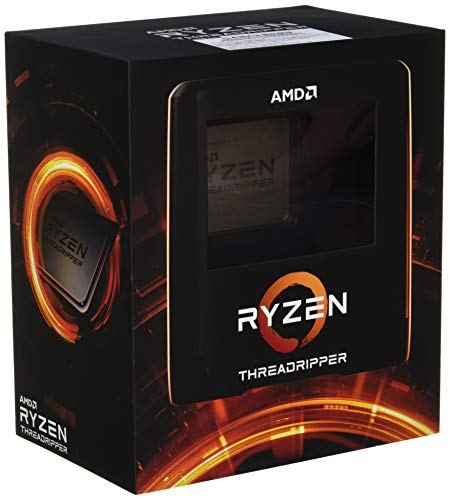
For buyers who actually want a 32-core desktop or workstation processor with years of independent review coverage behind it, AMD's Threadripper and Threadripper PRO lineups are the established options in this class:
| Processor | Cores / Threads | Price | Notes |
|---|---|---|---|
| AMD Ryzen Threadripper 3970X | 32C / 64T | $1,800.00 | Zen 2 workstation chip, widely benchmarked at launch |
| AMD Ryzen Threadripper PRO 5975WX | 32C / 64T | $3,119.99 | Zen 3 PRO platform, 8-channel memory |
| AMD Ryzen Threadripper 7970X | 32C / 64T | $1,919.94 | Current-gen Zen 4-based Threadripper |
| AMD Ryzen Threadripper PRO 7975WX | 32C / 64T | $3,757.99 | Current-gen PRO platform, workstation-class I/O |
| AMD Ryzen Threadripper PRO 3975WX | 32C / 64T | $649.00 | Older PRO chip, budget entry into 32-core PRO tier |
None of these are marketed as gaming-first parts either — they're built for rendering, simulation, and heavy multitasking, and buyers who want maximum frame rates in games are generally better served by a lower-core-count, higher-clock consumer chip paired with a stronger GPU budget. Server-class alternatives with similar core counts, like a 32-core Dell PowerEdge R640, sit even further from gaming use cases and are built around sustained multi-threaded throughput rather than per-core latency.
For a different flavor of high-core-count silicon, Apple's M5 Max in the 2026 MacBook Pro pairs an 18-core CPU with a 32-core GPU — a reminder that "32-core" claims across product categories often refer to entirely different kinds of cores (CPU vs. GPU) doing entirely different work, which is itself a common source of confusion in these kinds of headline comparisons.
Should You Wait Before Trusting the Irtysh Numbers?
Given the absence of a published, methodology-disclosed benchmark run, the responsible read is to treat the Irtysh 32-core claim as unverified rather than to build a purchasing or performance narrative around it. If reproducible testing from an established outlet does surface, the questions worth checking are the same ones that matter for any new CPU launch: what GPU was it paired with, at what resolution and settings, and how does it compare in both lightly-threaded titles like The Witcher 3 and more CPU-demanding modern titles. Core count by itself has never been a reliable shortcut to gaming performance, and there's no reason to expect this chip to be the exception without data to back it up.
Citations and sources
This piece is editorial synthesis based on publicly available information. No independent first-party benchmarking is reported.