Microsoft's guidance for what counts as a comfortable Windows 11 gaming configuration has quietly shifted. Where 16GB of RAM was long treated as the practical sweet spot, 32GB is increasingly framed — across OS guidance, builder forums, and outlet coverage — as the "no worries" configuration, with 16GB downgraded to merely a starting point. The shift is landing in the middle of what community shorthand has started calling RAMageddon: a period of rising DDR5 pricing driven by competition from AI and datacenter memory demand.
None of this means Windows 11 suddenly refuses to boot on 16GB — Microsoft's official minimum system requirements are still listed at 4GB RAM. What's changed is the gap between the bare install minimum and what actually feels smooth for gaming plus everyday multitasking on a modern build.
Why 32GB Is Becoming the New Baseline for Gaming PCs
A few converging pressures explain the shift:
- Windows 11's own footprint has grown. Background services, search indexing, and OS-level AI features consume more idle memory than earlier Windows versions did, leaving less headroom for the game itself on a 16GB system.
- Modern game engines lean harder on system RAM. Unreal Engine 5 titles and other current-gen engines built around fast asset streaming and DirectStorage assume more available memory for texture and level-data buffering, not just more VRAM.
- Multitasking is the default, not the exception. Discord, a browser with a dozen tabs, and a capture or streaming tool running alongside a game are now typical, and each adds several gigabytes of overhead before the game even loads.
Taken together, outlets covering the space — including Tom's Hardware and The Verge — have described 32GB as the configuration that removes memory as a variable, while 16GB is framed as adequate rather than ideal.
The RAMageddon Backdrop: Why DDR5 Prices Are Climbing
The timing matters. DDR5 module pricing has trended upward through 2025 into 2026 as AI accelerator and datacenter memory demand competes with consumer PC supply for the same fabrication capacity — a dynamic PC Gamer and other outlets have flagged repeatedly. That's pushed builders toward locking in 32GB kits sooner rather than waiting for prices to soften, since buying a second kit later risks mismatched timings and reduced stability versus a single matched kit purchased up front. Popular matched 32GB DDR5 6000MHz kits in this window include the CORSAIR Vengeance 32GB (2x16GB) DDR5-6000 CL30 EXPO/XMP kit and the value-oriented Crucial Pro 32GB (2x16GB) DDR5-6000 CL36 kit, both sized for the AM5 and current Intel platforms that current-gen game engines target.
For a concrete snapshot of where kit pricing landed during a recent promotional window, see 32GB of DDR5 Drops to $240 in New Newegg Build Bundles — a useful reference point for what a 32GB kit costs when retailers do discount it.
16GB vs 32GB: What the Guidance Actually Means
The practical difference isn't usually raw average FPS — it's consistency. Running short on system memory tends to show up as stutter, frame-time spikes, and background swapping rather than a lower benchmark number.
| Scenario | 16GB | 32GB |
|---|---|---|
| 1080p esports titles (CS2, Valorant, Overwatch 2) | Comfortable | No meaningful benefit |
| 1440p current-gen AAA, single-tasking | Workable | Smoother under memory-heavy scenes |
| 4K with ray tracing / upscaling enabled | Can hit ceiling | Recommended headroom |
| Gaming + streaming/Discord/browser simultaneously | Tight | Comfortable |
| Modding-heavy titles (large texture packs) | Can hit ceiling | Recommended |
A deeper, benchmark-anchored breakdown of this exact comparison lives in 16GB vs 32GB RAM for Windows 11 Gaming in 2026, which is worth reading alongside this piece if the decision is time-sensitive.
When 16GB Still Makes Sense
16GB isn't obsolete. It remains a defensible choice for:
- Esports-focused builds. Titles like Counter-Strike 2 or Valorant are light on system memory regardless of resolution. For a defensible entry-level DDR4 pairing on an older AM4 or LGA1200 board, the TEAMGROUP T-Force Vulcan Z 16GB (2x8GB) DDR4-3200 kit is a common budget baseline.
- Budget-constrained builds. Skipping the second RAM kit frees up budget for the GPU, which usually moves the needle more on actual frame rates. Best $1000 Prime Day Gaming PC: RTX 5060 Ti + 32GB RAM shows how a build spec balances that trade-off at a fixed price point.
- Single-task gaming setups. A PC that's used to game and little else has far less background pressure than one also running a browser, chat client, and capture software.
The honest framing from Microsoft's guidance and outlet coverage alike is that 16GB is a practical starting point, not a dead end — 32GB is the upgrade that removes memory as something to think about at all.
Future-Proofing: What Changes Through 2027
Looking ahead, a few trends point toward memory requirements continuing to climb rather than plateau:
- Game engines built around DirectStorage and large open-world streaming are being tuned with 32GB as a working assumption, not an edge case.
- OS-level AI features — the kind Microsoft has been layering into Windows through Copilot integrations — add persistent background memory usage that wasn't part of the picture a few years ago. For context on how that AI layer is evolving, see Microsoft's Copilot Super App vs a Local RTX 3060 Ollama Box in 2026 and Microsoft's Copilot Goes Agentic — Run Your Own Agent Locally on an RTX 3060.
- Microsoft's broader infrastructure bets — including its multi-billion-dollar AI infrastructure deal with Mistral in Europe and reported shift in AI hardware partnerships — signal a company investing heavily in AI features baked into its OS and services, which historically has translated into higher baseline resource expectations on the client side over time.
None of this guarantees 32GB will be mandatory by 2027, but it does mean the direction of travel — more OS overhead, more AI-adjacent background processes, more memory-hungry engines — points the same way it has for the last several console generations: today's recommended spec becomes tomorrow's minimum.
Typical Cost Delta: 16GB vs 32GB Kits
| Kit | Typical role | Notes |
|---|---|---|
| 16GB (2x8GB) DDR5 | Budget / esports build | Cheapest entry point, adequate for lighter workloads |
| 32GB (2x16GB) DDR5 | Recommended baseline | Matched dual-channel kit avoids stability issues from mixing kits later — see the CORSAIR Vengeance DDR5-6000 CL30 kit or the Crucial Pro DDR5-6000 CL36 kit |
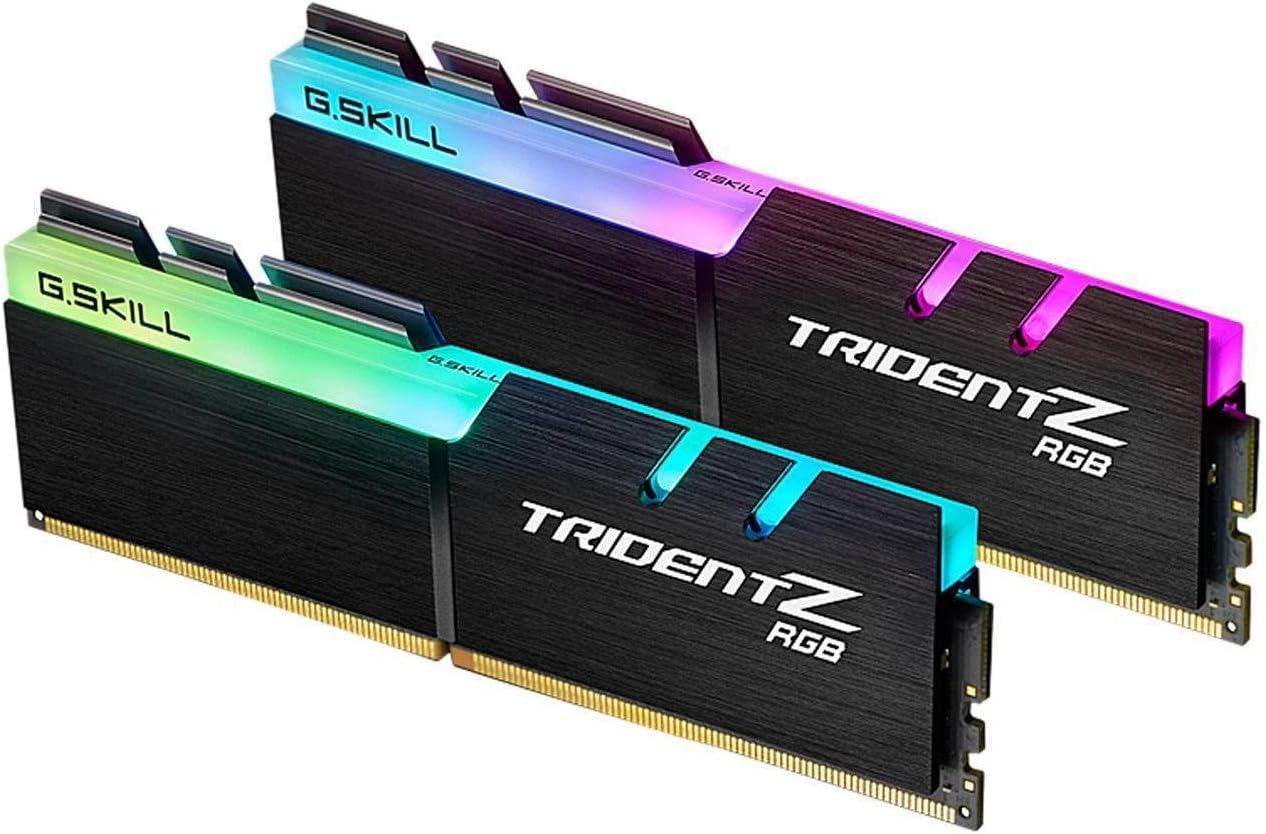
| 32GB (2x16GB) DDR4 | AM4 / older Intel upgrade | For builders on DDR4 platforms, matched 32GB kits like the G.SKILL Trident Z RGB DDR4-3200 or CORSAIR Vengeance LPX DDR4-3200 hit the same headroom target without switching platforms |
Buying the 32GB kit outright, when budget allows, sidesteps the risk of adding a second 16GB kit down the line that doesn't match timings with the first — a common source of instability in mixed-kit builds.
The Bottom Line
32GB has moved from "enthusiast overkill" to "recommended baseline" for gaming PCs, driven by Windows 11's growing footprint, memory-hungry current-gen engines, and the reality that most gaming sessions now happen alongside streaming, chat, and browser tabs. 16GB hasn't disappeared — it's simply been repositioned as a practical starting point rather than the safe default, right as DDR5 pricing makes the jump to 32GB a less trivial decision than it used to be.
Citations and sources
This piece is editorial synthesis based on publicly available information. No independent first-party benchmarking is reported.


