Training a generative kick drum model on a Linux desktop with just 6GB of VRAM is realistic — but only if the workload is scoped correctly and the memory budget is respected at every stage. Kick drums are short, low-bandwidth, single-class audio events, which puts them well within reach of consumer GPUs that would choke on a full multi-instrument or speech synthesis model. This guide walks through the environment setup, memory-saving techniques, AMD-specific tuning, and evaluation workflow needed to make it work.
Why Train Kick Drum Models on Budget Linux Desktops?
The appeal of a narrow generative task like kick drum synthesis is that the problem is small on every axis that matters for VRAM: short clip lengths (typically under a second), single-channel audio, and a constrained timbral space compared to full-mix or speech models. Research such as IRCAM and Sony CSL's DrumGAN work demonstrates that timbre-conditioned drum synthesis can be handled by comparatively lightweight generative architectures relative to general-purpose audio models (arxiv.org/abs/2008.12073).
Linux is the practical choice for AMD hardware specifically because ROCm — AMD's compute stack — has its primary, best-supported release target on Linux distributions, per AMD's own installation documentation (rocm.docs.amd.com). Windows support for ROCm has historically lagged, so a Linux desktop repurposed as a training box sidesteps driver friction that would otherwise eat into an already tight VRAM budget.
If your box also has an NVIDIA card in the 6-8GB range, the fundamentals below (mixed precision, gradient accumulation, batch tuning) carry over almost unchanged — swap ROCm for a standard CUDA/PyTorch install. For a broader look at what different GPU tiers can and can't do for generative audio and language workloads, see SpecPicks' GPU VRAM guide to running a 5GB TTS model locally and the 2026 hardware guide for training an LLM from scratch.
Setting Up Your Linux AI Training Environment
The environment stack has three layers: the ROCm driver/runtime, PyTorch built against ROCm, and swap configuration to give the OS a safety net when VRAM is exhausted.
1. Install ROCm. Follow AMD's official Linux install guide for your distribution (rocm.docs.amd.com) rather than a third-party script — the guide is versioned per ROCm release and per supported GPU, and using an unsupported combination is the single most common cause of silent training failures on AMD hardware.
2. Install a ROCm-enabled PyTorch build. PyTorch publishes ROCm wheels directly; select the ROCm variant (not the default CUDA build) from the official install matrix at pytorch.org/get-started/locally. Confirm the GPU is visible with a quick torch.cuda.is_available() check — on ROCm builds this still reports through the CUDA-compatible API layer.
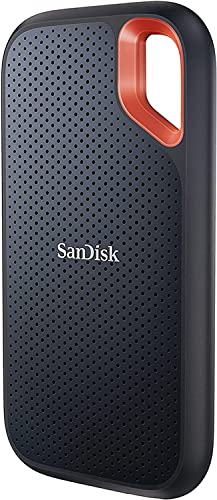
3. Configure swap. A 6GB card has no memory to spare for OS-level surprises. Setting aside 16-32GB of swap on a fast SSD gives the system a controlled fallback instead of an out-of-memory crash mid-epoch if a batch briefly spikes. This won't accelerate training — swap is orders of magnitude slower than VRAM — but it converts a hard crash into a survivable slowdown while you tune batch size down. A dedicated SSD for swap plus dataset storage (rather than sharing spindle bandwidth with your OS drive) keeps I/O stalls from compounding training slowdowns; a 1TB external drive like the SanDisk Extreme Portable SSD is a reasonable capacity for a kick-drum-scale dataset (tens of thousands of one-shot samples) plus checkpoint storage, and a 2TB unit (SanDisk 2TB Extreme) gives more headroom if you're iterating on multiple dataset versions or model checkpoints simultaneously.
4. Use memory-efficient attention where applicable. If your architecture includes attention layers, PyTorch's scaled_dot_product_attention and related fused kernels reduce peak activation memory relative to naive implementations — check the PyTorch documentation for current backend support on your ROCm version before assuming a given fused kernel is available (pytorch.org/docs/stable/amp.html covers the related mixed-precision APIs).
Optimizing Training for 6GB VRAM Systems
This is where most of the real engineering happens. Three techniques do the bulk of the work:
| Technique | What it does | Trade-off |
|---|---|---|
| Gradient accumulation | Simulates a larger effective batch size across several small forward/backward passes before one optimizer step | Slower wall-clock time per effective batch |
| Mixed-precision training (fp16/bf16) | Stores activations and gradients in half precision, roughly halving memory for those tensors | Requires loss scaling to avoid underflow; supported natively via torch.cuda.amp |
| Weight pruning during training | Removes low-magnitude weights on a schedule, shrinking the effective model | Can degrade output quality if pruned too aggressively or too early |
Mixed-precision training is well-established in the literature — the original technique is described in Micikevicius et al.'s "Mixed Precision Training" (arxiv.org/abs/1710.03740), and PyTorch's torch.cuda.amp module (documented at pytorch.org/docs/stable/amp.html) implements automatic loss scaling so you don't have to hand-tune it. On a 6GB card, enabling AMP is usually the single highest-leverage change available, since it directly cuts the memory footprint of the two largest consumers: activations and gradients.
Effective batch sizes in the 32-64 range (achieved via accumulation, not a single large batch) are a commonly cited starting point for small generative audio models — but the right number for your specific architecture and clip length has to be found empirically by watching for out-of-memory errors and backing off. Start small (4-8 real batch size) and accumulate up to your target effective batch size rather than guessing at the real batch size directly.
Pruning is the least essential of the three for a first working model — it's worth exploring once you have a stable training loop, not before. Introducing it too early makes it hard to tell whether a training instability is coming from pruning, precision, or the data pipeline.
For a look at how these same memory-saving techniques scale up when VRAM is not the constraint, SpecPicks' dual RTX 3090 LLM training benchmarks and RTX 5090 AI performance guide cover the high-VRAM end of the same trade-off space.
AMD GPU-Specific Performance Tweaks
On RDNA2/RDNA3 desktop cards (the RX 6000 series and newer, per AMD's ROCm hardware support list), a few platform-specific settings matter beyond the generic PyTorch tuning above:
- Power profile stability. Sustained training loads behave differently than gaming's bursty load pattern. Setting a stable, sustained power/clock profile through AMD's Radeon Software (Wattman) tooling — rather than leaving the card on a default gaming profile — reduces the odds of a clock-induced instability mid-epoch.
- Thermal monitoring. Training runs for hours at sustained load, unlike most gaming sessions. Watch temperatures through Wattman or
rocm-smiduring your first few runs to confirm the card is stabilizing rather than thermal-throttling unpredictably, which can silently slow or destabilize long training runs. - Confirm official support before troubleshooting. If you're on an older RX 5000-series (RDNA1) card, double-check AMD's current ROCm support matrix before spending hours debugging what may simply be an unsupported configuration (rocm.docs.amd.com).
Readers comparing whether an AMD or NVIDIA card makes more sense for a small home AI rig may also want SpecPicks' dual RTX 3090 vs RTX 5090 gaming-vs-AI-training comparison, which covers the same VRAM-vs-throughput trade-offs from the NVIDIA side.
Training Workflow and Model Evaluation
A practical end-to-end workflow looks like this:
- Source data. Freesound.org (freesound.org) hosts a large, license-filterable library of one-shot drum samples; filtering to Creative Commons / public-domain kick drum samples is a reasonable starting point for a dataset in the low tens of thousands of clips. Check each sample's specific license before using a trained model commercially.
- Preprocess. Normalize sample rate, trim silence, and standardize clip length before training — inconsistent input lengths are a common source of wasted VRAM from unnecessary padding.
- Train with monitoring. Log loss curves and periodically render sample outputs to spectrograms rather than relying on loss value alone — loss is a weak proxy for perceptual audio quality in generative audio work.
- Evaluate with spectrogram comparison. Comparing generated-sample spectrograms against real kick drum spectrograms (visually or via a similarity metric) gives a more honest read on model quality than the training loss curve. GANSynth (arxiv.org/abs/1902.08710) is a useful reference for how spectrogram-domain evaluation is approached in adversarial audio synthesis research, even though it targets pitched instrument synthesis rather than drums specifically.
- Export for inference. Once you have a checkpoint you're satisfied with, exporting to ONNX (onnx.ai) decouples the trained model from your PyTorch/ROCm environment, making it easier to run inference in a lighter-weight runtime or a different environment than the one used for training.
Throughout this process, checkpoint sizes and intermediate dataset versions add up quickly — a dedicated external SSD such as the SanDisk 2TB Extreme Portable SSD or the 1TB variant keeps that churn off your primary drive and off the same storage path as your OS swap, which matters if swap is being used actively during training.
For readers building out a more general home AI rig beyond this single-purpose project, SpecPicks' broader guides on AI rigging 3D model hardware and training an LLM in Swift with matrix-multiplication speed benchmarks cover adjacent hardware-selection questions, and the Qwen 3.6 model update tracker is a useful bookmark if you're also experimenting with small local language models on the same box.
Citations and sources
- https://rocm.docs.amd.com/projects/install-on-linux/en/latest/
- https://pytorch.org/get-started/locally/
- https://pytorch.org/docs/stable/amp.html
- https://arxiv.org/abs/1710.03740
- https://arxiv.org/abs/2008.12073
- https://arxiv.org/abs/1902.08710
- https://freesound.org/
- https://onnx.ai/
This piece is editorial synthesis based on publicly available information. No independent first-party benchmarking is reported.