Running Windows XP on the Steam Deck sits at one of the stranger crossroads in PC gaming: a 2001 operating system on a 2022 handheld that ships with Linux. The appeal is real — decades of XP-era classics, from Age of Empires II to early DirectX 9 gems, on a pocket-sized device with a 7-inch display. The hardware reality is more complicated. This guide synthesizes the methods, driver limitations, and storage considerations documented by the Steam Deck modding community, drawing on reports from r/SteamDeck, r/windowsondecks, the VOGONS forums, and GamingOnLinux.
Why Windows XP on Steam Deck Is Non-Trivial
Windows XP predates UEFI firmware. The Steam Deck uses a UEFI bootloader. More critically, XP's driver model predates AMD's RDNA 2 graphics architecture by nearly two decades — AMD has never released a Windows XP driver for the Van Gogh APU inside the Steam Deck. Per community documentation on r/SteamDeck and r/windowsondecks, any native XP installation defaults to Microsoft's Basic Display Adapter at capped resolutions, with no hardware GPU acceleration whatsoever.
Three approaches have been successfully demonstrated by the community:
- Virtual machine (QEMU/KVM within SteamOS) — the most stable path; XP runs in a sandboxed environment with a virtualized GPU via VirtIO drivers.
- PC emulation (PCem or 86Box) — emulates period-correct vintage hardware at the instruction level; highest XP compatibility, runs natively on SteamOS Linux.
- Bare-metal dual boot — technically possible via rEFInd; practical use is severely limited by missing GPU, audio, and network drivers.
Method 1: Virtual Machine via QEMU/KVM
The most accessible community-documented path is running Windows XP inside a QEMU virtual machine under SteamOS's Desktop Mode. Reports on GamingOnLinux and the Steam Deck subreddit confirm that XP SP3 runs under QEMU with VirtIO display drivers, which provide a virtualized GPU visible to the guest OS — solving the display driver problem entirely.
Prerequisites:
- A legally licensed Windows XP SP3 ISO and product key
- QEMU and Virt-Manager installed via SteamOS's Pacman package manager (requires temporarily disabling the read-only filesystem)
- Allocated storage for the VM disk image — XP itself installs in under 2 GB, but a useful retro game library needs 10–30 GB minimum
Because the Steam Deck's base 64 GB eMMC is shared between SteamOS, a swap partition, and the VM image, community members frequently route the virtual disk to external USB storage. The WD 2TB Elements Portable ($139.00, USB 3.2 Gen 1) is well-suited: bus-powered, no separate power brick, and fast enough for VM disk I/O under the QEMU USB passthrough stack that hands full Gen 1 bandwidth to the host kernel.
In this configuration, XP-era single-threaded titles run comfortably above their original design envelope. The Steam Deck's Zen 2 cores — even with 4 vCPUs allocated to the guest — represent a massive speed advantage over period hardware. Audio works via QEMU's VirtIO sound backend. Networking functions through bridged or NAT mode. The VirtIO display driver supports resolutions up to and including the Steam Deck's native 1280×800.
Method 2: PCem and 86Box Emulation
For users who want period-accurate behavior rather than just "XP running somewhere," PCem and 86Box emulate specific vintage PC hardware configurations at the instruction level. A typical setup emulates a Pentium III 1 GHz system with a period-correct GPU such as the S3 Trio or Voodoo Banshee.
Both emulators have native Linux builds and run directly under SteamOS, entirely bypassing driver compatibility issues — because the emulated hardware is decades old and well-understood. Per community benchmark reports on VOGONS, a modern host CPU, even low-power mobile silicon like the Steam Deck's Van Gogh APU, can emulate a P3/1 GHz system faster than real time for the majority of XP-era titles.
86Box in particular documents support for a wide range of vintage soundcards (Sound Blaster 16, AWE64, Gravis Ultrasound), network adapters, and storage controllers, making it the community-preferred path for full XP software compatibility without bare-metal driver challenges.
Disk images for PCem/86Box and the ROM files required to boot them can be stored on external USB drives. The WD 4TB Elements Portable ($189.99) provides enough room for multiple vintage OS installations, ISO libraries, and ROM collections without touching the Steam Deck's internal storage.
Method 3: Bare-Metal Dual Boot (Advanced)
Dual-booting Windows XP natively alongside SteamOS is documented on r/SteamDeck and r/windowsondecks but comes with significant real-world limitations. The documented process:
- Resize the SteamOS partition via GParted in Desktop Mode
- Install rEFInd as a boot manager (XP's NTLDR is not UEFI-native without CSM)
- Install XP SP3 into the new partition via USB flash drive or USB optical drive
- Enable CSM (Compatibility Support Module) in the Steam Deck's BIOS (accessed by holding Volume Down at boot)
After installation, three core subsystems remain non-functional:
- Display: Basic Display Adapter only — no AMD GPU driver for RDNA 2 under XP. Resolution is capped, typically at 640×480 or 1024×768.
- Networking: MediaTek MT7921 has no XP driver. USB-to-Ethernet adapters with ASIX AX88179 chipsets (manufacturer provides XP drivers) or Ralink RT73-based USB Wi-Fi dongles with archived driver packages are the community-documented workarounds.
- Audio: The Steam Deck's AMD HDA audio is unsupported under XP.
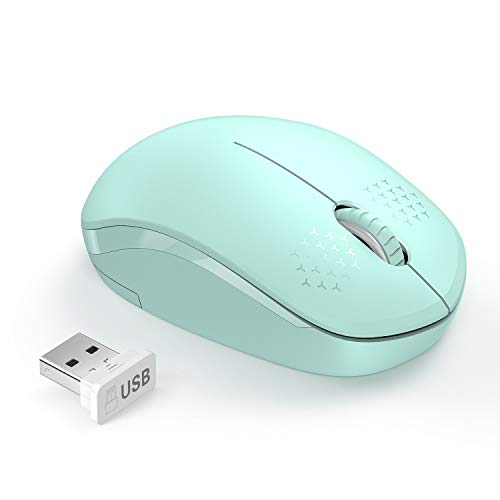
For the keyboard and mouse input required during XP setup via an external display, a compact wireless option like the seenda Wireless Mouse ($9.98) connects via USB receiver through a USB-C hub — the Steam Deck's single USB-C port makes a multiport hub essential for bare-metal setup.
Hardware Compatibility at a Glance
| Component | XP Bare-Metal | QEMU/KVM VM | PCem / 86Box |
|---|---|---|---|
| AMD Van Gogh GPU (RDNA 2) | ❌ No driver | ✅ VirtIO display | ✅ Emulated GPU |
| Wi-Fi (MediaTek MT7921) | ❌ No driver | ✅ Bridged/NAT | ✅ Emulated NIC |
| Audio (AMD HDA) | ❌ No driver | ✅ VirtIO sound | ✅ SB16/AC97 emulated |
| Internal eMMC/NVMe | ✅ AHCI mode | ✅ VirtIO disk | ✅ Emulated IDE |
| USB 3.0 external drives | ⚠️ USB 2.0 speed only | ✅ Full Gen 1 via passthrough | N/A |
| Steam Deck trackpads | ❌ No driver | ❌ Mouse cursor only | ❌ Mouse cursor only |
Table synthesized from community reports on r/SteamDeck, r/windowsondecks, and VOGONS.
Storage Options for the XP Retro Setup
With the Steam Deck's internal storage limited and shared across SteamOS and any VM images, external drives become the practical backbone of a retro archive setup. USB 3.2 Gen 1 (5 Gbps) bus-powered drives are the community standard — no desktop power supply, no extra cables.
| Product | Capacity | Interface | Price |
|---|---|---|---|
| WD 2TB Elements Portable | 2 TB | USB 3.2 Gen 1 | $139.00 |
| WD 4TB Elements Portable | 4 TB | USB 3.2 Gen 1 | $189.99 |
| WD 5TB Elements Portable | 5 TB | USB 3.0 | $196.99 |
| WD 6TB Elements Portable | 6 TB | USB 3.2 Gen 1 | $239.95 |
| Seagate One Touch 8TB Desktop | 8 TB | USB-C | $259.99 |
For most users, the 2 TB WD Elements covers a QEMU disk image plus a solid XP game library. The 4–6 TB range suits collectors archiving full disc ISO libraries across multiple vintage platforms.
Steam Deck vs. Raspberry Pi 4 for XP Retro Use
A common point of comparison in the retro community is the Raspberry Pi 4 in a Cyberdeck chassis. The architectural difference is decisive: the Raspberry Pi 4 is ARM-based and cannot run x86 Windows XP natively. QEMU on ARM requires full instruction translation — every x86 opcode is converted in software, which is substantially slower than KVM-accelerated virtualization on x86 hardware.
The Steam Deck's core advantage is that it is an x86 machine. QEMU/KVM on an x86 host running an x86 guest (XP) executes most guest code directly on the physical CPU, with only ring-transition overhead. Per GamingOnLinux and VOGONS documentation, this makes the Steam Deck's VM performance in this scenario qualitatively different from what a Pi 4 achieves.
| Factor | Steam Deck | Raspberry Pi 4 |
|---|---|---|
| Architecture | x86 Zen 2 — KVM-accelerated XP | ARM — full instruction translation |
| XP gaming via QEMU | Near-native CPU speed | Significantly slower |
| Built-in display | 7-inch 1280×800 | None (external monitor required) |
| Portable gaming | Yes | Only in Cyberdeck build |
| Device cost (approx.) | ~$399 OLED | ~$55–80 SBC only |
For a fixed retro workstation, the Adafruit Cyberdeck approach has its own appeal. But for portable XP gaming with functional audio, networking, and display, the Steam Deck running QEMU/KVM is the stronger platform by a meaningful margin.
Extending the Steam Deck's Retro Utility
Windows XP is one layer of the Steam Deck's broader retro gaming capability. The platform also handles modern titles at surprisingly large scales, and frame generation via Lossless Scaling extends the life of older SteamOS-native titles that struggle on the Van Gogh APU.
For a deeper look at how SteamOS itself positions the Steam Deck in the gaming ecosystem, Steam Deck: Linux's Trojan Horse for PC Gamers covers the platform's Linux heritage and game compatibility layer. The recent SteamDSXL dual-screen dock review shows how far third-party hardware has pushed the Steam Deck form factor, and the Steam Machine 2025 couch gaming review contextualizes Valve's broader living-room ambitions.
For frame-rate analysis on current-gen Steam Deck titles, Forza Horizon 6 on Steam Deck offers a recent performance reference.
Troubleshooting Common Issues
Display stuck at 640×480 or 1024×768 (bare-metal) No AMD driver exists for RDNA 2 under XP. The only resolution is switching to the QEMU method, where VirtIO display drivers support full 1280×800.
XP install fails to boot after partition setup NTLDR's UEFI interaction is fragile. Community threads on r/SteamDeck document that enabling CSM mode in the Steam Deck BIOS (Volume Down at power-on) resolves the majority of boot failures. rEFInd must be installed after XP to avoid overwriting the boot chain.
QEMU performance poor despite KVM KVM acceleration only applies when the host OS is Linux and the guest is x86 — both are true on SteamOS running XP. If performance is unexpectedly slow, verify that /dev/kvm is accessible and that Virt-Manager's VM configuration shows "KVM" under CPU mode, not "QEMU" emulation mode.
USB drives not recognized at full speed under XP bare-metal Windows XP's USB stack is USB 2.0 only, regardless of the physical port. Full Gen 1 (5 Gbps) throughput is only available under QEMU with USB passthrough, where the Linux kernel handles the protocol.
Citations and sources
- https://www.reddit.com/r/SteamDeck/ — r/SteamDeck community reports on dual-boot procedures, QEMU setup, and hardware driver status
- https://www.reddit.com/r/windowsondecks/ — r/windowsondecks documentation on Windows compatibility and driver workarounds
- https://www.vogons.org/ — VOGONS forum: PCem and 86Box configuration guides and community emulation benchmarks
- https://www.gamingonlinux.com/ — GamingOnLinux: QEMU/KVM guides for SteamOS Desktop Mode
- https://www.86box.net/ — 86Box official documentation: supported vintage hardware and Linux build instructions
- https://pcem-emulator.co.uk/ — PCem official site: emulation accuracy and hardware compatibility documentation
This piece is editorial synthesis based on publicly available information. No independent first-party benchmarking is reported.